Reading Improvement Normal Reading Worksheets for Ages 3-7
4 filtered results
-
From - To
Boost your child's literacy skills with Reading Improvement Normal Reading Worksheets for Ages 3-7. Designed specifically to enhance reading fluency and comprehension, these engaging resources provide a range of activities, including phonics exercises, sight words practice, and captivating stories. Tailored for early readers, each worksheet encourages children to learn at their own pace while building a solid reading foundation. Perfect for parents and educators alike, these worksheets make learning enjoyable and effective. Give your child a head start in reading with our expertly crafted materials, available now on Kids Academy. Download, print, and watch them thrive!
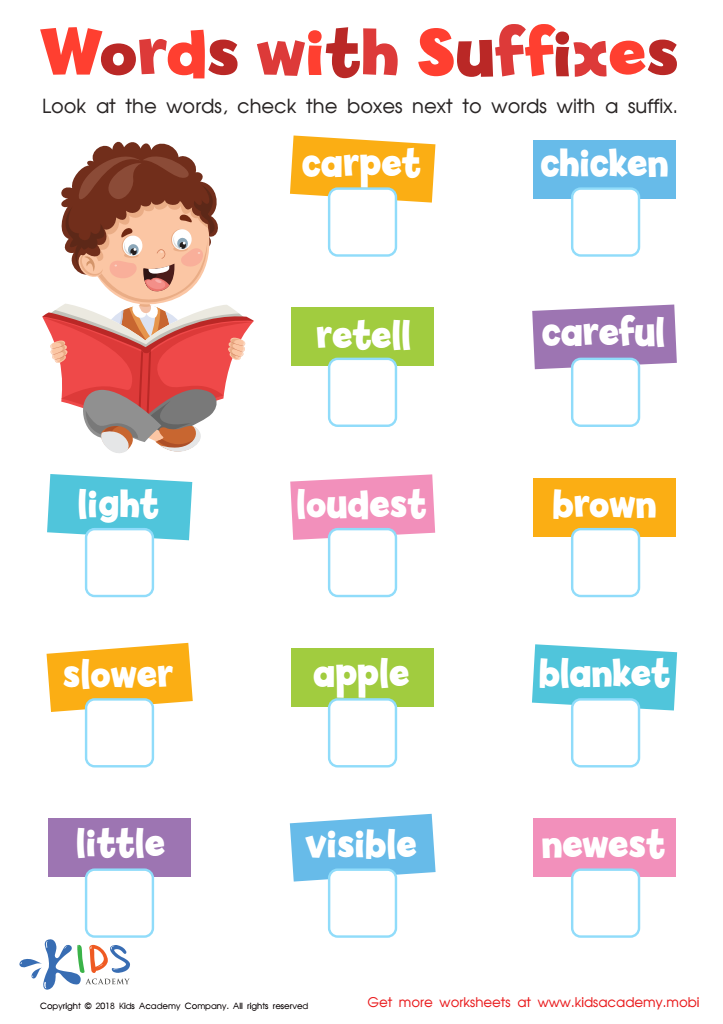
Reading: Words With Suffixes Worksheet
 Assign to My Students
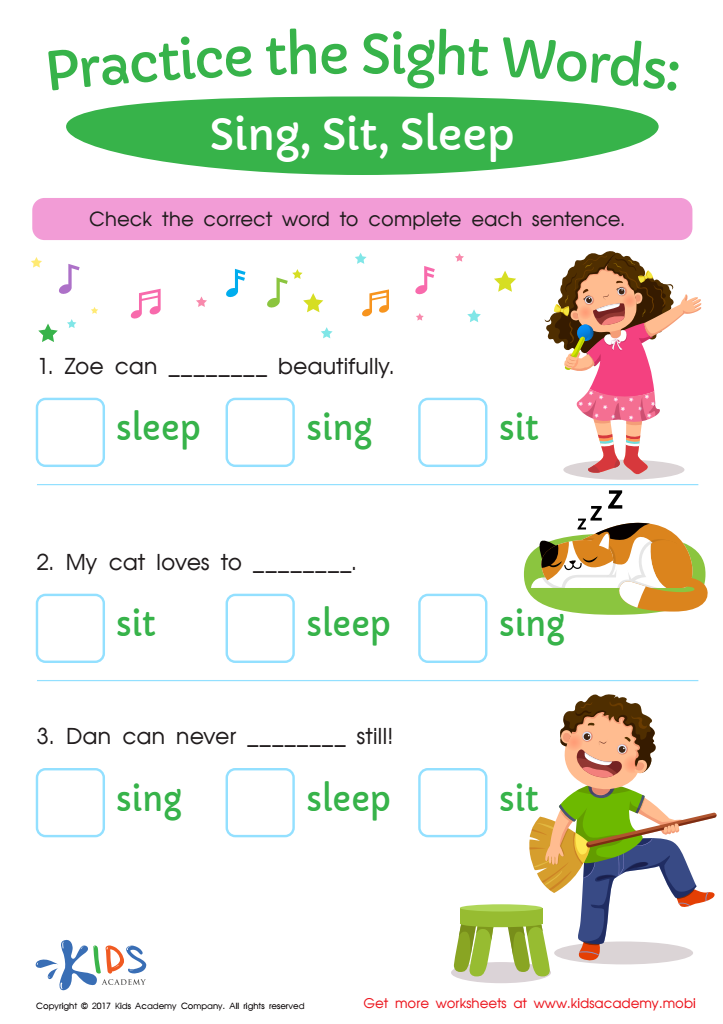
Sing, Sit, Sleep Sight Words Worksheet
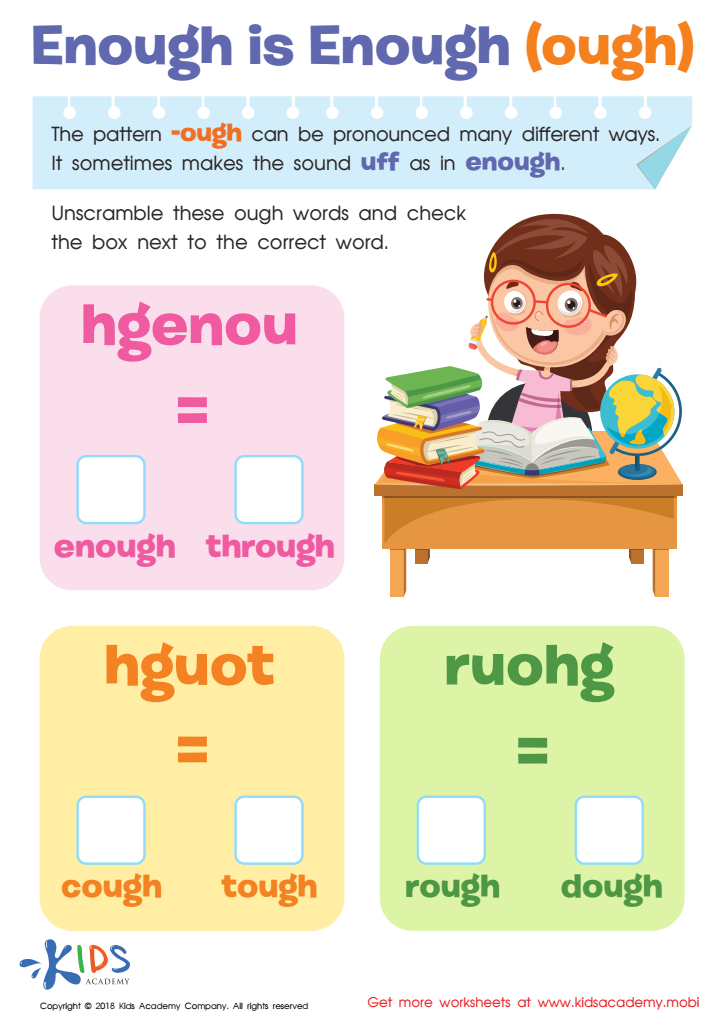
Enough Is Enough (ough) Worksheet
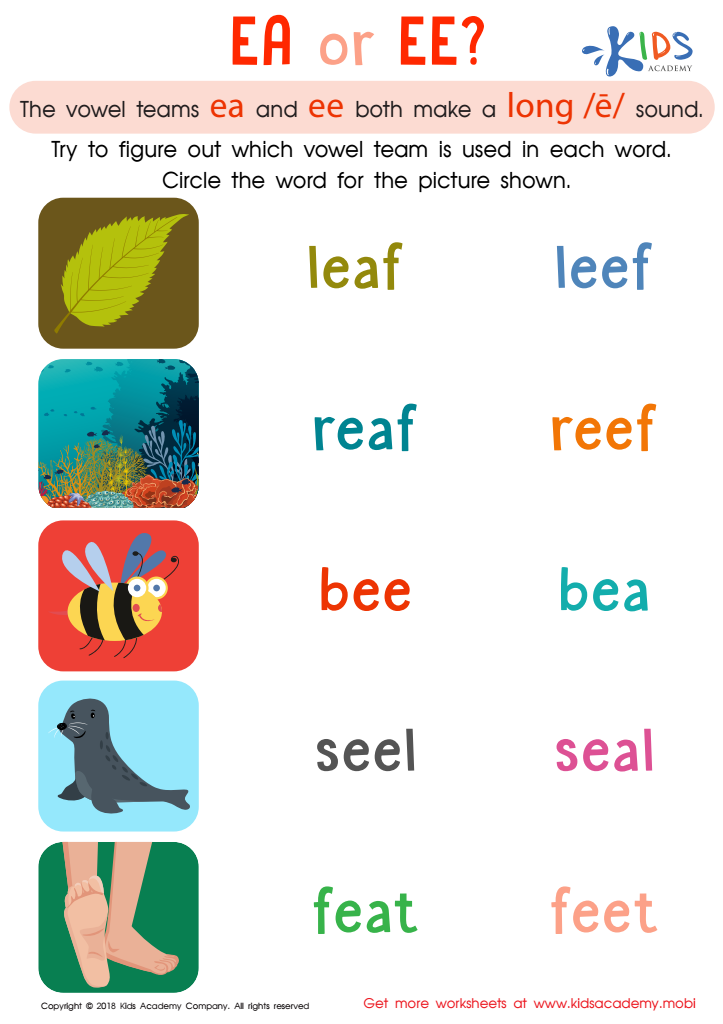
Reading: EA and EE Worksheet







Parents and teachers play a pivotal role in the early literacy development of children. Helping children to achieve normal reading levels at the ages of 3 to 7 is crucial for several reasons. Firstly, early reading skills are directly linked to future academic success. Children who develop a strong foundation in reading are more likely to excel in all subjects, as reading comprehension is integral to learning science, math, and social studies.
Moreover, early literacy boosts cognitive development. During these formative years, children's brains are exceptionally receptive to new information. Learning to read stimulates brain areas involved in visual and auditory processing, memory, and critical thinking. Early reading also fosters a love for learning, and children who enjoy reading often continue to read for pleasure throughout their lives, leading to broad, deep reservoirs of knowledge.
Social-emotionally, reading improvement promotes self-confidence and independence. Children who achieve normal reading proficiency can better understand and express their thoughts and ideas, enhancing their communication skills. Furthermore, they are more likely to develop empathy by recognizing and understanding emotions within stories.
Overall, supporting reading development from a young age sets the stage for lifelong learning, emotional health, and academic success, making it a priority for parents and educators alike.








