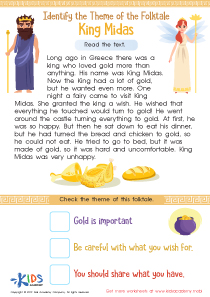
Sight word recognition Normal Reading Worksheets for Ages 3-7
9 filtered results
-
From - To
Explore our engaging "Sight Word Recognition Normal Reading Worksheets" designed specifically for children aged 3-7! These worksheets promote early literacy by helping young learners recognize and read common sight words essential for reading fluency. With a variety of fun activities such as tracing, coloring, and matching, these resources cater to diverse learning styles, making it easy for educators and parents to support reading development. The colorful and interactive design keeps children motivated and focused as they enhance their vocabulary and reading skills. Start your child's reading journey today with our accessible and educational materials that lay a strong foundation for future success!
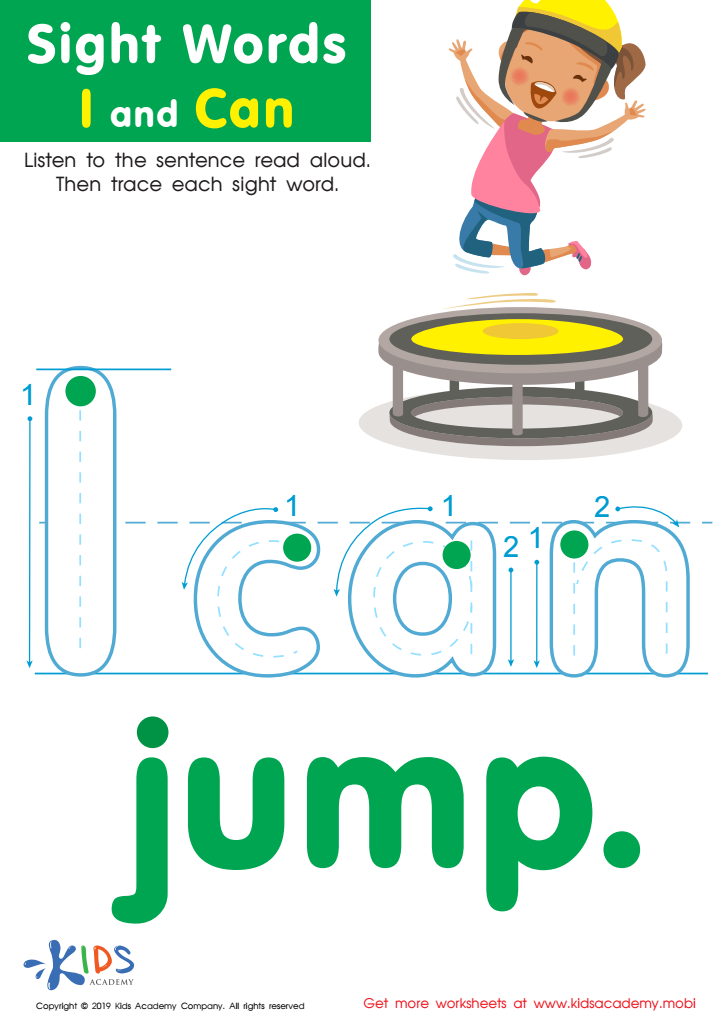
Sight Words I Can Worksheet
 Assign to My Students
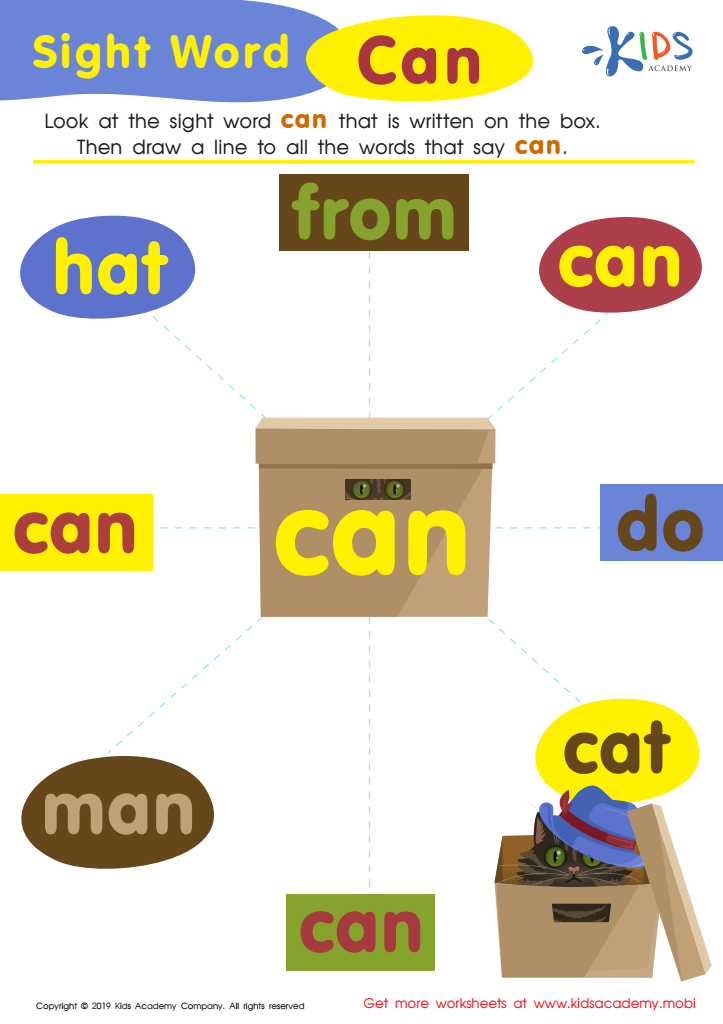
Sight Word Can Worksheet
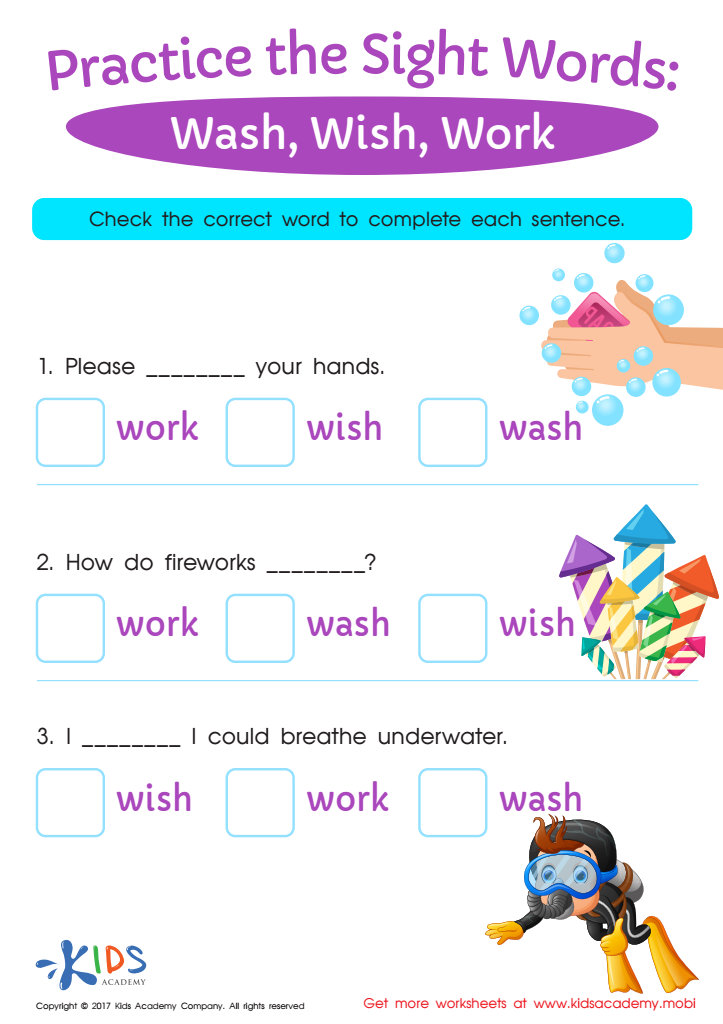
Wash, Wish, Work Sight Words Worksheet
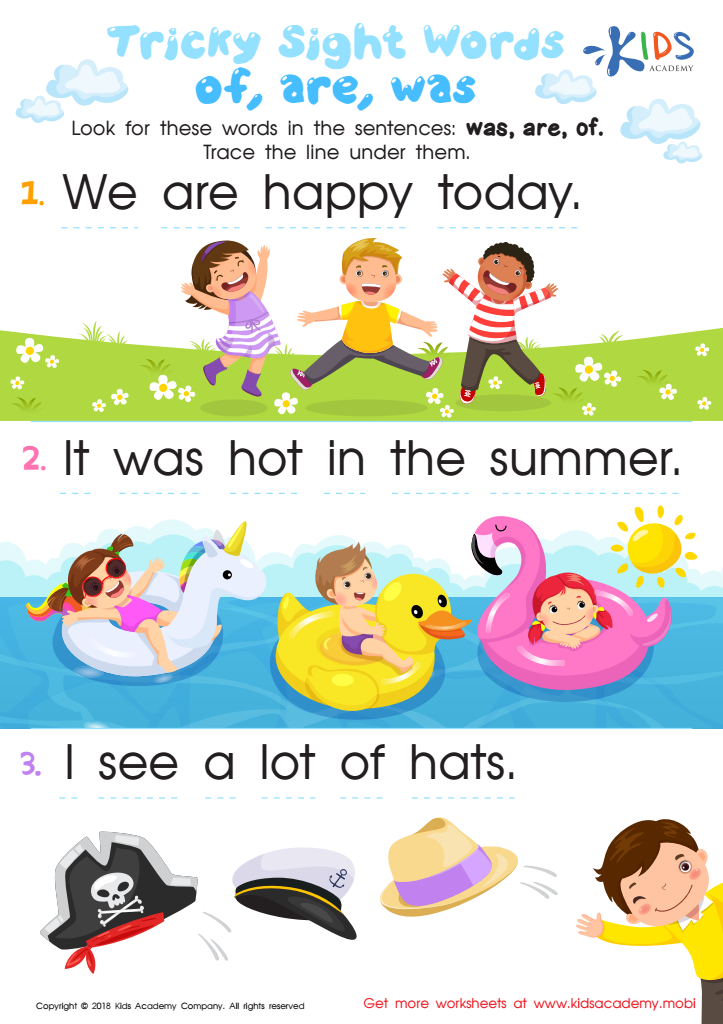
Tricky Sight Words Worksheet
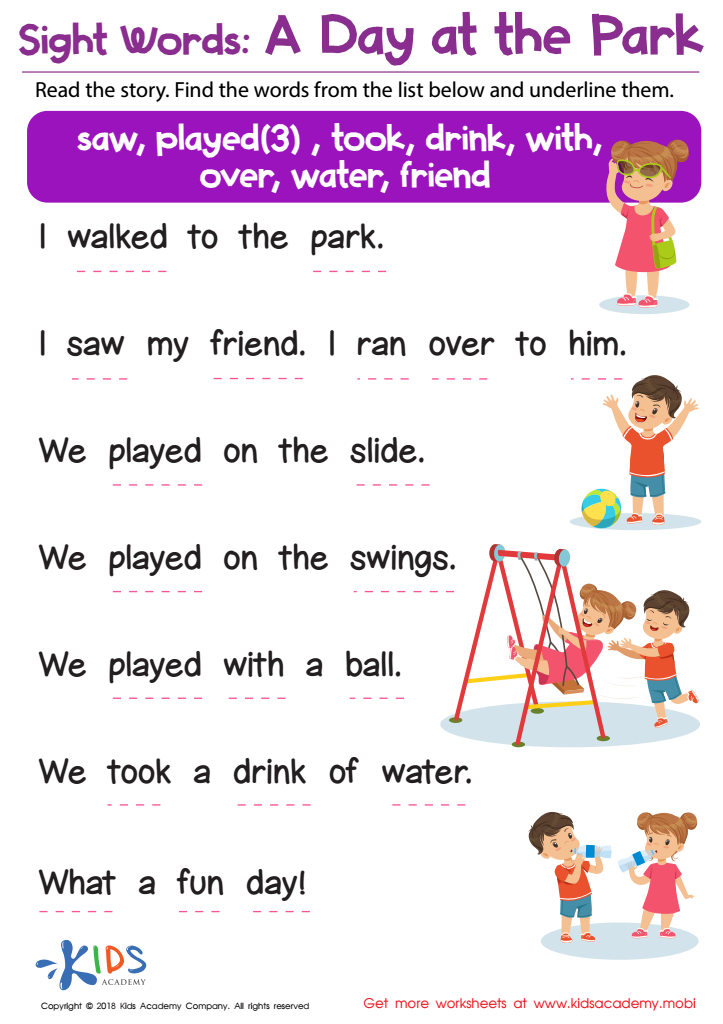
Sight Words: A Day at the Park Worksheet
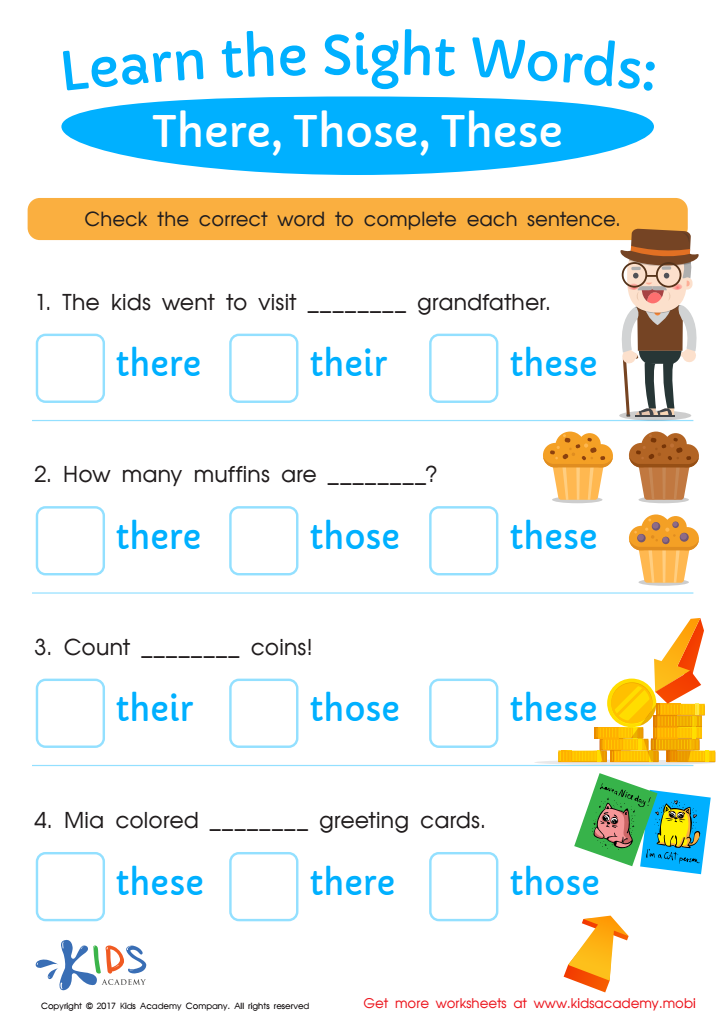
There, Those and These Sight Words Worksheet
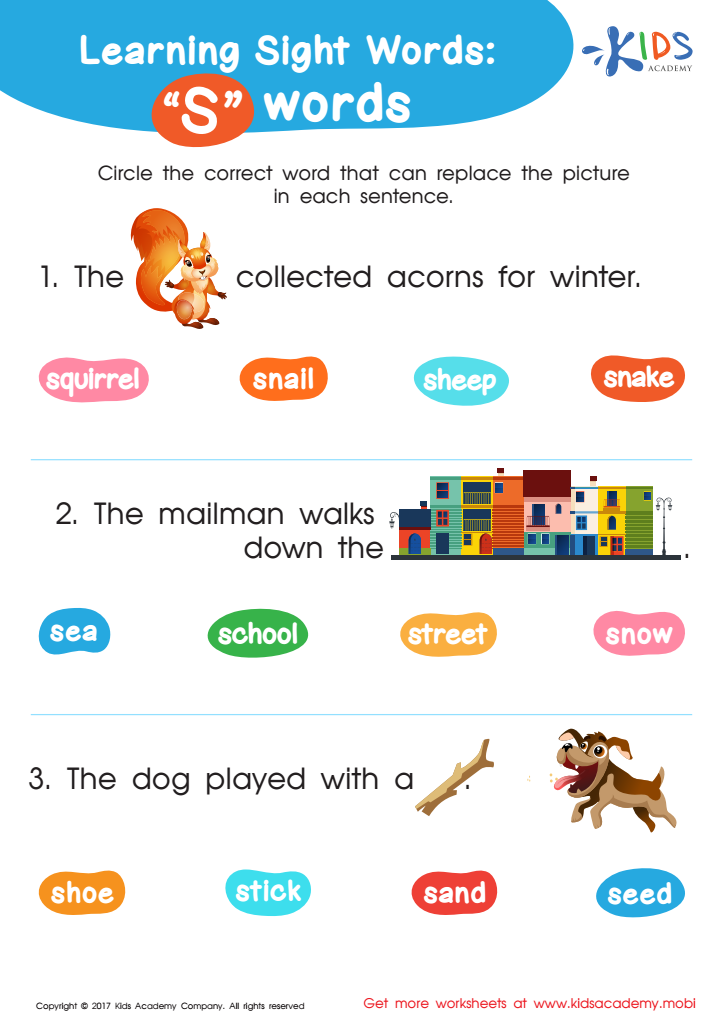
S Words Sight Words Worksheet
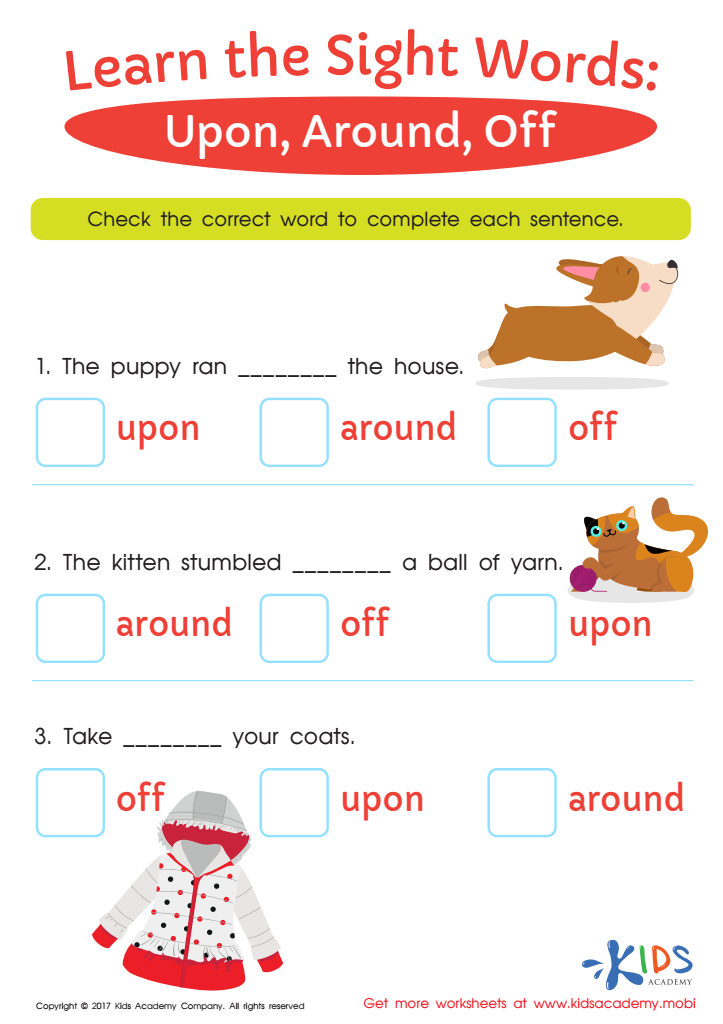
Upon, Around, Off Sight Words Worksheet
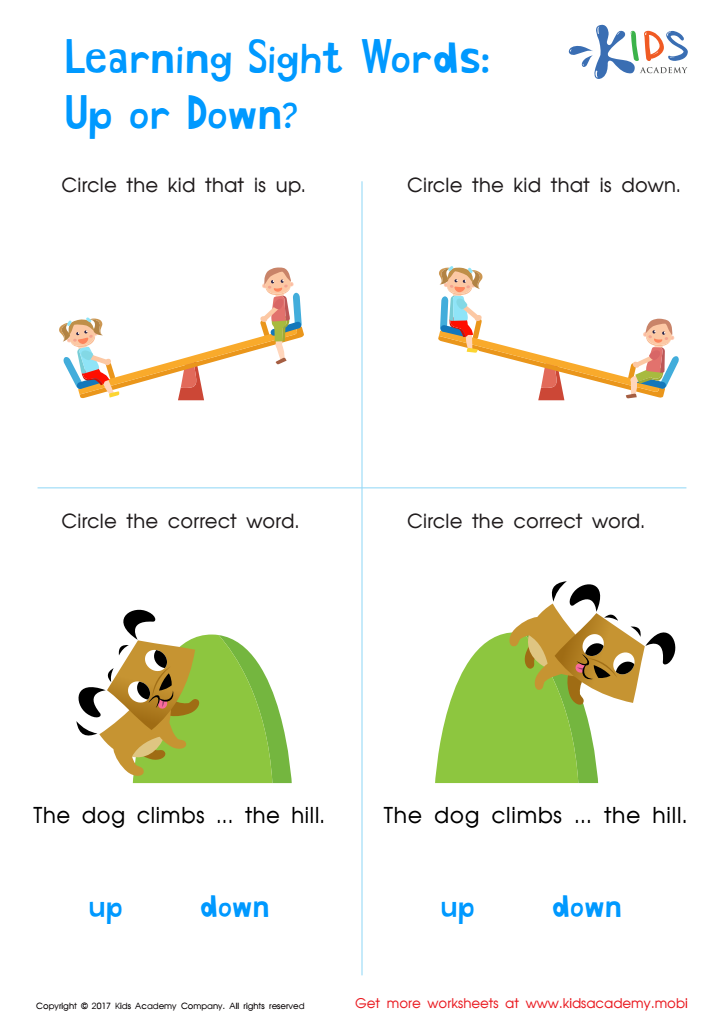
Up or Down Printable Sight Words Worksheet








Sight word recognition is a critical foundation for early literacy and overall reading success for children aged 3-7. This stage is vital as children begin to develop their reading skills through exposure to consistent, high-frequency words that make up a large portion of the texts they encounter. Mastering sight words enables students to read more fluently and with greater comprehension, as they spend less time deciphering common words and more time understanding the meaning of sentences.
Parents and teachers should prioritize sight word recognition because it builds confidence and encourages a love for reading. When children are able to read common words effortlessly, they experience a sense of accomplishment that motivates them to tackle more complex texts. Additionally, sight word proficiency supports the development of other essential reading skills, such as phonemic awareness and vocabulary expansion.
In the early years, engaged and supportive reading environments at home and school can bolster a child’s success. Thus, by focusing on sight word recognition, educators and caregivers equip children with fundamental skills that pave the way for lifelong literacy and learning. This investment in early reading strategies not only enhances academic growth but fosters a passion for reading that can shape a child’s future opportunities.