Vocabulary improvement Normal Reading Worksheets for Ages 3-7
3 filtered results
-
From - To
Discover our engaging Vocabulary Improvement Normal Reading Worksheets designed specifically for children aged 3-7! These fun and interactive worksheets aim to boost vocabulary skills while fostering a love for reading. Each resource is crafted to stimulate your child’s imagination, enhance linguistic abilities, and improve comprehension through age-appropriate activities. From matching words to pictures to fill-in-the-blank exercises, our diverse worksheets cater to varying learning styles. They serve as an excellent tool for both parents and educators to support early literacy development. Start your child's journey to reading success today with our captivating vocabulary improvement worksheets!
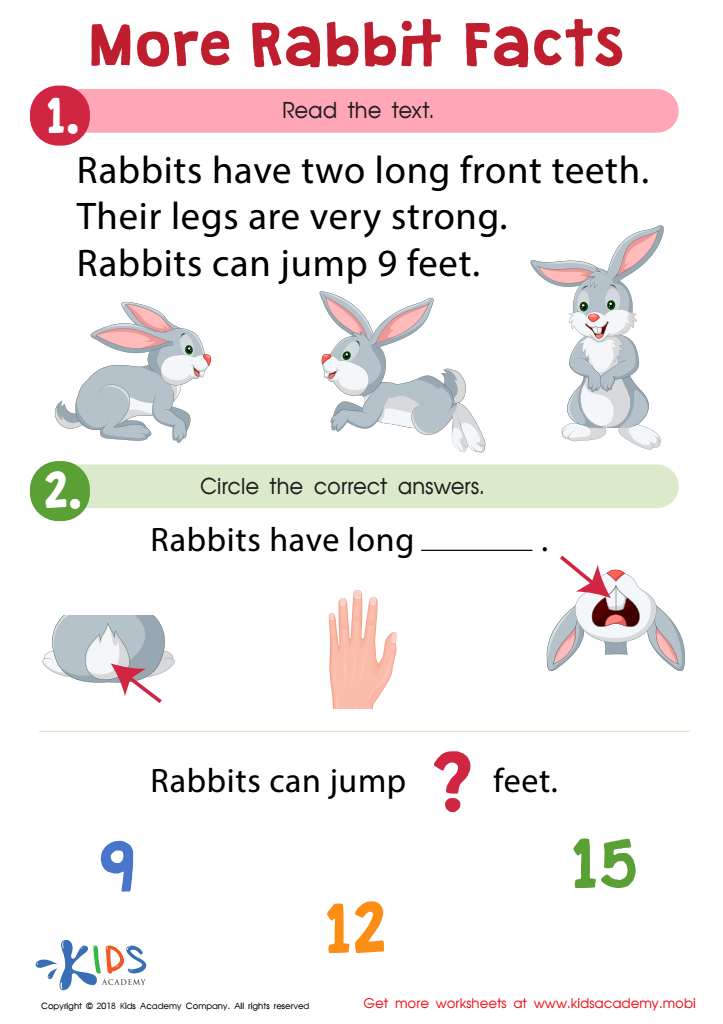
More Rabbit Facts Worksheet
 Assign to My Students
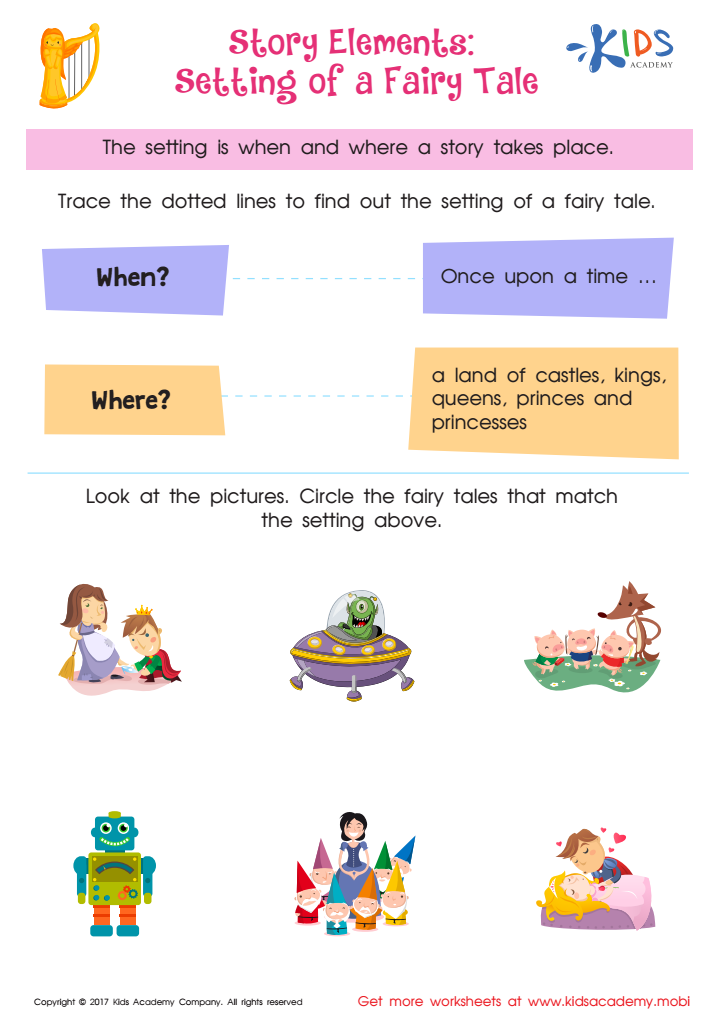
Story Elements: Setting of a Fairy Tale Printable
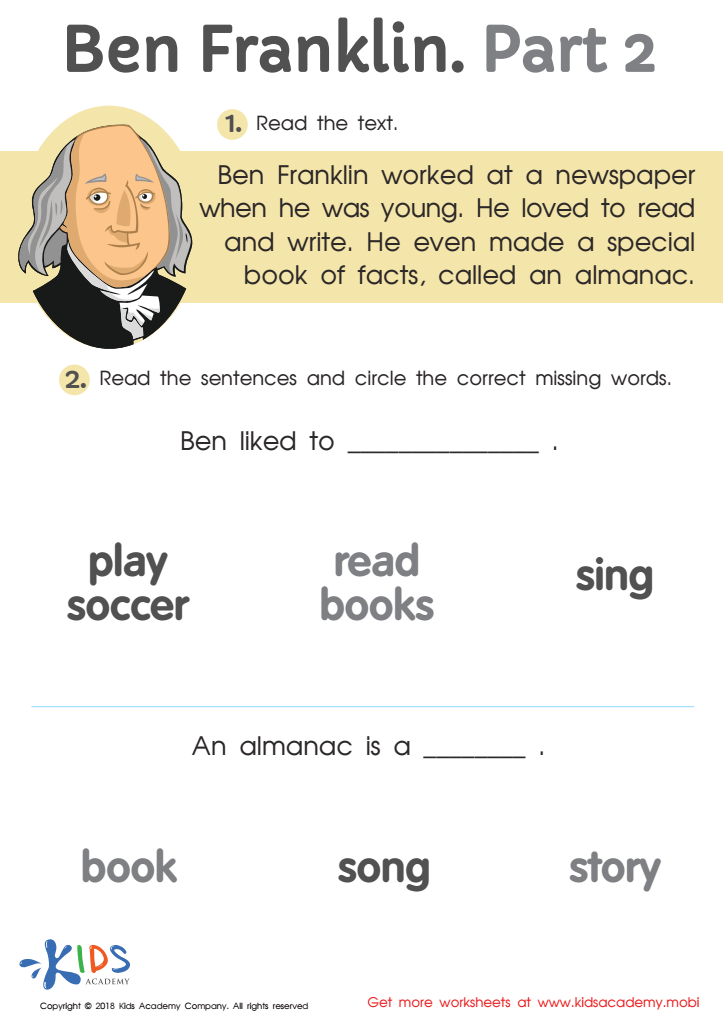
Ben Franklin Part 2 Worksheet







Vocabulary improvement is crucial for the reading development of children aged 3-7, as it significantly influences their overall academic success and communication skills. At this early stage, children's brains are exceptionally receptive to language acquisition. A strong vocabulary lays the foundation for comprehension, enabling children to understand stories, follow instructions, and express their thoughts clearly.
For parents and teachers, fostering vocabulary growth is not just about teaching word definitions; it involves providing rich language experiences. Engaging children in conversations, reading diverse texts, and observing the context in which words are used cultivates their ability to use language expressively. Children equipped with a robust vocabulary tend to perform better academically, as they can communicate more effectively and grasp more complex concepts across subjects.
Promoting vocabulary development also enhances social skills, as children learn to articulate their feelings, interact with peers, and engage confidently in discussions. In an increasingly competitive world, strong verbal skills are essential for success. Both parents and teachers play integral roles in nurturing this foundation, ensuring children become eager, confident, and proficient readers and communicators, setting them on a path for lifelong learning and growth.








