
Identifying story elements Normal Reading Comprehension Worksheets for Ages 3-7
3 filtered results
Difficulty Level
Grade
Age
-
From - To
Subject
Activity
Standards
Welcome to our "Identifying Story Elements" reading comprehension worksheets for children aged 3-7! These engaging, printable activities focus on helping young learners understand key story components such as characters, settings, and plots. Each worksheet is designed to boost reading skills while making learning fun. Kids will enjoy colorful illustrations and stimulating questions that encourage critical thinking and comprehension. Perfect for both classrooms and at-home learning, these worksheets foster a love for reading and storytelling. Explore our collection today and watch your little ones develop essential literacy skills and confidence in their reading abilities!
Favorites
With answer key
Interactive
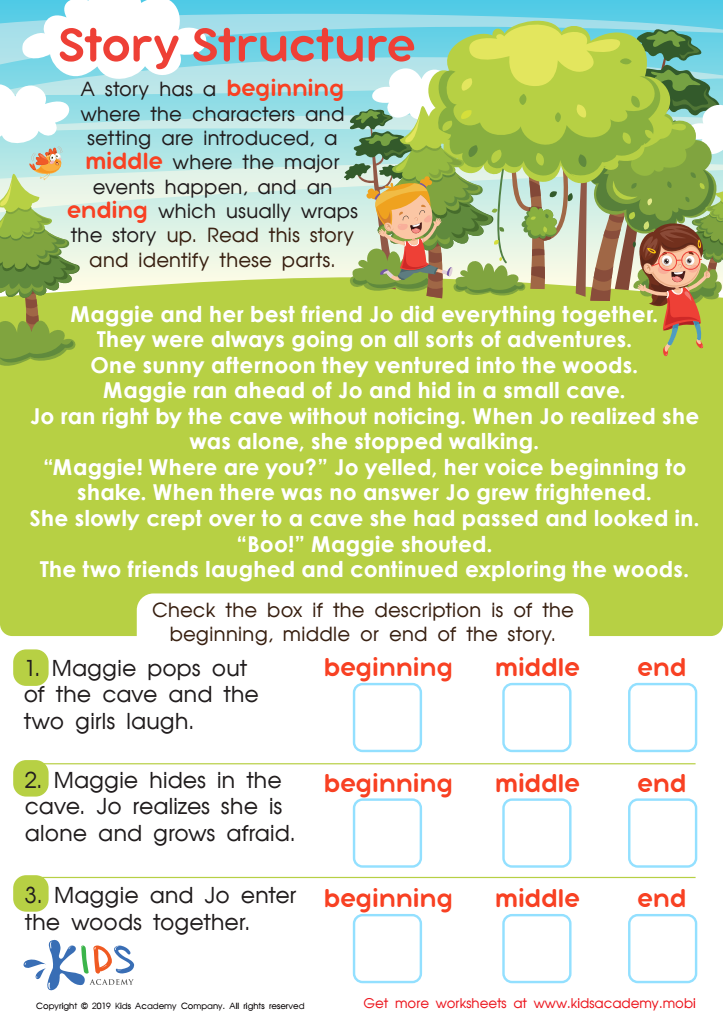
Story Structure Worksheet
Help your students read and identify the parts of the story in this worksheet: the beginning (characters and setting), middle (major events), and ending (events are resolved). Show them how to structure a story for clarity.
 Assign to My Students
Story Structure Worksheet
Worksheet
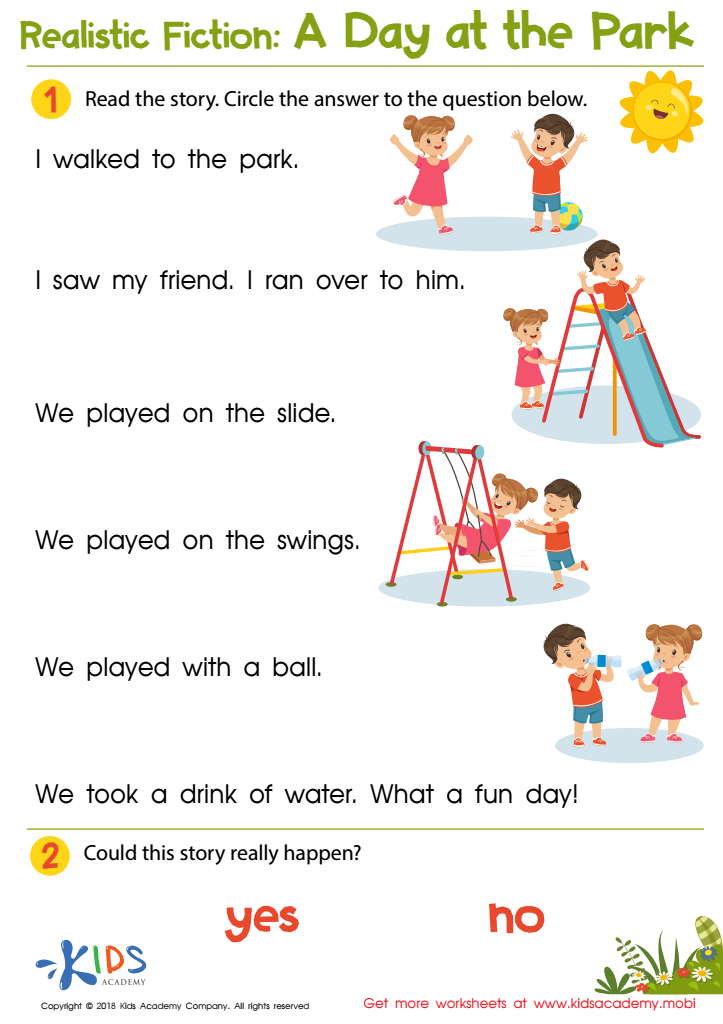
A Day at the Park Worksheet
Kids as young as preschool-age can be taught to evaluate stories! Use this fun worksheet about a day at the park. Read each sentence aloud, looking at the pictures. Ask your child if the events in the story could happen in real life - if yes, circle yes, otherwise circle no. When finished, discuss with them the genre, realistic fiction.
A Day at the Park Worksheet
Worksheet
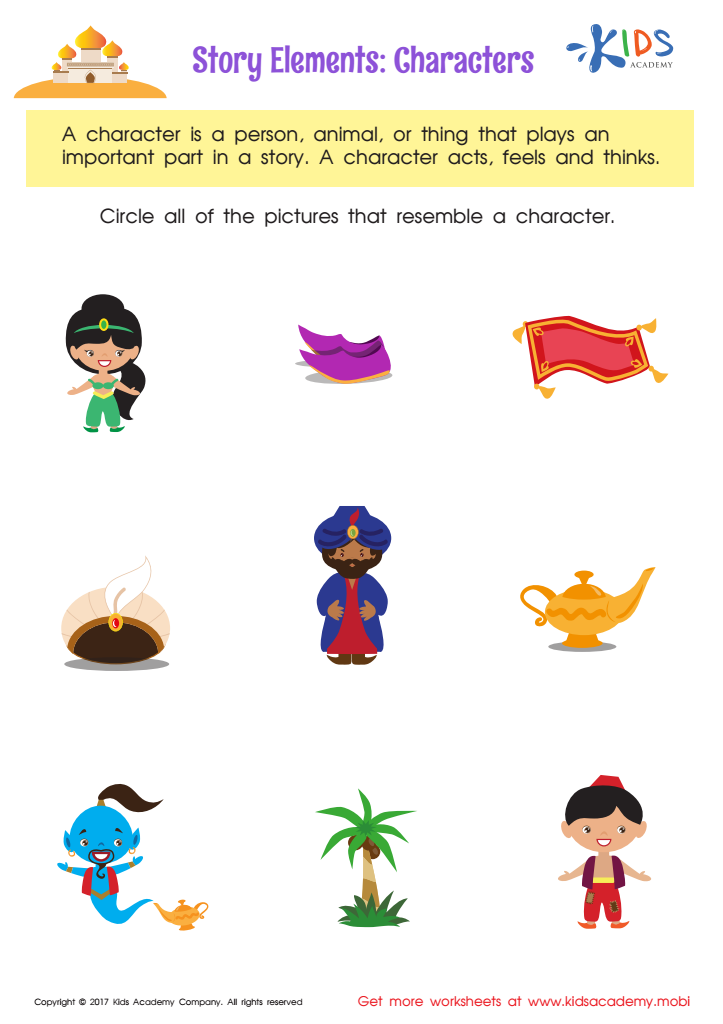
Story Elements Printable
Read the text and review the characters, settings and plot in a guided discussion.
Take your child on a journey to the Middle East and review the characters, settings and plot of their favorite childhood stories with this Aladdin-themed worksheet! It'll help them master early analysis skills and learn about characterization. Enjoy a fun, guided discussion with your child as you review important story elements.
Story Elements Printable
Worksheet
Join Kids Academy for Free
Who is primarily going to use this learning content?








Identifying story elements is crucial for early reading comprehension, especially for children aged 3-7. Understanding story elements such as characters, settings, events, and conflict helps young readers engage with texts on a deeper level. When parents and teachers focus on these elements, they provide children with the tools to comprehend and retell stories, enhancing their critical thinking skills.
Developing comprehension skills early on lays the foundation for future academic successes. By recognizing characters and their motivations, setting the scene, and following plot developments, children can learn to predict outcomes and understand narratives more profoundly. This engagement with text also fosters a love for reading, encouraging children to explore different genres and themes.
Moreover, discussing story elements nurtures essential language skills, expanding vocabulary and promoting effective communication. It builds connections between children's experiences and the stories they read, enriching their interpretation and enjoyment of literature.
Ultimately, prioritizing the identification of story elements equips young readers with lifelong skills that extend beyond academic settings, enabling them to become thoughtful communicators and critical thinkers. For these reasons, parents and teachers should prioritize teaching story elements as a cornerstone of early literacy development.








