Identifying story elements Normal Reading Fiction Worksheets for Ages 3-7
3 filtered results
-
From - To
Explore our engaging "Identifying Story Elements" worksheets designed for young readers aged 3-7! These interactive activities help children discover the essential components of fiction, including characters, settings, and plots. Each worksheet encourages critical thinking and creativity, fostering a deeper understanding of storytelling while making reading fun. Perfect for homeschooling, classrooms, or any skill-building activities, these worksheets promote language development and comprehension skills. Let your child's imagination soar as they dissect their favorite tales and start recognizing different story elements. Download and print our worksheets today to inspire a lifelong love of reading and storytelling in your little ones!
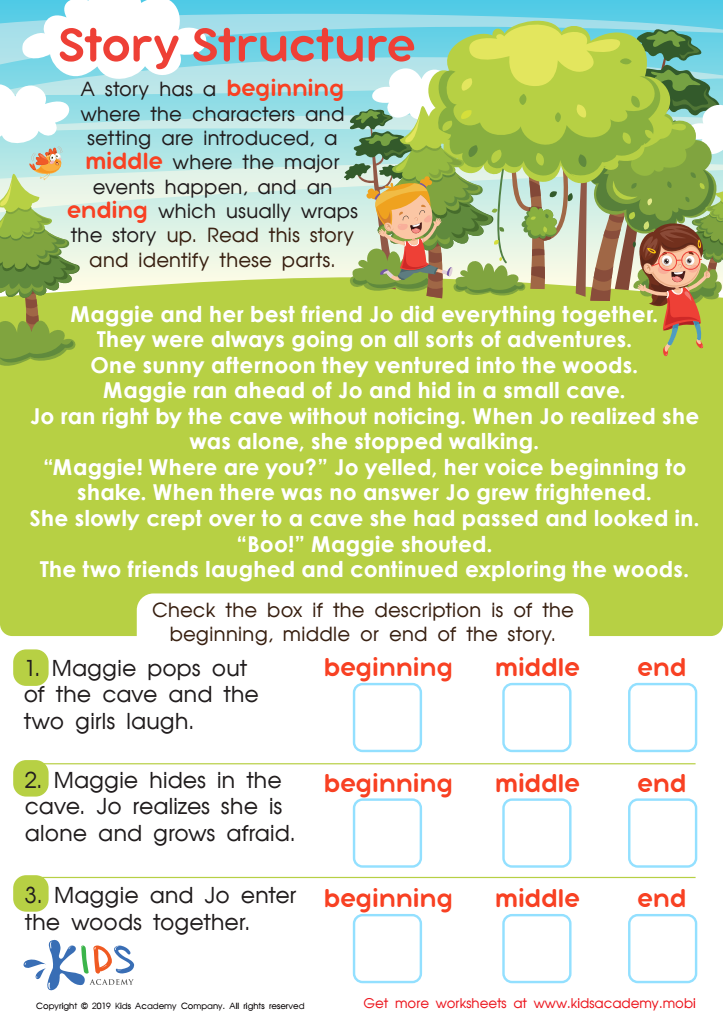
Story Structure Worksheet
 Assign to My Students
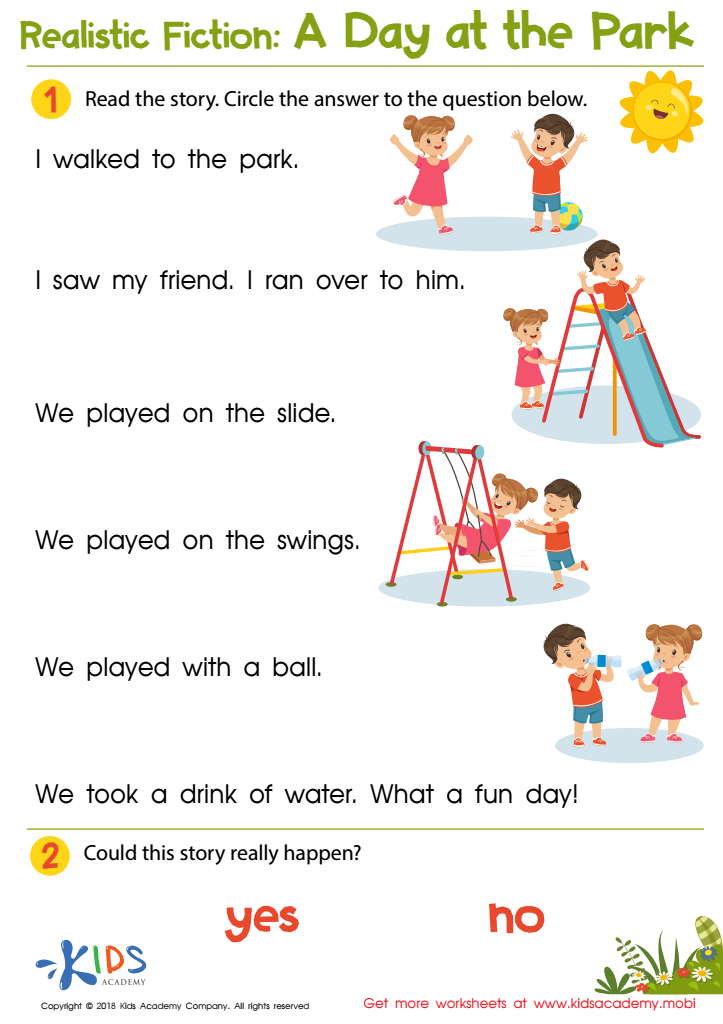
A Day at the Park Worksheet
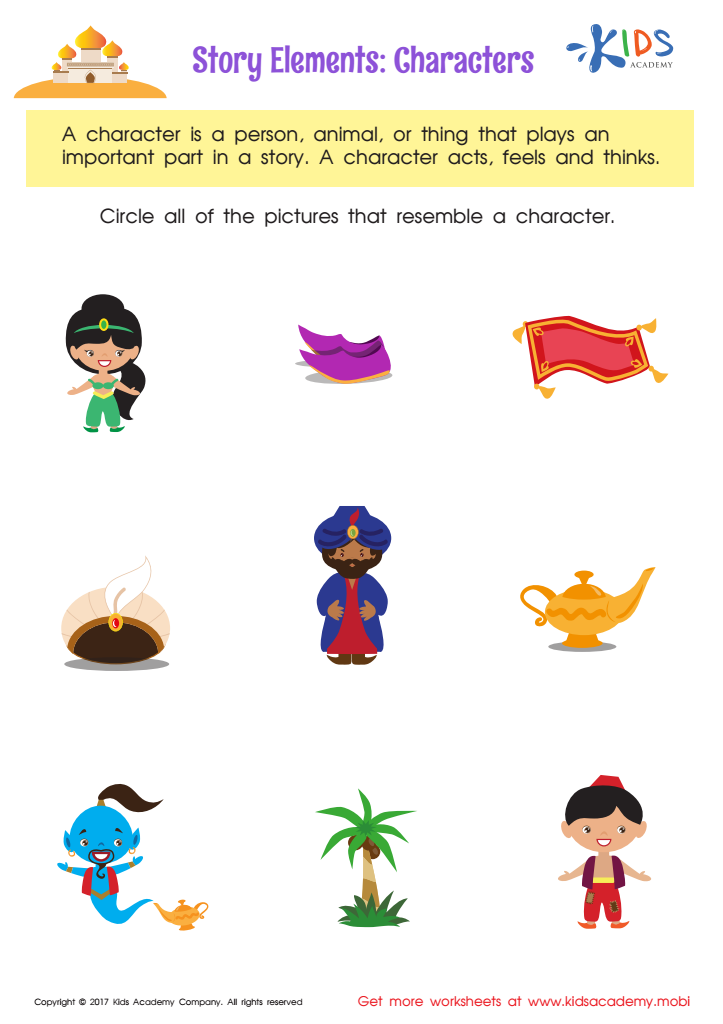
Story Elements Printable








Identifying story elements in fiction is crucial for children aged 3-7, as it lays the foundation for their reading comprehension and critical thinking skills. Parents and teachers should care because understanding components like characters, setting, plot, conflict, and resolution enhances a child's ability to engage with texts and relate to narratives. When children grasp these elements, they begin to connect with the story on a personal level, fostering empathy and imagination.
Moreover, story elements provide structure, helping young readers organize their thoughts and understand the sequence of events. This cognitive process supports the development of language skills, enriches vocabulary, and encourages expressive storytelling, which are essential in early literacy.
Engaging with story elements also promotes discussions between parents, teachers, and children, making reading a shared, interactive experience. Such interactions can ignite a lifelong love of reading and spark curiosity, motivating children to explore diverse genres and ideas.
Furthermore, recognizing story elements equips kids with tools to analyze and interpret not just fictional stories but also real-life situations, enhancing their critical reasoning. Ultimately, nurturing an appreciation for story elements can transform every reading session into an enjoyable and enriching experience, profoundly impacting a child's overall cognitive development.







