Categorizing objects Normal Science Worksheets for Ages 3-7
4 filtered results
-
From - To
Discover our engaging "Categorizing Objects Normal Science Worksheets" tailored for children ages 3-7! These interactive worksheets are designed to enhance your child’s understanding of the natural world by helping them classify and categorize objects based on various attributes. Through hands-on activities, young learners will improve critical thinking skills, boost their vocabulary, and develop a stronger foundation in science concepts. Our intuitive layout ensures that children remain captivated while learning essential sorting skills. Ideal for both classroom settings and at-home practice, these worksheets provide the perfect balance of fun and education. Start your child's scientific journey today!
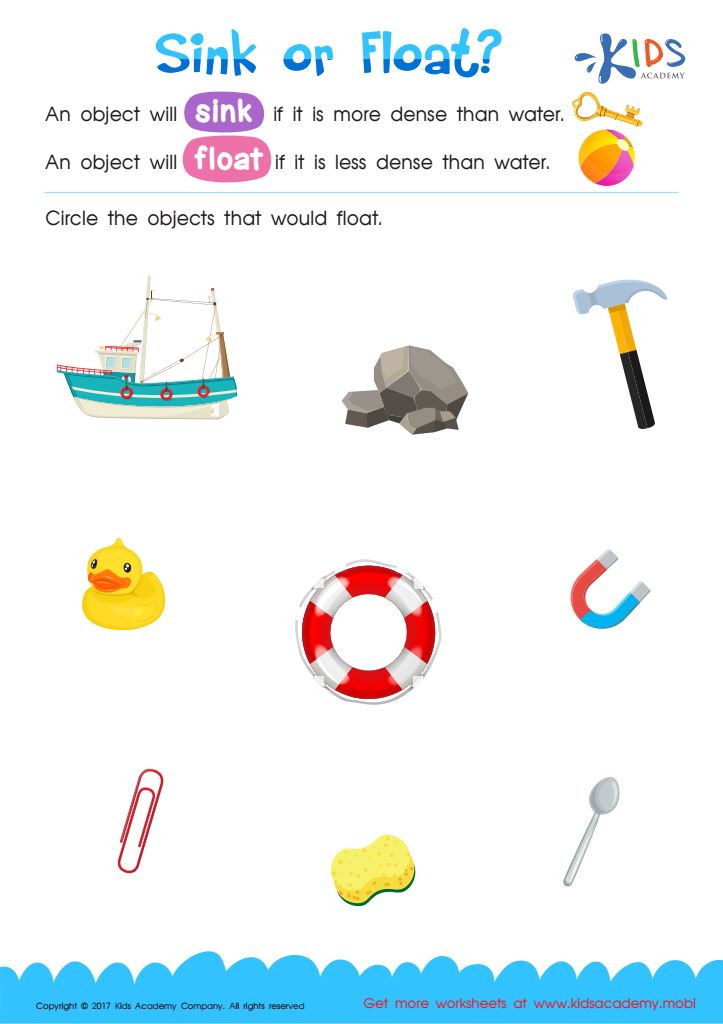
Sink or Float Printable
 Assign to My Students
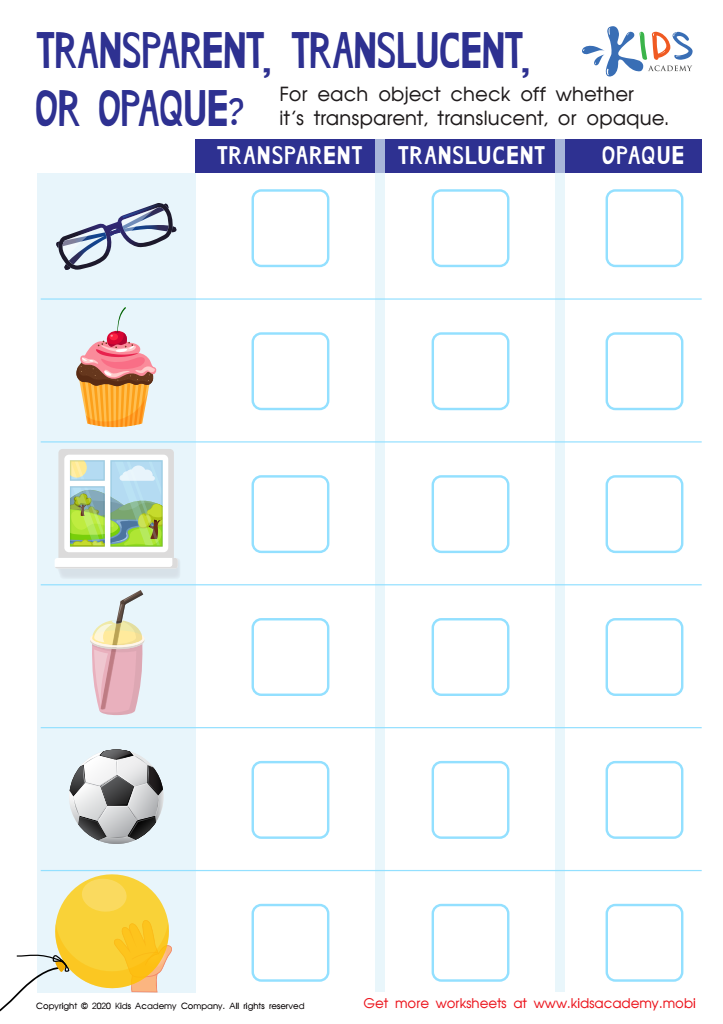
Transparent, Translucent, or Opaque Worksheet
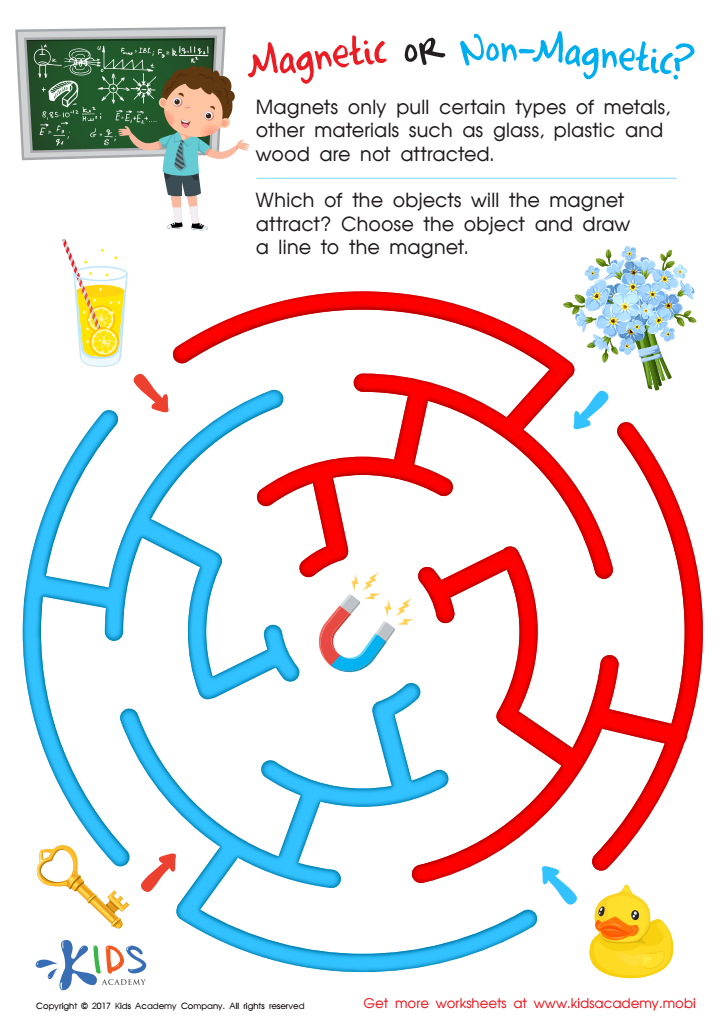
Magnetic or Non–Magnetic Worksheet
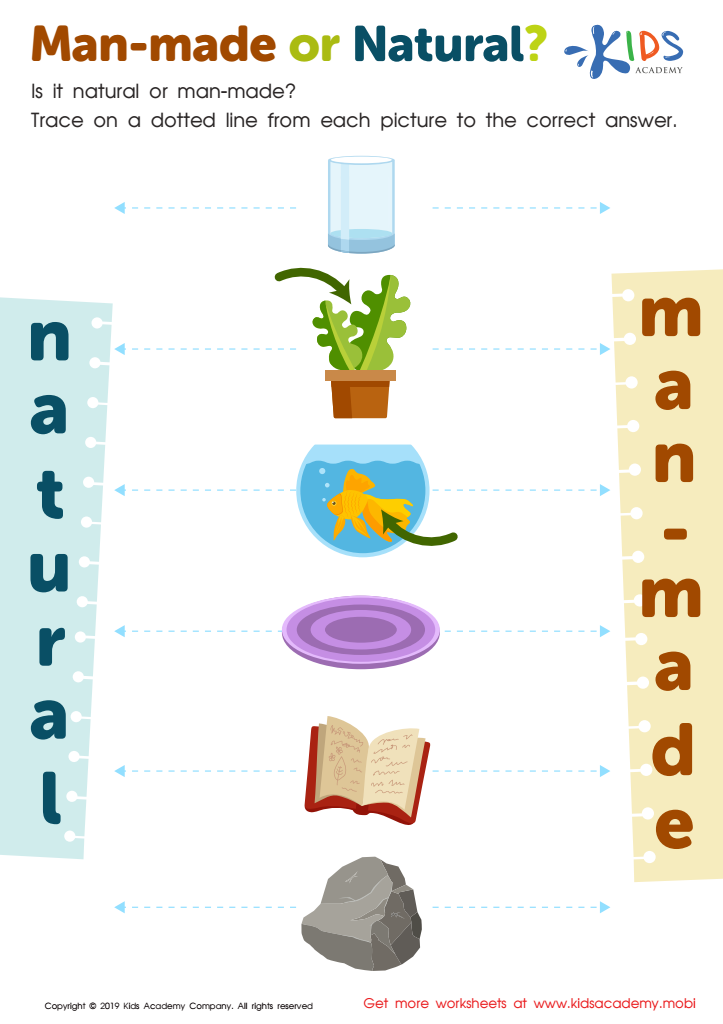
Man-Made or Natural? Worksheet




%20(1).jpg)


Categorizing objects is an essential educational activity for children ages 3 to 7, encompassing elements of normal science, which fosters foundational skills critical for cognitive development. Understanding how to group and classify items based on attributes like size, color, shape, or function helps young learners not only personalize their learning experiences but also enhances their critical thinking skills.
For parents and teachers, attention to categorization promotes early scientific thinking by encouraging observation, experimentation, and problem-solving. When children identify similarities and differences among objects, they develop classification skills that support mathematical reasoning and vocabulary growth. These skills lay the groundwork for concepts such as sorting, counting, and pattern recognition, all vital for success in later academic pursuits.
Moreover, categorizing objects nurtures curiosity and creativity, as children begin to explore relationships in their environment and articulate explanations for their classifications. This exploratory learning fosters an active engagement that enriches their understanding of the world.
In summary, parents and teachers should care about categorizing objects, as it is a crucial component of early learning that supports cognitive development, enhances essential skills, and cultivates a love for learning in young children.







