Developing analytical skills Normal Science Worksheets for Ages 3-7
3 filtered results
-
From - To
Help your child explore the wonders of science with our "Developing Analytical Skills" worksheets designed for ages 3-7. These engaging activities aim to build foundational analytical skills through fun, hands-on experiments and observations. Children will learn to categorize, hypothesize, and draw conclusions, fostering critical thinking from an early age. Each worksheet is crafted by educational experts to be age-appropriate and stimulating, ensuring a balance of education and enjoyment. Perfect for at-home learning or classroom use, these worksheets are an essential resource for nurturing young inquisitive minds. Spark a lifelong love of science today!
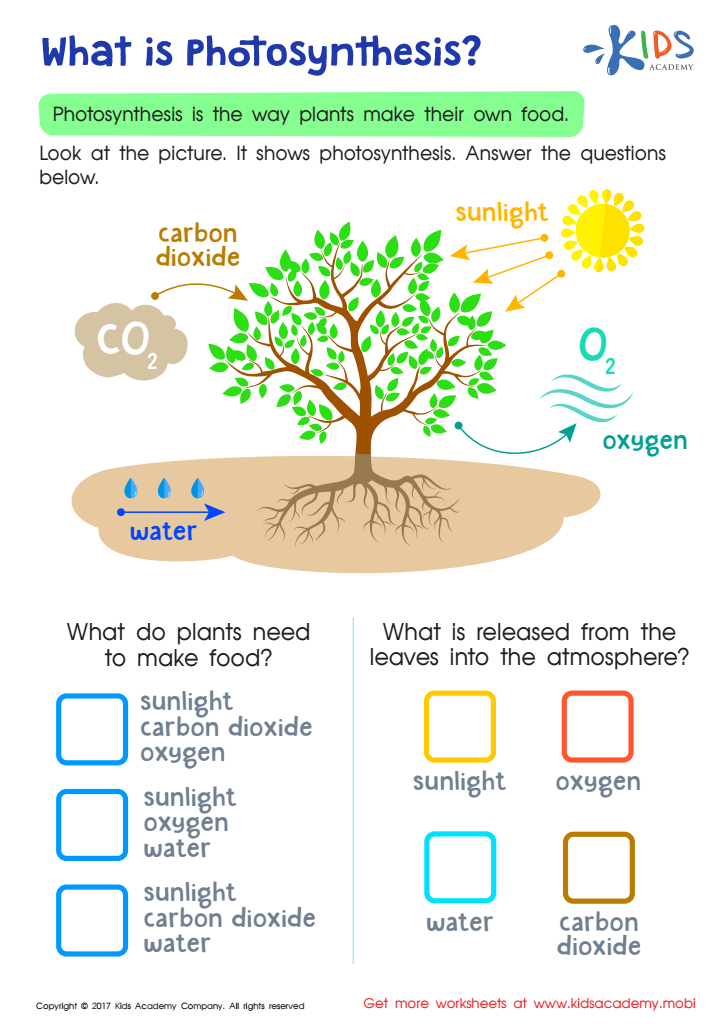
What is Photosynthesis Printable
 Assign to My Students
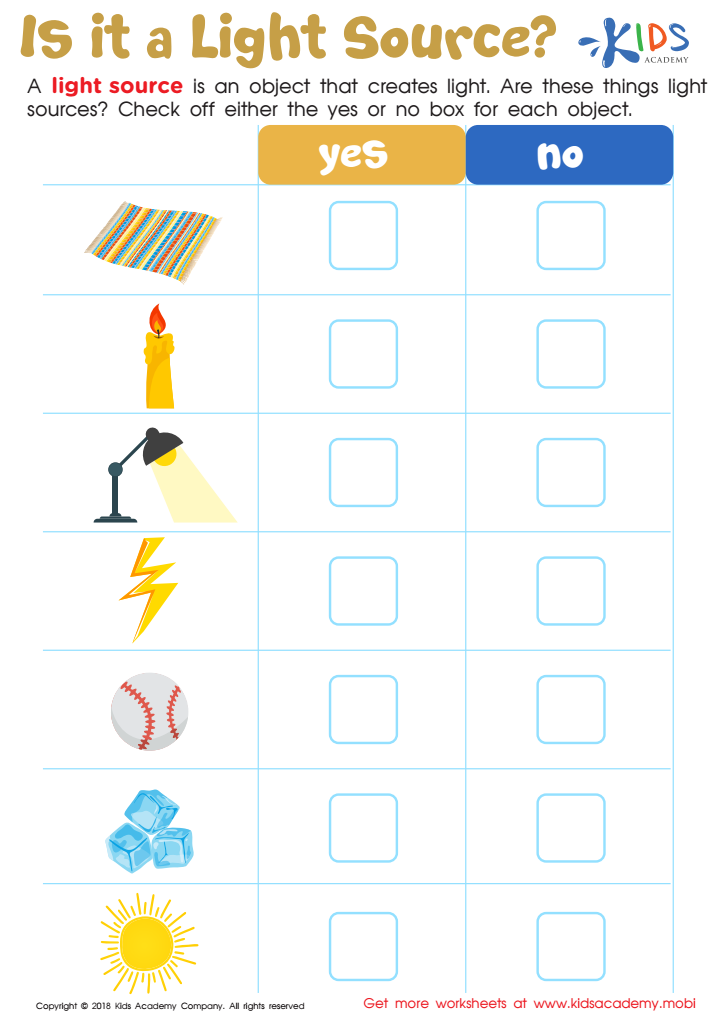
Is It a Light Source? Worksheet

How Light Travels Worksheet








Developing analytical skills in children aged 3-7 is crucial for their cognitive and overall development. At this formative stage, children are incredibly curious and learn by observing, questioning, experimenting, and problem-solving—key components of analytical thinking. Parents and teachers play an essential role in nurturing these skills, laying a strong foundation for future learning and intellectual growth.
Introducing normal science concepts, such as sorting objects, understanding basic cause-and-effect relationships, and exploring natural phenomena, not only fuels a child's curiosity but also develops their ability to think critically and independently. These early experiences encourage children to ask questions, seek answers, and understand the world around them in a structured way.
Moreover, fostering analytical skills helps children build resilience as they learn to navigate challenges and view setbacks as opportunities for problem-solving and discovery. This mindset is invaluable not just for academic success but for personal growth and lifetime learning.
By prioritizing the development of analytical skills, parents and teachers contribute to a child's success in a rapidly changing world, equipping them with essential tools to think clearly, make informed decisions, and approach life's complex problems with confidence and creativity. These early investments pay off by developing well-rounded, capable individuals ready to face future challenges.







