Recognizing Patterns Normal Science Worksheets for Ages 3-7
3 filtered results
-
From - To
Discover our engaging "Recognizing Patterns" science worksheets, designed specifically for children aged 3 to 7. These fun and interactive worksheets help young learners explore the concept of patterns through colorful illustrations and relatable examples. By identifying and creating patterns, children enhance their critical thinking and observational skills while fostering a love for science. Perfect for preschool and early grade classrooms, these worksheets provide a hands-on approach to learning, ensuring your child develops foundational skills in pattern recognition. Download our printable worksheets today and watch your child’s confidence grow as they embark on this exciting educational journey!
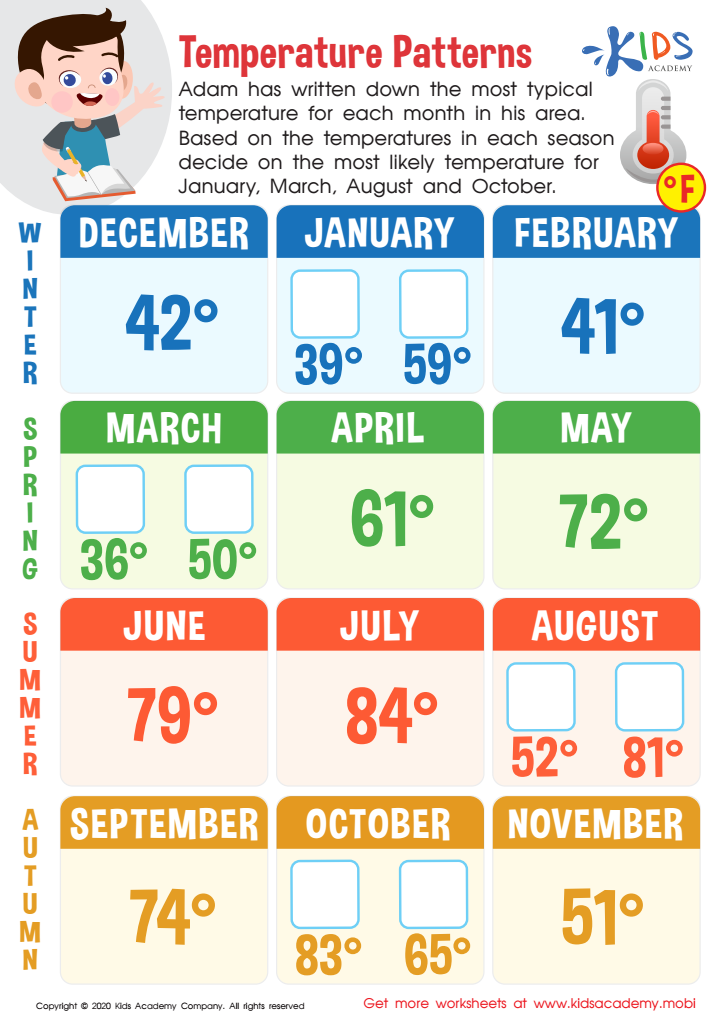
Temperature Patterns Worksheet
 Assign to My Students
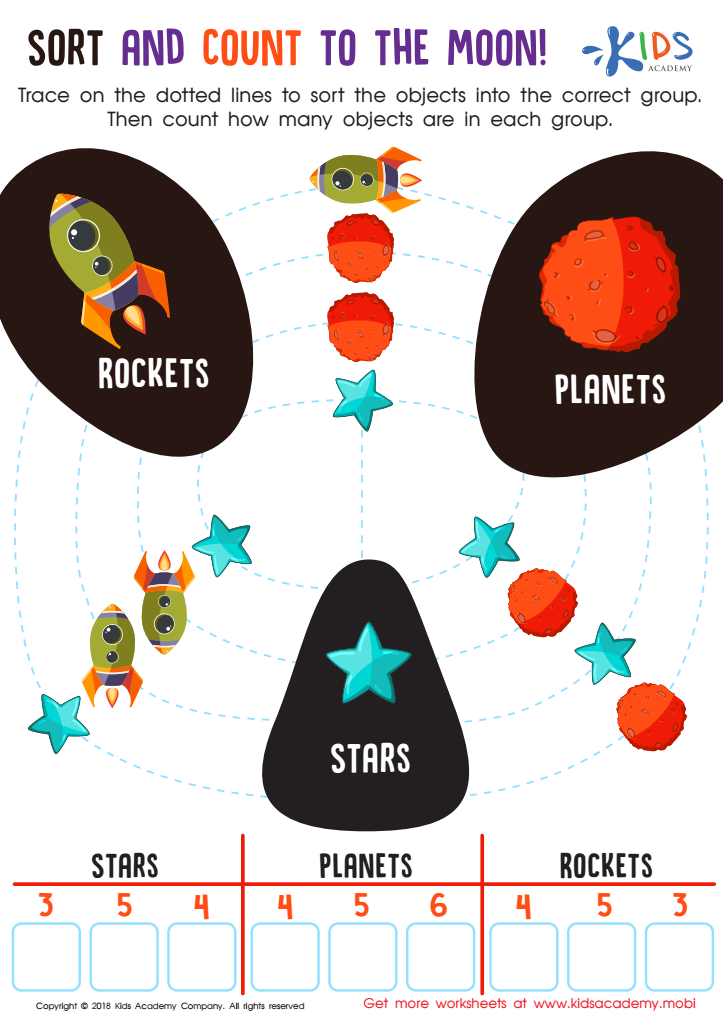
Sort and Count to the Moon Worksheet
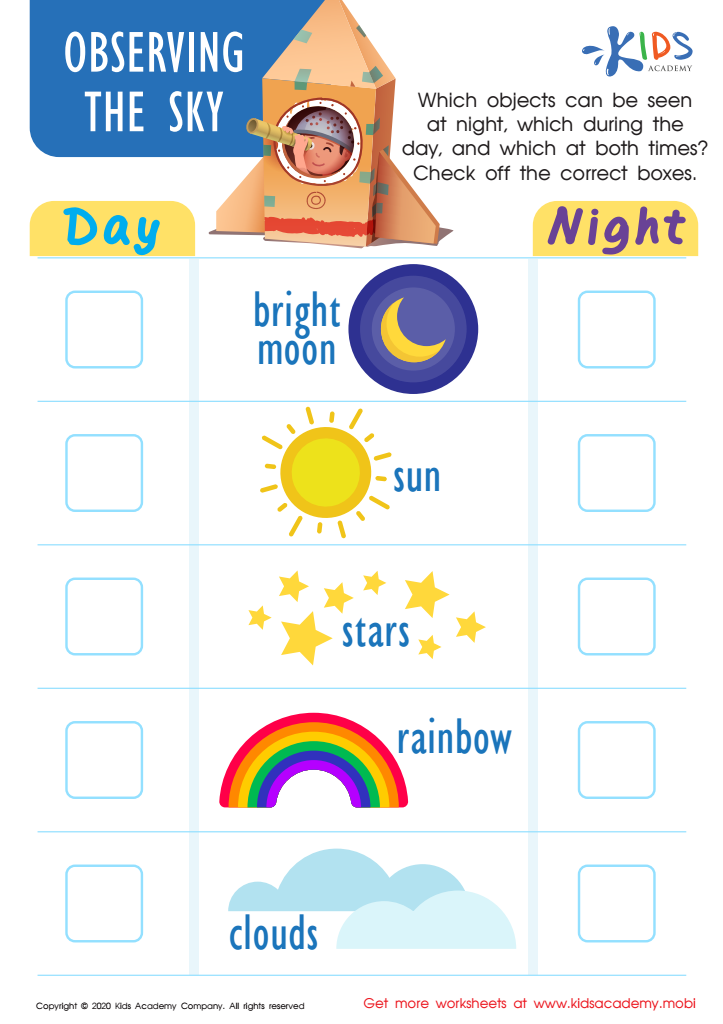
Observing the Sky Worksheet






Recognizing patterns is a fundamental skill that lays the groundwork for critical thinking and problem-solving in young children aged 3-7. For parents and teachers, understanding the importance of this skill in the context of "Normal Science" is crucial. Firstly, recognizing patterns helps children to make sense of the world around them. It enhances their ability to identify relationships, categorize objects, and predict outcomes, fostering analytical reasoning.
Additionally, engaging with patterns lays the foundation for future mathematical concepts, including addition and subtraction, as children begin to discern numbers and shapes in structured forms. The practice of identifying and creating patterns can also enhance literacy skills, as children become attuned to the rhythms and structures of stories.
Moreover, pattern recognition can boost a child's confidence and motivation, as they experience success in sorting, classifying, and predicting. By involving children in playful and interactive activities that promote pattern exploration—like using blocks, musical instruments, or art projects—parents and teachers help cultivate curiosity and creativity.
In essence, focusing on recognizing patterns is not just a cognitive exercise; it equips children with essential skills that will benefit them profoundly throughout their education and in everyday life. Thus, it's imperative for adults to foster an environment where young learners can explore and appreciate patterns.







