Cognitive Development Normal Community Worksheets for Ages 3-7
4 filtered results
-
From - To
Discover our engaging "Cognitive Development Normal Community Worksheets for Ages 3-7!" Designed to nurture young minds, these worksheets promote critical thinking, problem-solving, and decision-making skills in a fun and interactive way. Rooted in essential social studies concepts, children will explore their community, enhancing their understanding of the world around them. With colorful illustrations and age-appropriate activities, these worksheets capture children's attention while encouraging cognitive growth. Perfect for parents and educators alike, our resources foster creativity and curiosity in early learners. Download and print today to support your child’s cognitive development through exciting, community-focused learning experiences!

Let's Look! Assessment Worksheet
 Assign to My Students
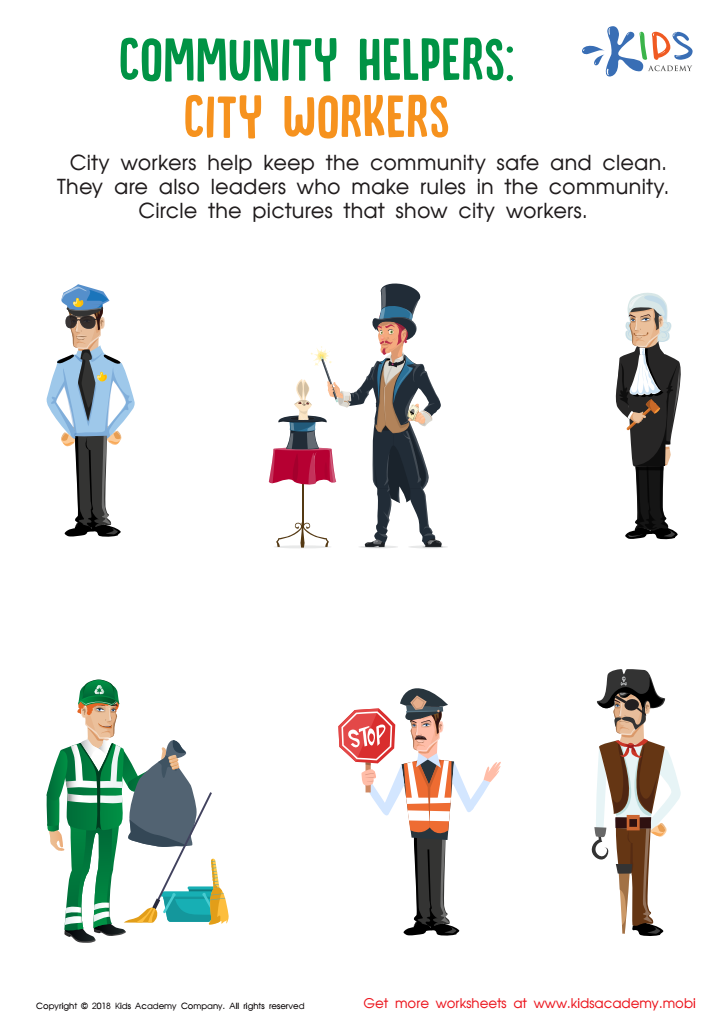
City Workers Community Helpers Worksheet

What Do you See at School? Worksheet








Cognitive development in early childhood, particularly from ages 3 to 7, is crucial because this period lays the foundation for a child's future learning capabilities and overall mental health. Parents and teachers should care about this developmental phase as it directly influences critical skills such as problem-solving, memory, and decision-making. During these formative years, children's brains are incredibly malleable and are adept at absorbing information and learning new concepts.
Engaging children in memory games, storytelling, and fostering curiosity through questions boosts cognitive skills. Parents and teachers create enriching environments that promote exploration and critical thinking by recognizing and nurturing this development. Additionally, understanding cognitive development helps adults identify any potential delays or issues early on. This proactive stance ensures that children receive the support they need to thrive.
Moreover, strong cognitive skills contribute to social-emotional development, critical for navigating relationships and building self-esteem. Teaching adults about typical cognitive milestones allows for a supportive community that encourages children's growth. Ultimately, investing in cognitive development benefits not just the individual child but society at large, as these early years shape a child's capacity for lifelong learning and adaptability in an ever-changing world.