Critical Thinking Normal Community Worksheets for Ages 3-7
5 filtered results
-
From - To
Unlock the power of young minds with our "Critical Thinking Normal Community Worksheets for Ages 3-7". Carefully crafted to enhance essential skills in children, these dynamic worksheets promote problem-solving, logical reasoning, and thoughtful analysis. Through engaging activities and scenarios, kids explore community concepts while developing crucial critical thinking abilities. Perfect for early learners, our worksheets foster intellectual growth and a deeper understanding of their surroundings. Ideal for both classroom and home use, these printable resources prepare children for future academic success in a fun and interactive way. Ignite curiosity and analytical thinking with our expertly designed worksheets today!
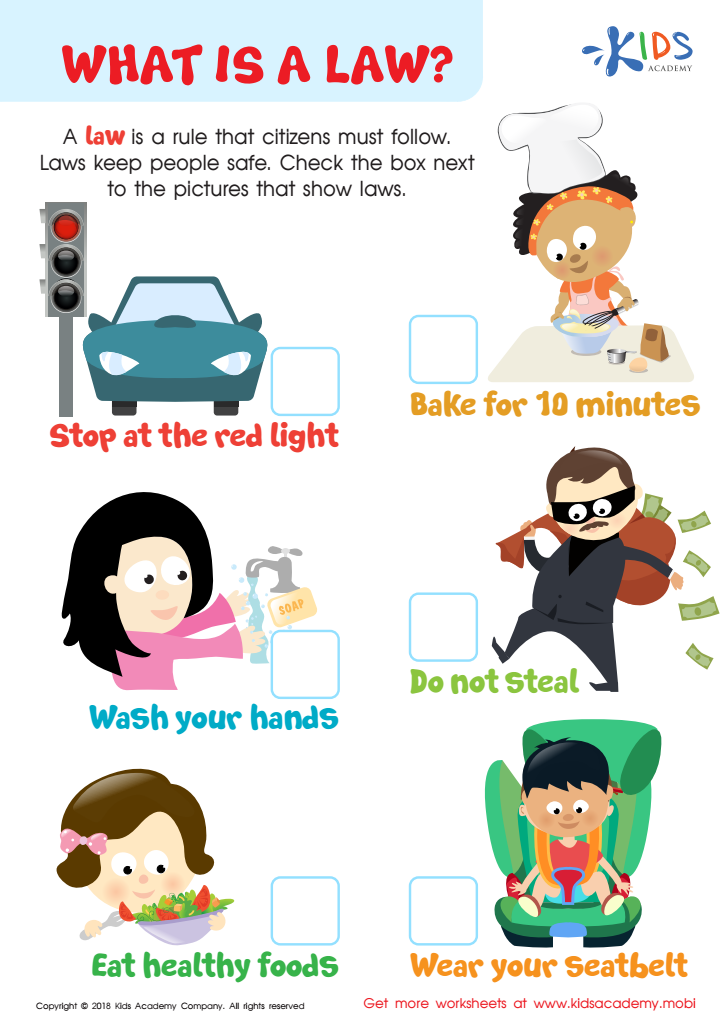
What is a Law? Worksheet
 Assign to My Students
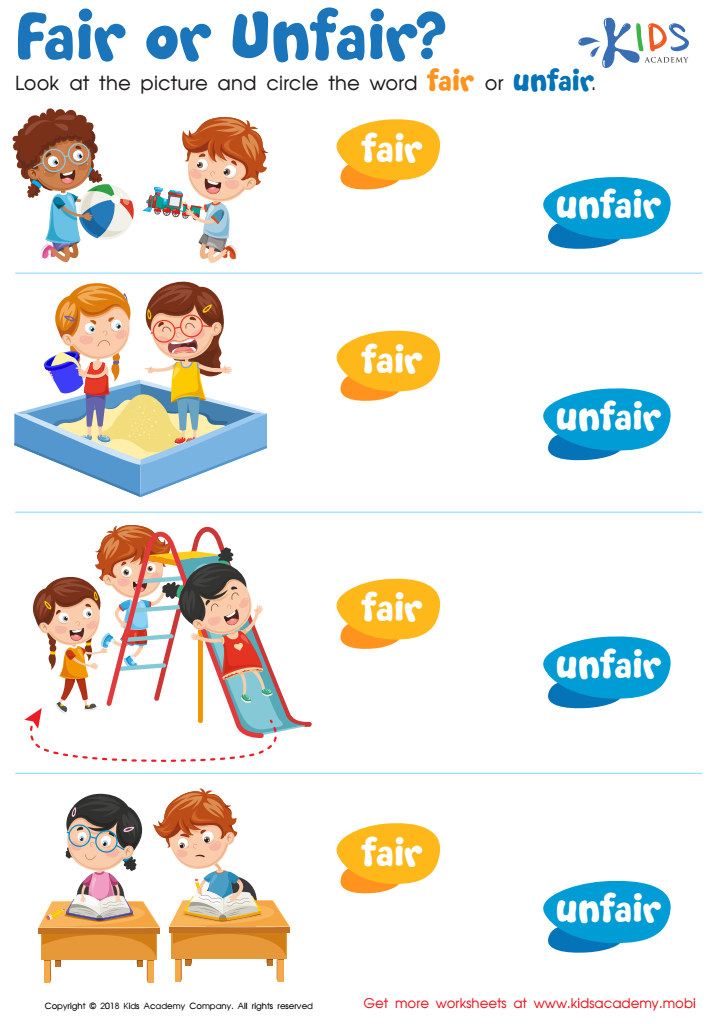
Fair or Unfair Worksheet
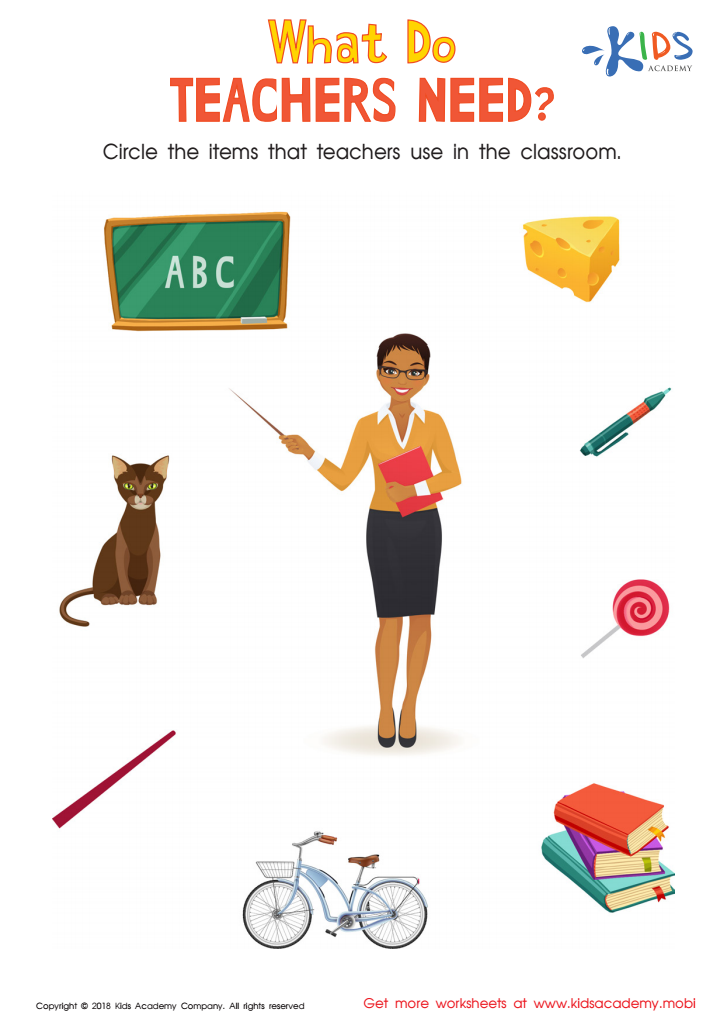
What Do Teachers Need Worksheet

Traditional Music Worksheet
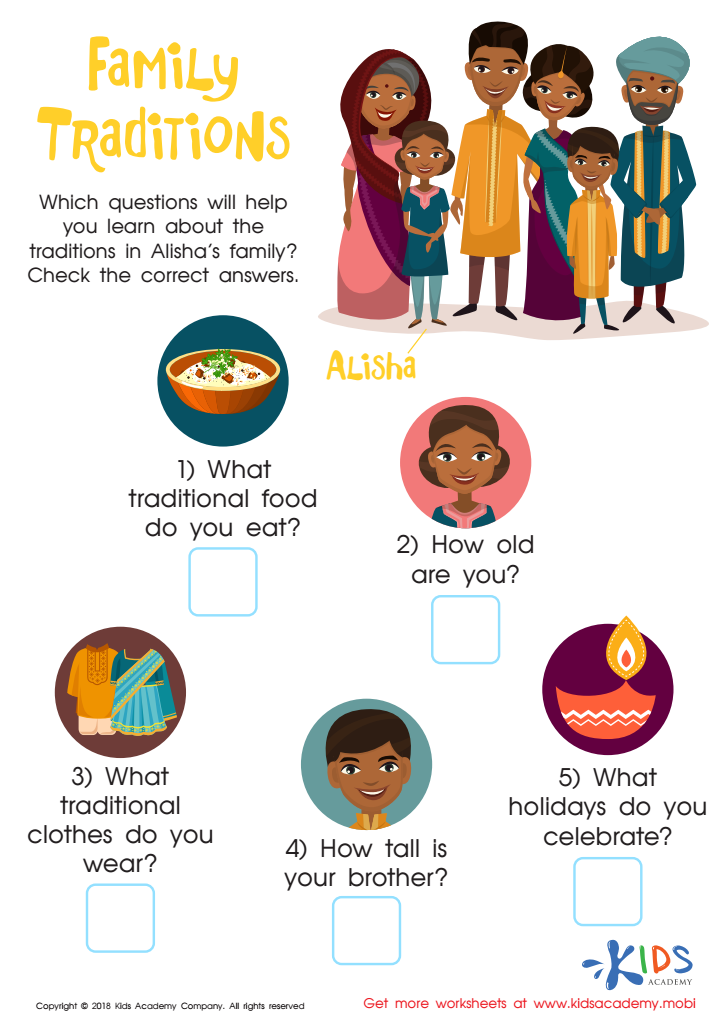
Family Traditions Worksheet








Critical thinking skills are essential for children even at the early age of 3-7 because they form the foundation for effective problem-solving and independent learning throughout life. Parents and teachers who emphasize the importance of fostering critical thinking at this formative stage help children develop the ability to analyze information, make connections, and evaluate outcomes rather than just passively accepting information.
Introducing critical thinking within a community context magnifies its value by providing diverse perspectives and unique problem-solving opportunities. In a supportive classroom or family setting, children can engage in conversations that challenge their way of thinking, helping them to see issues from different angles and understand the process of reasoning.
Furthermore, critical thinking encourages curiosity, which is fundamental in this age group, characterized by an instinctive desire to explore and learn about their environment. When children are encouraged to ask questions and think critically, they become active participants in their learning journeys, rather than passive recipients. This engagement promotes a deeper understanding of concepts and retention of information.
Given the interconnected world we live in, the ability to think critically also lays the groundwork for developing empathy and cooperation, as children learn to listen, evaluate different viewpoints, and work through disagreements constructively. By nurturing critical thinking from an early age, parents and teachers empower children with essential skills that will benefit them throughout their academic and personal lives.