Enhancing observation skills Normal Social Studies Worksheets for Ages 3-7
3 filtered results
Difficulty Level
Grade
Age
-
From - To
Subject
Activity
Standards
Enhance your child's observation skills with our interactive Social Studies worksheets designed for ages 3-7. Our engaging materials promote critical thinking and attention to detail while exploring engaging topics. Each worksheet encourages young learners to observe, analyze, and draw conclusions about their environment and the world around them. From identifying shapes to exploring cultural diversity, these activities foster curiosity and comprehension in a fun, playful way. Perfect for both home and classroom settings, our worksheets make learning enjoyable and effective. Download now and give your child the tools to become a keen observer and an informed citizen of tomorrow!
Favorites
With answer key
Interactive
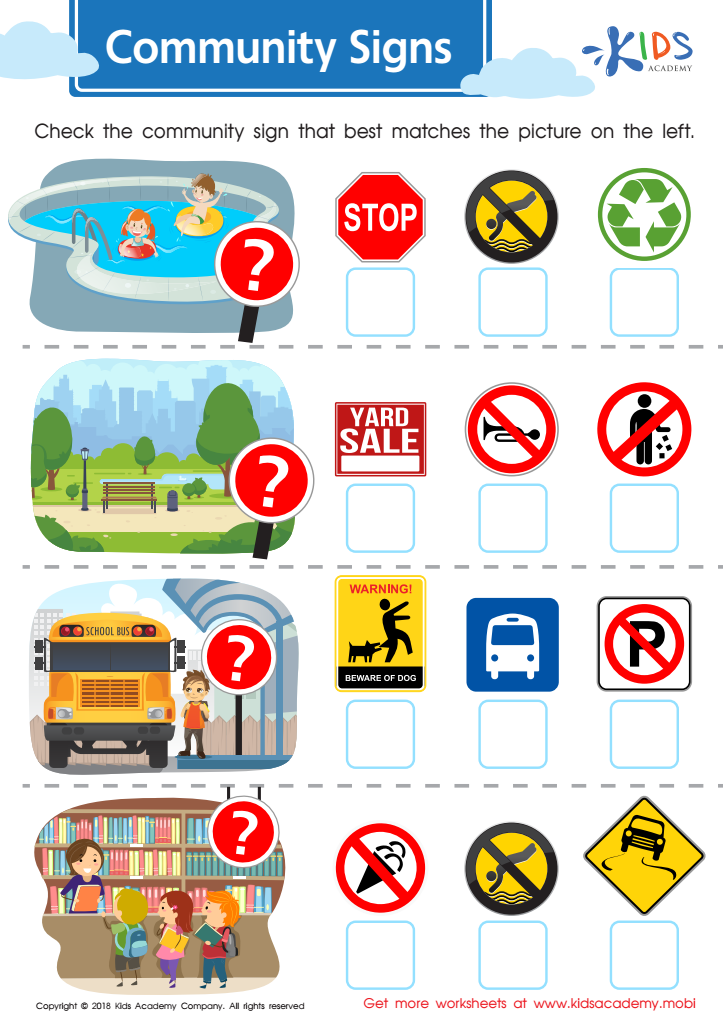
Community Signs Worksheet
To stay safe, our kids need to know community signs. Ask them to name signs at the pool, park, etc. Then, have them check the worksheet for the picture that matches the community signs.
 Assign to My Students
Community Signs Worksheet
Worksheet
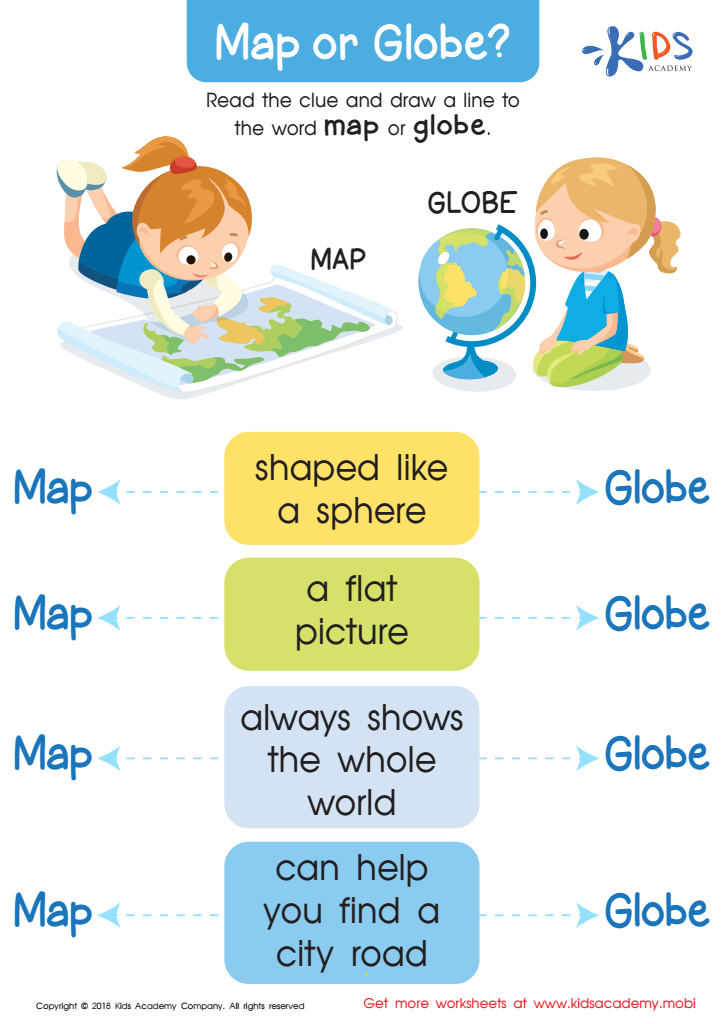
Map or Globe? Worksheet
Learning the difference between maps and globes can be difficult for young children. Get this free worksheet to help them! It offers word and picture clues for them to practice matching. They'll also get to use their fine motor skills as they trace the lines to find the answers.
Map or Globe? Worksheet
Worksheet
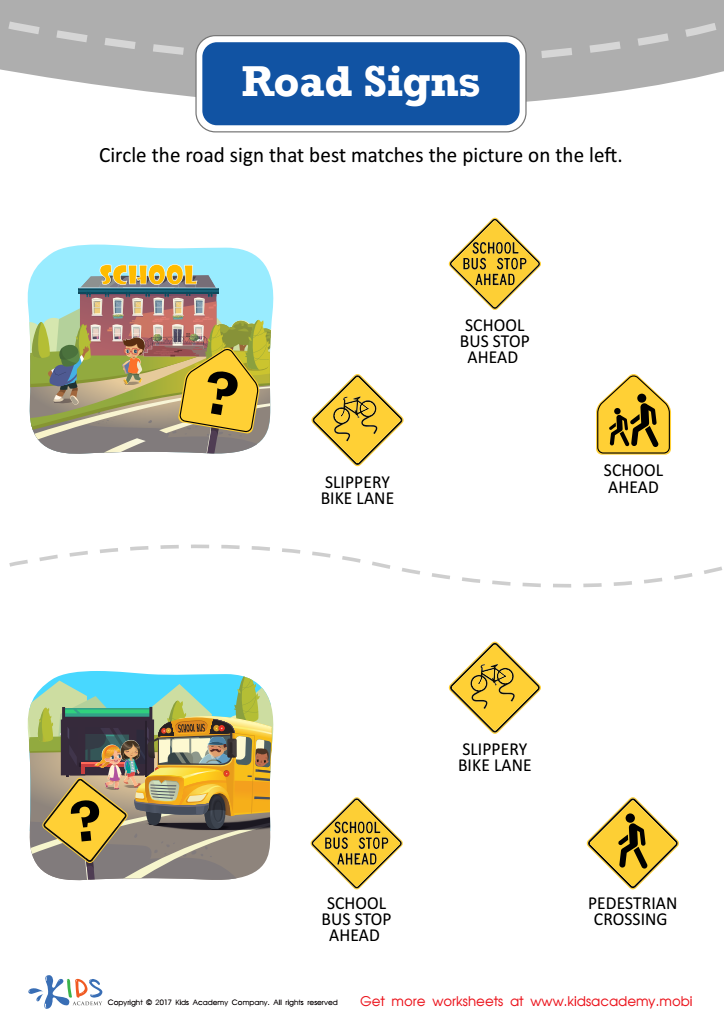
Road Signs (Part 1) Worksheet
Kids are exposed to danger near roads, so help them recognize traffic signs with this printable. It'll foster their reading comprehension and symbol recognition, while keeping them safe.
Road Signs (Part 1) Worksheet
Worksheet
Join Kids Academy for Free
Who is primarily going to use this learning content?








Enhancing observation skills in young children, particularly in the context of Social Studies for ages 3-7, is crucial for several reasons. First, strong observation skills foster critical thinking and inquiry. Young learners begin to notice details in their environment, such as different cultures, social interactions, and community roles. This awareness helps them ask questions and seek knowledge, laying the foundation for lifelong learning.
Additionally, observation skills facilitate empathy and understanding of diversity. When children observe and reflect on their peers and community members, they develop awareness of individual differences and experiences, promoting social cohesion and inclusivity. This not only nurtures respect for others but also empowers children to express their thoughts and feelings about the world around them.
Furthermore, enhanced observation skills contribute to improved communication capabilities. As children learn to articulate their observations, they become better speakers and listeners, essential social skills. Teachers and parents play a critical role in this development, guiding and encouraging children’s natural curiosity by providing timely feedback and structured activities.
Incorporating effective observation training within Social Studies creates engaged, informed, and compassionate young individuals, equipping them with the tools they need to thrive both academically and socially.