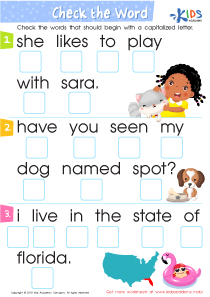
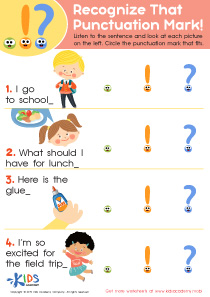
Capitalization rules Normal Writing Worksheets for Ages 3-7
3 filtered results
-
From - To
Discover our engaging "Capitalization Rules Normal Writing Worksheets" designed specifically for children aged 3-7! These worksheets focus on teaching the foundational rules of capitalization in a fun and interactive way. Kids will learn to capitalize the first letters of sentences, proper nouns, and more, while enhancing their writing skills. Our colorful and easy-to-understand activities make learning enjoyable, fostering a love for writing in young learners. Perfect for homeschooling, classroom use, or extra practice at home, these worksheets encourage early literacy development and help children build confidence in their writing abilities. Get started today and make learning to write an exciting adventure!
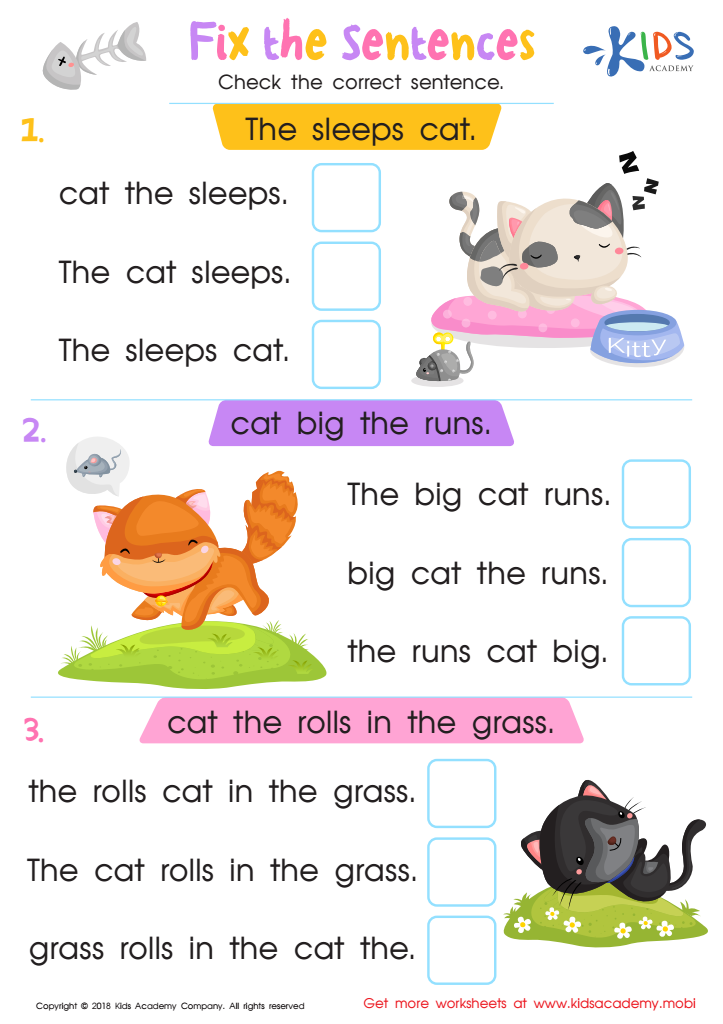
Fix the Sentences Worksheet
 Assign to My Students
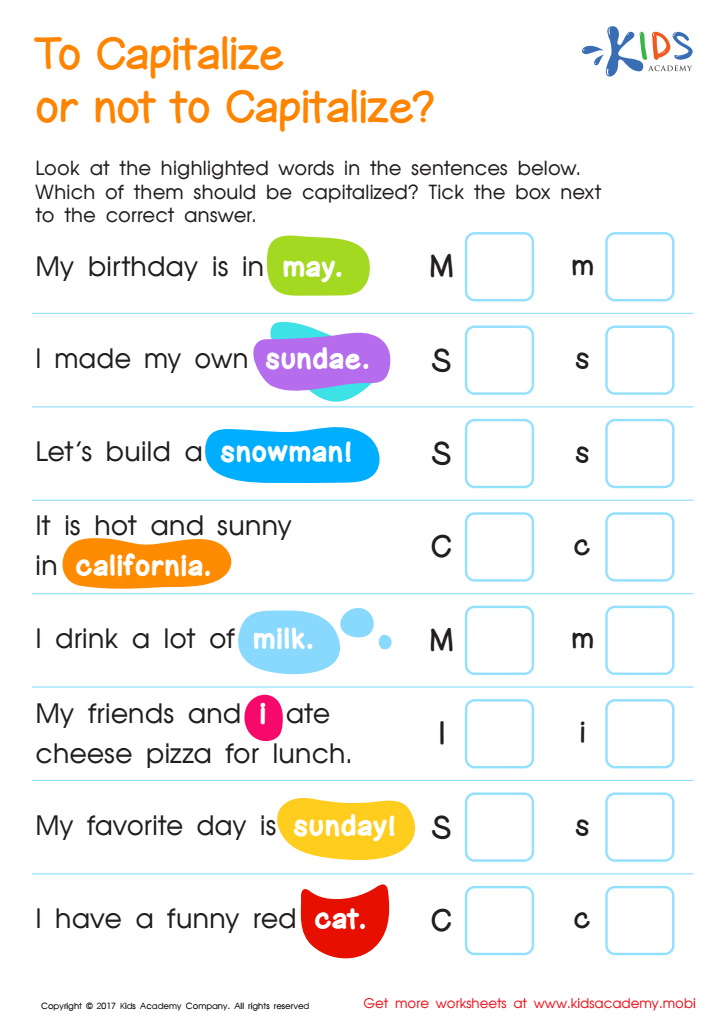
Capitalization: To Capitalize or Not? Printable
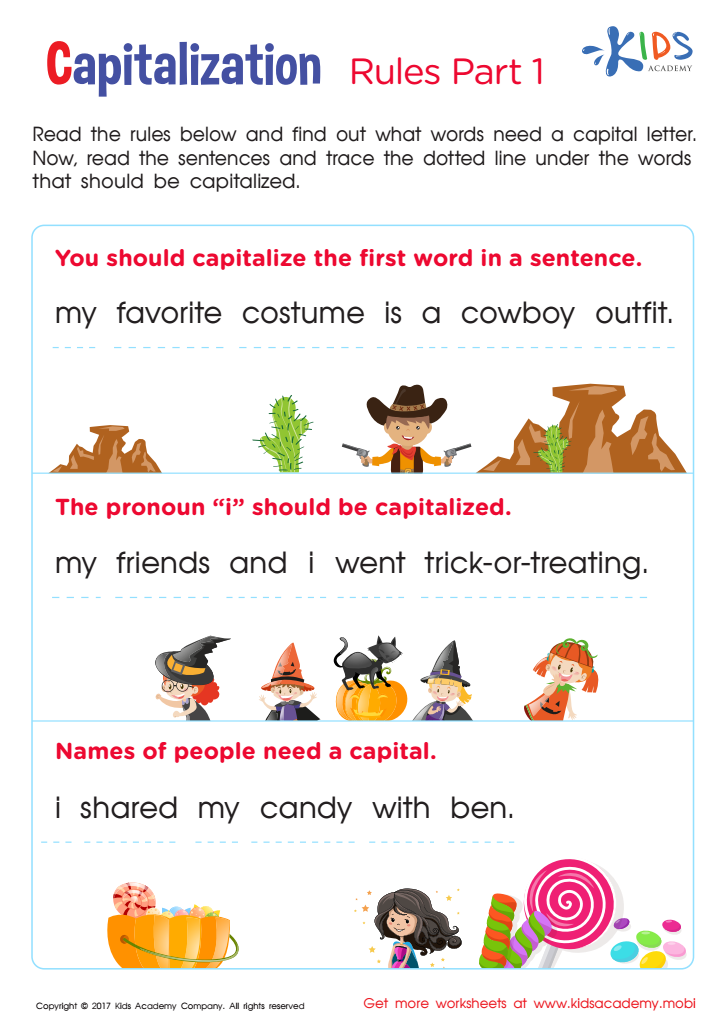
Capitalization Rules: Part 1 Worksheet








Capitalization is an essential aspect of writing that young children need to learn early on. For ages 3-7, mastering capitalization helps children develop their reading and writing skills, which are foundational for effective communication. When parents and teachers emphasize capitalization rules, such as starting sentences with a capital letter or using capitals for names, children begin to understand the structure and organization of written language.
Learning to capitalize correctly not only enhances clarity but also fosters confidence in young learners. When children see their writing presented well, they feel a sense of accomplishment, motivating them to write more. Additionally, capitalization contributes to comprehension; proper use helps readers identify the beginning of new thoughts or important information, aiding in understanding.
Moreover, reinforcing capitalization rules nurtures attention to detail, a valuable skill in all areas of learning. It teaches children that language has rules and structures, promoting their overall literacy development. In collaborative efforts, parents and teachers can create a consistent approach, making learning about capitalization both fun and engaging. By focusing on these rules, adults actively support children’s growth as confident readers and writers, setting the stage for future academic success.