Noun identification Normal Writing Worksheets for Ages 3-7
3 filtered results
-
From - To
Our "Noun Identification Normal Writing Worksheets" for ages 3-7 are meticulously designed to enhance early learners' understanding of nouns. These engaging, age-appropriate worksheets are perfect for preschool and early elementary students, providing a solid foundation in grammar. Activities range from identifying and coloring objects to matching nouns with corresponding pictures, making learning fun and interactive. These worksheets not only enhance writing skills but also foster critical thinking and language development. Ideal for both classroom and home use, our noun identification worksheets are a valuable resource in nurturing young minds to master the basics of grammar effortlessly.
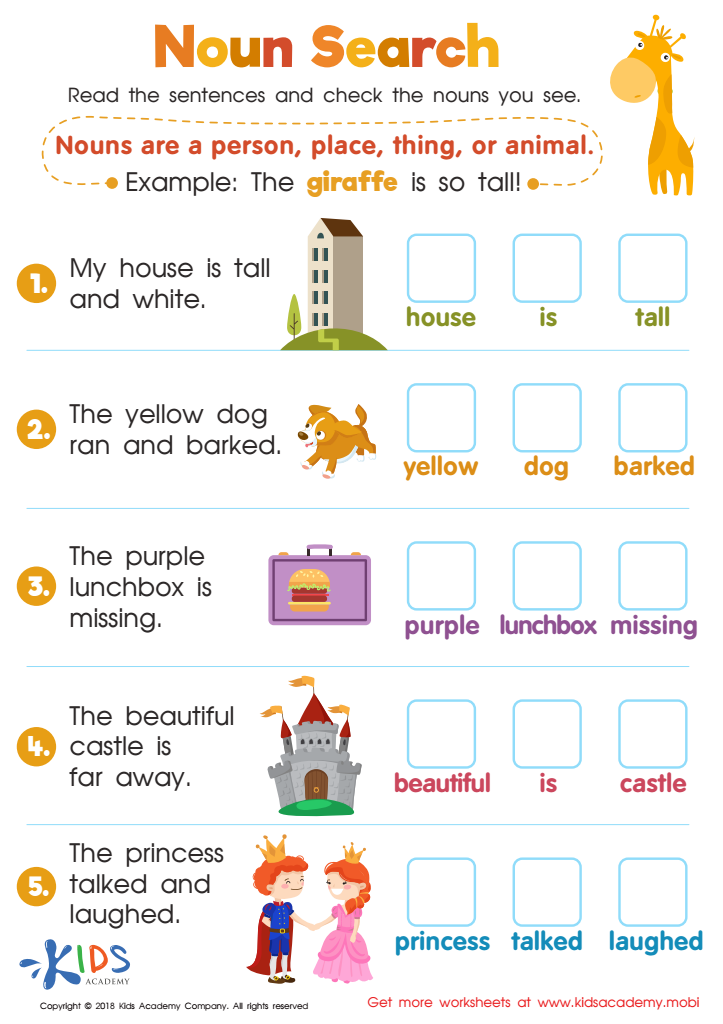
Noun Search Worksheet
 Assign to My Students
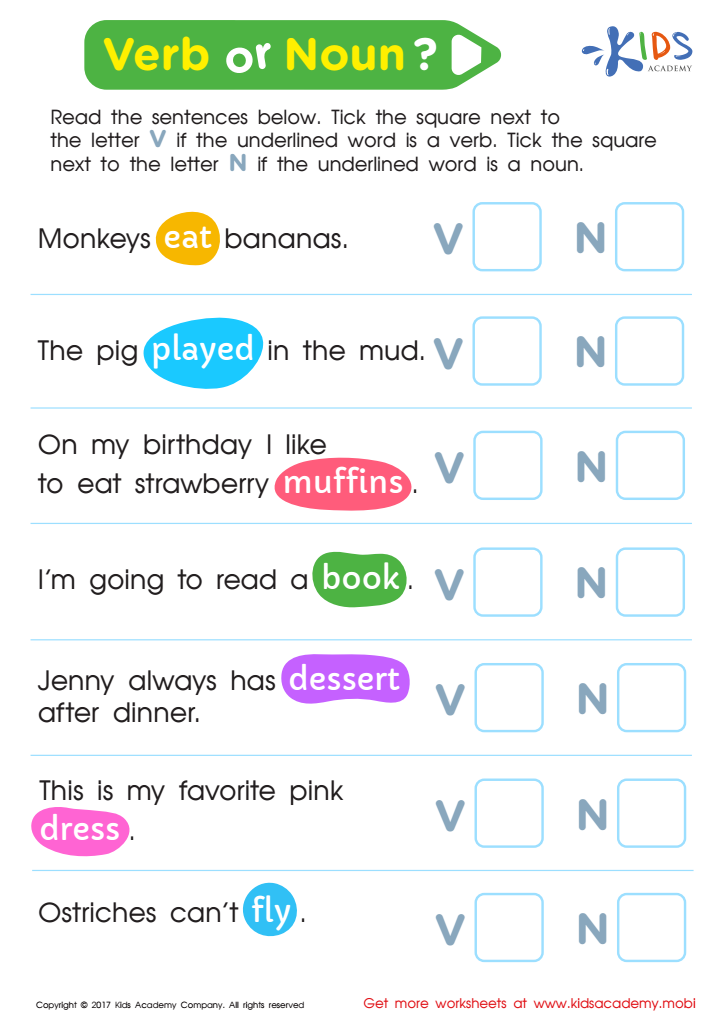
Verb or Noun Worksheet
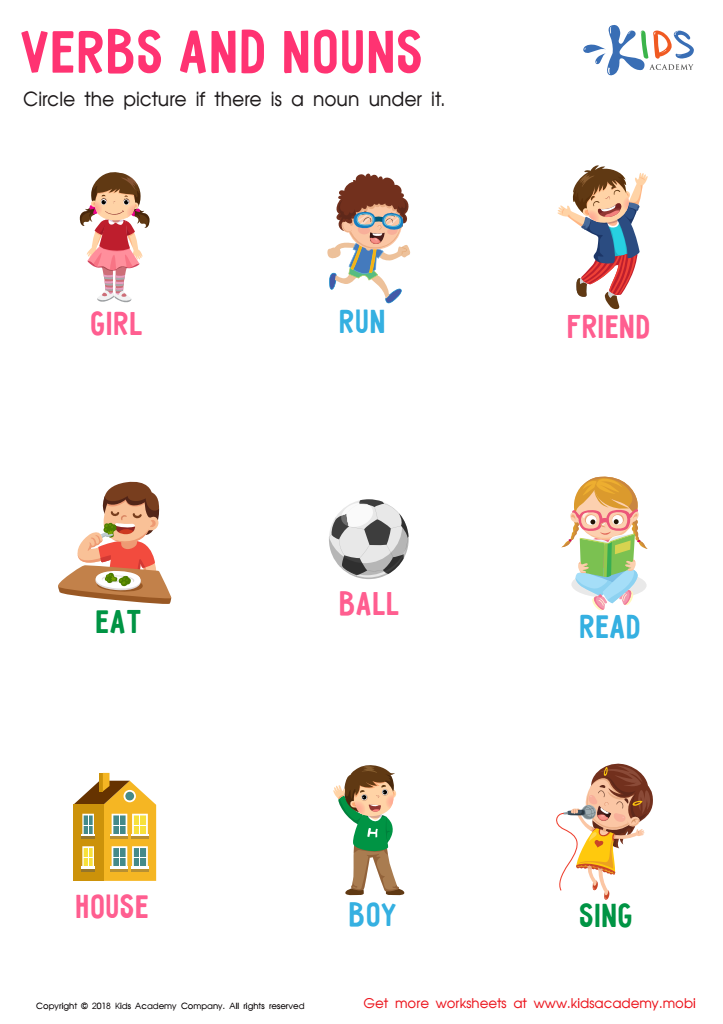
Verbs and Nouns Worksheet








Parents and teachers should care about noun identification for children ages 3-7 because it lays the essential foundation for language development. At this crucial stage, kids are rapidly expanding their vocabulary and understanding of sentence structure. By learning to identify nouns, children begin to grasp the basic building blocks of language, which helps them make sense of the world around them.
Nouns, which represent people, places, things, and ideas, are often the starting point for children's learning because they are tangible and relatable. When children can pinpoint nouns in sentences, they become better at constructing their own sentences, thus improving their communication skills. This early language competence also fosters better reading comprehension, as understanding how sentences are built makes it easier to decode and make sense of written text.
Furthermore, being able to identify nouns boosts a child's confidence in expressing themselves, whether verbally or in writing. As their ability to communicate effectively grows, so does their capacity to engage socially and academically. In turn, this can lead to a more positive attitude toward learning in general.
Hence, helping young children identify nouns isn't just a trivial exercise; it is a foundational skill that equips them with the tools for lifelong learning and effective communication.