Sight word recognition Normal Writing Worksheets for Ages 3-7
4 filtered results
Difficulty Level
Grade
Age
-
From - To
Subject
Activity
Standards
Boost your child's reading skills with our Sight Word Recognition Normal Writing Worksheets for ages 3-7! Specifically designed for young learners, these colorful and engaging worksheets help children master essential sight words. Through a variety of fun activities like tracing, writing, and identifying sight words, kids enhance their reading fluency and confidence. Ideal for early graders, these printables seamlessly blend learning with play, nurturing strong foundational literacy skills. Perfect for parents and educators looking to support their child's learning journey at home or in the classroom. Start the learning adventure today with Kids Academy's expertly crafted sight word worksheets!
Favorites
With answer key
Interactive
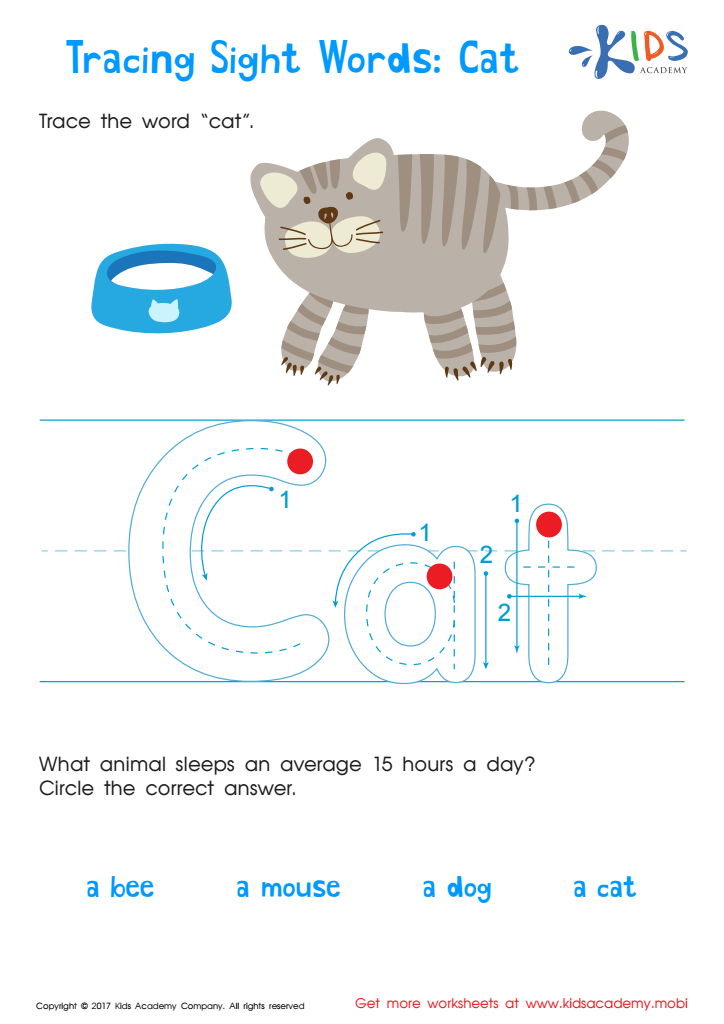
Cat Printable Sight Words Worksheet
Encourage your child's literacy with this fun sight words worksheet: cat PDF! It helps build a solid foundation for reading, featuring activities such as reading and tracing the word cat, and finding it amongst other sight words. With its cute cat, Kids Academy makes learning to read a delight!
 Assign to My Students
Cat Printable Sight Words Worksheet
Worksheet
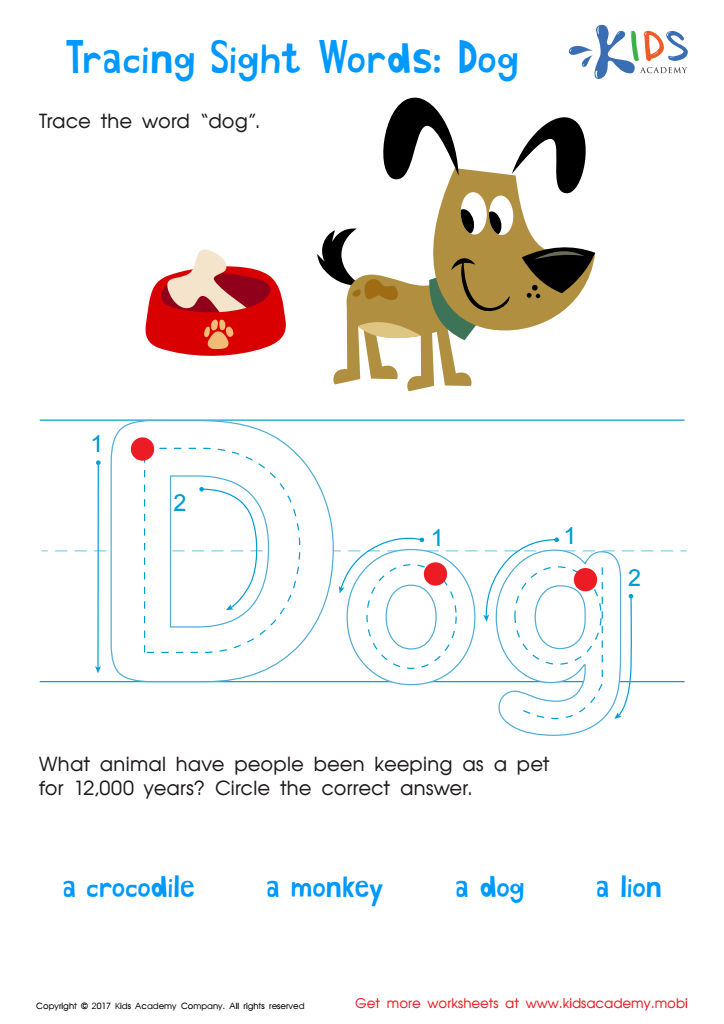
Dog Worksheet Sight Words Worksheet
Get your kids excited to read with our dog-themed sight words worksheet!
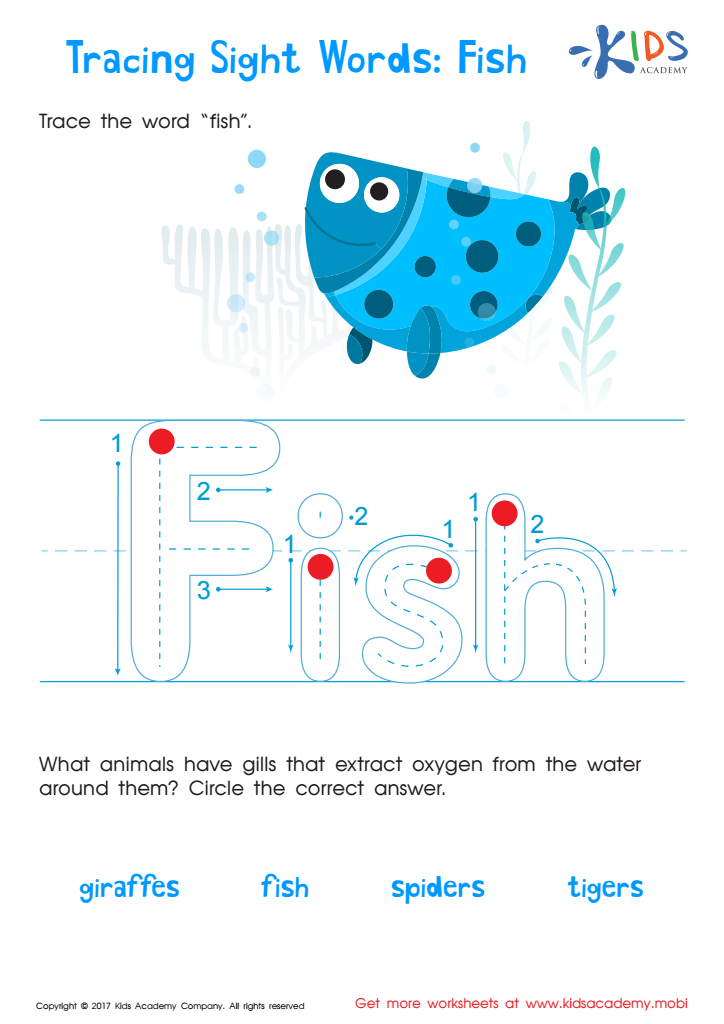
Excite your child to read with our sight words worksheet: dog edition! Featuring a lovable dog character to put a smile on any kid's face, this worksheet helps kids practice reading and writing the word "dog". Build a library of words they can read quickly and promote increasing literacy skills with early fluency! Get them ready for reading with our dog-themed sight words worksheet!
Dog Worksheet Sight Words Worksheet
Worksheet
Sight Word Sentences Worksheet
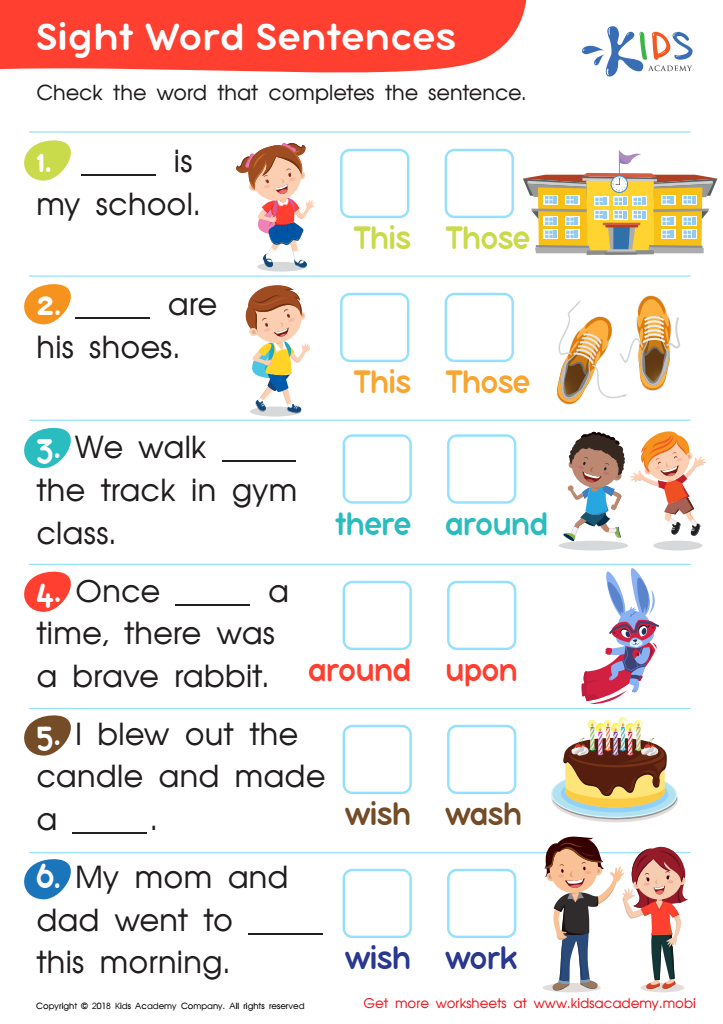
Improve reading fluency! Have students fill in the blank with the correct sight word to complete sentences. Sight words are often tricky to decode - they don't follow phonics or spelling rules. To read smoothly, young learners must know them by memory. Use this printable and help kids master their sight words!
Sight Word Sentences Worksheet
Worksheet
Join Kids Academy for Free
Who is primarily going to use this learning content?





Sight word recognition is crucial for young children, particularly between the ages of 3-7, as it lays the foundation for successful reading development. Sight words are frequently encountered, and many cannot be easily sounded out using phonics. When children recognize these words instantly, it increases their fluency and efficiency in reading.
For parents and teachers, focusing on sight word recognition means facilitating smoother, more comprehensible reading experiences. When children do not have to pause frequently to decode basic words, they can concentrate better on understanding the text and honing their comprehension skills. Recognizing sight words quickly also boosts their confidence, making reading a less daunting and more enjoyable activity.
In classrooms, efficient sight word recognition supports better listening comprehension and participation. Students can follow along with stories or instructions without getting stuck on common words, which enhances their overall learning experience. Meanwhile, at home, parents who encourage sight word practice contribute to their child's academic success and foster a lifelong love for reading.
Overall, prioritizing sight word recognition in early education addresses a fundamental aspect of literacy. It equips children with essential tools for future academic achievement and cultivates a positive association with the learning process, making early literacy experiences both fruitful and enjoyable.