Fine Motor Skills Normal Tracing Words Worksheets for Ages 3-7
6 filtered results
-
From - To
Boost your child's fine motor skills with our engaging tracing words worksheets designed for ages 3-7! These carefully crafted activities help young learners enhance their hand-eye coordination, control, and dexterity while developing essential writing abilities. Each worksheet features age-appropriate words that keep children motivated and excited about learning. Perfect for home or classroom use, these worksheets create an enjoyable and interactive way for kids to practice tracing, allowing them to explore letter formation and gain confidence in their writing skills. Foster a love for learning and watch your child's abilities flourish with our Fine Motor Skills Normal Tracing Words Worksheets!
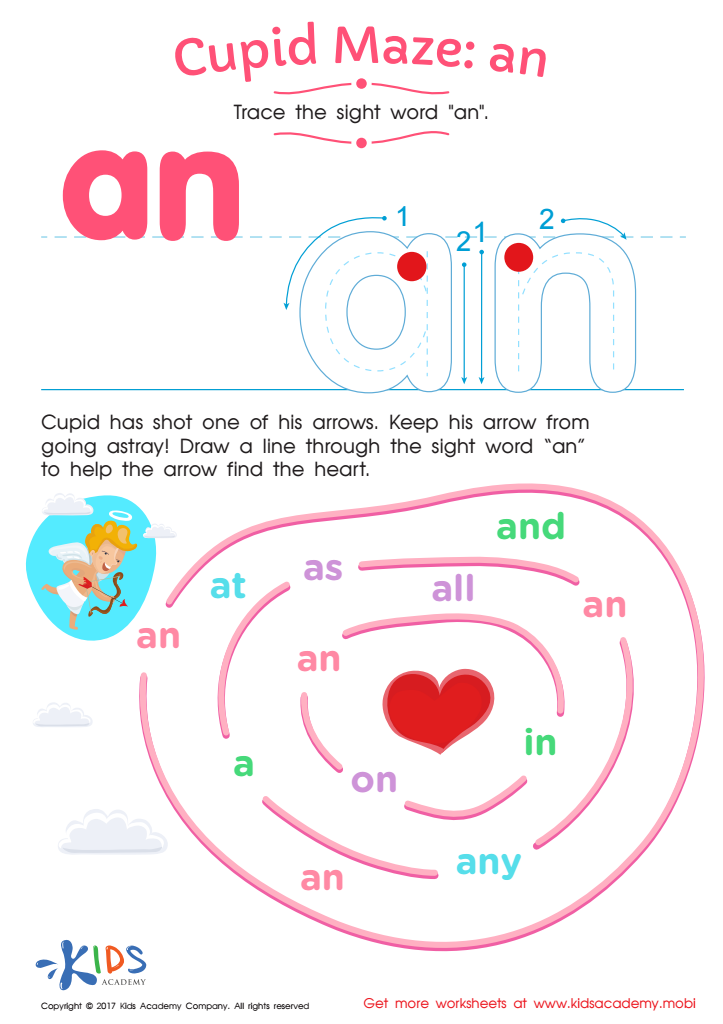
Cupid Maze: An Printable
 Assign to My Students

Snowman Tracing Winter Words Worksheet
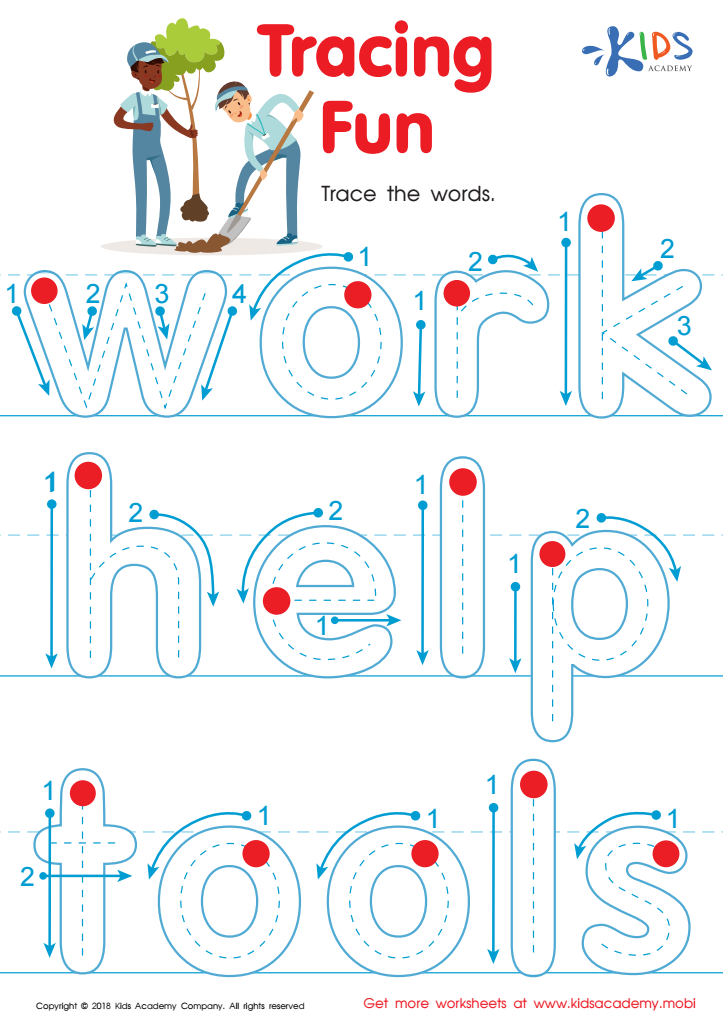
Tracing Fun Worksheet
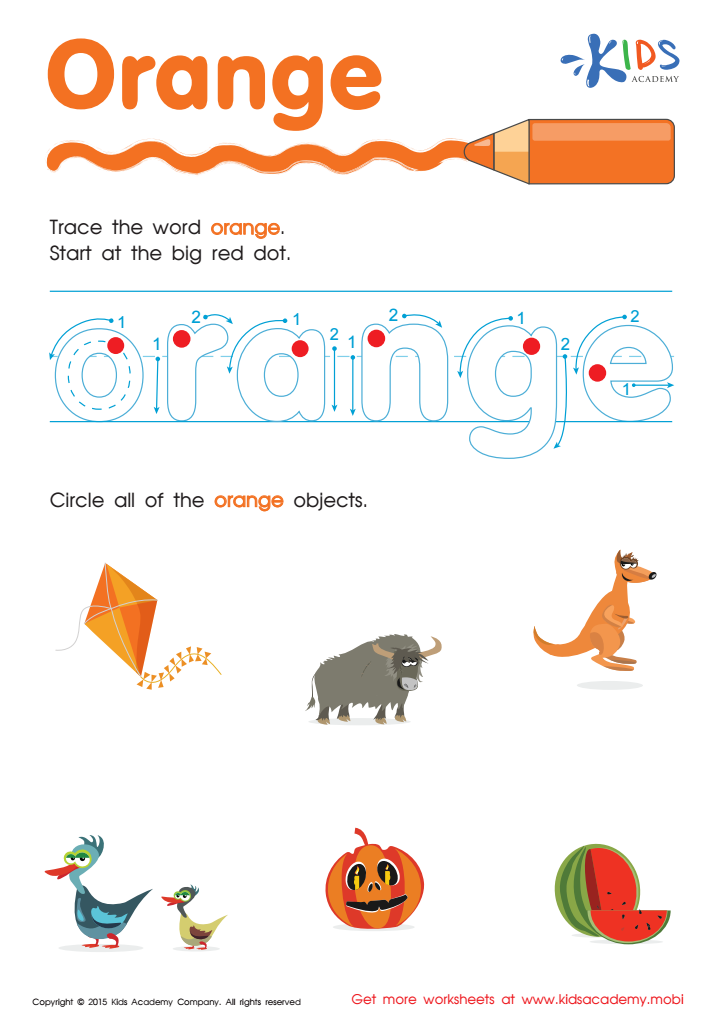
Orange Tracing Color Words Worksheet
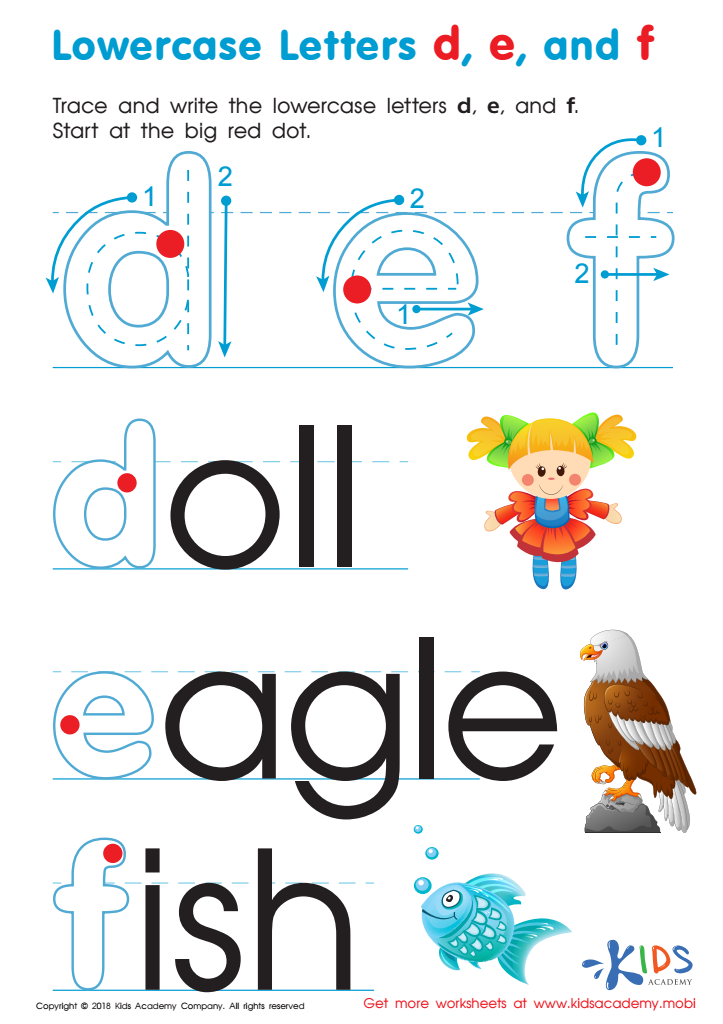
Lowercase Letters d e f Worksheet

White Tracing Color Words Worksheet








Fine motor skills are essential developmental milestones for children aged 3-7, playing a significant role in their overall cognitive and physical growth. Normal tracing of words helps children enhance their fine motor skills by promoting hand-eye coordination, dexterity, and control, which are crucial for various everyday tasks.
When children engage in tracing activities, they develop the ability to manipulate writing tools, laying the groundwork for writing and drawing. This process also strengthens the small muscles in their hands and fingers, which is necessary for later academic tasks, such as writing, cutting, and participating in arts and crafts.
Additionally, tracing words provides a fun and engaging way for children to familiarize themselves with letters and vocabulary, contributing to their literacy development. It bridges the gap between recognizing letter shapes and acquiring the muscle memory required for independent writing.
Furthermore, teachers and parents who focus on this aspect of fine motor development create a strong foundation for future learning, enhancing a child's confidence and willingness to try new activities. As children develop these skills in a nurturing environment, they are more likely to succeed both academically and socially. Supporting fine motor skills buildup through normal tracing experiences is essential for preparing children for their educational journey.