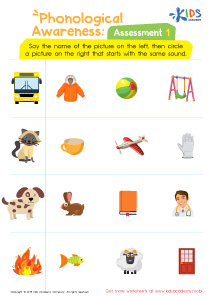
Normal Ending Sounds Worksheets for Ages 3-8
5 filtered results
-
From - To
Discover our engaging Normal Ending Sounds Worksheets designed for children ages 3-8! Developed to enhance phonemic awareness, these worksheets help young learners master the subtle nuances of ending sounds in words. Each worksheet is packed with colorful illustrations and fun activities to capture your child’s interest while reinforcing critical language skills. Perfect for classroom use or at-home practice, our expertly crafted sheets make learning enjoyable and effective. Boost your child's reading proficiency, vocabulary, and pronunciation with our innovative Ending Sounds Worksheets today! Embrace the joy of learning with Kids Academy.
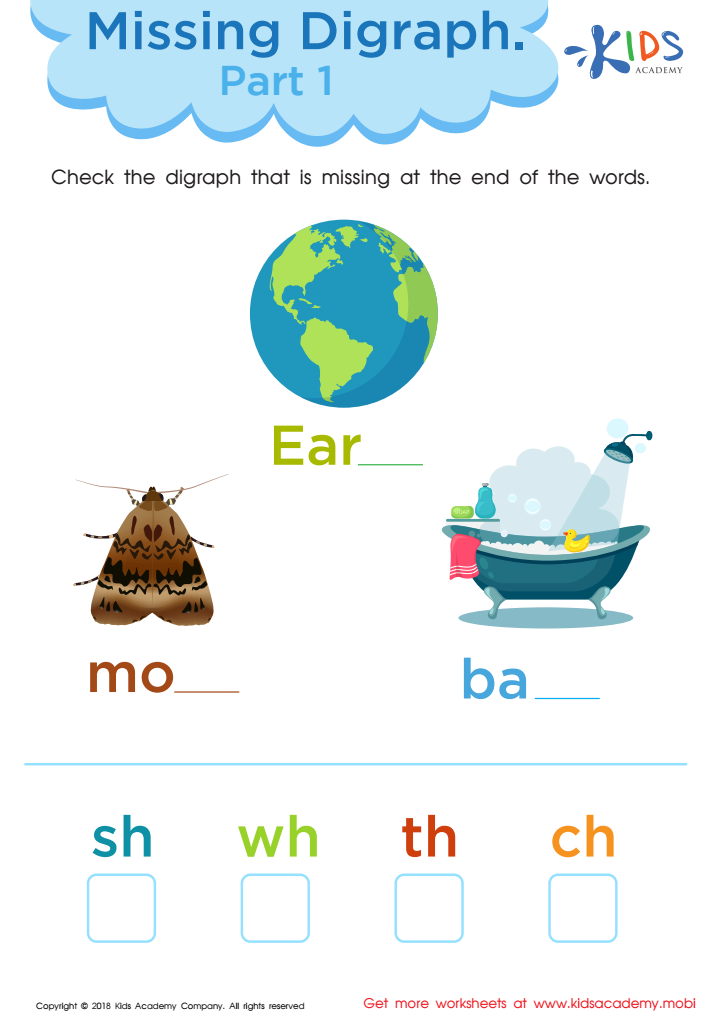
Missing Digraph: Part 1 Worksheet
 Assign to My Students
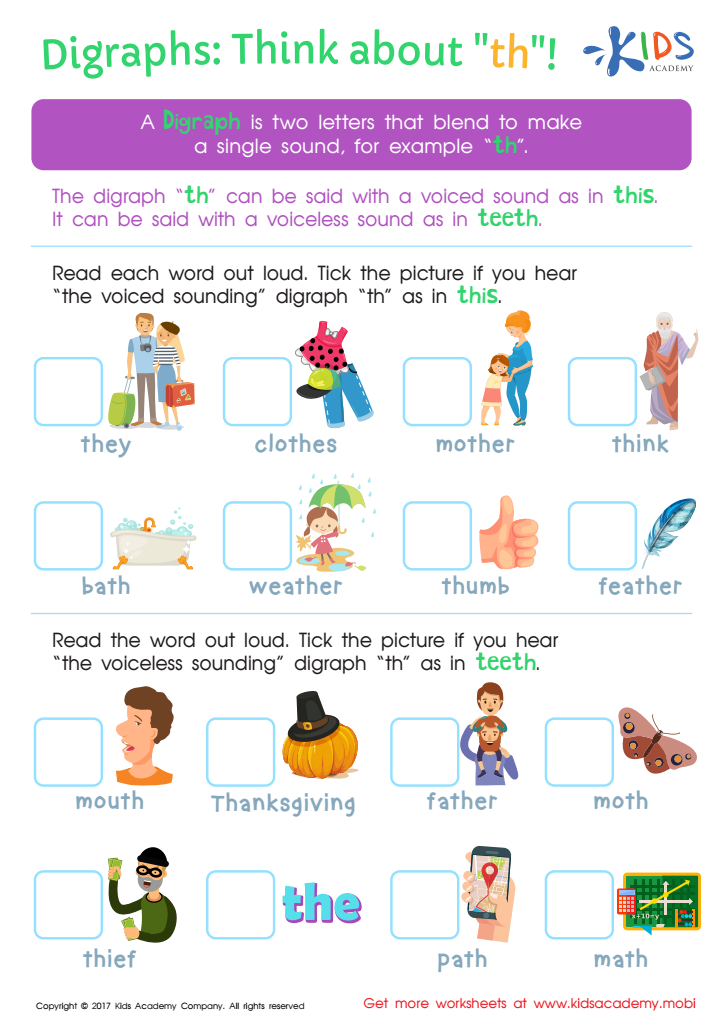
Digraphs: Think About "th" Worksheet
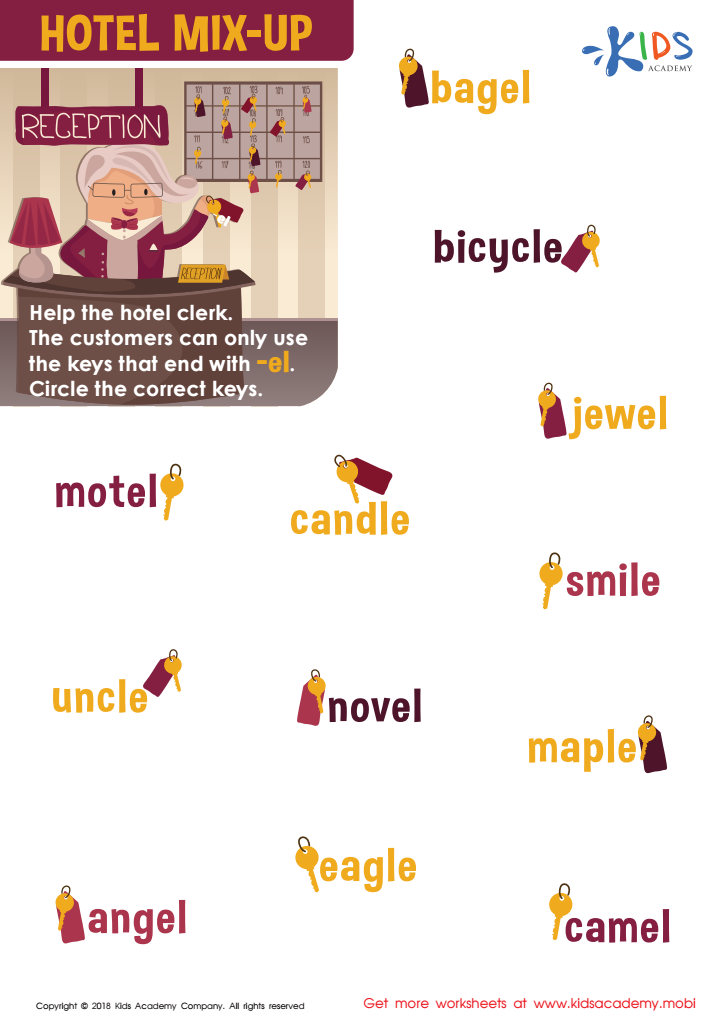
Hotel Mix-up Worksheet
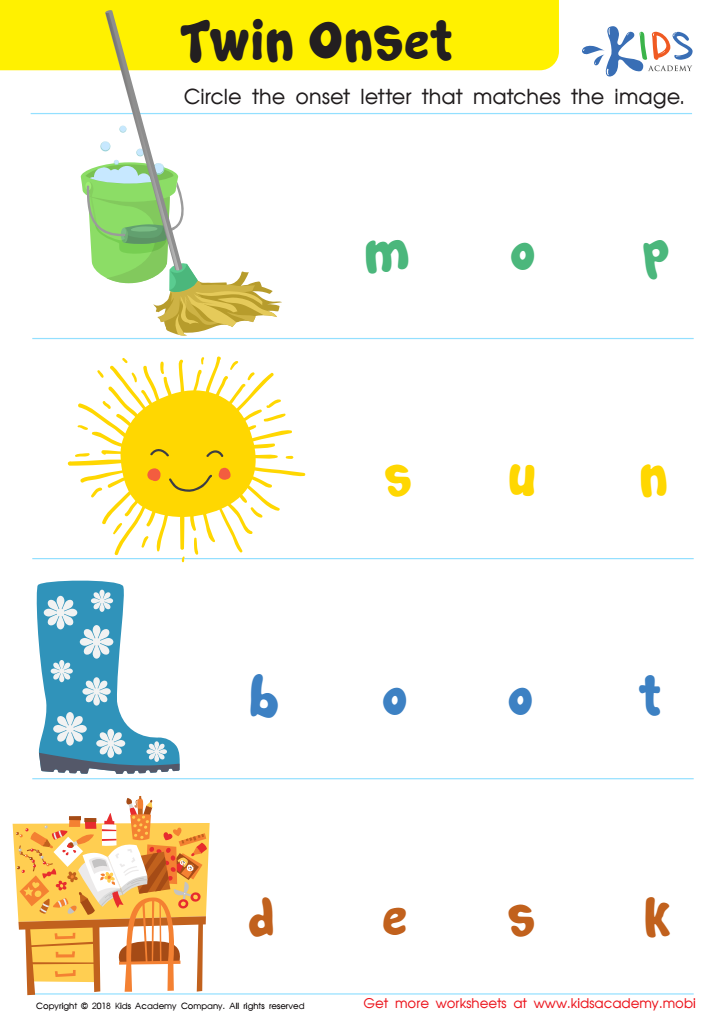
Twin Onset Worksheet
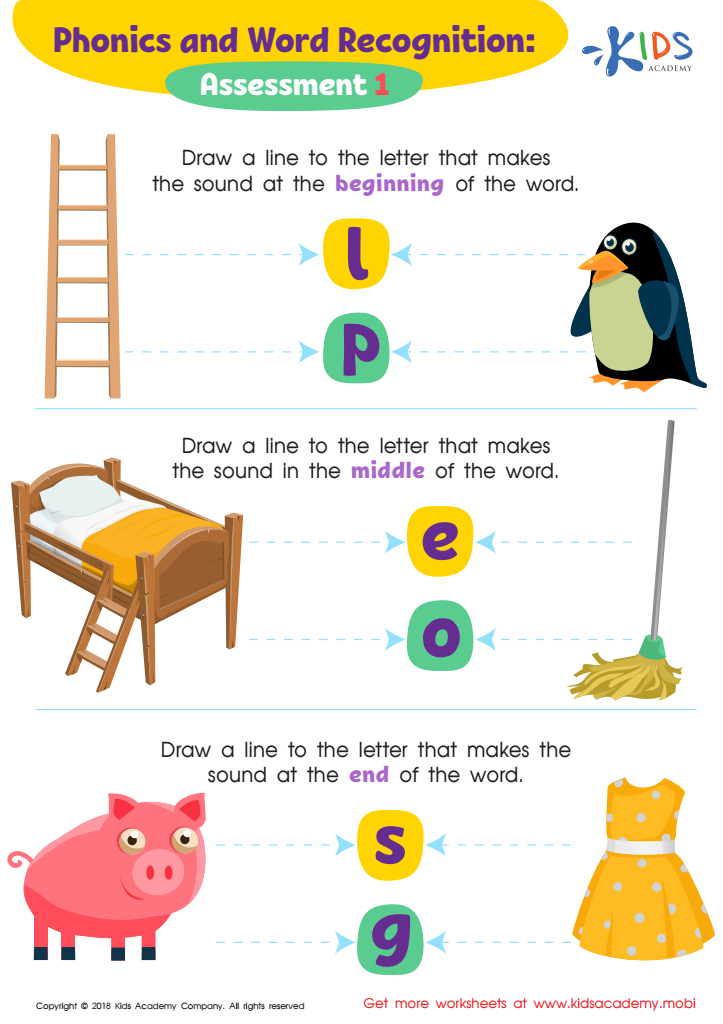
Phonics and Word Recognition: Assessment 1 ELA Worksheet






Understanding normal ending sounds is crucial for children ages 3-8 as it lays the foundation for phonemic awareness, a key skill in early literacy development. Phonemic awareness involves recognizing and manipulating the smallest units of sound in spoken words, which is essential for decoding words during reading and writing.
First, normal ending sounds help children distinguish between similar words, improving their vocabulary and comprehension. This awareness supports better pronunciation and enhances their ability to communicate more effectively.
Second, proficiency in ending sounds contributes to spelling accuracy. When children understand that words have specific sounds at the end, they can apply this knowledge to spell words correctly and recognize patterns within language, which aids in overall reading fluency.
Lastly, strong phonemic awareness correlates with later success in reading and writing, which are critical skills for all areas of learning. Children who can identify, isolate, and manipulate sounds, including ending sounds, feel more confident and motivated. This confidence can lead to a positive attitude toward school and lifelong learning.
Thus, by paying attention to normal ending sounds, parents and teachers equip children with the essential tools needed for academic success and effective communication, ensuring they become competent, enthusiastic readers and writers.