Filters

7 filtered results

Clear all filters
Favorites
With answer key
Interactive

7 filtered results

Difficulty Level

Grade


Discover our engaging Cognitive Development Normal Alphabet Worksheets, designed specifically for children aged 3-8. These worksheets promote essential cognitive skills while providing a fun and interactive way to learn the alphabet. With colorful illustrations and various activities, kids enhance their memory, problem-solving, and critical thinking abilities as they recognize letters and their sounds. Our resources cater to different learning styles, ensuring that every child can grow and thrive in their literacy journey. Perfect for parents and educators alike, these worksheets make learning enjoyable and effective, laying a solid foundation for future academic success. Explore our collection today to support your child’s development!

Check out this FREE Trial Lesson on Alphabet for age 3-8!

Demonstrate Understanding of Frequently Occurring Verbs and Adjectives by Relating Them to Their Opposites

Favorites
With answer key
Interactive
  • 3-8
  • Cognitive Development
  • Alphabet
  • Normal
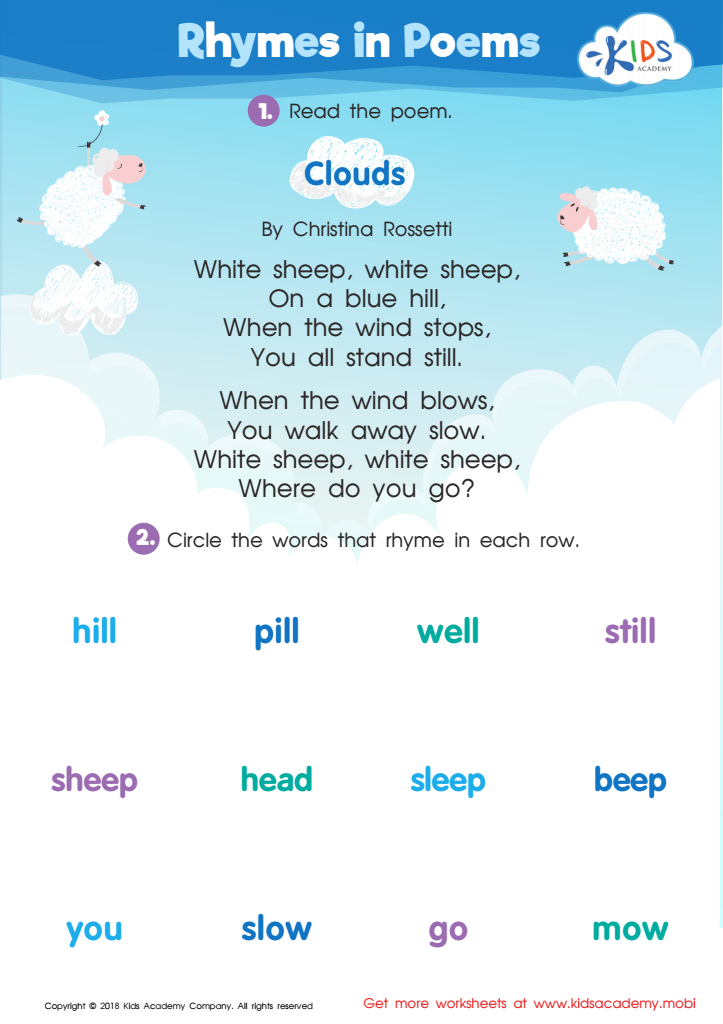
Rhymes in Poems Worksheet

Rhymes in Poems Worksheet

Poems are lovely works of literature; some with rhymes, and some without. This poem for kids is full of rhymes and tells the tale of a sheep. Read it aloud to your kids, then help them circle the rhyming words.
Rhymes in Poems Worksheet
Worksheet
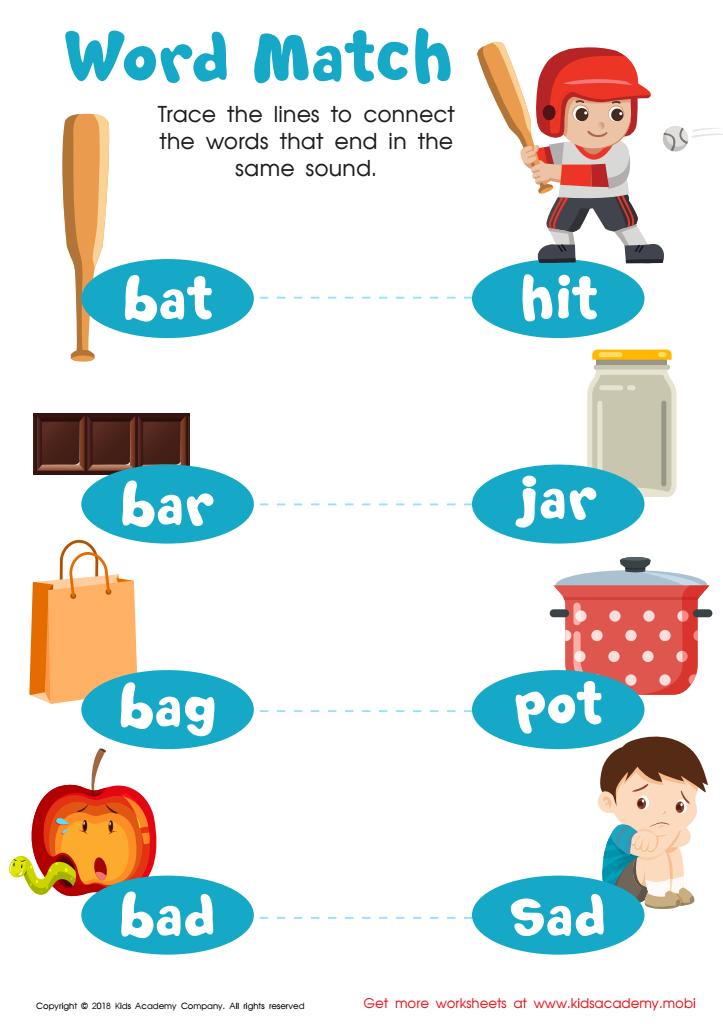
Word Match Reading Worksheet

Word Match Reading Worksheet

This printout helps children learn to read fluently by connecting words with the same sound. Colorful pictures aid understanding and context for kindergarten-level students. Tracing lines, they learn to identify the sounds made by letters of the alphabet and deepen their knowledge of phonics.
Word Match Reading Worksheet
Worksheet
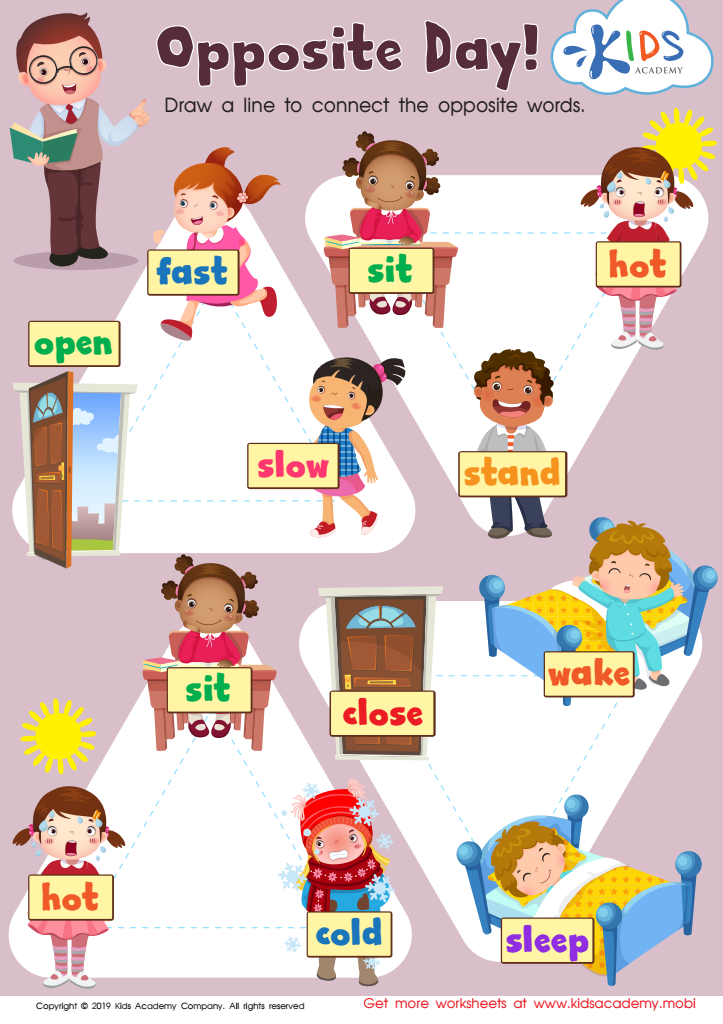
Opposite Day Worksheet

Opposite Day Worksheet

Early learners need to know about opposites to improve their higher-order thinking and critical thinking. This fun worksheet helps them understand the concept, practice opposite words, read high-frequency words and work on fine motor skills. Download the traceable PDF to get started.
Opposite Day Worksheet
Worksheet
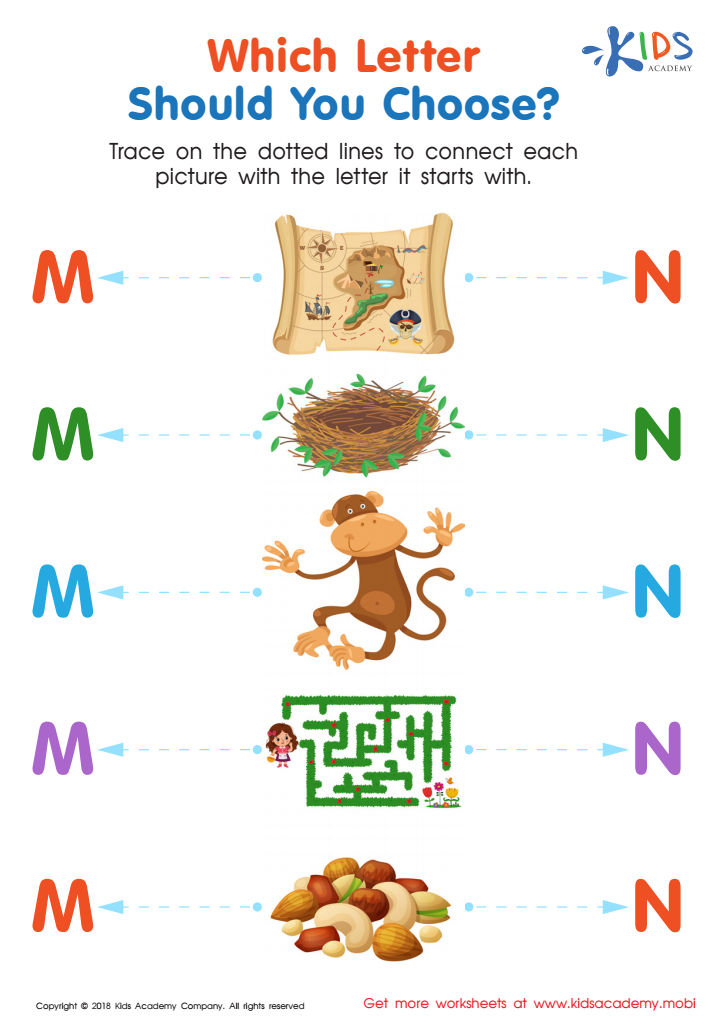
Which Letter Should you Choose? Worksheet

Which Letter Should you Choose? Worksheet

Trace the dotted lines to connect images with their first letter: "n" or "m." Challenge your child to name each picture, then identify the first letter and trace to the right letter! Five images in total.
Which Letter Should you Choose? Worksheet
Worksheet
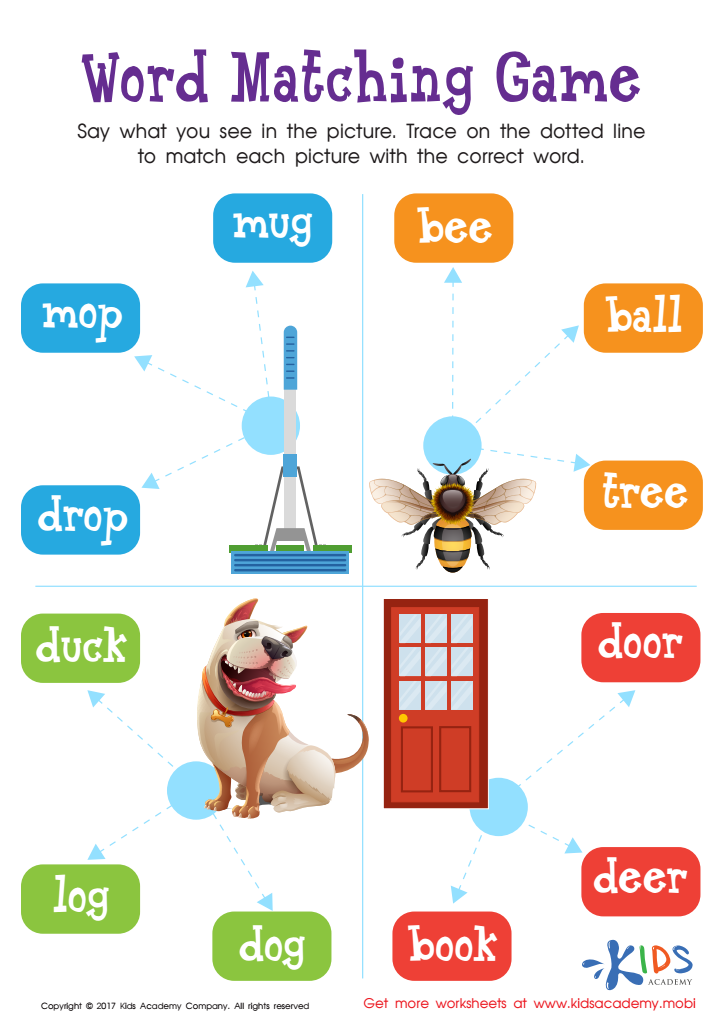
Word Matching Game Worksheet

Word Matching Game Worksheet

Help your early reader develop prereading skills with this fun matching worksheet! Visual cues help them learn sight words, decode words in word families, and identify phonetic patterns. They'll practice discerning sounds past initial consonants while saying the name of the picture and finding the matching word - and reading at the same time!
Word Matching Game Worksheet
Worksheet
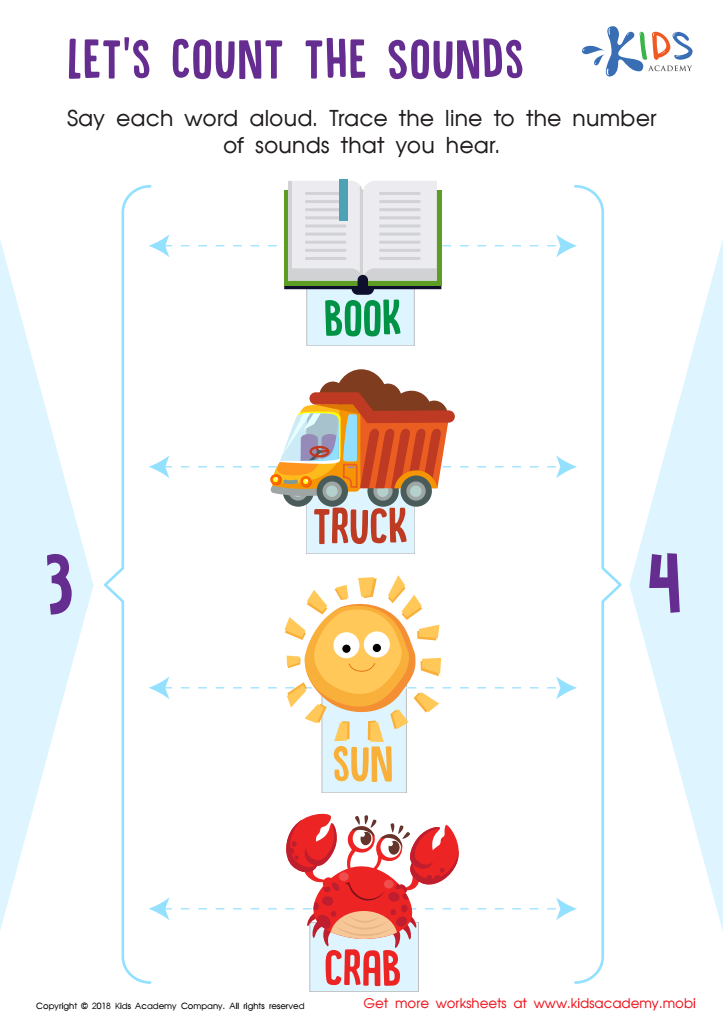
Let's Count the Sounds Worksheet

Let's Count the Sounds Worksheet

This bright and cheery traceable worksheet encourages children to practice auditory discrimination and phonological awareness. Using picture clues, they read each word and trace the line that represents the number of sounds heard. This builds decoding skills and helps them become successful readers.
Let's Count the Sounds Worksheet
Worksheet
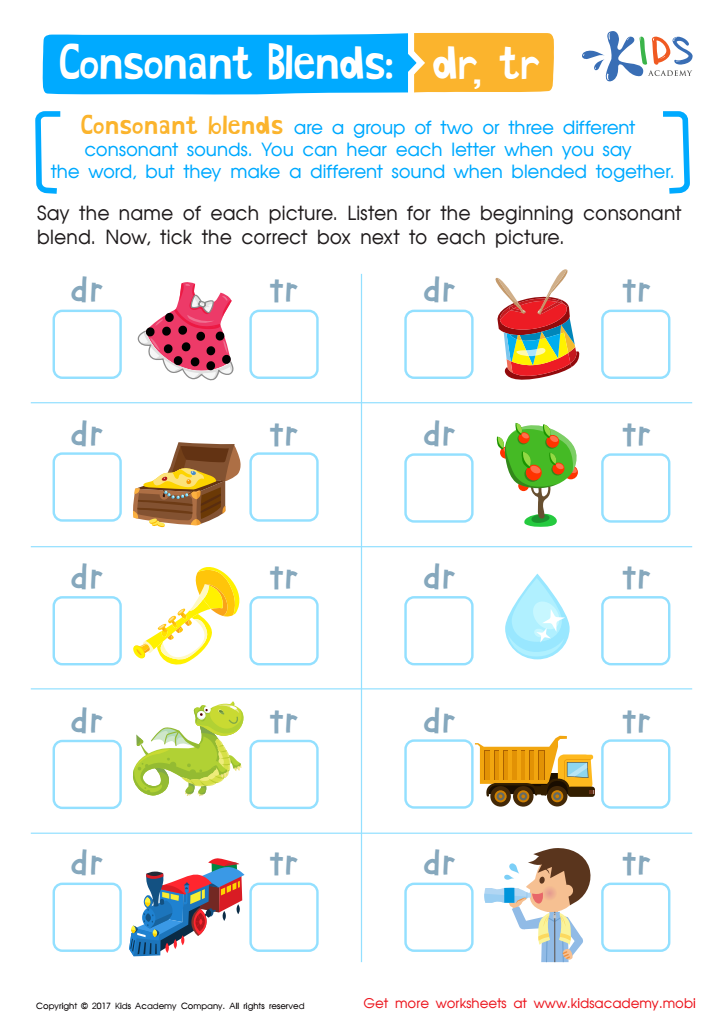
Consonant Blend Dr and Tr Printable Worksheet

Consonant Blends: "Dr" and "Tr" Printable

Pictures of the words provide a visual cue, and sound-outs help with auditory cues.
Consonant Blends: "Dr" and "Tr" Printable

Worksheet


Cognitive development is crucial for children aged 3 to 8, as this period lays the foundation for future learning and success. Understanding the normal stages of cognitive development helps parents and teachers identify typical behaviors and benchmarks. By recognizing what's expected at each age, they can better support children's growth and learning.

During these years, children progress in their ability to think, reason, and solve problems. They begin to develop critical thinking skills, enhance their language capabilities, and establish social relationships. It’s essential for parents and teachers to foster an environment rich in exploration and interaction, which enhances cognitive growth.

Moreover, being aware of cognitive development enables adults to spot any potential developmental delays early on. Early intervention is vital, as addressing issues promptly can lead to more successful outcomes.

Encouraging cognitive development through play, discussions, and hands-on activities helps engage children in meaningful ways. Thus, by caring about cognitive development milestones, parents and teachers can actively contribute to a child's readiness for school, social integration, and overall emotional well-being. This not only benefits individual children but also strengthens communities as they cultivate thoughtful, capable future citizens.