Cognitive Development Normal Phonics Worksheets for Ages 3-8
6 filtered results
-
From - To
Our Cognitive Development Normal Phonics Worksheets for ages 3-8 are expertly designed to enhance young learners' reading and writing skills. These engaging and educational worksheets use age-appropriate activities to teach phonics fundamentals, promoting auditory discrimination and phonological awareness. With a variety of fun exercises, children can practice identifying sounds, blending them together, and building vocabulary, all while developing critical cognitive skills. Ideal for use at home or in classrooms, these worksheets foster a love for learning and provide a strong foundation for future academic success. Help your child embark on an exciting journey of discovery and literacy development today!
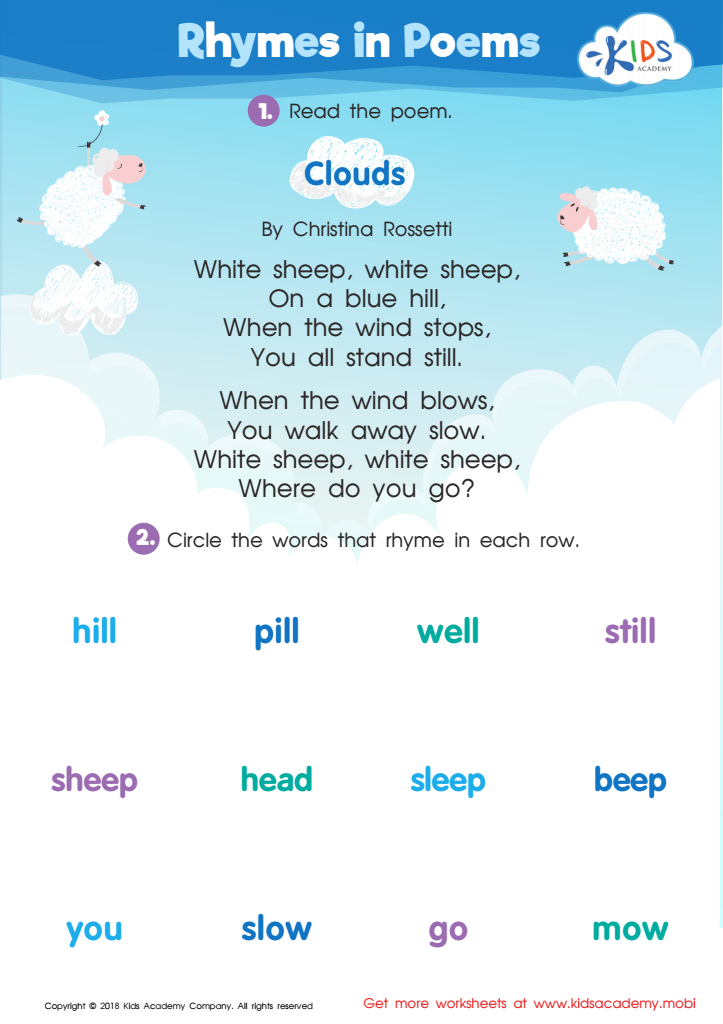
Rhymes in Poems Worksheet
 Assign to My Students
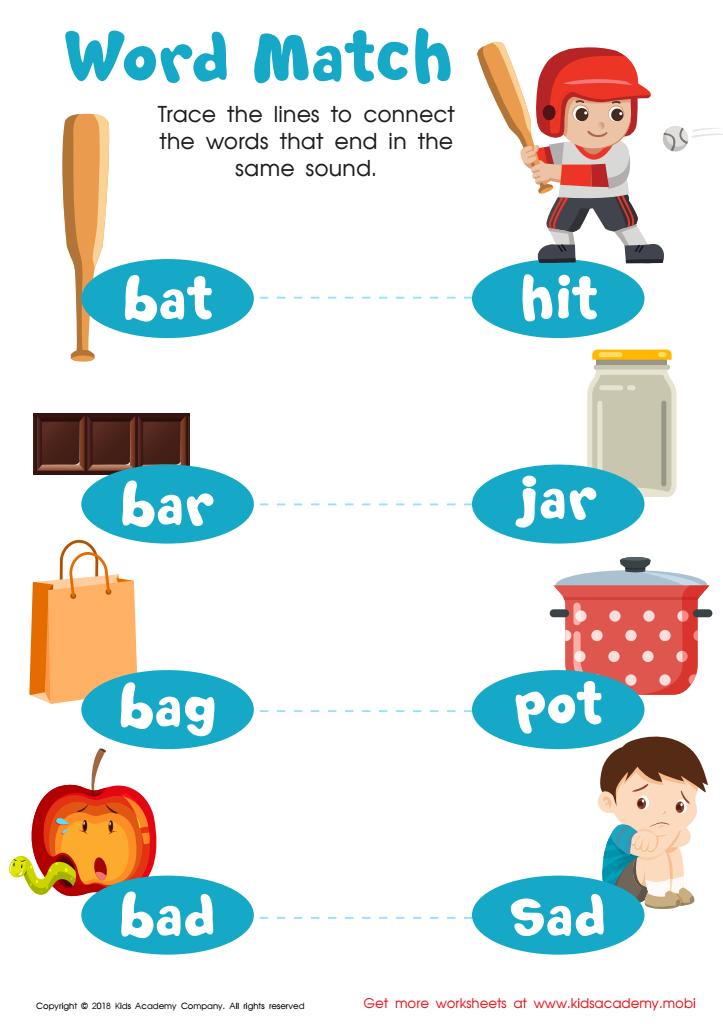
Word Match Reading Worksheet
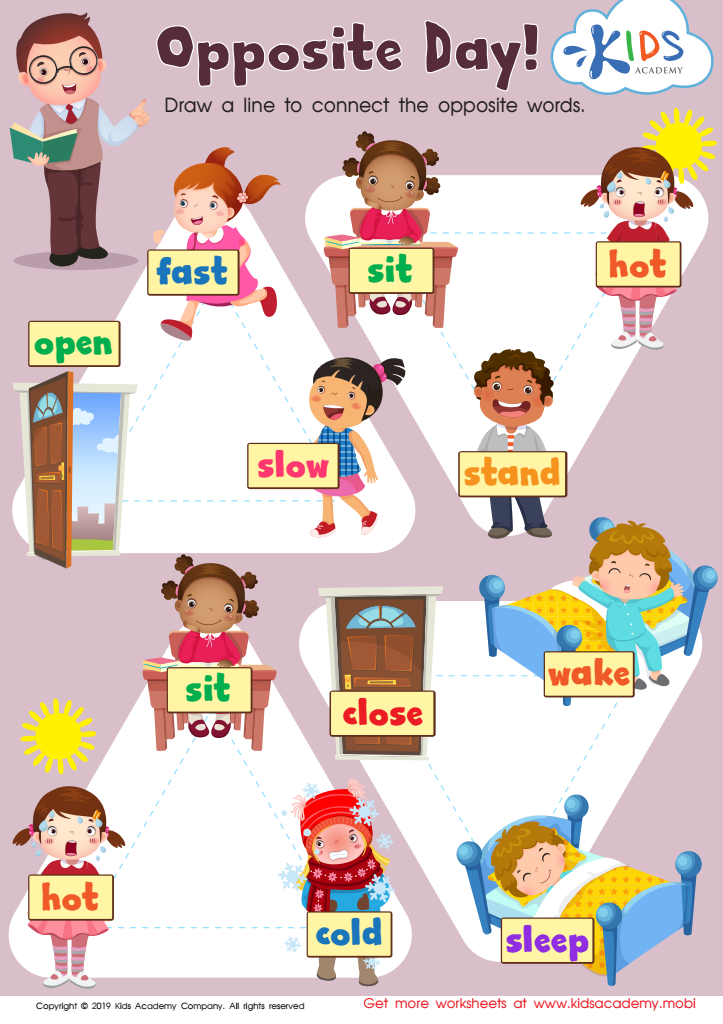
Opposite Day Worksheet
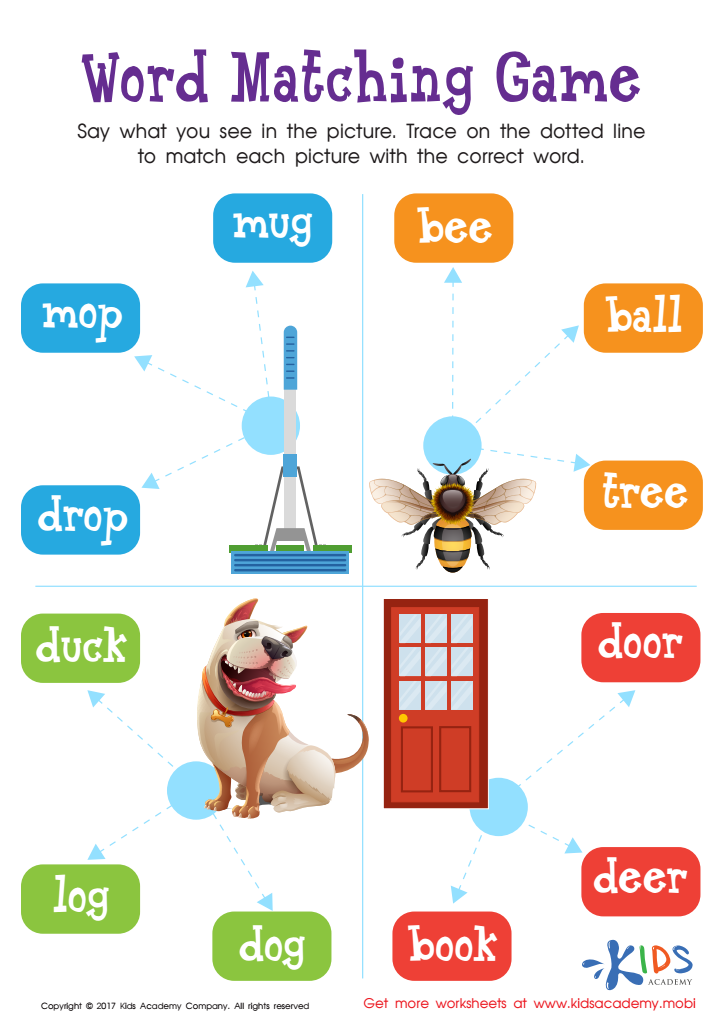
Word Matching Game Worksheet
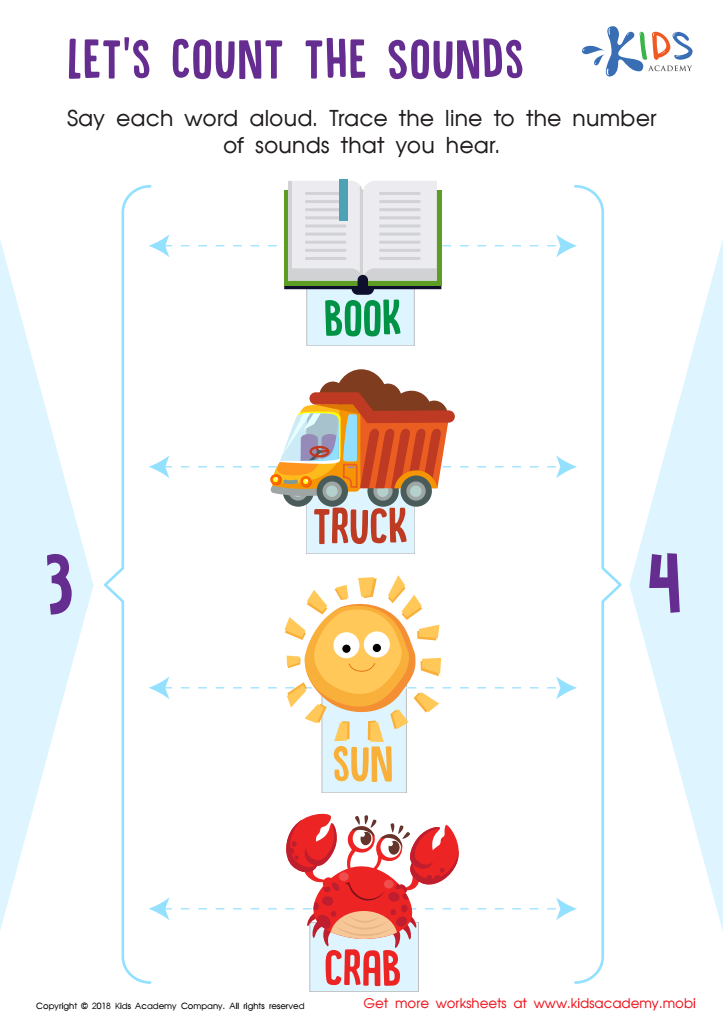
Let's Count the Sounds Worksheet
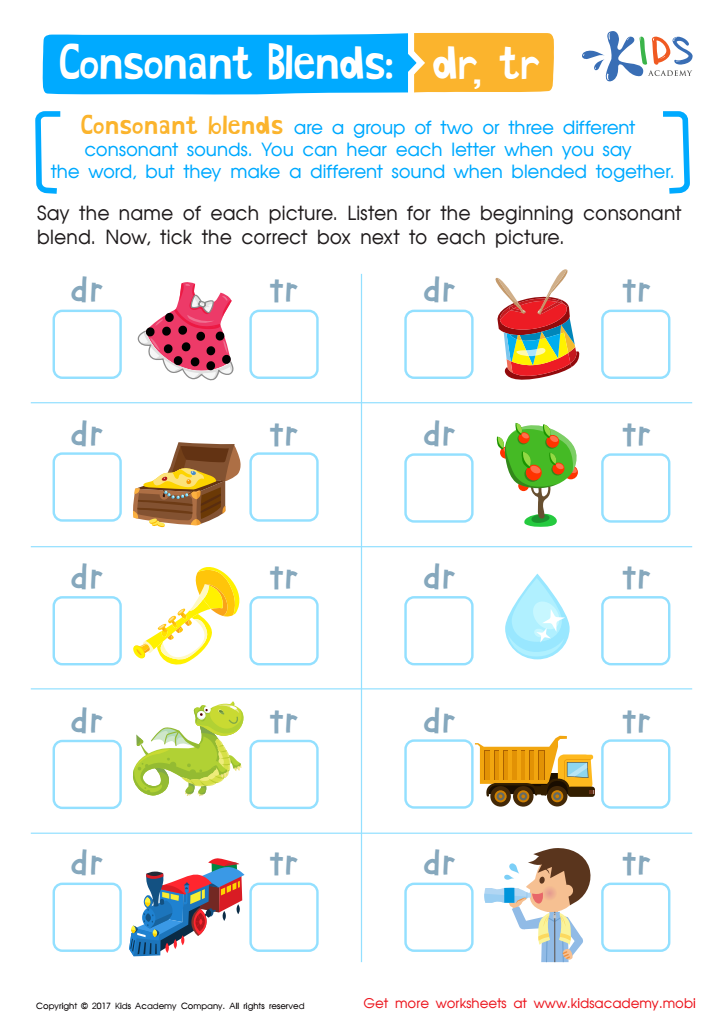
Consonant Blends: "Dr" and "Tr" Printable








Cognitive development in early childhood, specifically normal phonics awareness for ages 3-8, is critically important for a child's overall learning and academic success. Phonics—the relationship between sounds and their corresponding letters—is a foundational skill for reading and writing. Parents and teachers should prioritize this aspect of development because it greatly influences a child's ability to decode words, comprehend text, and spell accurately.
During the ages of 3-8, children are in a crucial developmental window where their brains are particularly receptive to language acquisition. Fostering phonic skills during this period not only accelerates reading proficiency but also enhances cognitive development, including memory, attention, and problem-solving abilities. By engaging in phonic-rich activities, children learn to recognize and manipulate the sounds of speech, which is essential for word recognition and fluency in reading.
Early mastery of phonics paves the way for more advanced literacy skills, which underpin academic achievement in various subjects. Furthermore, children who become proficient readers early are more likely to develop a love for reading, which contributes to lifelong learning and intellectual curiosity. Therefore, ensuring that children develop strong phonics skills during these formative years is vital for their educational journey and can establish a solid foundation for their future learning endeavors.







