Spelling practice Normal Vowel Blends Worksheets for Ages 3-8
5 filtered results
Difficulty Level
Grade
Age
-
From - To
Subject
Activity
Standards
Enhance your child's spelling skills with our engaging Normal Vowel Blends Worksheets, specially designed for ages 3-8. These worksheets provide an interactive and fun way for young learners to explore vowel blends, helping them develop essential reading and writing abilities. Each worksheet features vibrant illustrations and age-appropriate activities that encourage kids to identify and combine vowel sounds effectively. Suitable for home or classroom use, our spelling practice resources foster confidence in early literacy while keeping learning enjoyable. Download our printable worksheets today and watch your child's spelling skills bloom as they master vowel blends with ease!
Favorites
With answer key
Interactive
The AI Vowel Pair Worksheet
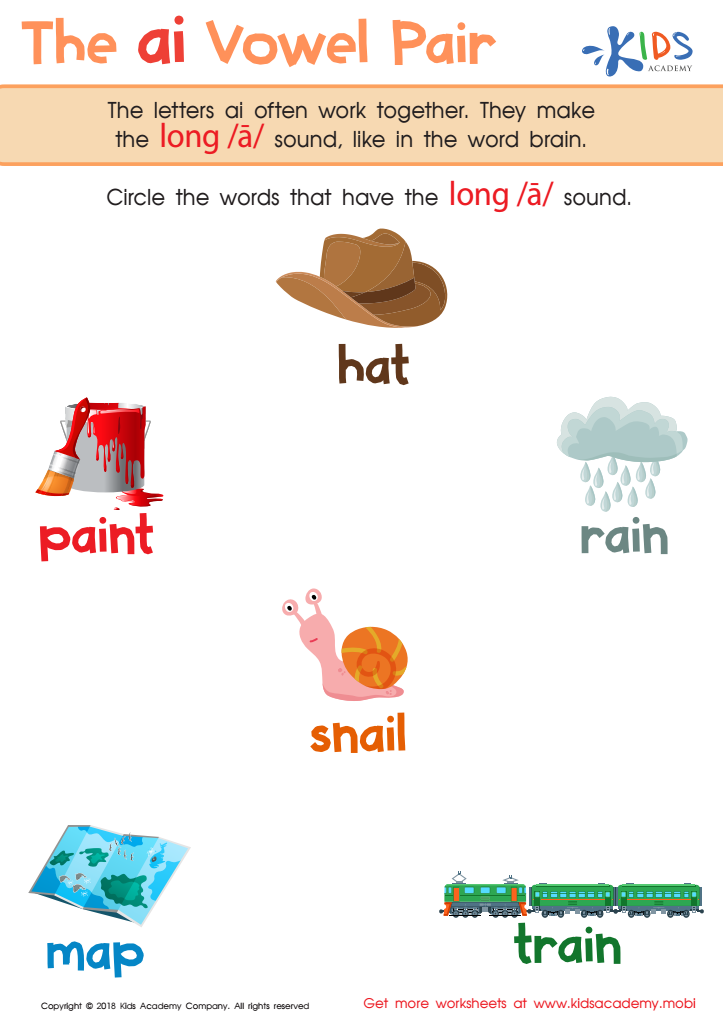
Vowel pairs make different sounds than individual letters. The 'ai' combination often forms the long /a/ sound, like in 'brain' and 'strain'. Get your kids to look at the pictures in the worksheet, identify each and say the name aloud. Help them circle the words with the long /a/ sound.
 Assign to My Students
The AI Vowel Pair Worksheet
Worksheet
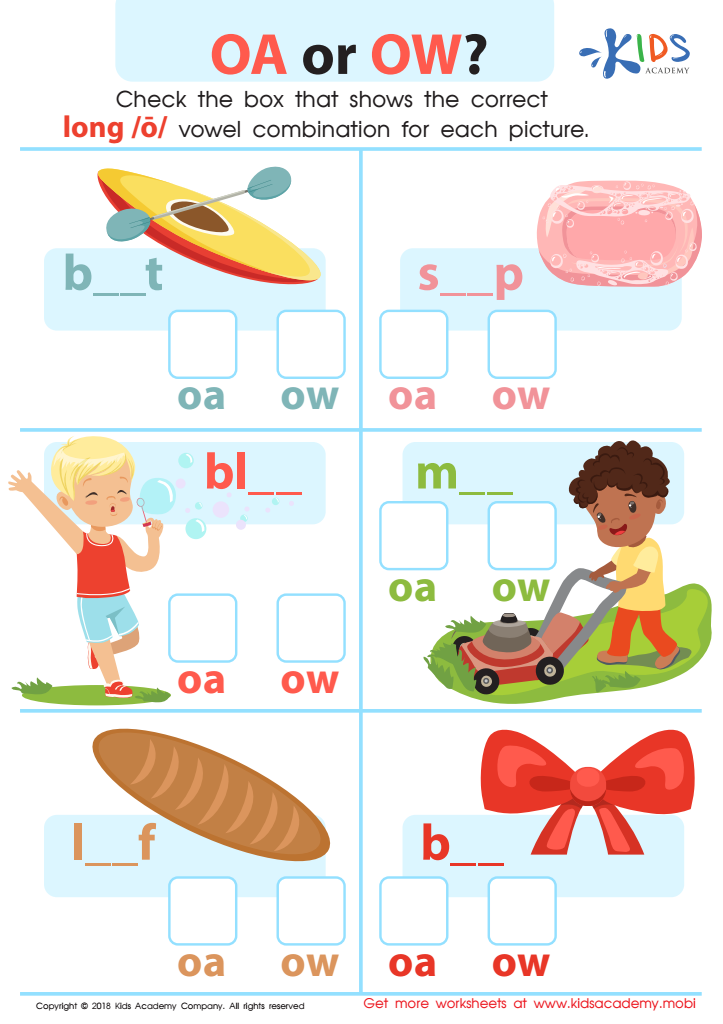
Reading: OA or OW Worksheet
This printable worksheet helps young and emergent readers with decoding words and understanding digraphs (two letters with one sound). It requires students to complete the spelling for each word based on the picture, focusing on /oa/ and /ow/ spellings. It's ideal for a reading classroom and for spelling practice.
Reading: OA or OW Worksheet
Worksheet
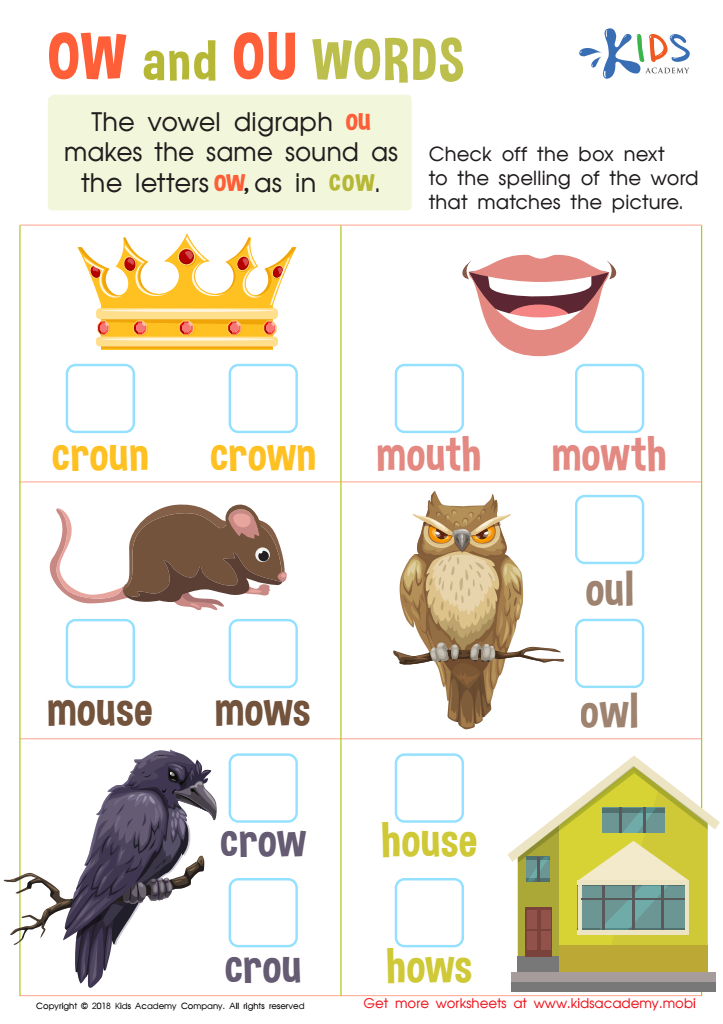
Reading: OW and OU Words Worksheet
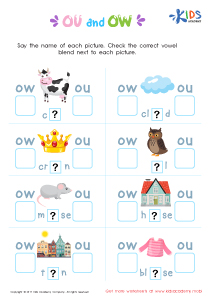
Help your kids learn phonetics! Explain the different sounds and long/short variations. Emphasize that some vowel sounds are the same, e.g. ou = ow in cow. For practice, have them read aloud the words in the worksheet and check the box next to the spelling that matches the picture.
Reading: OW and OU Words Worksheet
Worksheet
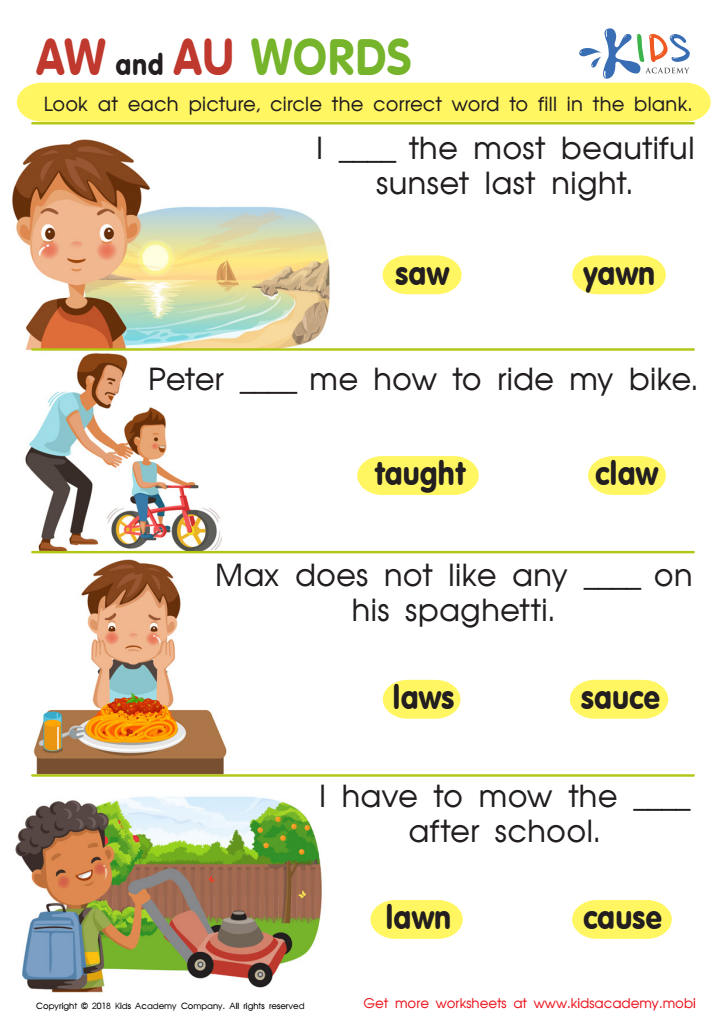
Reading: AW and AU Words Worksheet
This worksheet helps kids recognize that /au/ and /aw/ can make the same sound. Students read sentences and pick the correct word with one of the digraphs. Understanding digraphs improves decoding and reading fluency. Perfect for reading and phonics classes.
Reading: AW and AU Words Worksheet
Worksheet
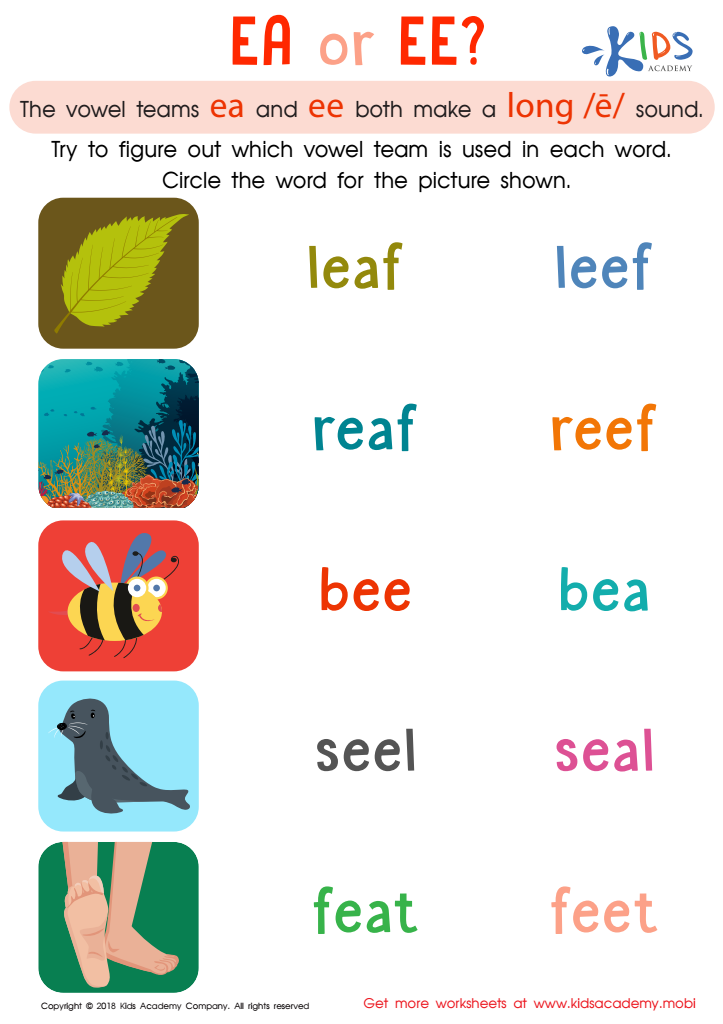
Reading: EA and EE Worksheet
Confused by the long E sound's varying spellings? Give students practice with this printable. It will improve their reading and spelling skills by helping them identify the correct spellings for words with the /ee/ and /ea/ vowel teams. Clear up the confusion and sharpen their skills.
Reading: EA and EE Worksheet
Worksheet
Join Kids Academy for Free
Who is primarily going to use this learning content?





Spelling practice, especially focusing on normal vowel blends, is crucial for young learners aged 3-8 for various reasons. First and foremost, mastering vowel blends lays the foundation for phonemic awareness, a key skill that allows children to decode and spell words effectively. When children learn these vowel combinations, such as “ai” in “rain” or “oe” in “toe,” they develop a deeper understanding of how sounds work together in words.
Additionally, strong spelling skills enhance reading proficiency. As children recognize vowel blends, they become more confident readers, improving comprehension and fluency. This confidence spills over into writing; kids with good spelling skills express themselves more freely and creatively.
Moreover, early spelling practice fosters cognitive development. It encourages critical thinking and problem-solving as children learn to segment sounds and blend them again. For parents and teachers, focusing on normal vowel blends not only supports literacy but also nurtures a habit of practice and perseverance.
Ultimately, caring about spelling practice means investing in a child’s communication skills and overall academic success, enabling them to navigate their educational journey with confidence and enthusiasm.