Comparing Fractions Normal Worksheets for Ages 3-8
5 filtered results
-
From - To
Explore our engaging "Comparing Fractions Normal Worksheets" tailored for ages 3-8! These worksheets offer a fun and interactive way to help young learners understand the concept of fractions and develop essential math skills. With colorful visuals and age-appropriate exercises, children can easily grasp how to compare fractions using pictures and simple number representations. Designed to enhance critical thinking and problem-solving abilities, our worksheets provide plenty of practice to reinforce learning. Whether at home or in the classroom, these resources aim to make math enjoyable and accessible for early learners. Start your child's mathematical journey today with our comprehensive worksheets!
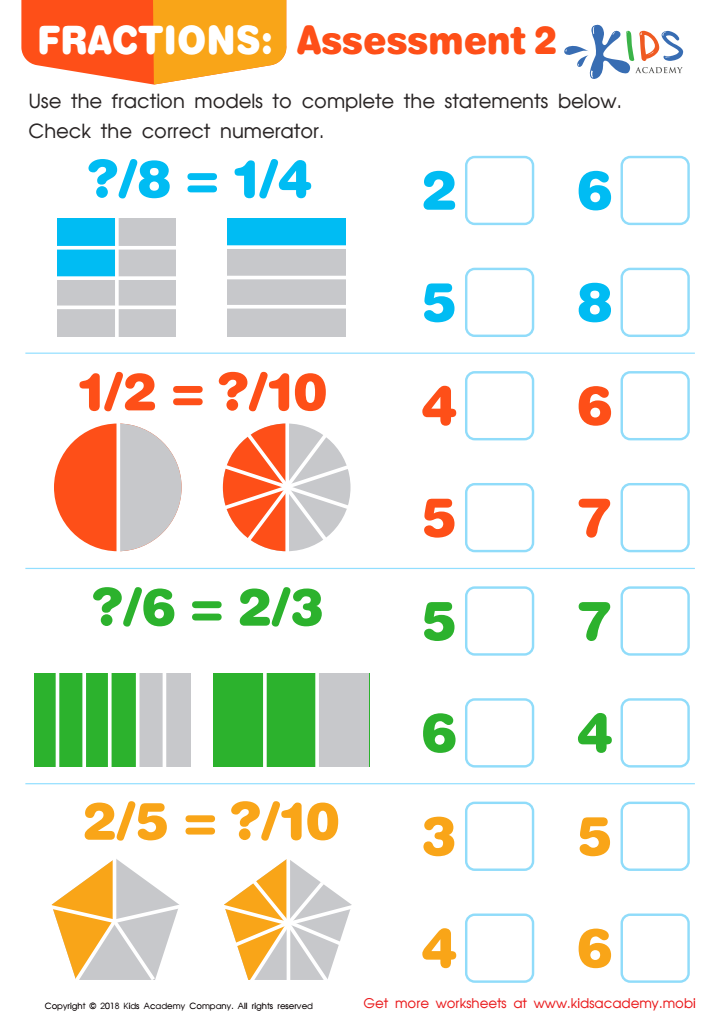
Fractions: Assessment 2 Worksheet
 Assign to My Students
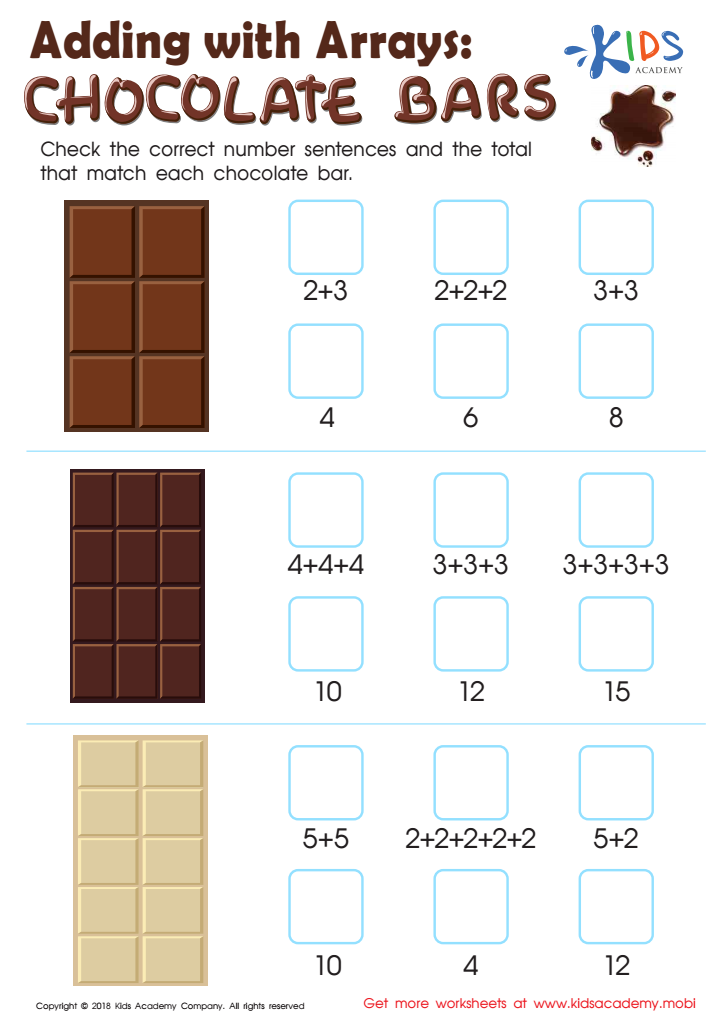
Adding with Arrays: Chocolate Bars Worksheet
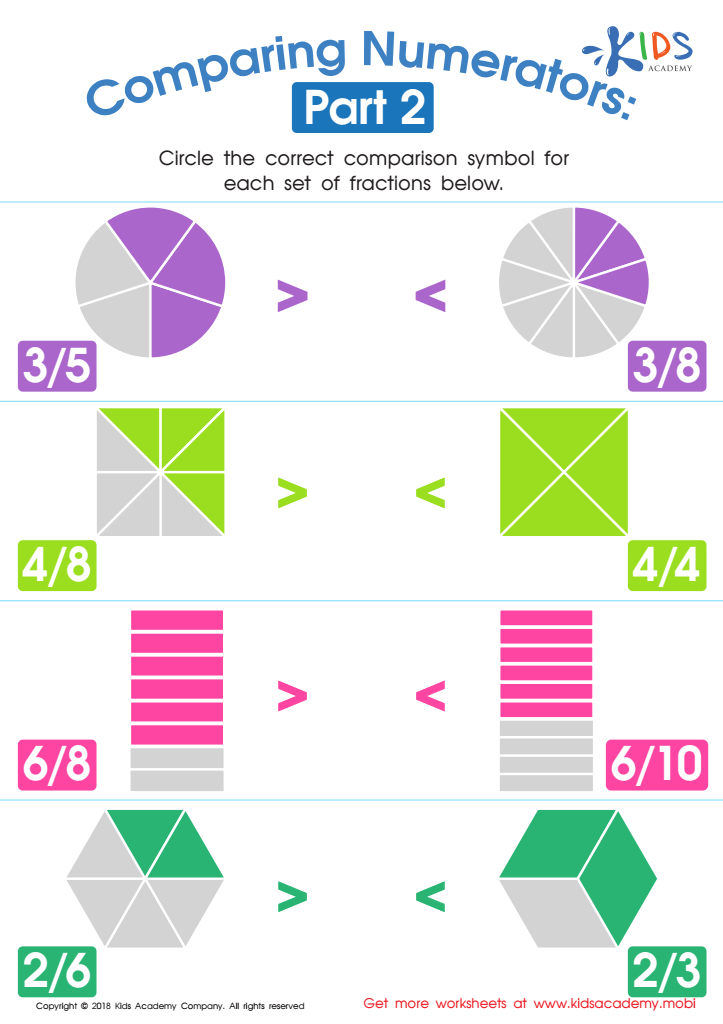
Comparing Numerators Part 2 Worksheet
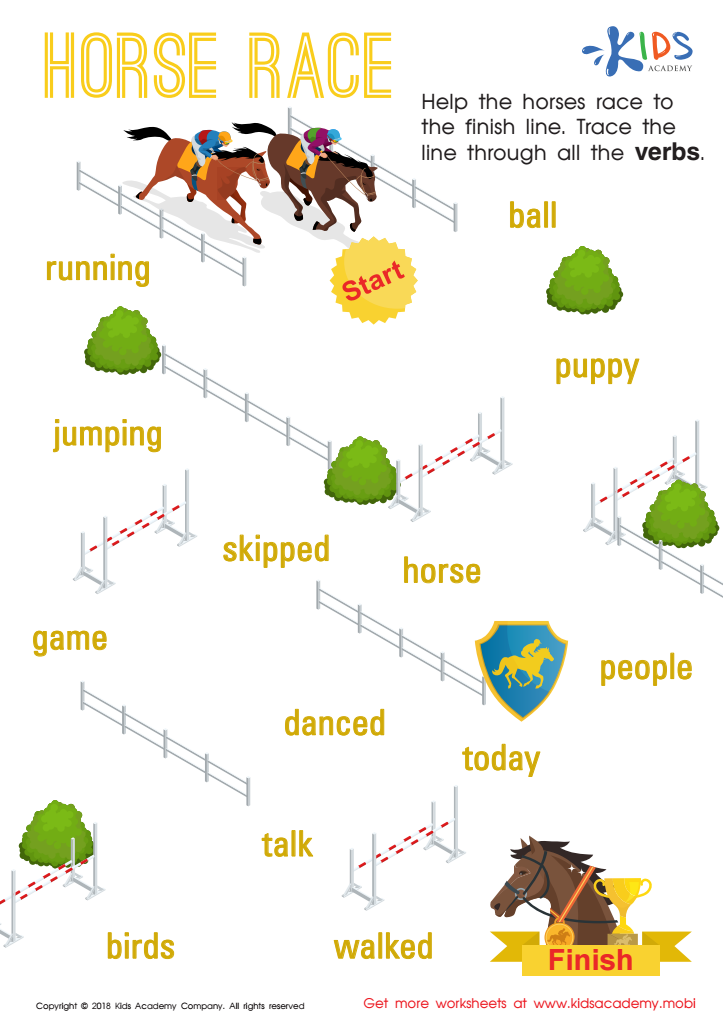
Horse Race Worksheet
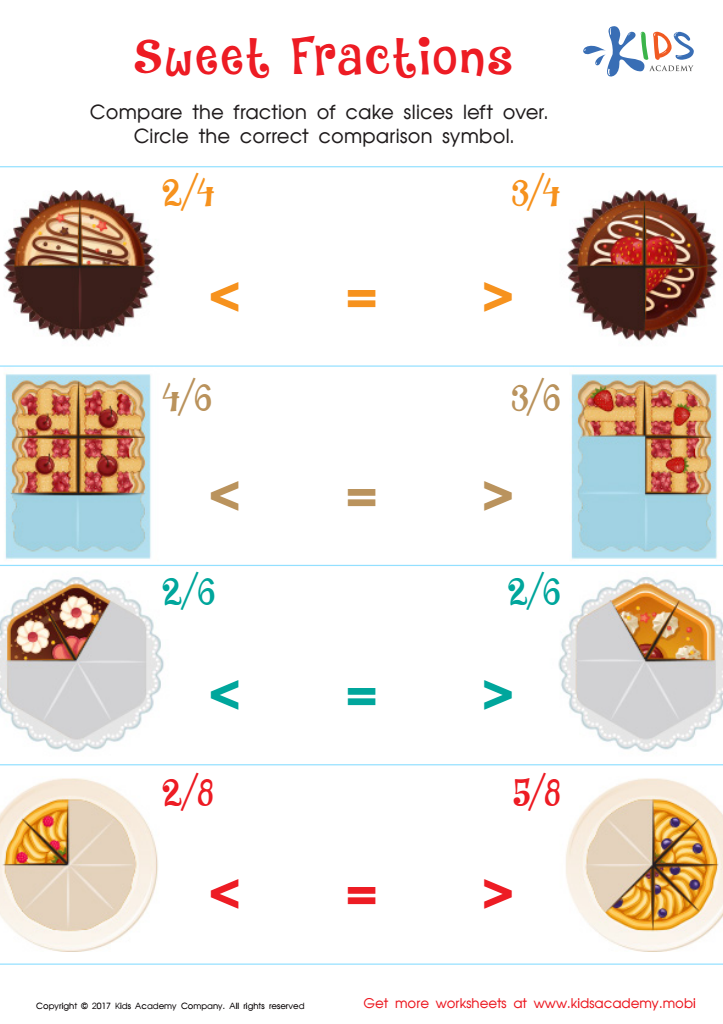
Compare Fractions Worksheet







Understanding fractions is a foundational math skill that sets the stage for more complex mathematical concepts. For children aged 3-8, learning to compare fractions helps develop critical thinking and problem-solving abilities. Parents and teachers should care about this early introduction because it fosters number sense, allowing children to grasp how quantities relate to one another.
At this age, children are naturally curious about their world and excited to learn. Using engaging activities, such as visual aids, games, or real-life scenarios (like sharing pizza), makes the concept of comparing fractions relatable and fun. It promotes active participation and enhances retention by connecting math to everyday experiences.
Additionally, introducing fractions early encourages a growth mindset, as students learn that making mistakes is part of the learning process. This foundational skill not only supports future learning in mathematics but also builds confidence and independence when tackling academic challenges.
By prioritizing the understanding of comparing fractions, parents and teachers equip children with essential skills that extend beyond math, enhancing their overall cognitive development and preparing them for success in a variety of subjects. Investing time in these foundational skills pays off as children progress in their education.








