Comparing lengths Normal Worksheets for Ages 3-8
4 filtered results
-
From - To
Discover interactive "Comparing Lengths" worksheets designed for children ages 3-8. Our engaging activities help young learners identify and compare varied lengths, enhancing their measurement skills and mathematical comprehension. Vibrant illustrations and hands-on puzzles make learning exciting and fun. Perfect for in-class lessons or at-home practice, these worksheets foster the development of critical thinking and problem-solving abilities. With tasks ranging from matching objects by length to ordering items from shortest to longest, kids build a strong foundation in measurement concepts, preparing them for more advanced math challenges. Help your child build confidence and enthusiasm in learning with our "Comparing Lengths" worksheets.
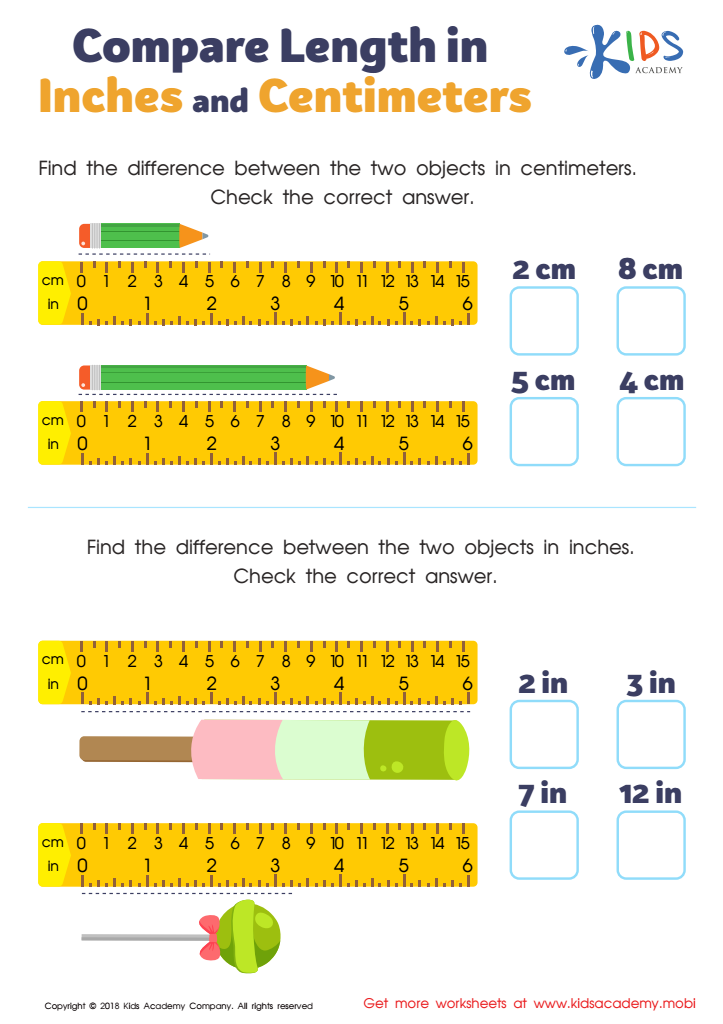
Compare Length in Inches and Centimeters Worksheet
 Assign to My Students
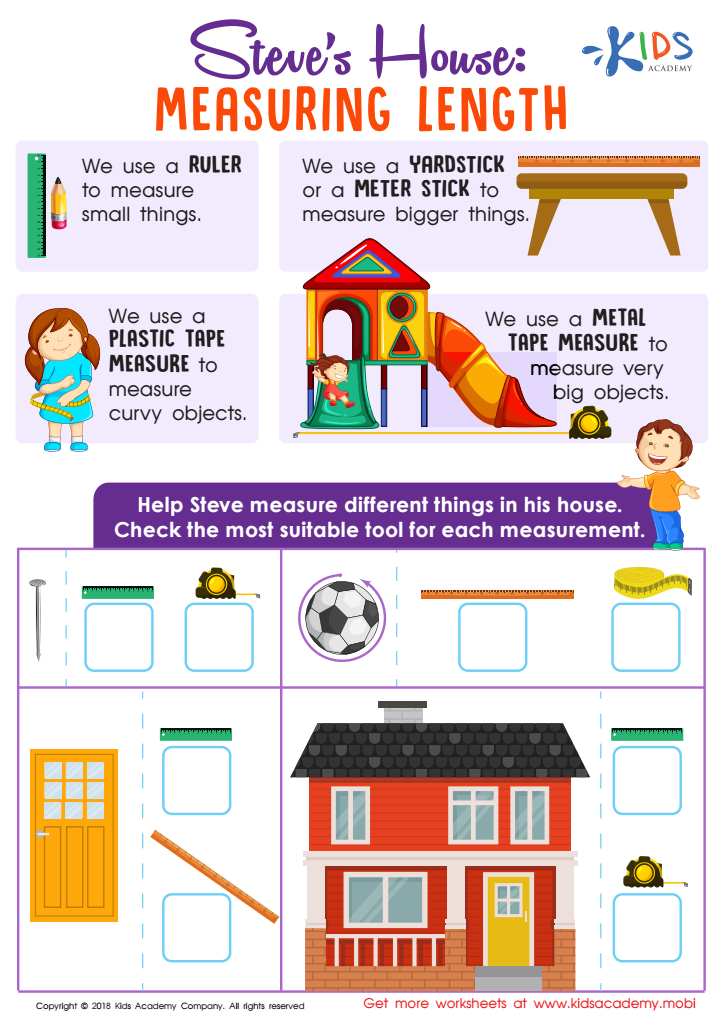
Steve's House: Measuring Length Worksheet
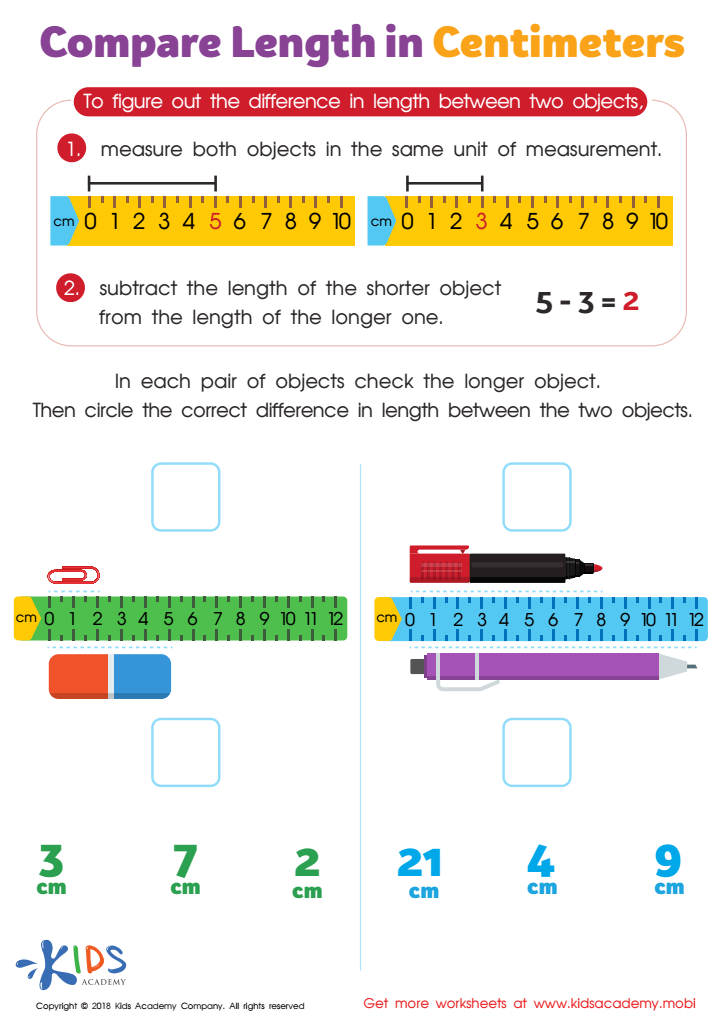
Compare Length in Centimeters Worksheet
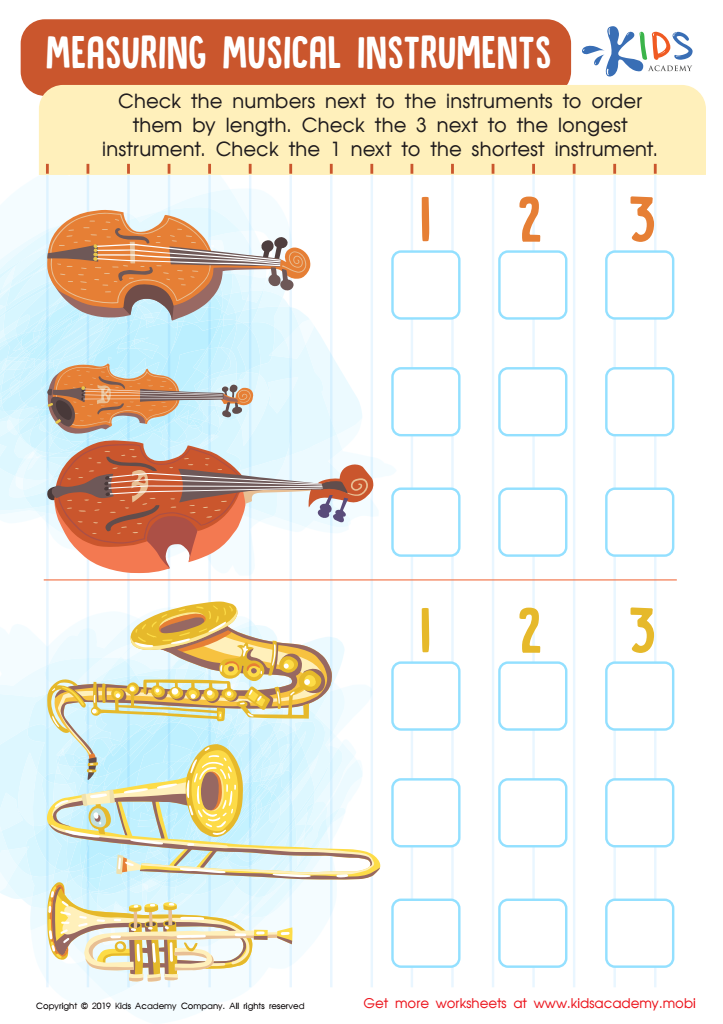
Measuring Musical Instruments Worksheet








Comparing lengths is a crucial skill for children ages 3-8 as it fosters foundational concepts in mathematics and beyond. For one, it introduces young learners to basic measurement principles, which are part of the early math curriculum. When children compare lengths, they engage in activities that develop their spatial awareness, critical thinking, and problem-solving abilities.
For example, distinguishing between objects that are "longer" or "shorter" helps children understand and articulate relationships between different items. This fundamental understanding propels future learning in subjects like geometry, where recognizing shape dimensions becomes vital.
In addition, comparing lengths taps into a child's natural curiosity and encourages observational skills. Everyday instances, such as comparing the height of a favorite toy to their own height, bring practical applications that enhance learning retention.
Moreover, this skill supports language development. As children use terms like “tall,” “short,” “long,” and “shorter,” they expand their vocabulary in meaningful contexts. Socially, it encourages collaboration and communication when children explain their observations or take part in group activities.
Overall, by promoting the comparison of lengths at an early age, parents and teachers lay a critical groundwork for advanced mathematical thought processes and everyday problem-solving skills. Thus, integrating such activities regularly has both immediate and long-term educational benefits.








