Comprehension skills improvement Normal Worksheets for Ages 3-8
3 filtered results
-
From - To
Unlock your child's potential with our Comprehension Skills Improvement Worksheets tailored for ages 3-8! These interactive, enjoyable activities are designed to enhance reading comprehension through age-appropriate stories and questions. Each worksheet encourages critical thinking, vocabulary development, and retention while making learning fun. Perfect for both classroom and home use, our printable resources cater to various learning styles, ensuring that every child can engage at their level. Help your young learners build a solid foundation in literacy with our thoughtfully crafted worksheets, setting them on a path to reading success. Explore our collection today and nurture your child's love for learning!
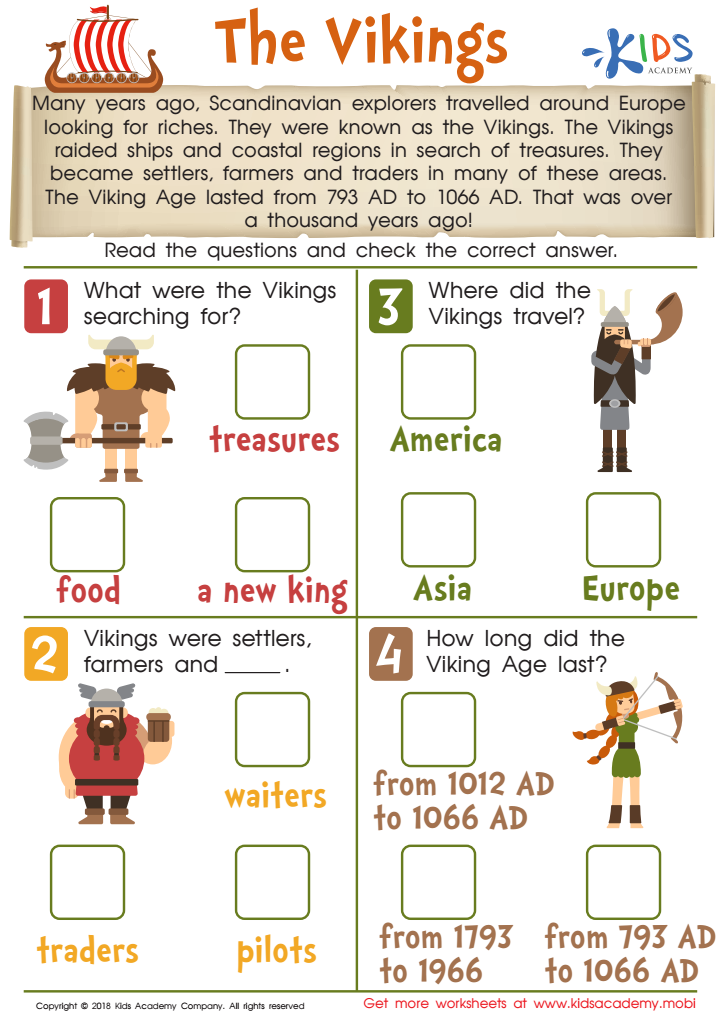
The Vikings Worksheet
 Assign to My Students
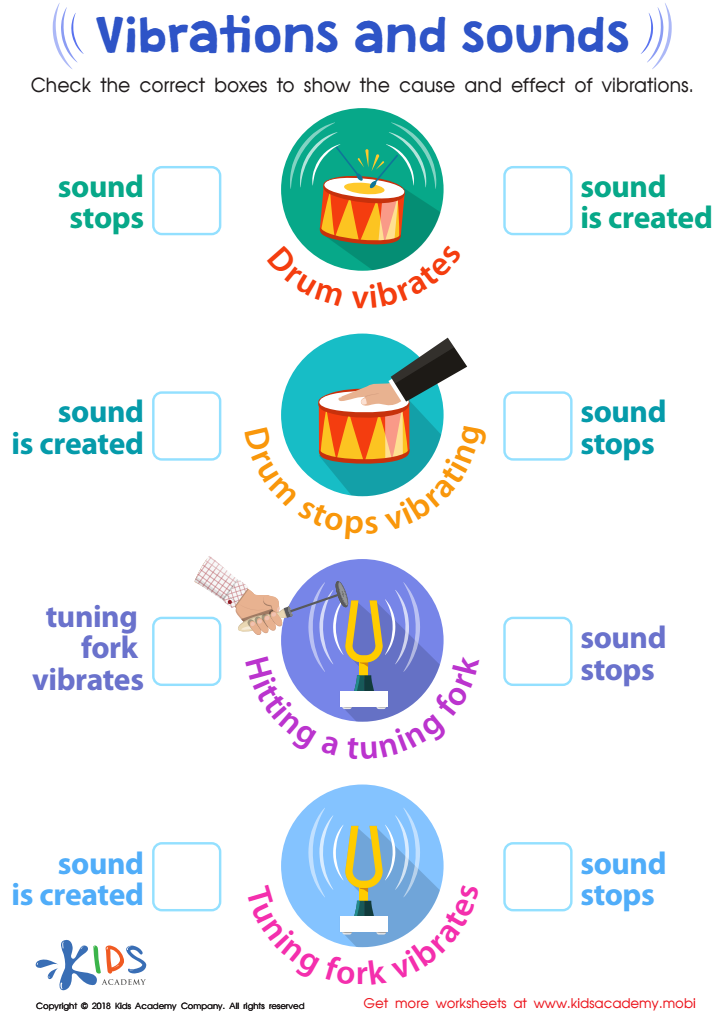
Vibrations and Sounds Worksheet
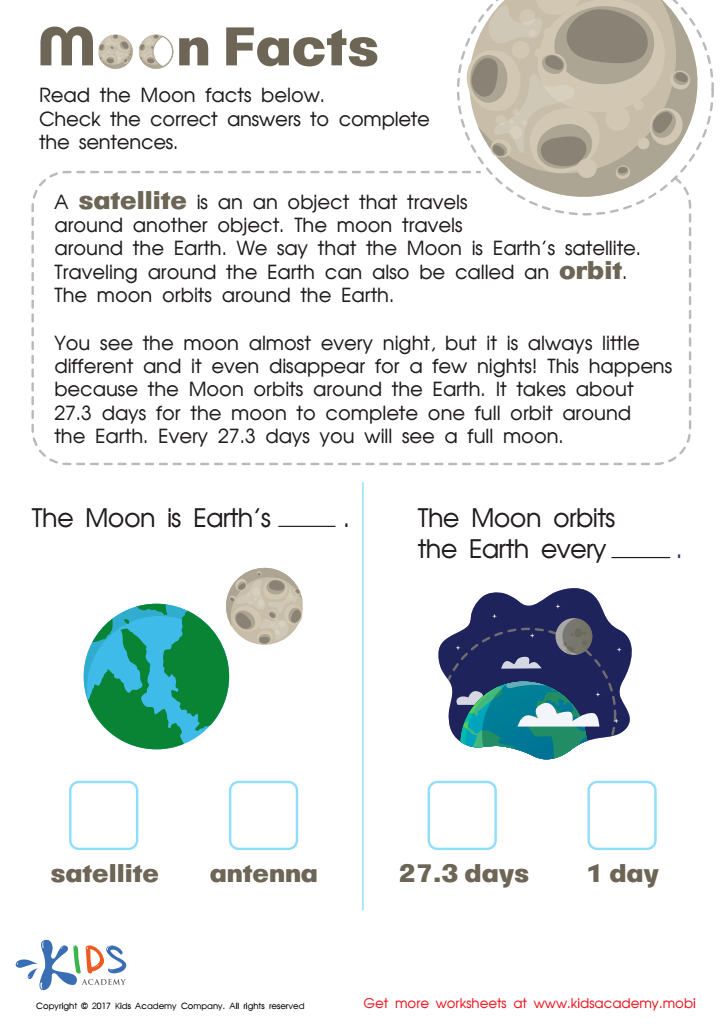
Moon Facts Worksheet








Comprehension skills are crucial for children aged 3-8 as they lay the foundation for effective communication and critical thinking. During these early years, children transition from learning to read to reading to learn. Improving comprehension skills at this stage not only enhances literacy but also fosters a love for learning and exploration. When children can understand and interpret stories, they engage more fully with the material, improving retention and application of knowledge across subjects.
Parents and teachers should prioritize comprehension skill development as it aids in emotional and social growth. Children who can comprehend their reading can better understand the world around them, navigate social situations, and relate to their peers. Additionally, strong comprehension skills lead to better academic performance. When children grasp concepts in reading, math, science, and other disciplines, they become more confident and eager learners.
Moreover, children with strong comprehension skills are better equipped to handle challenges as they grow older. They develop analytical and reasoning skills that are essential for problem-solving and decision-making. Consequently, fostering comprehension skills during these formative years is an investment in a child's overall well-being and future academic success, making it a priority for parents and educators alike.








