Improving categorization skills Normal Worksheets for Ages 3-8
3 filtered results
-
From - To
Enhance your child's cognitive development with our "Improving Categorization Skills Normal Worksheets" designed for ages 3-8. These engaging and interactive worksheets provide a playful approach to learning, allowing young learners to group objects, identify similarities and differences, and improve critical thinking skills. Perfect for home or classroom use, our resources are tailored to meet educational standards and spark curiosity. Each worksheet encourages creativity and comprehension through colorful illustrations and fun activities that make learning enjoyable. Help your child build a strong foundation in categorization, fostering essential skills that will benefit their future learning experiences. Explore our collection today!
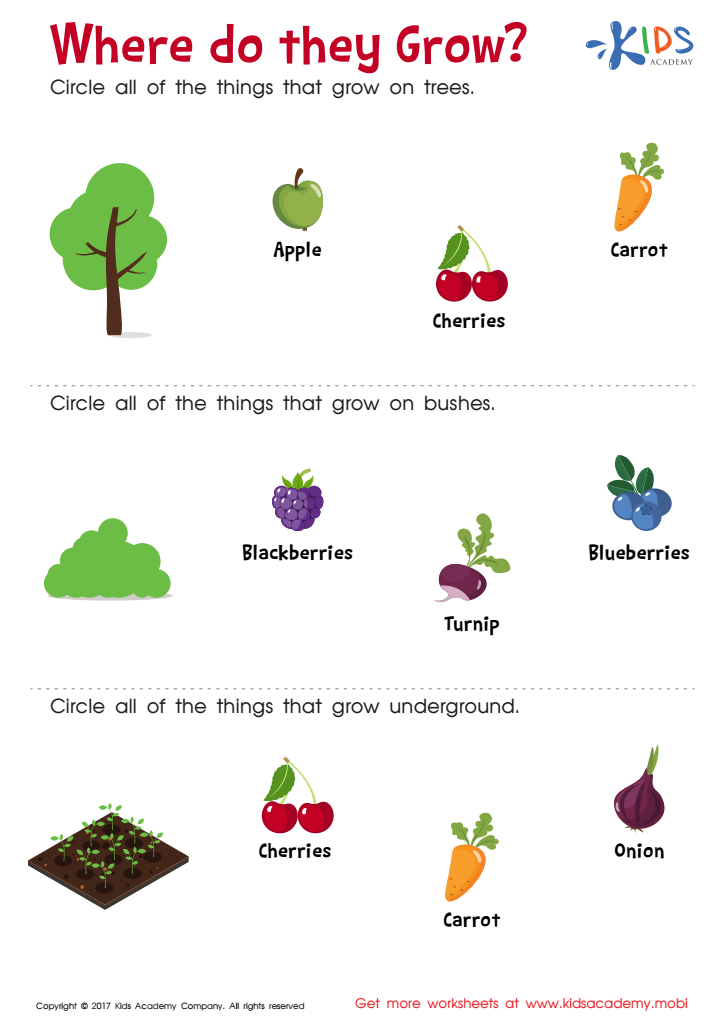
Where Do They Grow Worksheet
 Assign to My Students
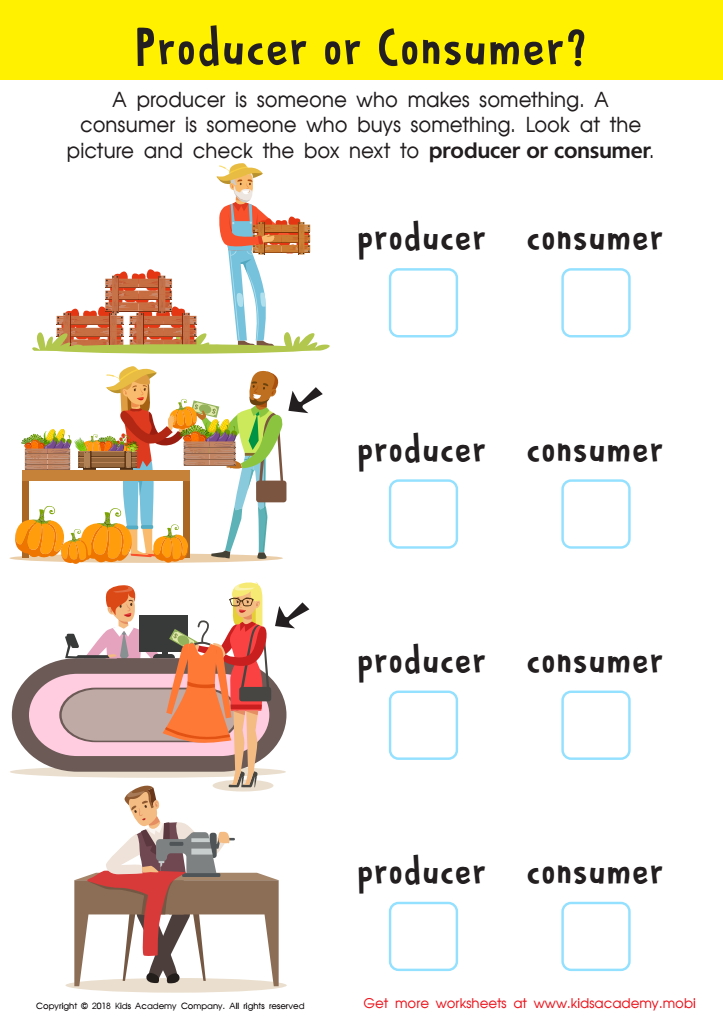
Producer or Consumer? Worksheet
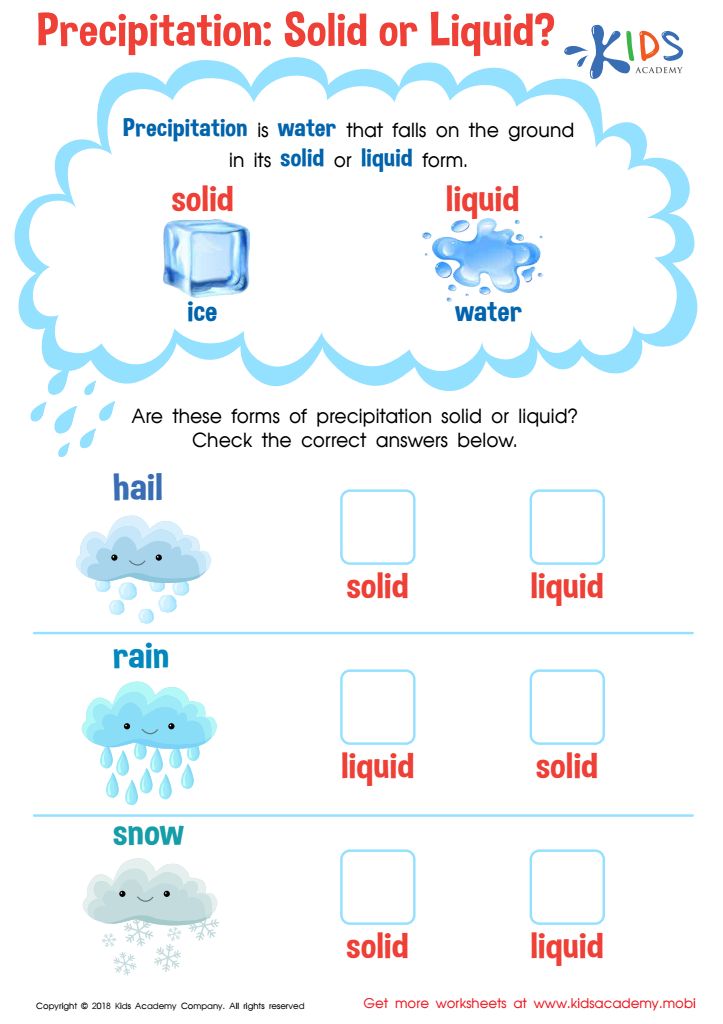
Precipitation: Solid or Liquid? Worksheet







Improving categorization skills in children aged 3-8 is vital for their cognitive development and academic success. Categorization is the process of organizing information into groups based on shared characteristics. By fostering these skills, educators and parents help children learn to identify similarities and differences, which enhances critical thinking and problem-solving abilities.
First, improved categorization skills lay the foundation for effective learning across subjects, including math, science, and language arts. Children who can categorize can understand concepts like sets, numbers, and patterns more easily.
Additionally, categorization skills support language development. When children classify items, they expand their vocabulary by learning new words related to various categories and enhancing their ability to articulate thoughts.
Socially, these skills aid in fostering relationships. Children learn about group dynamics, as they identify social categories like friendships and interests, helping them navigate social settings more effectively.
Moreover, developing categorization skills early can also boost confidence in children, as successful categorizing can lead to a sense of accomplishment. Parents and teachers can engage in playful activities and games that promote categorization, making learning fun. By prioritizing this essential skill, we prepare children for future academic and life challenges.








