
Listening skills Normal Worksheets for Ages 3-8
4 filtered results
Difficulty Level
Grade
Age
-
From - To
Subject
Activity
Standards
Improve your child's listening skills with our engaging worksheets designed for ages 3-8. Our activities help young learners practice following directions, understanding stories, and responding to questions, fostering critical listening abilities. Each worksheet combines fun tasks with educational content, ensuring an enjoyable learning experience. Whether it’s identifying sounds, matching images, or following audio instructions, these exercises are perfect for enhancing attention and auditory processing. Ideal for home or classroom use, our worksheets support parents and teachers in developing essential listening skills that pave the way for successful communication and learning. Download now to start your child’s auditory journey!
Favorites
With answer key
Interactive
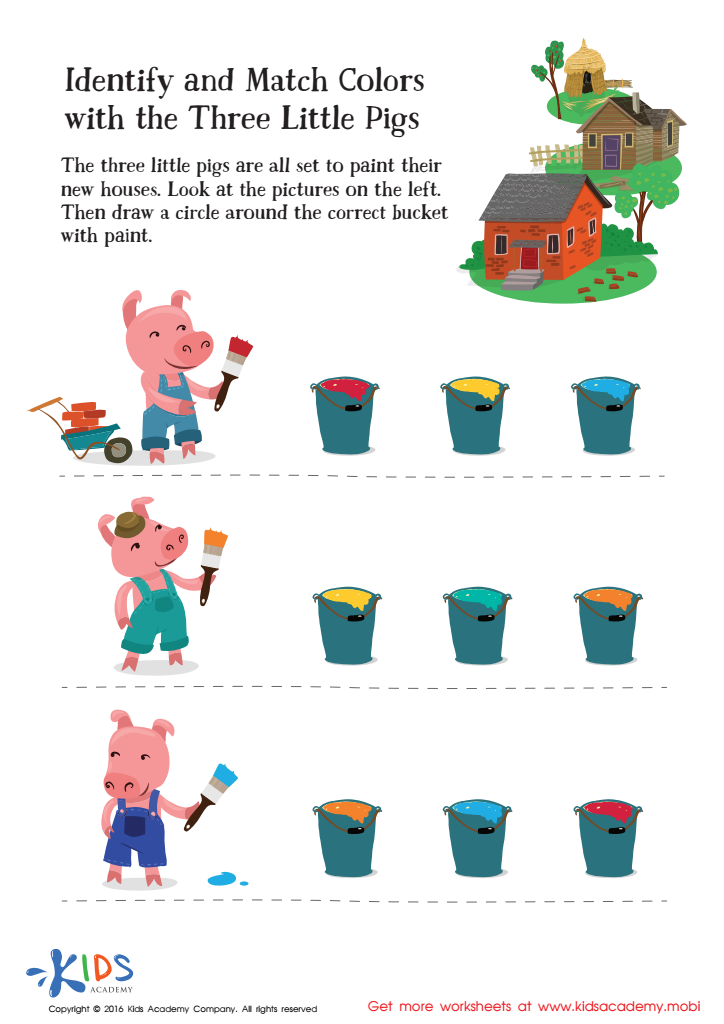
Fairy Tale Worksheet: Identify and Match Colors with Three Little Pigs
Help the 3 Little Pigs find the right color for their houses! This fun worksheet will have your child developing their problem solving and color recognition skills. It's a great way to start building the foundation for advanced logic skills. Plus, they'll love the Three Little Pigs coloring pages.
 Assign to My Students
Fairy Tale Worksheet: Identify and Match Colors with Three Little Pigs
Worksheet
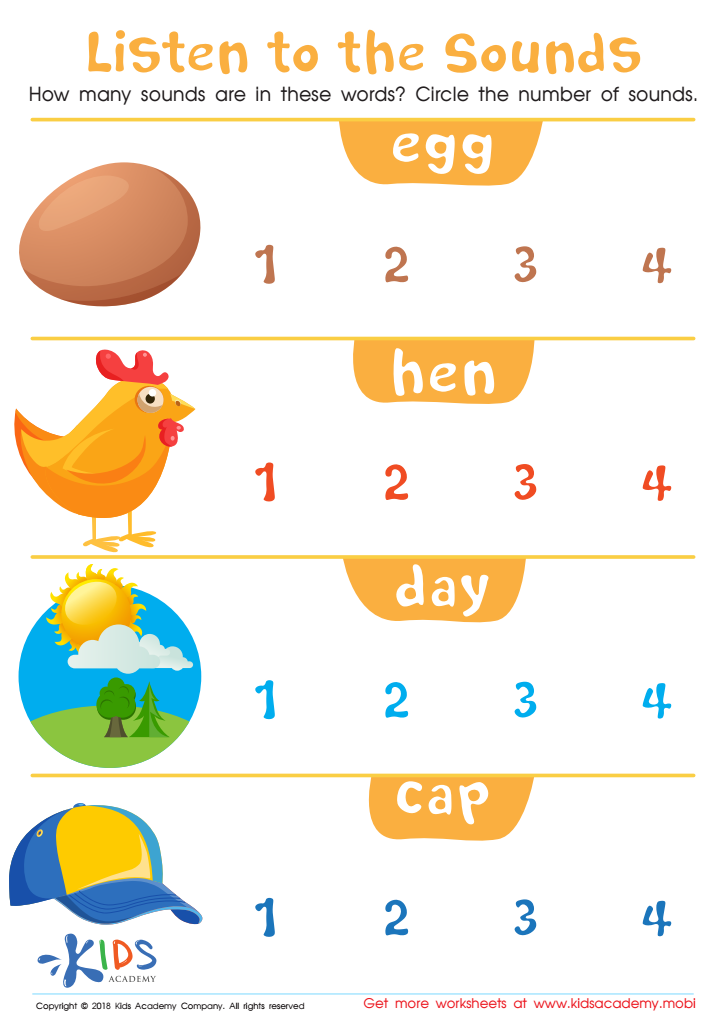
Listen to the Sounds Worksheet
This worksheet builds emerging readers' skills in using sounds for reading and spelling. It helps strengthen auditory processing by having them count the sounds in each word, then trace the corresponding number. Fun and cheerful!
Listen to the Sounds Worksheet
Worksheet
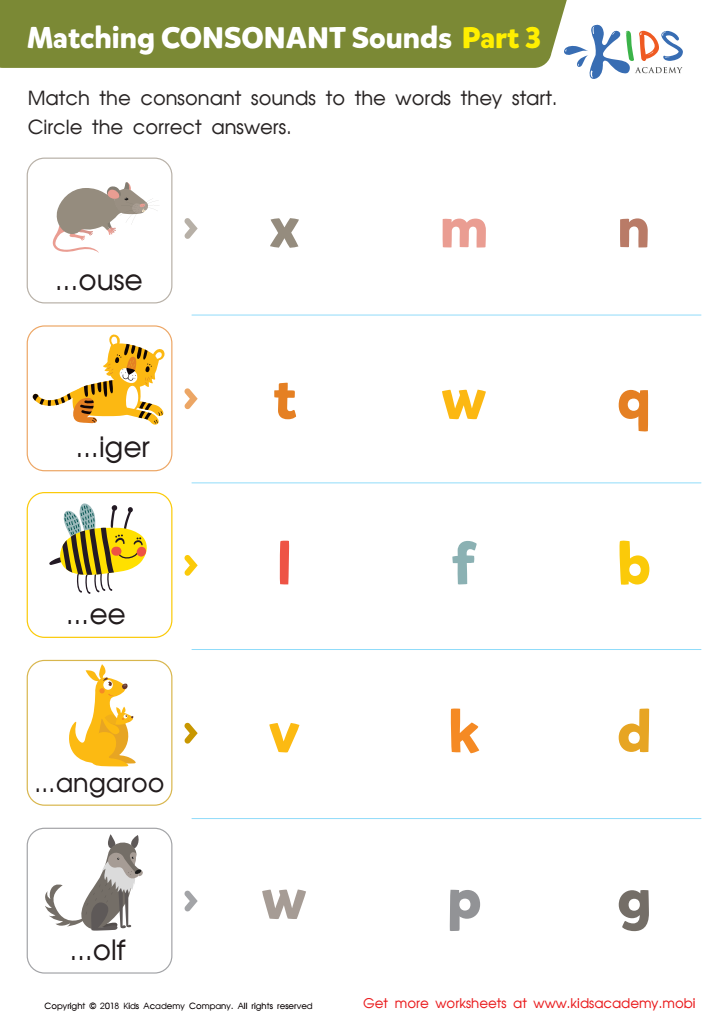
Matching Consonant Sounds: Part 3 Worksheet
Help your early learner match consonant sounds to words with this fun worksheet! Have them name the pictures and try out each letter in the corresponding column. When they hear the sound that matches, circle it. Have them write the letter in the box to complete the word. Work their way down the page until the critters' names all match with consonants!
Matching Consonant Sounds: Part 3 Worksheet
Worksheet
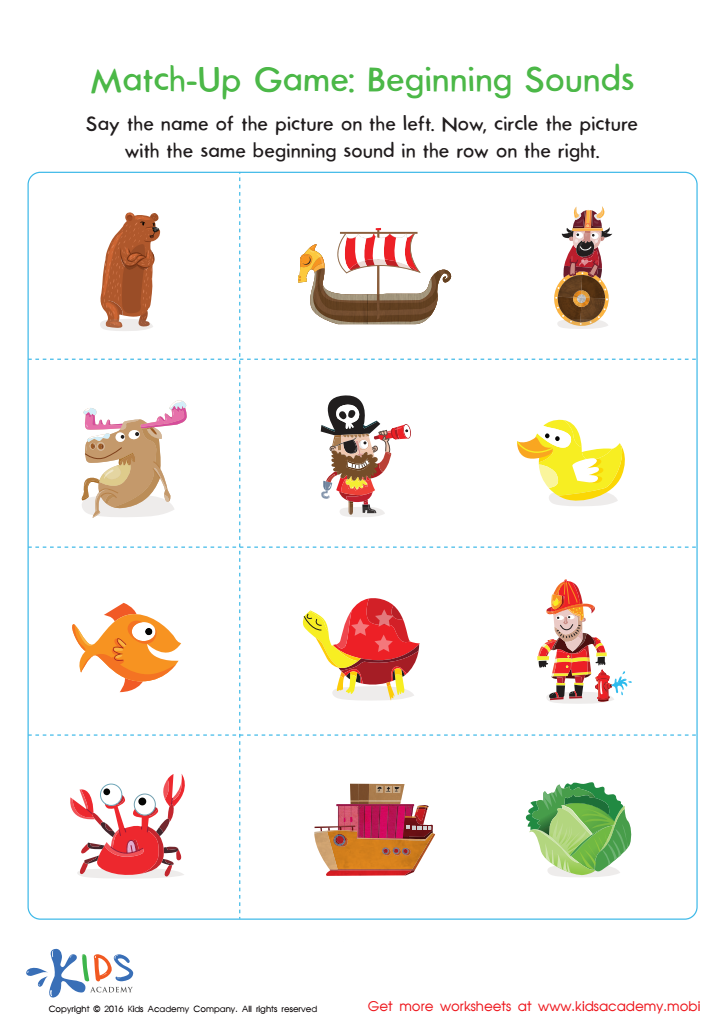
Match–Up Game: Beginning Sounds Worksheet
Start today with this beginning sounds match-up printable!
Teach your child to solve problems mentally with this beginning sounds match-up printable. They'll learn to categorize pictures based on phonics rules, developing mental stamina and focus. It's an important step for recognizing sounds and letters in print, building a foundation for reading and spelling. Start today and take your child's skills to the next level!
Match–Up Game: Beginning Sounds Worksheet
Worksheet
Join Kids Academy for Free
Who is primarily going to use this learning content?







Developing strong listening skills in children aged 3-8 is crucial for their overall growth and future success. For parents and teachers, fostering these skills can significantly impact a child's educational journey and social development. Active listening aids in language acquisition, helping children expand their vocabulary, understand grammar, and communicate effectively. When children attentively listen, they comprehend instructions better, which supports academic success and smooth transition into more structured educational settings.
Furthermore, good listening skills are fundamental for fostering healthy relationships. By listening, children learn empathy, perspective-taking, and effective communication, which are essential skills for resolving conflicts and building friendships. Teachers and parents who emphasize and model good listening create environments where children feel valued and heard, promoting their emotional well-being and self-esteem.
In the classroom, effective listening contributes to better focus, discipline, and a heightened ability to follow directions, leading to a more productive learning atmosphere. At home, these skills encourage meaningful interactions and bonding.
Investing in children's listening skills from an early age lays a strong foundation for lifelong learning, emotional intelligence, and social competence. Therefore, both parents and teachers must recognize and nurture the development of these essential skills during the formative early years.








