Phonics comprehension Normal Worksheets for Ages 3-8
3 filtered results
-
From - To
Unlock the power of reading with our Phonics Comprehension Normal Worksheets designed for children ages 3-8! These engaging worksheets help young learners develop essential phonics skills, improve their reading comprehension, and boost vocabulary. Each worksheet features colorful illustrations and age-appropriate activities that make learning fun and effective. Tailored to various learning levels, our resources support diverse educational needs, ensuring every child can thrive in their reading journey. Whether used in the classroom or at home, our phonics worksheets provide a solid foundation for lifelong literacy skills. Start nurturing your child’s reading potential today with these interactive and educational materials!
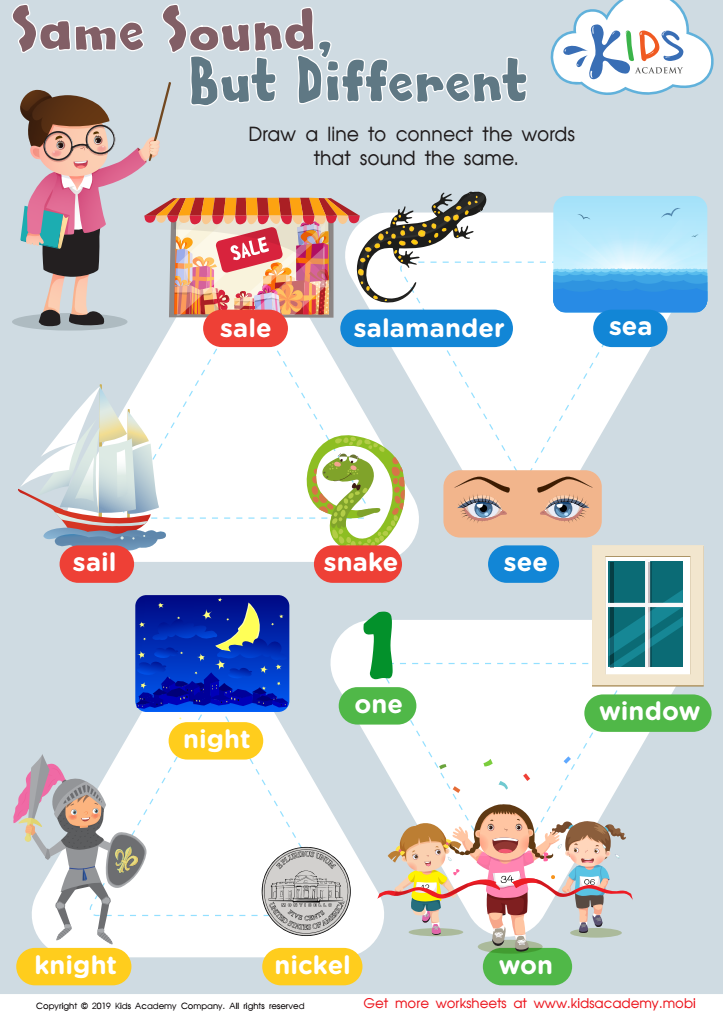
Sound Different Worksheet
 Assign to My Students
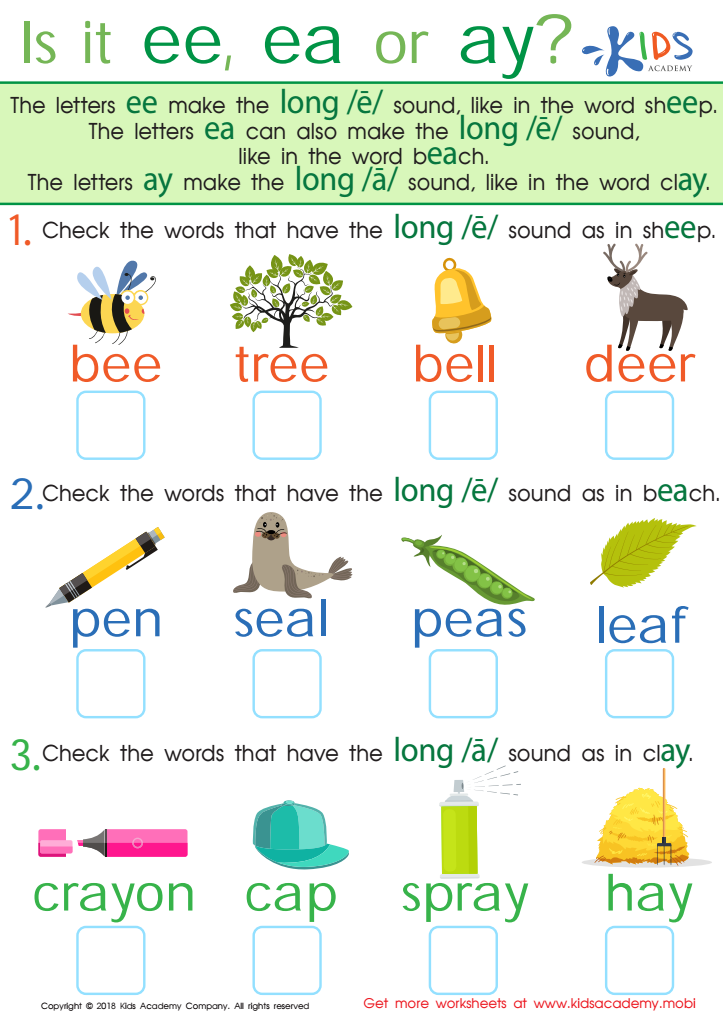
Is It EE, EA, or AY? Worksheet
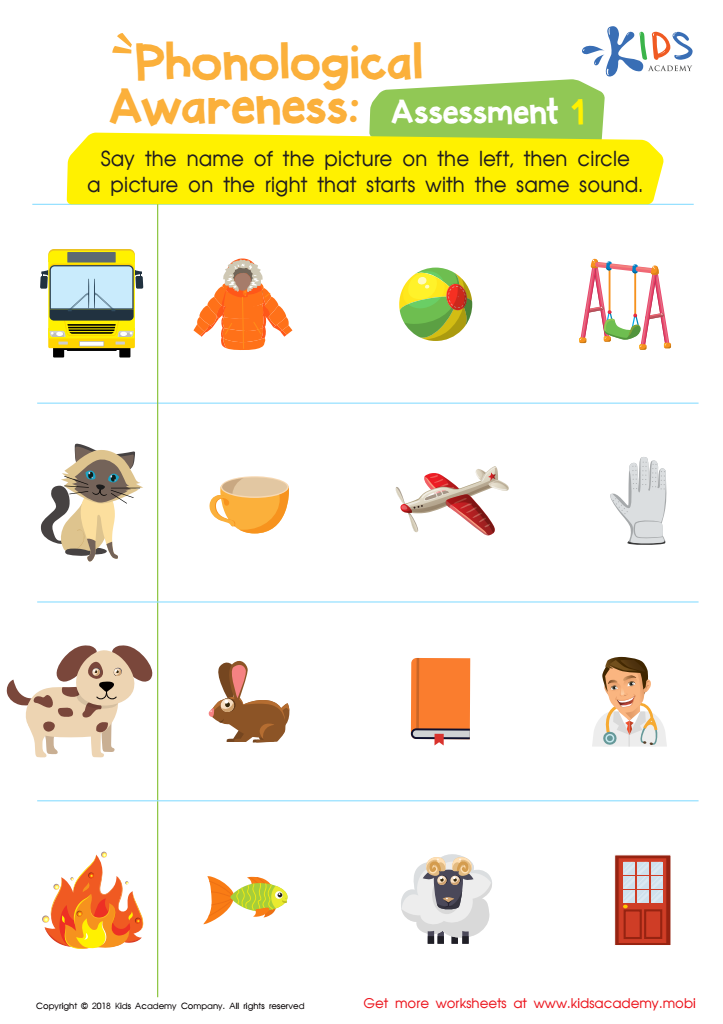
Phonological Awareness: Assessment 1 Worksheet








Phonics comprehension is a crucial aspect of early literacy that requires the attention of both parents and teachers. For children ages 3-8, mastering phonics lays the foundation for reading success. Phonics helps children understand the relationship between sounds and letters, enabling them to decode words as they encounter them. This skill is essential, as strong decoding abilities contribute to fluency, comprehension, and overall academic achievement.
When parents and teachers emphasize phonics, they equip children with the tools to read confidently and independently. Early readers who grasp phonics are more likely to develop a love for reading, leading to lifelong learning and increased literacy skills. Additionally, phonics instruction also supports children who experience reading difficulties; by reinforcing these foundational skills, educators can intervene early to address challenges.
Creating engaging phonics activities at home or in the classroom fosters a positive learning environment and strengthens the bond between parent/teacher and child. Understanding phonics comprehension affirms its role as a critical stepping stone in literacy development, ultimately empowering students to express themselves, build vocabulary, and expand their knowledge. Prioritizing phonics comprehension not only enhances individual student outcomes but also contributes to the overall literacy levels within the community.








