
Rhyming skills development Normal Worksheets for Ages 3-8
4 filtered results
Difficulty Level
Grade
Age
-
From - To
Subject
Activity
Standards
Enhance your child's reading and phonemic awareness with our engaging Rhyming Skills Development Worksheets, designed for ages 3-8. These normal worksheets promote fun and interactive learning through a variety of activities that help young learners identify and create rhymes. Children will enjoy connecting words, completing rhyming stories, and exploring language in a playful way. Our carefully crafted resources cater to different skill levels, ensuring that every child can gain confidence in their abilities. Perfect for home or classroom use, these worksheets are an excellent tool to foster a love of language while building foundational literacy skills. Start your rhyming adventure today!
Favorites
With answer key
Interactive
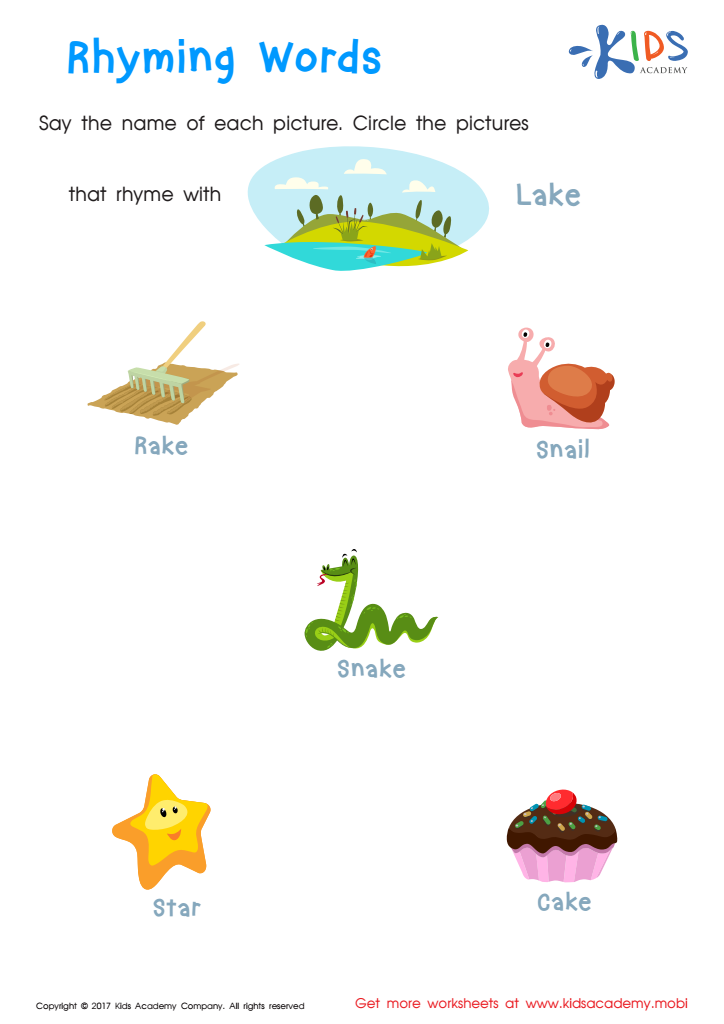
Rhyming Words Rhyming Worksheet
This worksheet is great for honing pre-reading skills. It helps kids make connections between pictures and written words, use problem-solving, and recognize sounds and words that rhyme. Have fun exploring rhyming words with your child, and they'll be rhyming in no time!
 Assign to My Students
Rhyming Words Rhyming Worksheet
Worksheet
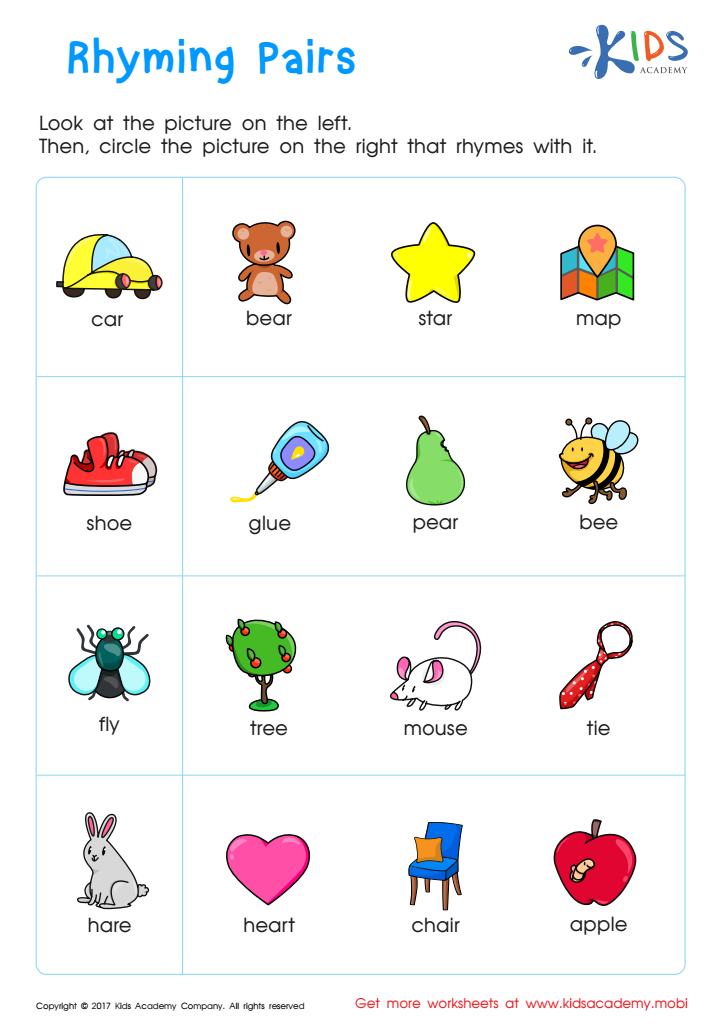
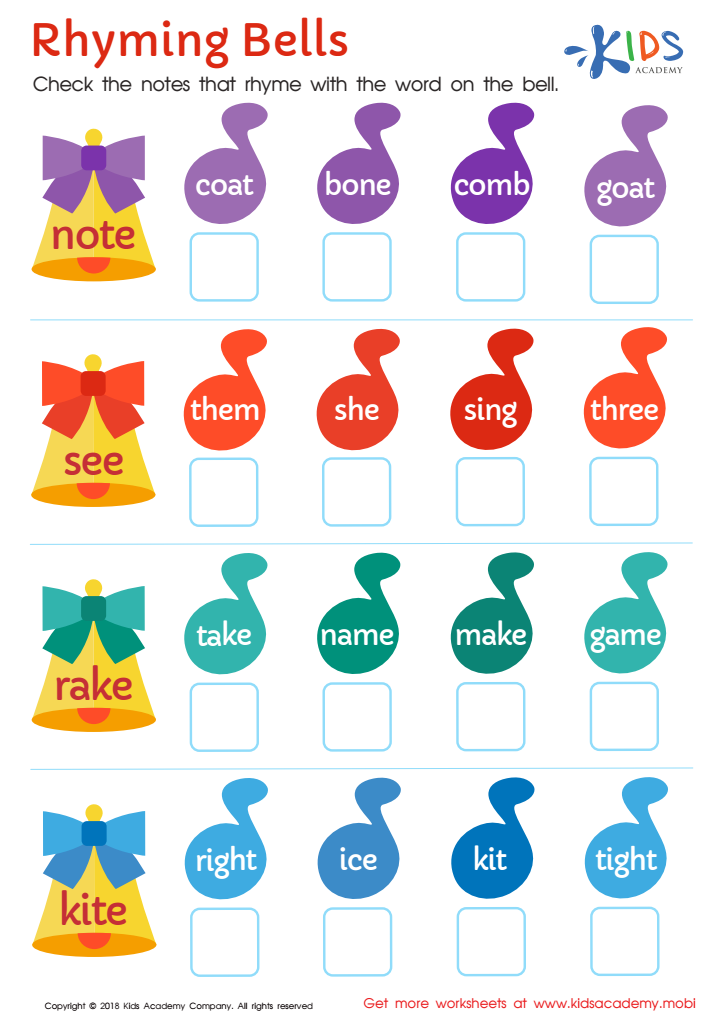
Rhyming Bells Worksheet
This printable worksheet helps students recognize rhyming words. Read a word, then pick the 4 words that rhyme. Look out for words with different spellings but same ending sound. It's a great exercise to improve understanding of rhyming words.
Rhyming Bells Worksheet
Worksheet
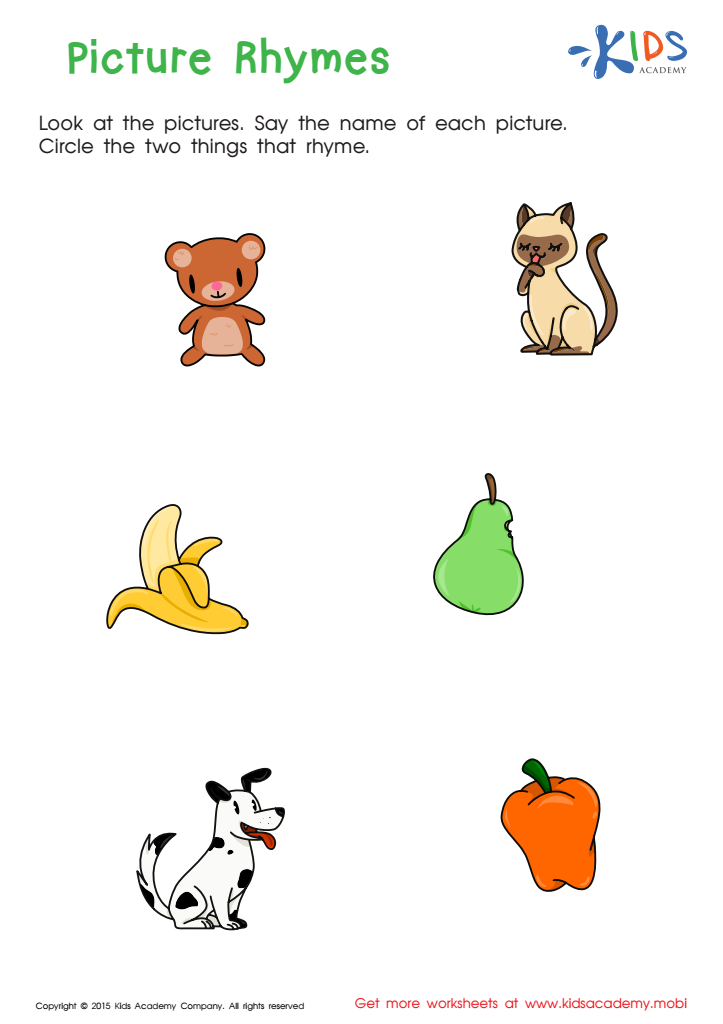
First Words: Picture Rhymes Worksheet
Rhyming helps kids understand language, read and write better. This printable worksheet boosts problem-solving and cognitive skills with vibrant pictures. It teaches kids to identify words, recognize rhymes, complete mental tasks and write words. An extra activity: show them how rhyming words share some of the same letters.
First Words: Picture Rhymes Worksheet
Worksheet
Join Kids Academy for Free
Who is primarily going to use this learning content?






Rhyming skills are crucial for children aged 3-8 as they form the foundation for literacy development. When children engage with rhymes, they practice phonemic awareness—the ability to hear, identify, and manipulate sounds in words. This skill is essential for learning to read and write. Recognizing rhyming patterns helps children decode words and improves their vocabulary as they hear and learn new words in context.
Additionally, rhyming activities promote cognitive development. They encourage critical thinking as children begin to understand language structure and patterns. When children participate in rhyming games and songs, they also enhance their memory and auditory processing skills.
Moreover, incorporating rhyming in play and storytelling fosters a love for language. It makes learning fun and engaging, which is vital at this developmental stage. Children who enjoy language are more likely to explore reading on their own in the future.
Lastly, strong rhyming skills can positively impact a child’s social skills. Rhyming often encourages group participation, creating opportunities for interaction and collaboration among peers. Overall, nurturing rhyming skills at this age is integral to building a solid foundation for future literacy, cognitive, and social development.








