Science knowledge Normal Worksheets for Ages 3-8
5 filtered results
-
From - To
Explore our collection of "Science Knowledge Normal Worksheets for Ages 3-8" designed to ignite curiosity in young minds. These engaging resources cover diverse topics, including plants, animals, seasons, and the human body, tailored for early learners. Each worksheet combines educational content with fun activities to develop critical thinking and observational skills. Perfect for parents and teachers, these printable sheets aim to foster a love for science and facilitate foundational understanding. Prepare your child for academic success with exercises that make learning an enjoyable adventure. Start exploring the wonders of science with our carefully crafted worksheets today!
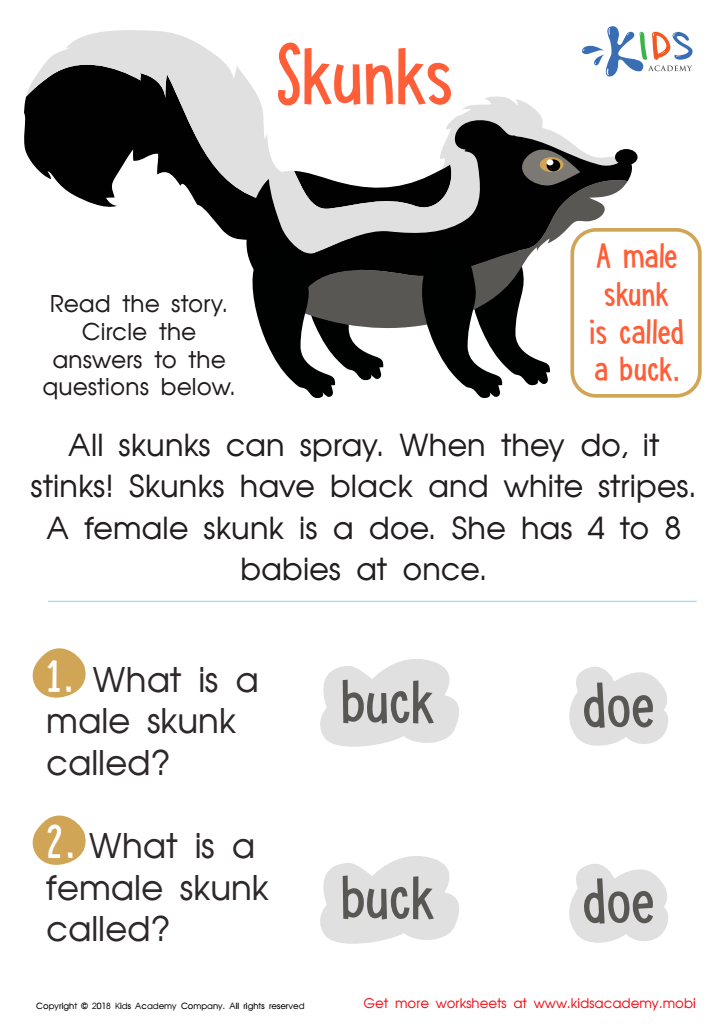
Skunks Worksheet
 Assign to My Students
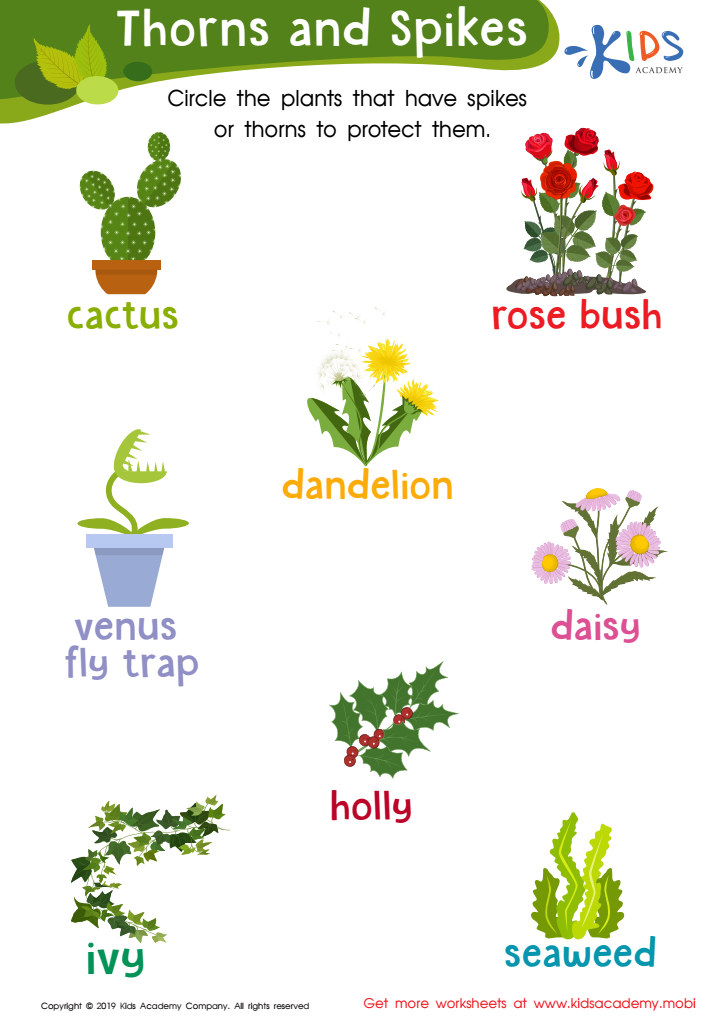
Thorns and Spikes Worksheet
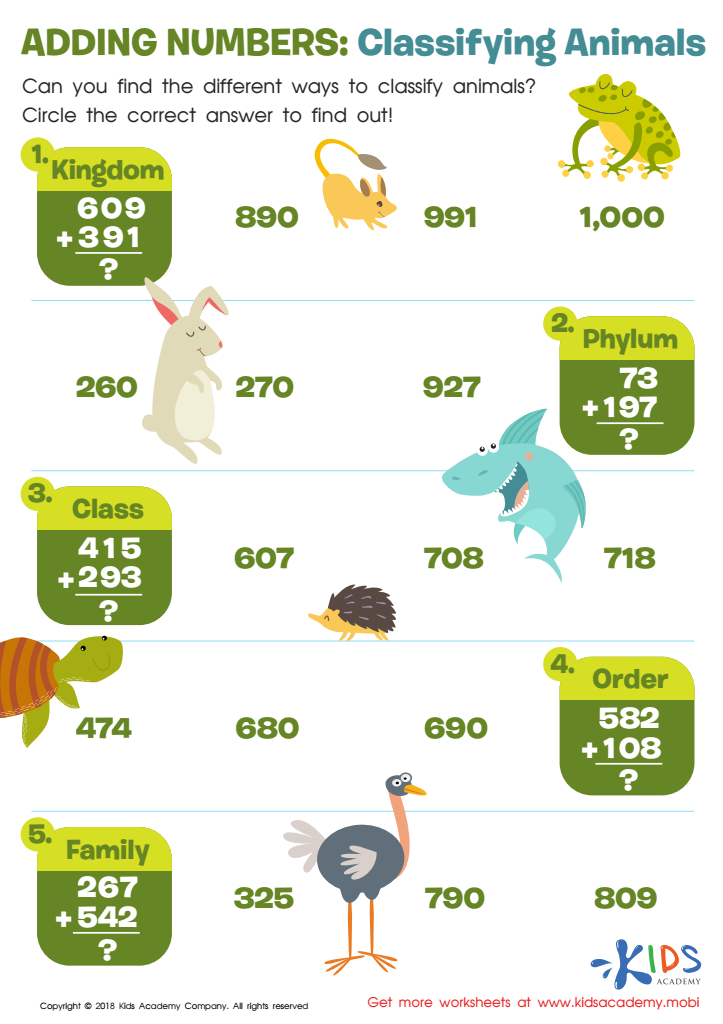
Adding Numbers: Classifying Animals Worksheet
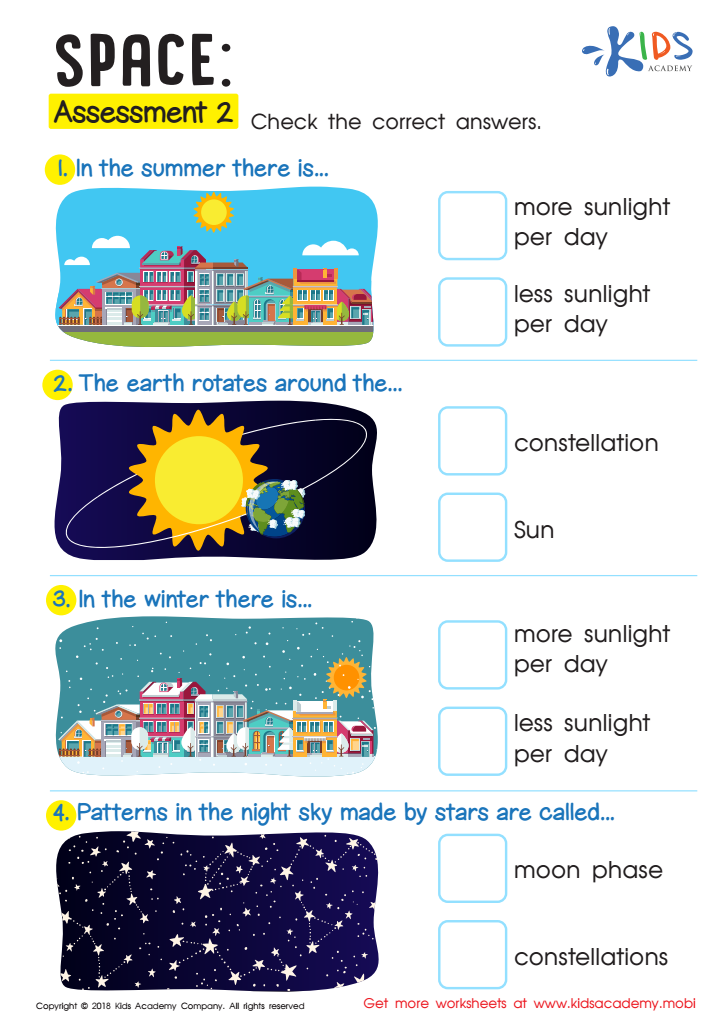
Space: Assessment 2 Worksheet







Introducing science knowledge to children ages 3-8 is crucial for several compelling reasons. Firstly, this is a formative period for cognitive development. Engaging in science-related activities helps young minds develop critical thinking and problem-solving skills. Experiments, observations, and asking questions promote curiosity and analytical thinking, which are essential skills for lifelong learning.
Secondly, scientific exploration fosters a sense of wonder and excitement about the natural world. This early exposure can ignite a lifelong interest in science, technology, engineering, and mathematics (STEM) fields, potentially leading to future careers in these crucial areas.
Moreover, early science education helps children understand the world around them. When kids learn about plants, animals, weather, and simple physics, they gain a valuable perspective on everyday phenomena, enhancing their overall understanding and interaction with the environment.
Socially, engaging in science activities offers collaborative learning experiences, improving communication and teamwork abilities. Working on projects or discussing observations with peers encourages cooperation and the sharing of ideas.
Lastly, equipping children with basic scientific knowledge supports them in becoming informed citizens. In a world increasingly shaped by science and technology, informed decision-making relies on a fundamental understanding of these domains. By prioritizing early science education, teachers and parents set a foundation for future academic, career, and personal success.








