Understanding biodiversity Normal Worksheets for Ages 3-8
4 filtered results
-
From - To
Discover the fascinating world of biodiversity with our specially designed worksheets for children aged 3-8. These engaging and educational resources will help young learners explore the variety of life on Earth, from plants to animals, and understand the importance of ecosystems. Each worksheet is tailored towards fostering curiosity and comprehension in young minds, using age-appropriate activities that combine fun with learning. By introducing children to biodiversity at a young age, we aim to inspire a lifelong appreciation for wildlife and the natural world. Perfect for parents and educators, these printables will make science both exciting and accessible.
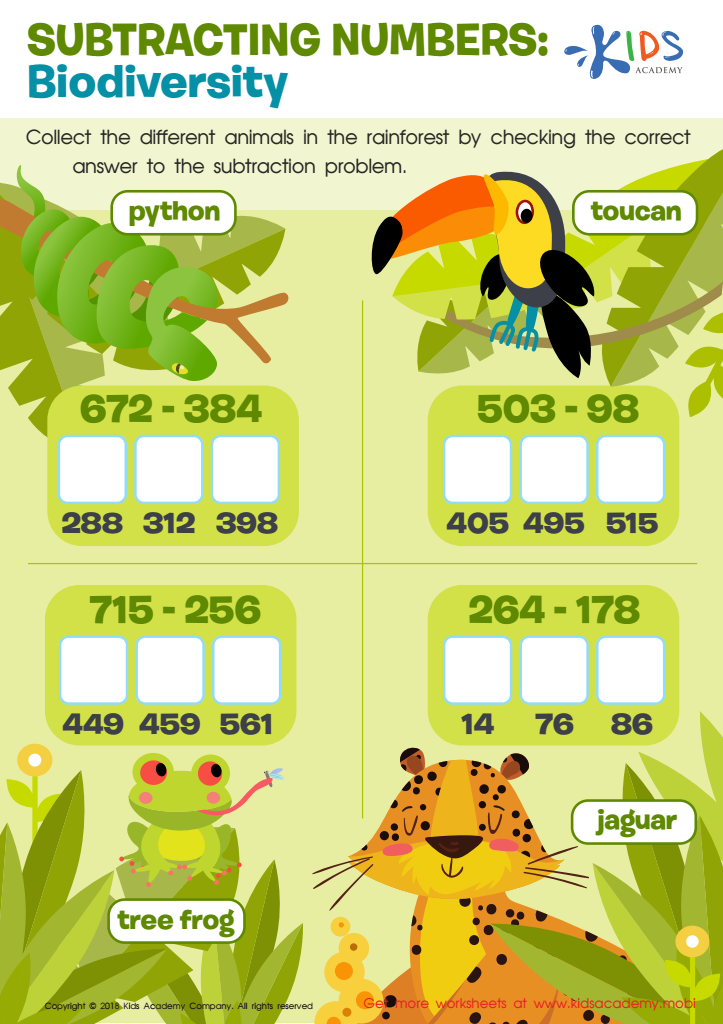
Subtracting Numbers: Biodiversity Worksheet
 Assign to My Students
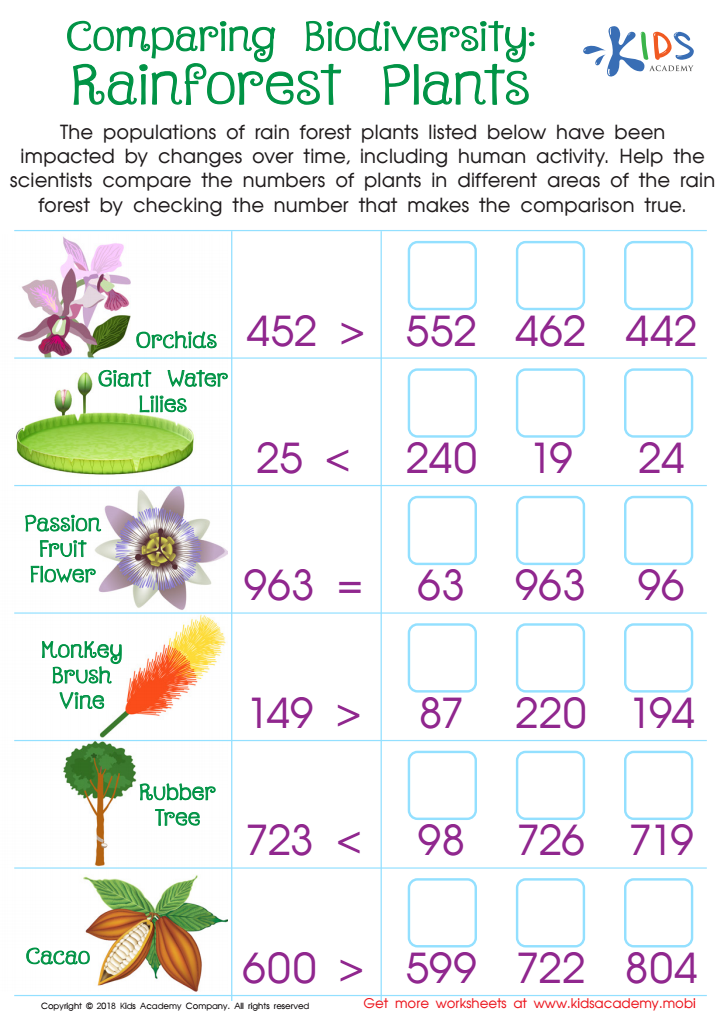
Comparing Biodiversity: Rainforest Plants Worksheet
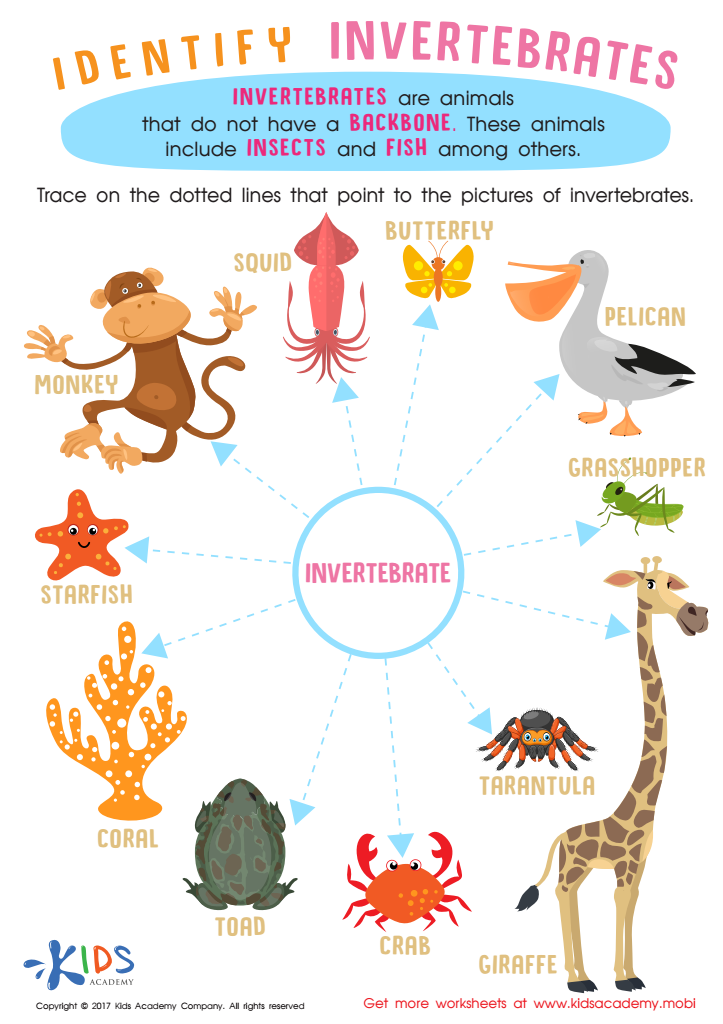
Invertebrates Worksheet for Grade 3
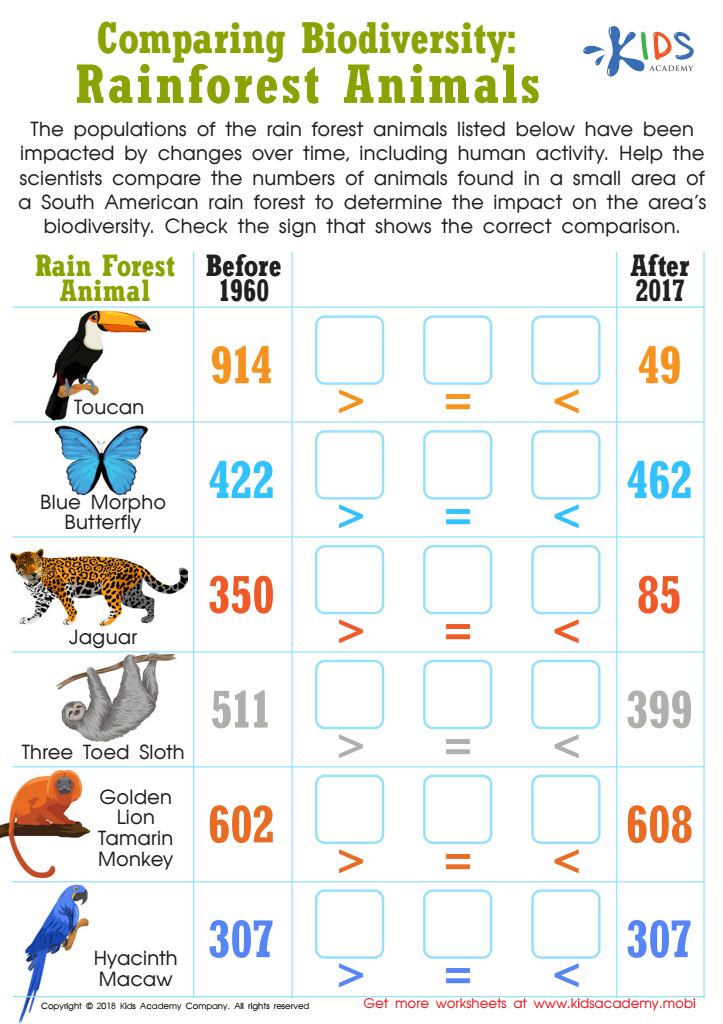
Comparing Biodiversity: Rainforest Animals Worksheet







Teaching children about biodiversity is essential, even from a young age, because it fosters a deeper understanding and appreciation of the natural world. For children aged 3-8, learning about the variety of life on Earth helps create early awareness of nature and its importance.
Understanding biodiversity helps children appreciate that different plants, animals, and micro-organisms play crucial roles in our environment. This knowledge can cultivate a sense of wonder and responsibility towards protecting diverse ecosystems. When children see the vibrant assortment of life in a garden, forest, or ocean, they begin to recognize that all species, no matter how small, are interconnected and essential for healthy ecosystems.
Moreover, teaching about biodiversity helps develop observational and cognitive skills. Children who are encouraged to explore and ask questions about different species learn critical thinking, problem-solving, and empathy. This context makes science tangible and relevant to their everyday lives, laying a strong foundation for future scientific learning.
Lastly, promoting awareness around biodiversity instills values of conservation and sustainability early on. Children who understand the impact of their actions on the environment are more likely to adopt sustainable habits and advocate for ecological harmony as they grow. Thus building an early connection to biodiversity nurtures informed and responsible stewards of the planet.








