Understanding syllables Normal Worksheets for Ages 3-8
5 filtered results
-
From - To
Unlock the world of phonics with our "Understanding Syllables Normal Worksheets" designed for ages 3-8! These engaging worksheets help young learners grasp the essential concept of syllables through various fun and interactive activities. Children will practice identifying, counting, and segmenting syllables in a variety of words, fostering essential reading skills. Each worksheet is tailored to meet developmental needs, ensuring that learning is both educational and enjoyable. Perfect for home or classroom use, these resources encourage critical thinking and language development in early learners. Give your child a head start in literacy and make learning syllables an exciting adventure today!
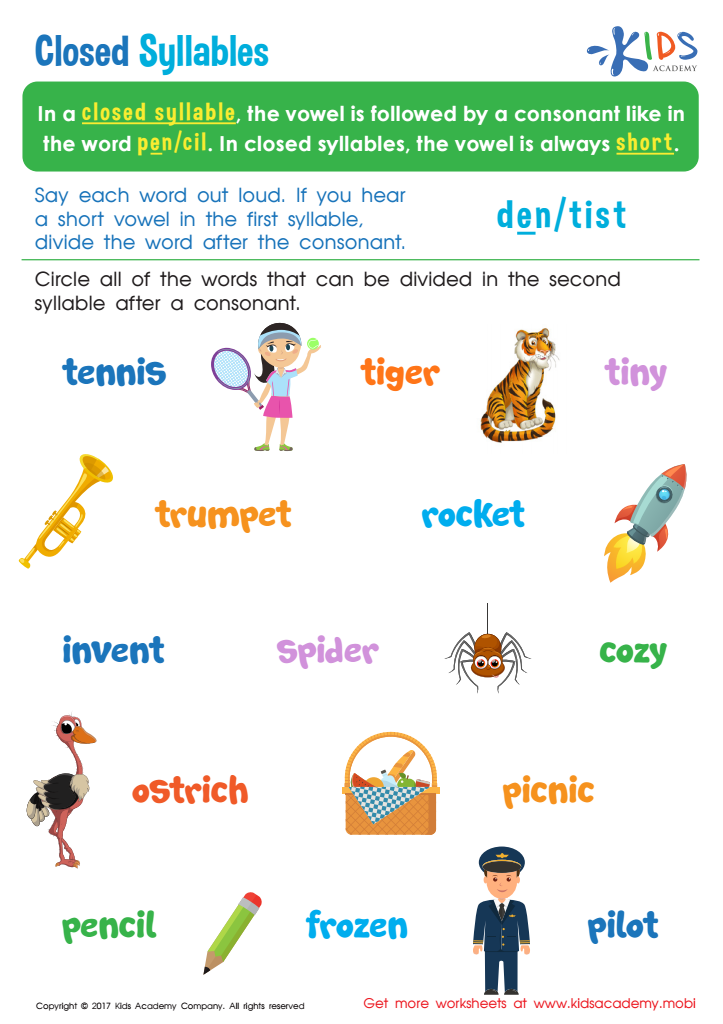
Closed Syllable Spelling Worksheet
 Assign to My Students
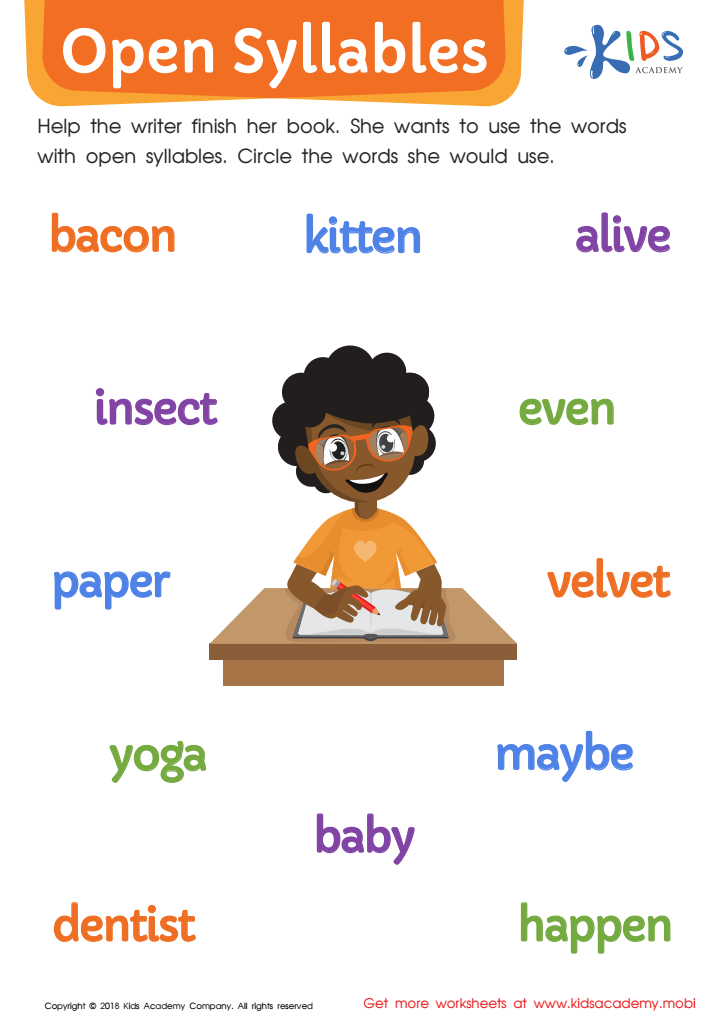
Open Syllables Worksheet
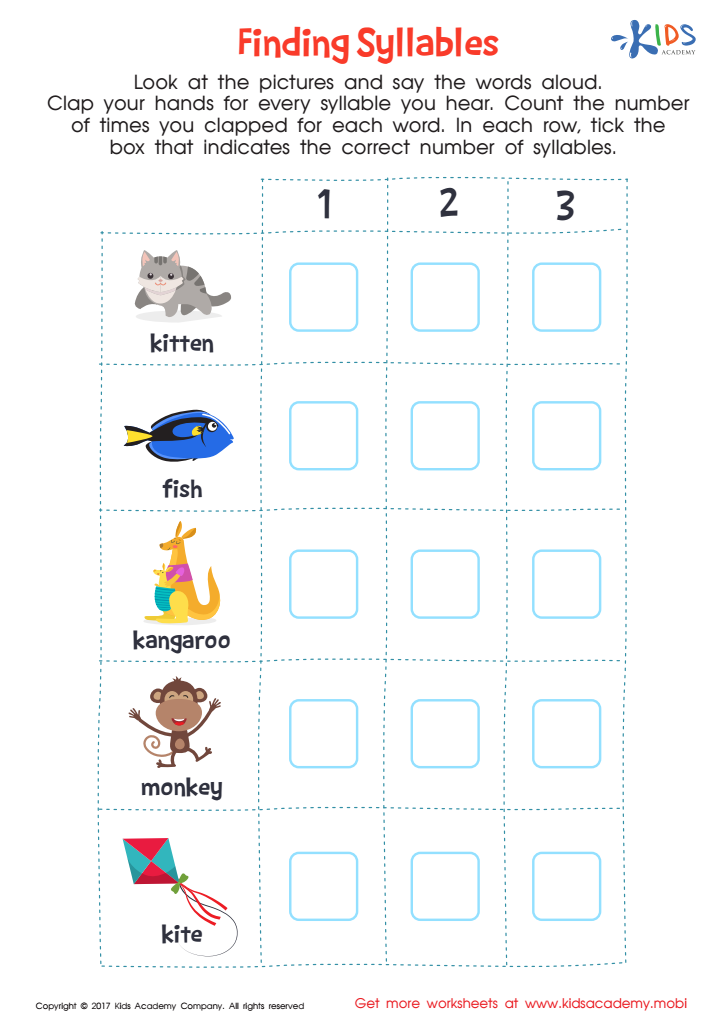
Finding Syllables Word Structure Worksheet
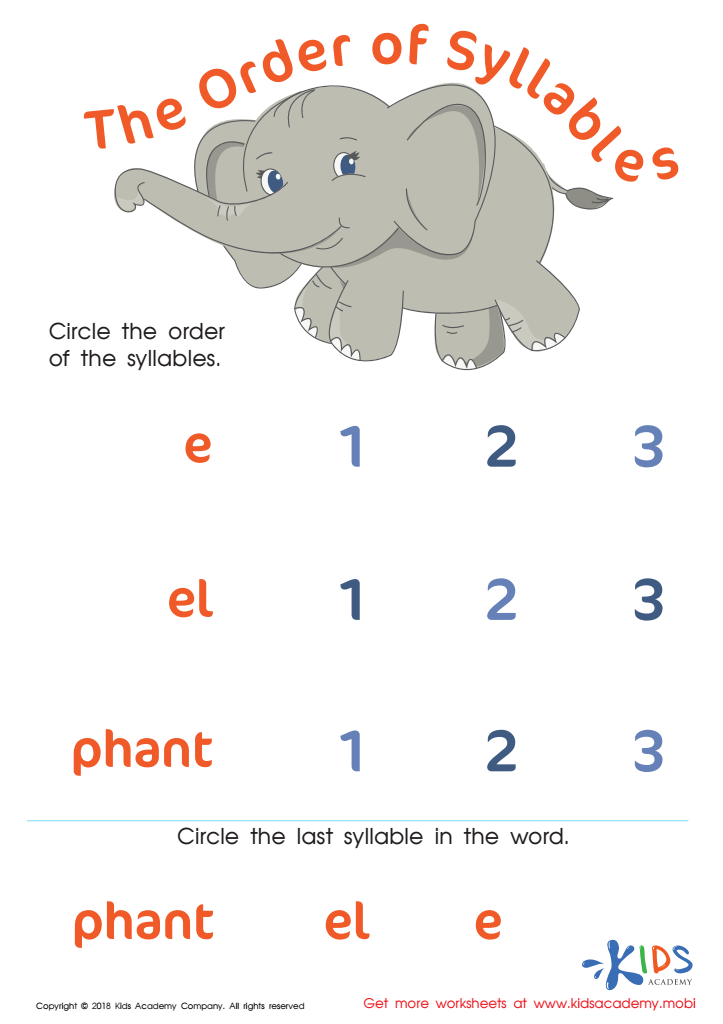
The Order of Syllables Worksheet
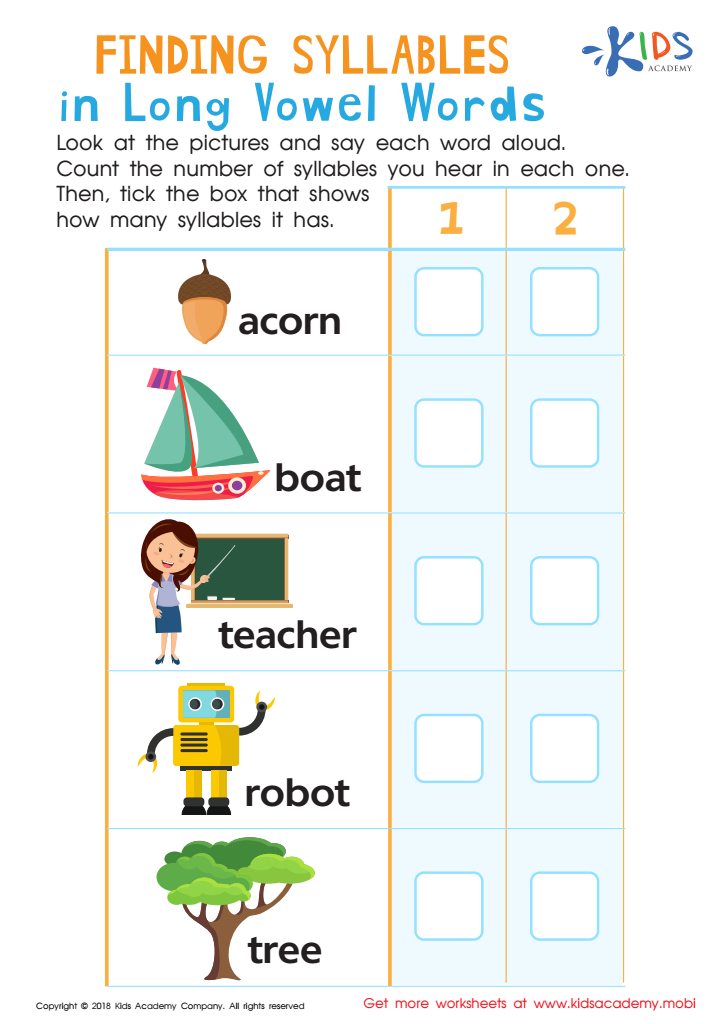
Finding Syllables in Long Vowel Words Worksheet



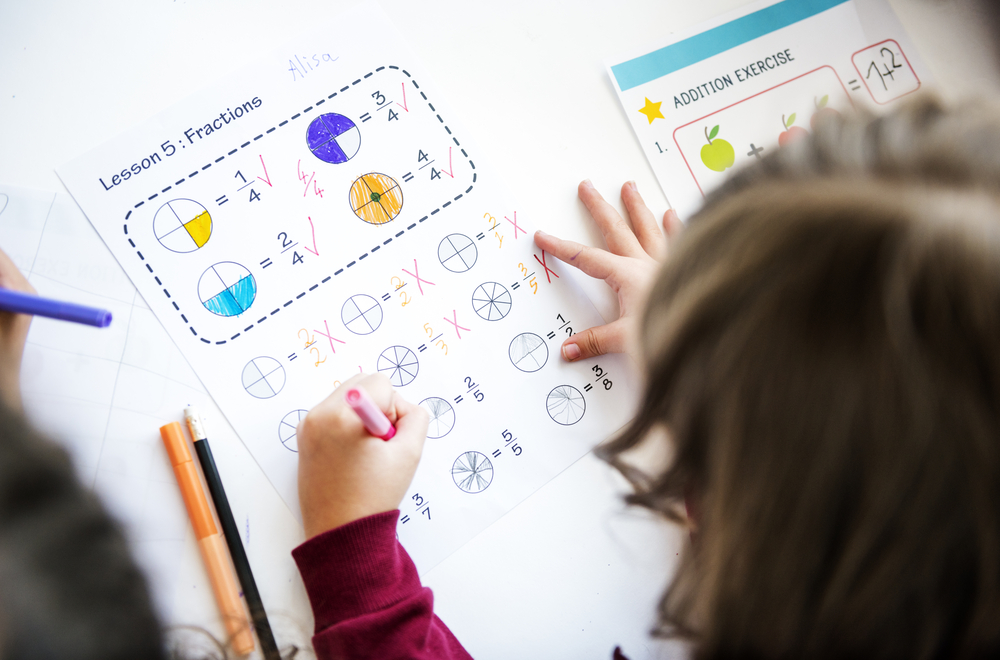



Understanding syllables is fundamental for children ages 3-8, as it lays the groundwork for reading and language development. At this stage, children's brains are rapidly developing, and their ability to recognize and manipulate syllables significantly impacts their literacy skills.
When parents and teachers focus on syllable awareness, they help children break down words into manageable parts, making it easier to decode and pronounce unfamiliar words. This skill is crucial for learning phonics and enhances spelling abilities too. By recognizing syllables, children also improve their rhyming skills and phonemic awareness, further boosting their overall language proficiency.
Moreover, engaging in syllable-related activities can make learning fun, often incorporating games, songs, and storytelling. Such playful interactions not only foster a love for language but also strengthen the parent-child or teacher-student bond.
Lastly, an early understanding of syllables contributes to children's confidence when reading aloud and fosters a sense of achievement that motivates them to explore literacy more independently. In summary, prioritizing syllable recognition is essential for nurturing competent, confident readers and effective communicators.








