
Understanding times tables Normal Worksheets for Ages 3-8
3 filtered results
Difficulty Level
Grade
Age
-
From - To
Subject
Activity
Standards
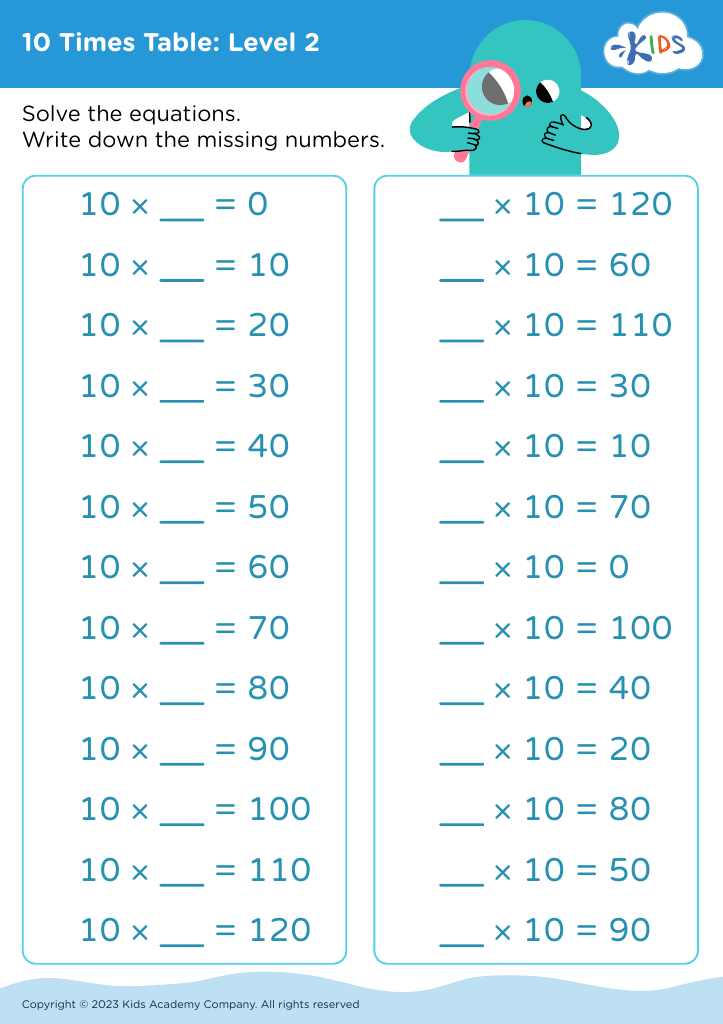
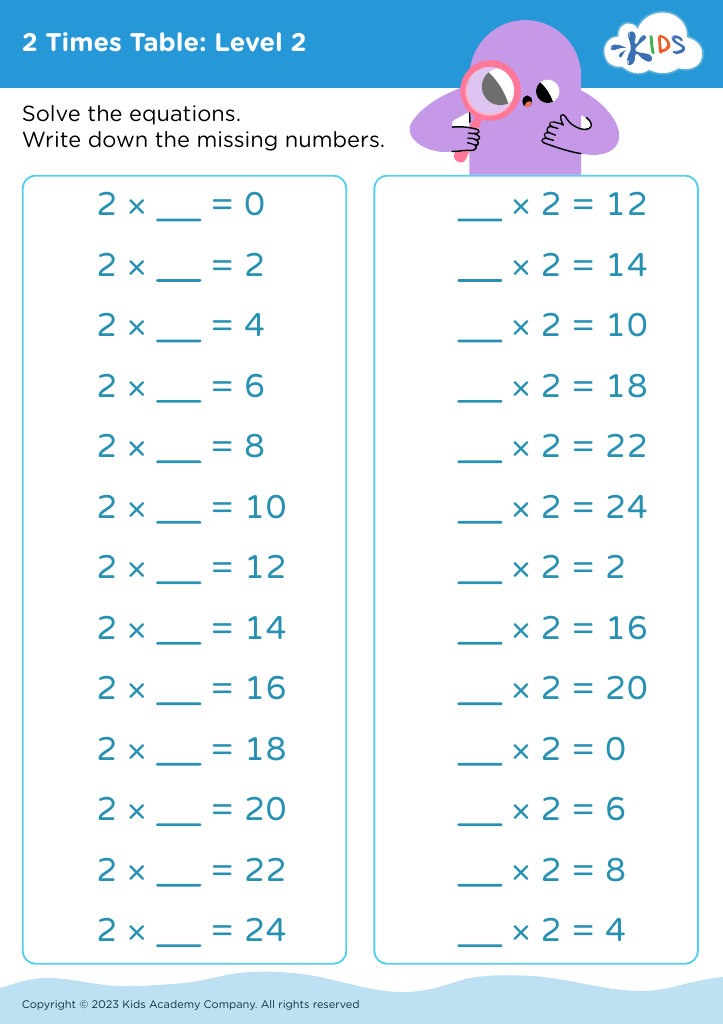
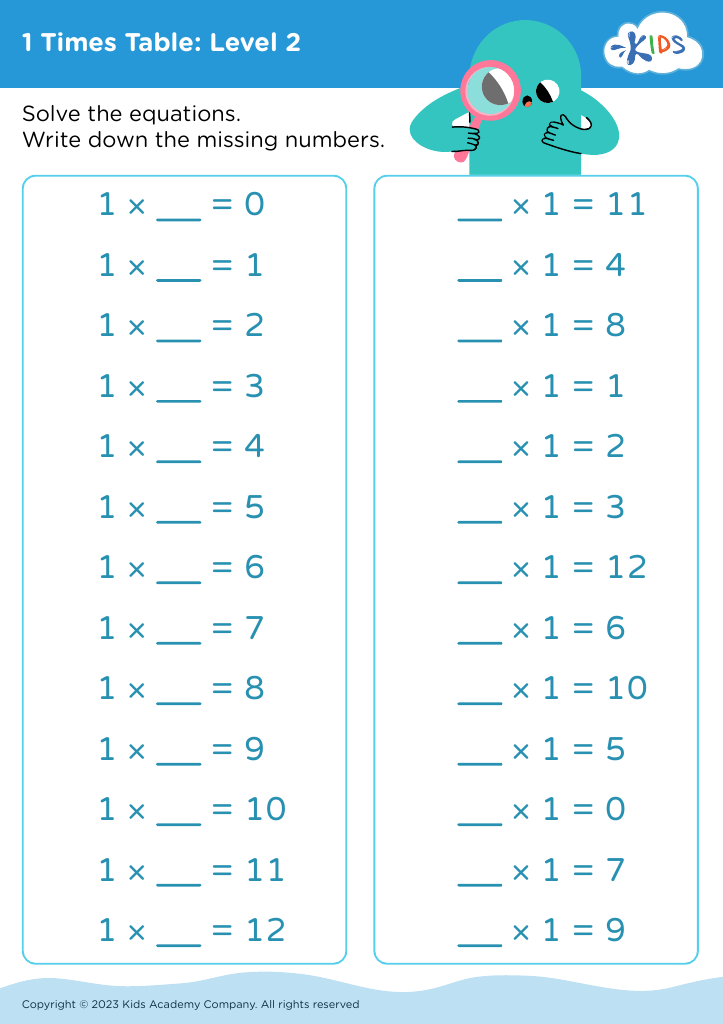
Explore our engaging "Understanding Times Tables Normal Worksheets" designed for children ages 3-8. These worksheets provide a fun and interactive way for young learners to grasp essential multiplication skills. Through colorful visuals and easy-to-follow exercises, kids will boost their confidence and fluency in times tables. Our meticulously crafted resources cater to various learning styles, making it easy for parents and educators to support math readiness. Discover the joy of learning as your child interacts with these worksheets, laying a strong foundation for future math success. Perfect for at-home practice or classroom activities, our worksheets make mastering multiplication a delightful experience!
Favorites
With answer key
Interactive
Join Kids Academy for Free
Who is primarily going to use this learning content?








Understanding times tables is vital for children aged 3-8 as it builds a solid foundation for their mathematical skills. During these formative years, youngsters are forming their ability to think logically and solve problems, and introducing them to multiplication concepts early can enhance their reasoning and cognitive skills.
When children grasp the concept of times tables, they not only improve their multiplication skills but also develop a greater understanding of patterns and relationships within numbers. This foundational knowledge will help them with future math concepts, such as division, fractions, and algebra, making advanced math easier to tackle later on.
Furthermore, multiplication is a fundamental skill used in real-world scenarios like helping with measurements in cooking, budgeting, or playing games that involve scoring. Teaching times tables also fosters confidence, as children who master these concepts feel a sense of achievement and are more likely to engage positively with math.
Additionally, with the increasing emphasis on STEM (science, technology, engineering, and mathematics) education, early proficiency in math can open doors for future learning opportunities. Ultimately, parents and teachers should recognize the importance of introducing times tables early, setting the stage for lifelong mathematical proficiency and enjoyment.








