Visual discrimination skills Normal Worksheets for Ages 3-8
5 filtered results
-
From - To
Visual discrimination skills are essential for children aged 3-8 as they identify, assess, and differentiate between various shapes, patterns, and objects. Our expertly crafted "Visual Discrimination Skills Normal Worksheets" offer engaging, age-appropriate activities designed to build these crucial skills. From recognizing differences in size, color, and shape to spotting subtle distinctions in complex visuals, these worksheets support cognitive development and enhance attention to detail. Ideal for classroom use or at-home practice, they provide a fun and effective way to sharpen your child’s observation abilities, setting a solid foundation for reading, writing, and daily problem-solving tasks.
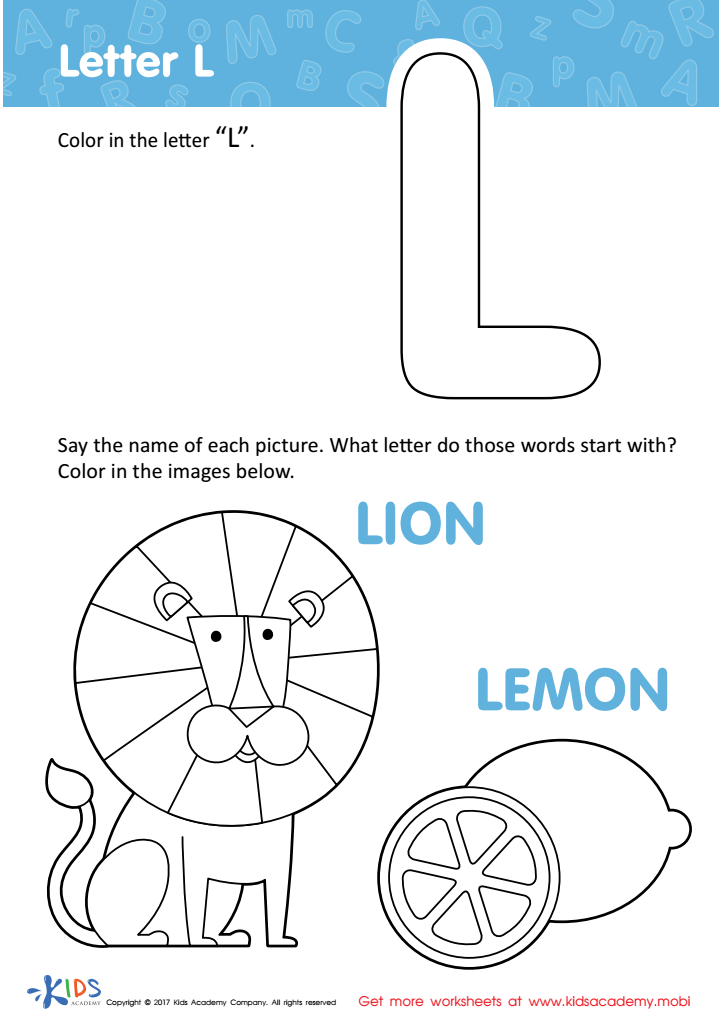
Letter L Coloring Sheet
 Assign to My Students

Find Uppercase Letters A, B, and C Worksheet
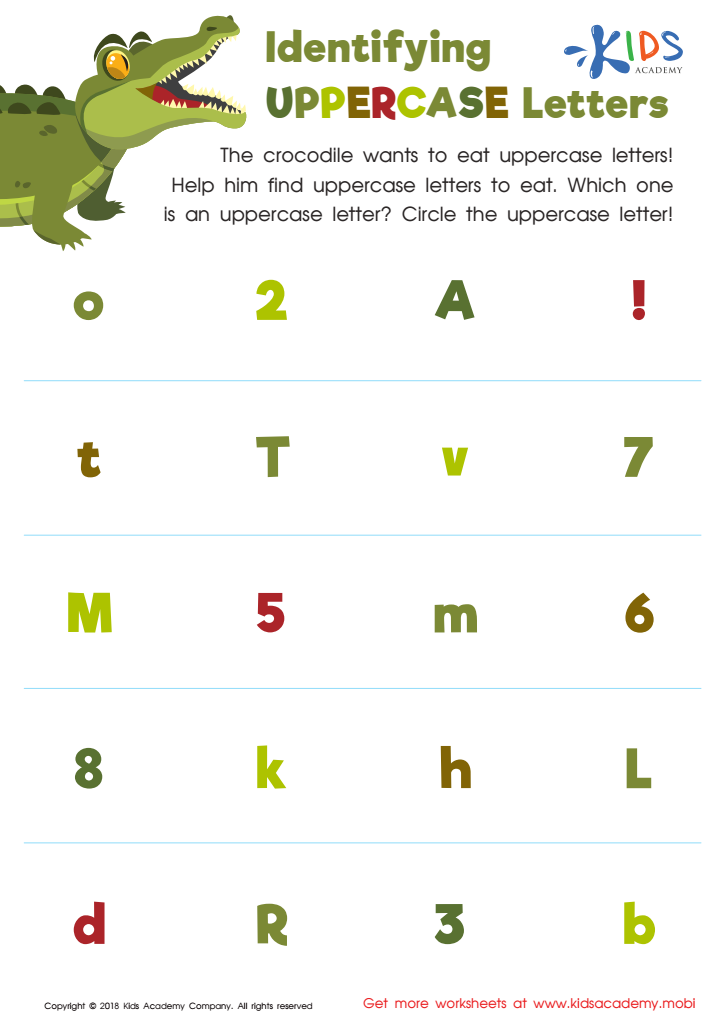
Identifying Uppercase Letters Worksheet
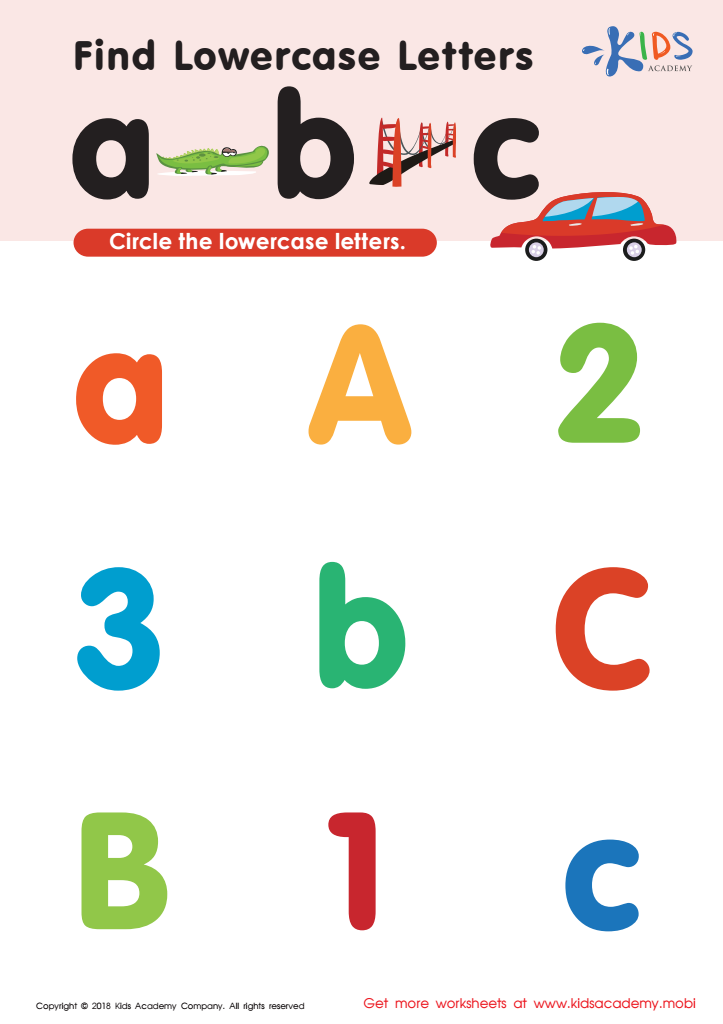
Find lowercase letters a b c Worksheet
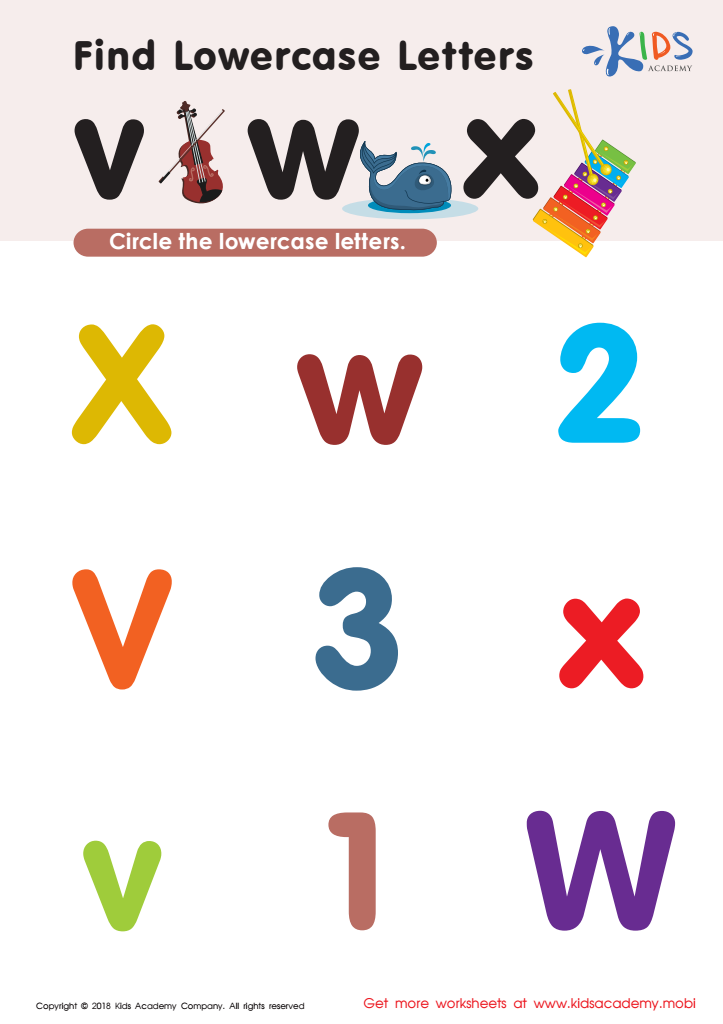
Find Lowercase Letters v w x Worksheet






Visual discrimination skills are crucial for young children as they form the foundation for reading, writing, and overall academic success. For ages 3-8, these skills enable children to discern differences and similarities between objects and shapes, letters, and numbers. This ability is fundamental in recognizing letters and understanding that 'b' is different from 'd,' which directly impacts their reading ability.
Moreover, visual discrimination skills enhance attention to detail, critical for comprehension tasks across subjects. Without these skills, children may struggle with early learning milestones, potentially leading to frustration and disengagement in academic settings.
For parents and teachers, fostering visual discrimination skills can be achieved through engaging activities like sorting games, puzzles, and matching exercises. Encouraging children to notice differences in shapes, sizes, colors, and patterns can significantly aid their cognitive development.
Ultimately, strong visual discrimination skills lay the groundwork for more advanced skills, including math and writing. Prioritizing these skills helps ensure children have a robust foundation, promoting confidence and enthusiasm in learning. As early childhood is a prime period for developing these essential skills, attention from both parents and teachers can result in long-term educational benefits.








