Cognitive Development Normal 2D Shapes Worksheets for Ages 3-8
5 filtered results
-
From - To
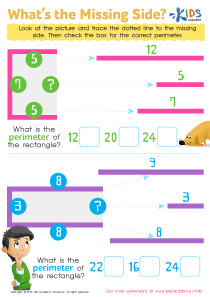
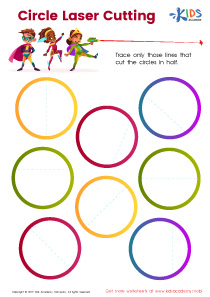
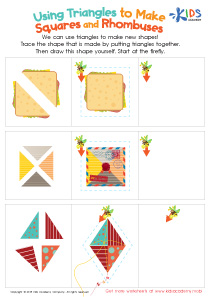
Unlock the power of early learning with our "Cognitive Development Normal 2D Shapes Worksheets for Ages 3-8." Specifically crafted to enhance spatial awareness and critical thinking, these engaging worksheets help young minds recognize and differentiate between basic 2D shapes. Ideal for preschoolers and early grade students, the activities include fun tasks like matching, tracing, and sorting shapes, which not only build foundational geometry skills but also boost cognitive development. With colorful and interactive designs, our worksheets provide a playful yet educational experience that supports brain growth and prepares children for academic success. Perfect for both classroom and home use!
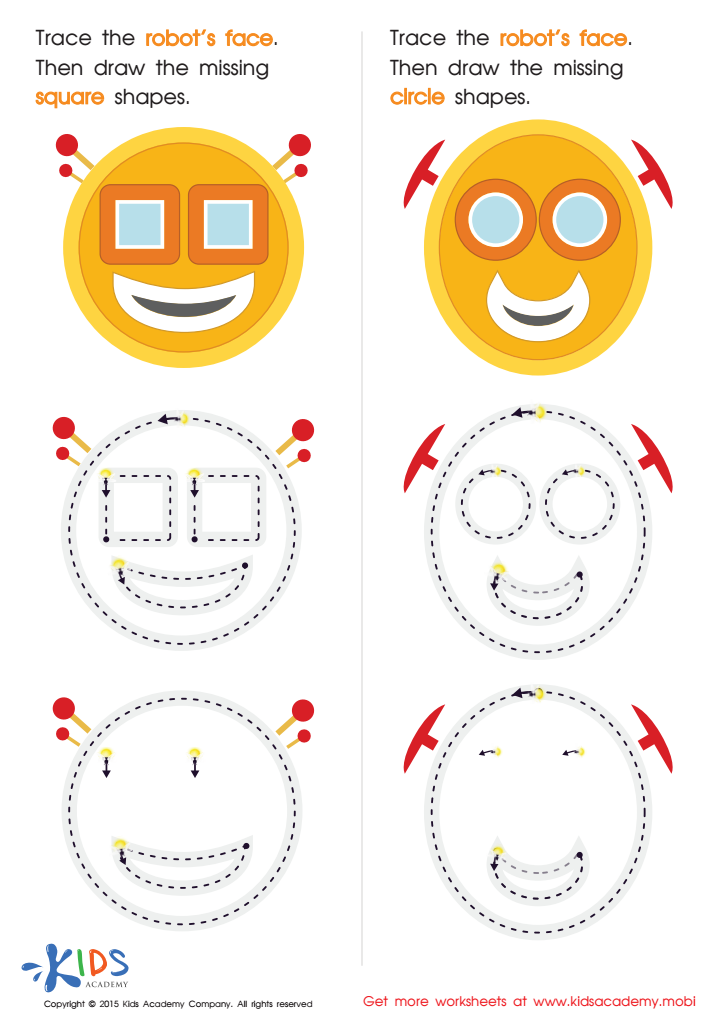
Practicing to Draw Circles And Squares Printable
 Assign to My Students





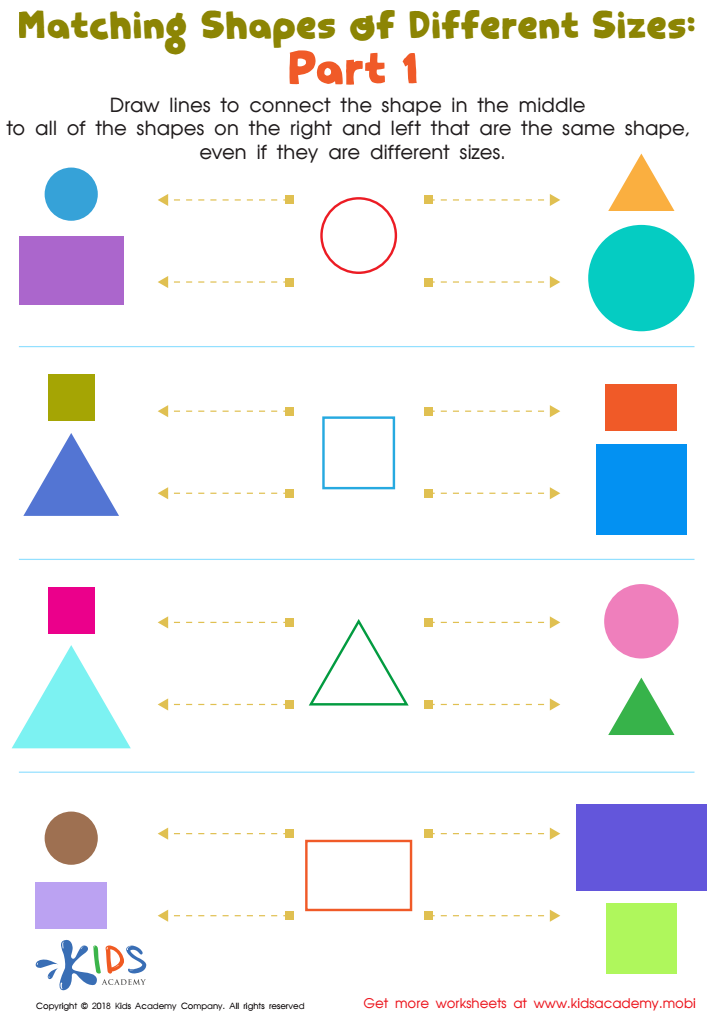
Geometry: part 1 Worksheet
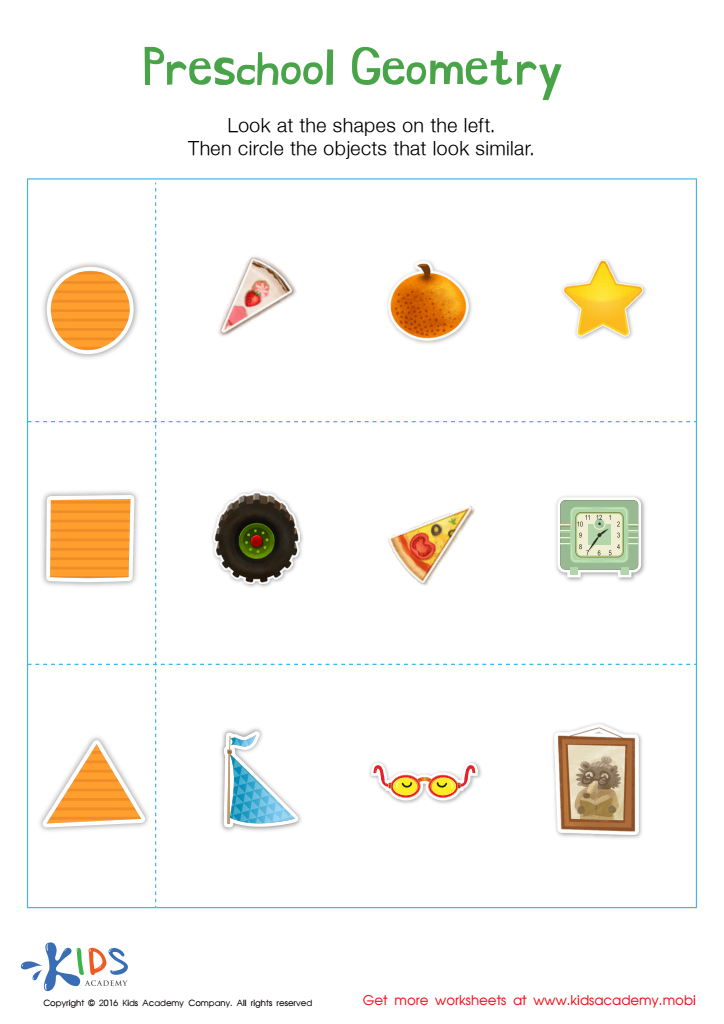
Preschool Geometry Match Up Worksheet
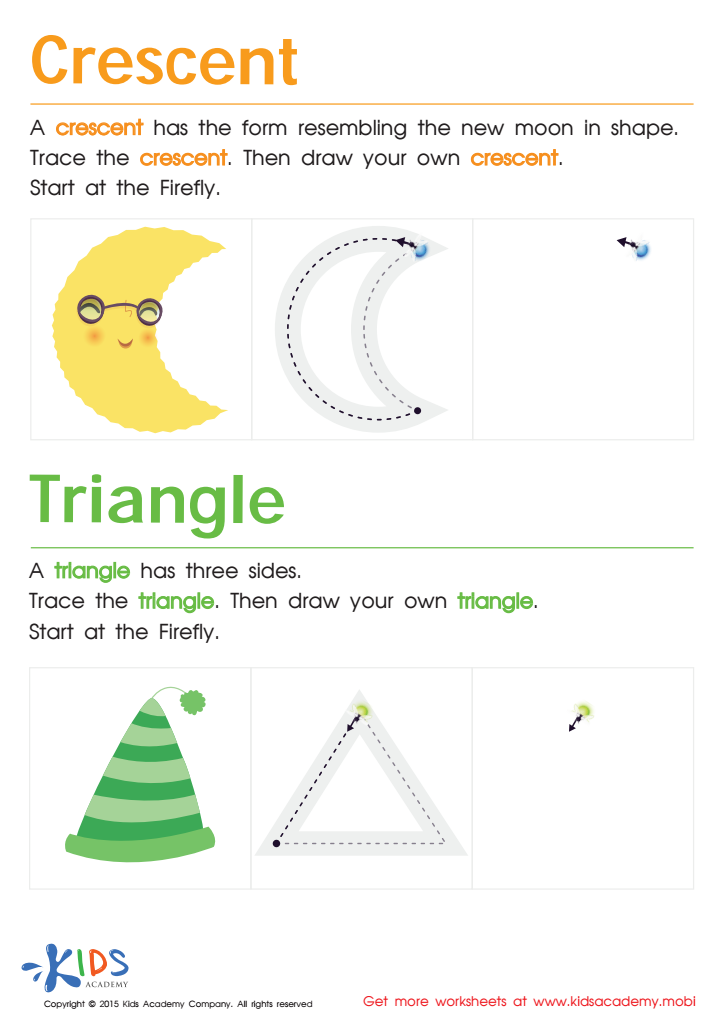
Learning to Draw Crescents And Triangles Worksheet
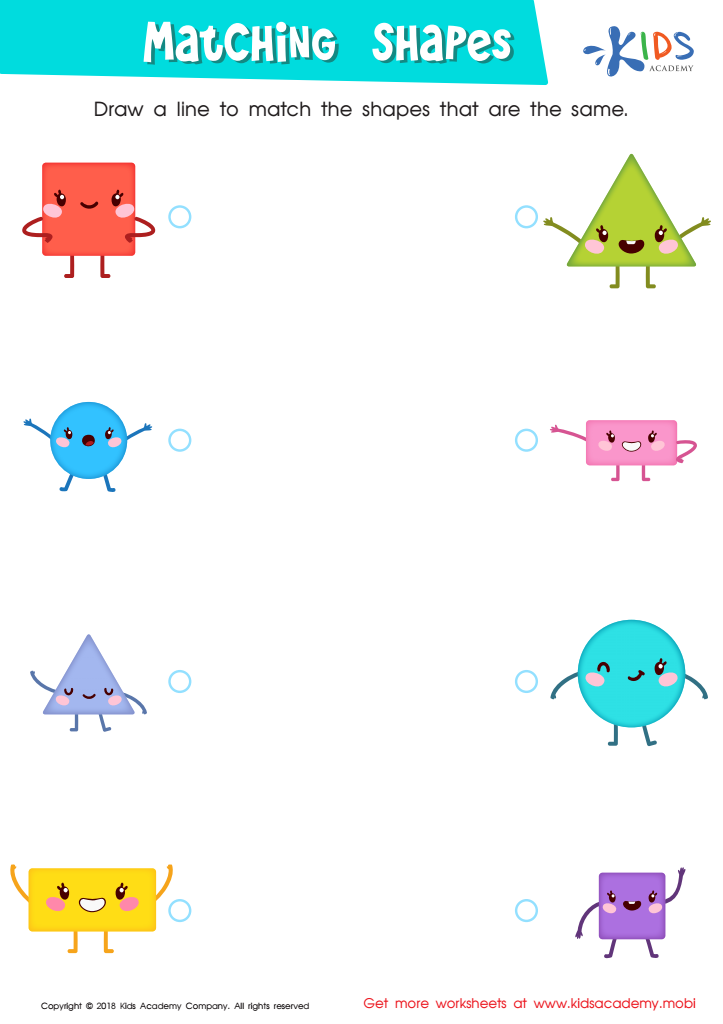
Matching Shapes Worksheet








Cognitive development and the understanding of normal 2D shapes in children ages 3-8 are crucial components of early education that shape a child's foundational skills and overall cognitive growth. For children, learning about 2D shapes such as circles, squares, triangles, and rectangles enhances their ability to recognize patterns, a key element in cognitive processing and problem-solving. This foundational knowledge supports mathematical thinking, including geometry and spatial awareness, which are essential for everyday tasks and advanced learning.
Parents and teachers play pivotal roles in reinforcing these skills, as early exposure and practice can significantly impact a child's academic trajectory. Recognizing shapes aids in categorization and differentiation, helping young learners make sense of the world around them, from identifying objects to understanding complex concepts later on. Moreover, mastering these shapes boosts hand-eye coordination and fine motor skills as children draw, trace, and manipulate shape-based toys or tools.
This period of early brain development is marked by rapid growth and exceptional receptiveness to learning. By prioritizing shape recognition and related activities, parents and teachers not only foster a solid base for future mathematical learning but also stimulate cognitive processes related to memory, attention, and logical thinking. Thus, caring about cognitive development through engaging with 2D shapes sets the stage for holistic development and lifelong learning success.