Problem-Solving Skills Normal 2D Shapes Worksheets for Ages 3-8
5 filtered results
-
From - To
Enhance your child's problem-solving skills with our engaging Normal 2D Shapes Worksheets, specially designed for ages 3-8. These worksheets provide a fun and interactive way for young learners to explore fundamental geometric shapes while developing critical thinking and analytical abilities. Each activity encourages creativity and reinforces shape recognition through exciting tasks that challenge children to think outside the box. Perfect for home practice or classroom use, our worksheets promote early math proficiency and confidence. Equip your child with the essential skills they'll need for future learning adventures, ensuring their educational journey is both enjoyable and effective! Start shaping future problem-solvers today!
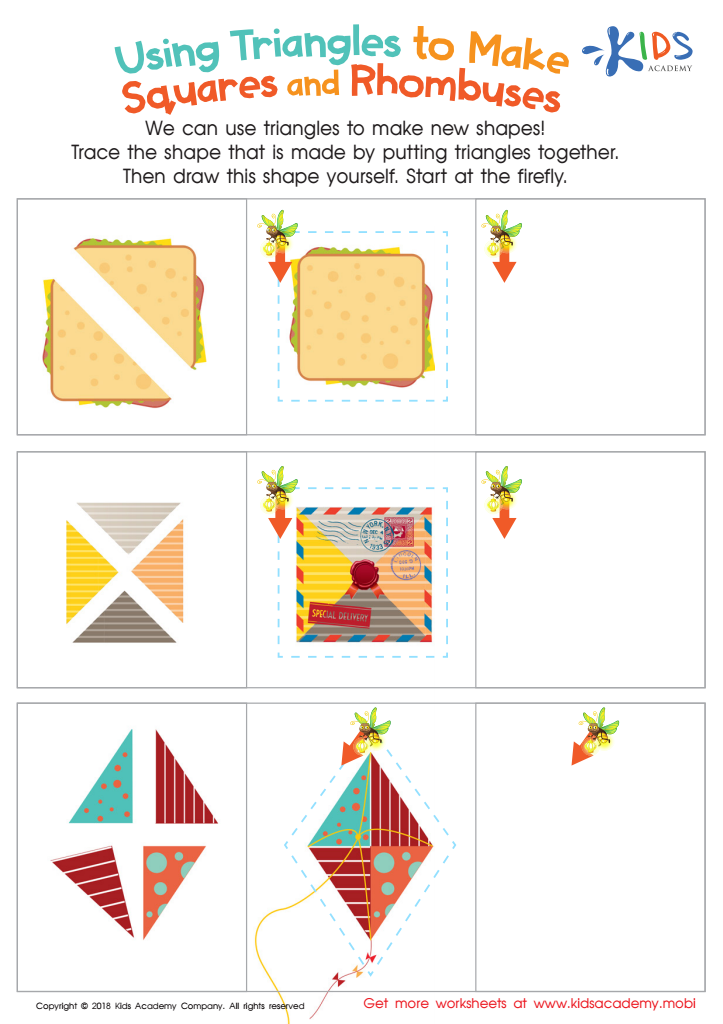
Using Triangles to Make Squares and Rhombuses Worksheet
 Assign to My Students







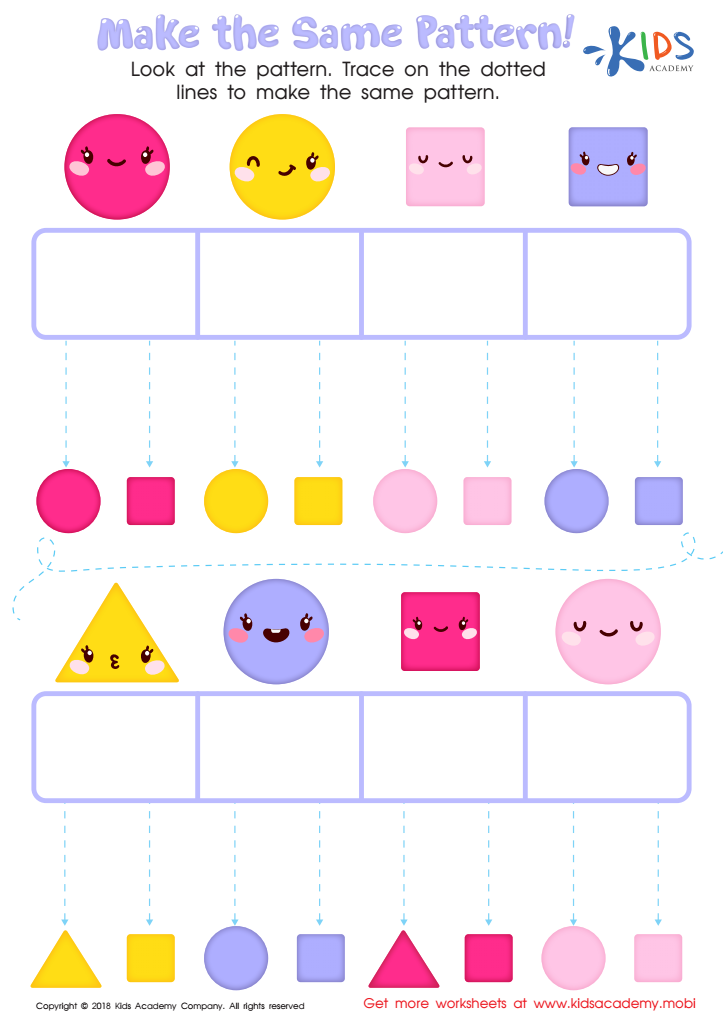
Make the Same Pattern Worksheet
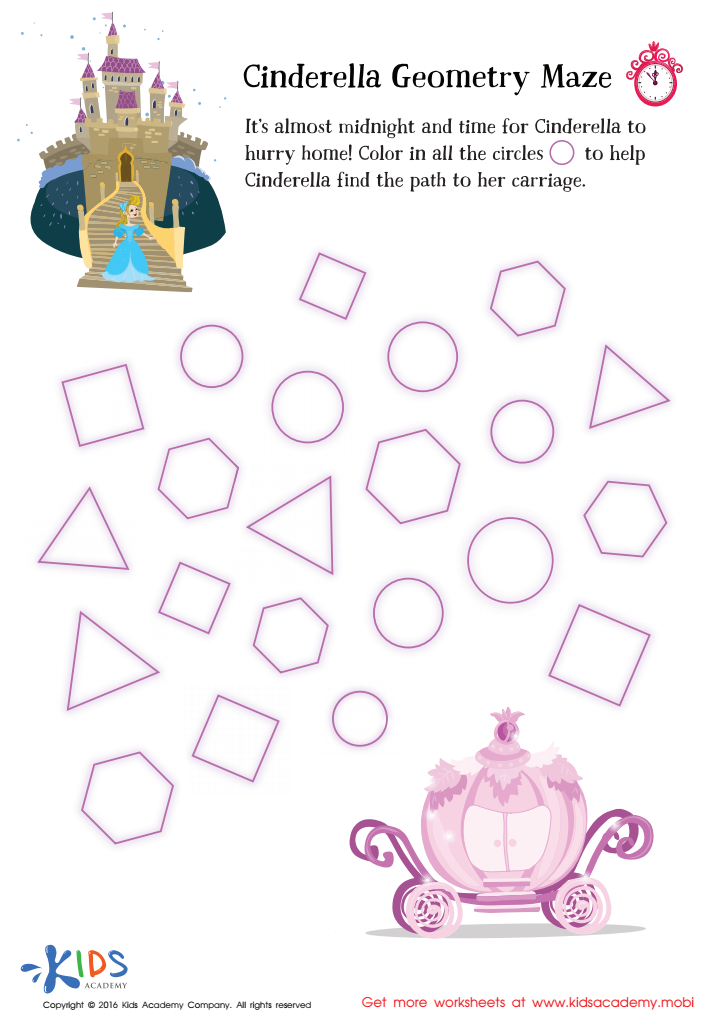
Cinderella Geometry Maze Worksheet
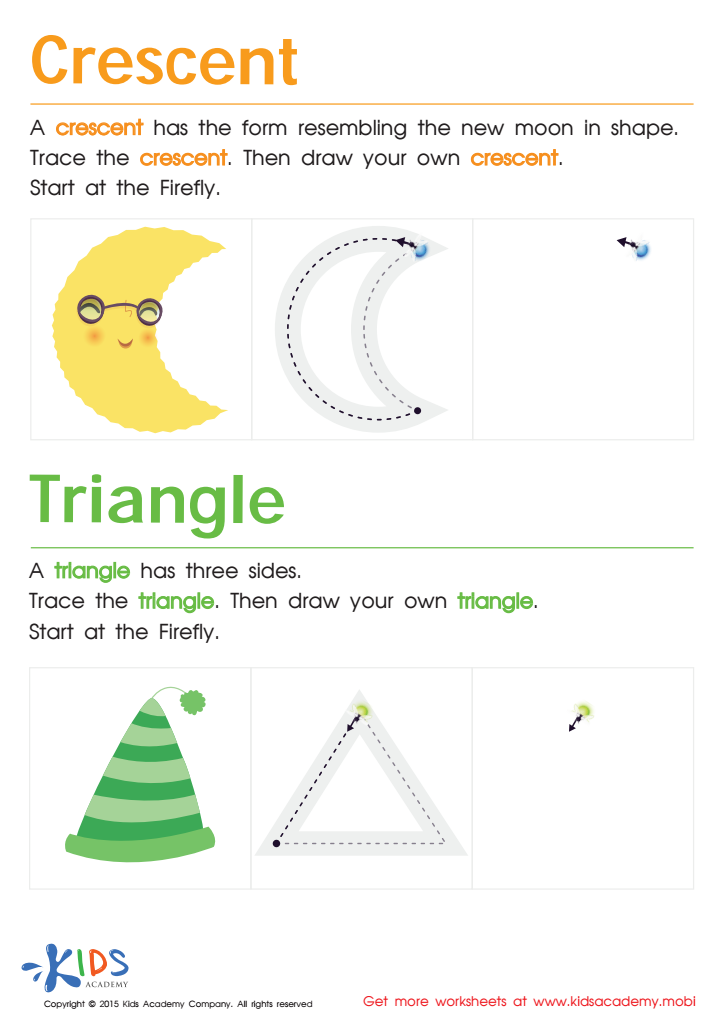
Learning to Draw Crescents And Triangles Worksheet
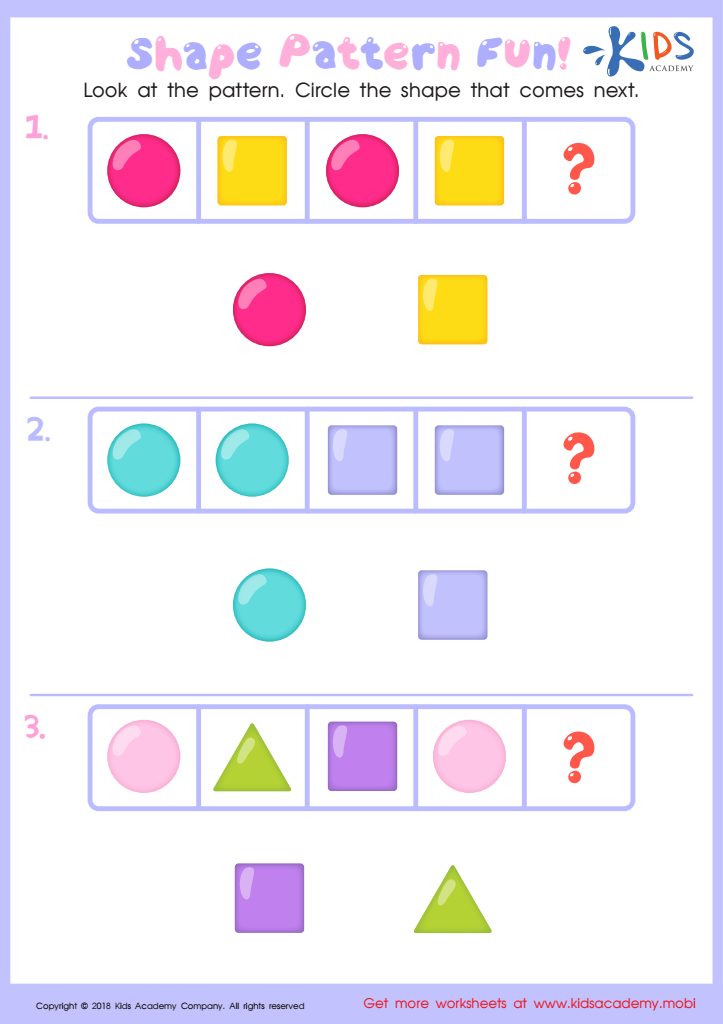
Shape Pattern Fun Worksheet








Problem-solving skills related to normal 2D shapes are vital for children aged 3-8, serving as a foundation for their cognitive development and future learning. At this early stage, children encounter various geometric shapes, and engaging them in activities related to shapes enhances their analytical thinking. It encourages them to categorize, compare, and manipulate shapes, fostering critical thinking and creativity.
Additionally, understanding 2D shapes supports mathematical skills, aiding in spatial reasoning and laying the groundwork for advanced concepts such as measurements and geometry. When children learn to identify and interact with shapes through games and hands-on activities, they develop persistence and resilience by learning to approach challenges from different angles.
Moreover, shape recognition ties into real-world applications, helping children make sense of their environment, from recognizing traffic signs to art. By honing these problem-solving skills, parents and teachers prepare children not just for academic success but for everyday life, nurturing inquisitive and confident individuals.
Ultimately, fostering an interest in shapes and problem-solving at this young age promotes a lifelong love of learning, ensuring children are equipped with essential skills for future educational journeys. Encouraging exploration and discussion about shapes becomes essential for holistic development.