Reading comprehension Normal Addition and Subtraction Word Problems Worksheets for Ages 3-8
6 filtered results
-
From - To
Enhance your child's math and reading skills with our Reading Comprehension Normal Addition and Subtraction Word Problems Worksheets designed for ages 3-8. These engaging worksheets combine reading and fundamental math, prompting young learners to solve realistic word problems involving basic addition and subtraction. Perfect for early graders, our colorful exercises ensure kids master both math and reading comprehension simultaneously. Support your child's learning journey and build a strong foundation in essential skills by incorporating these fun and educational worksheets into their routine. Visit Kids Academy for downloadable, printable materials tailored to foster academic growth in young children.
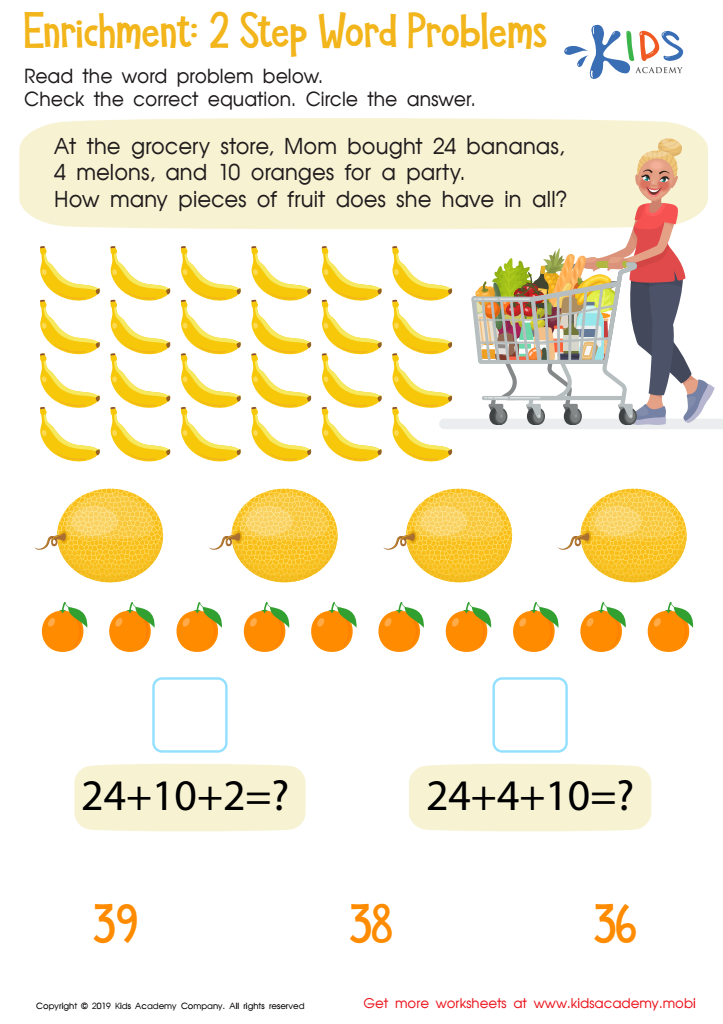
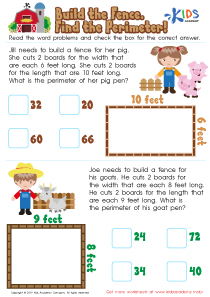
Enrichment -2 Step Word Problems Worksheet
 Assign to My Students
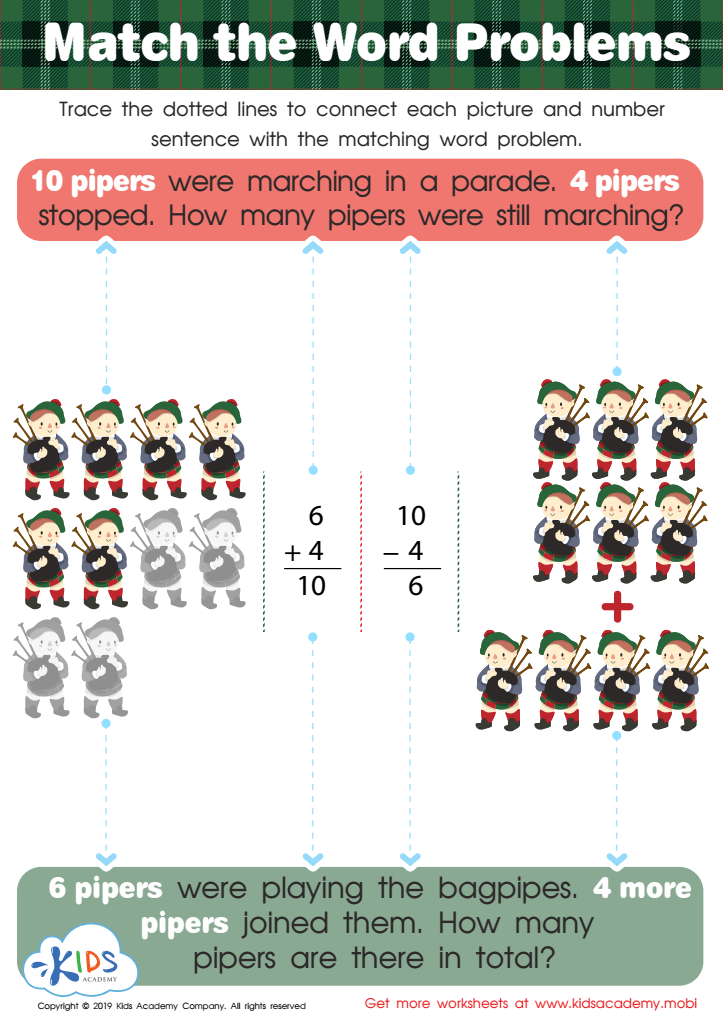
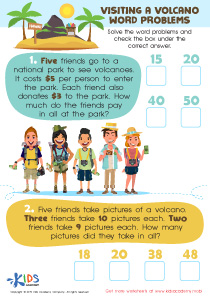
Match the Word Problems Worksheet
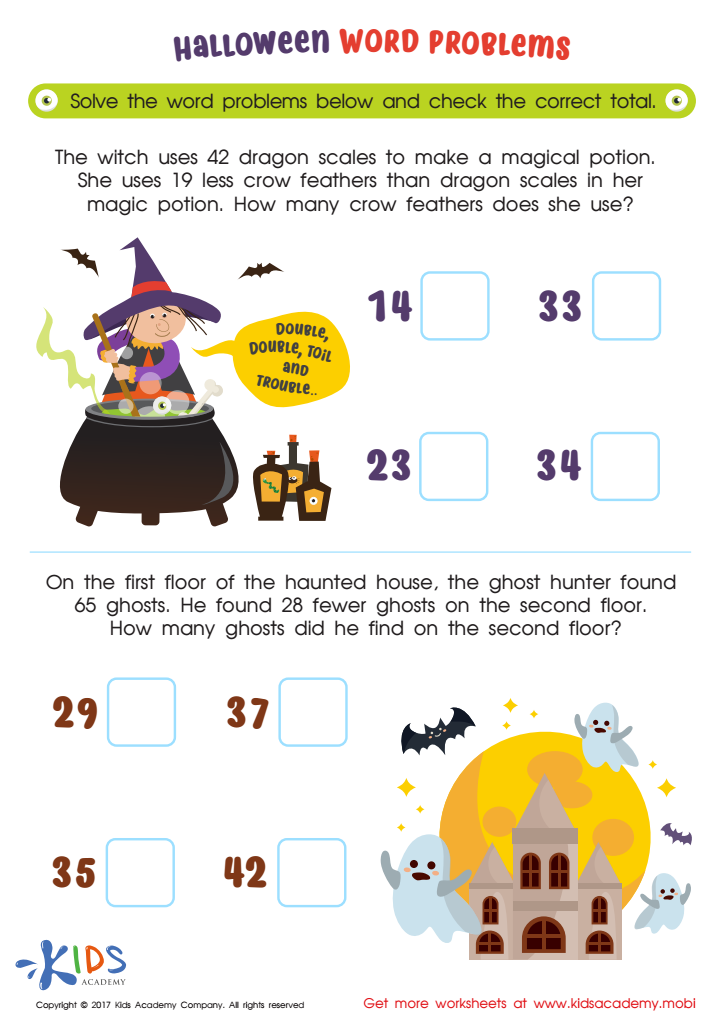
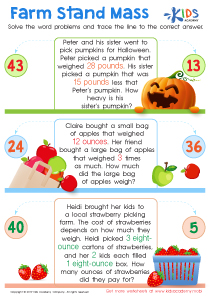
Halloween Word Problems Printable
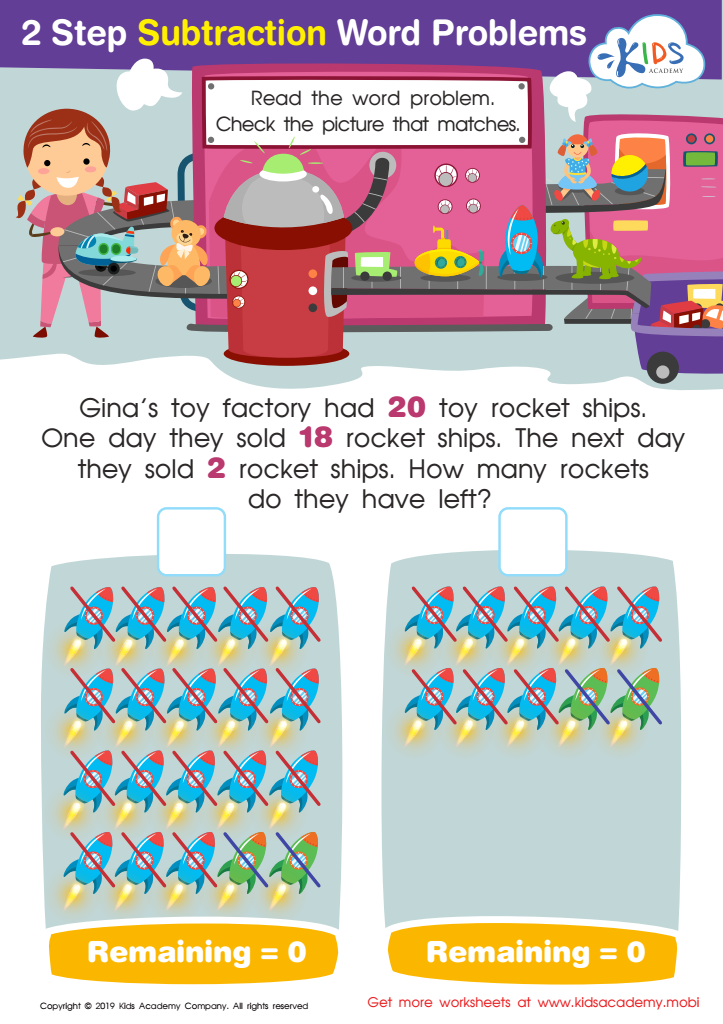
Step Subtraction Word Problems Worksheet
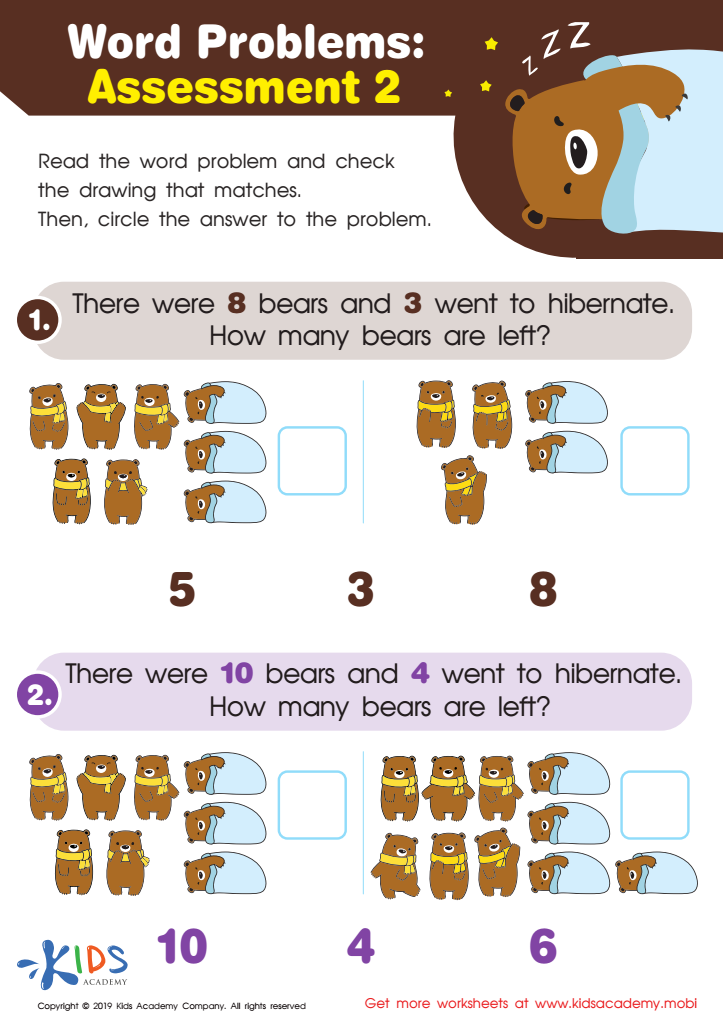
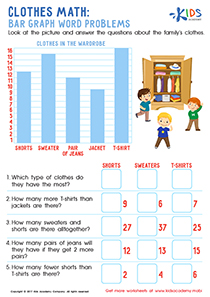
Word Problems: Assessment 2 Worksheet
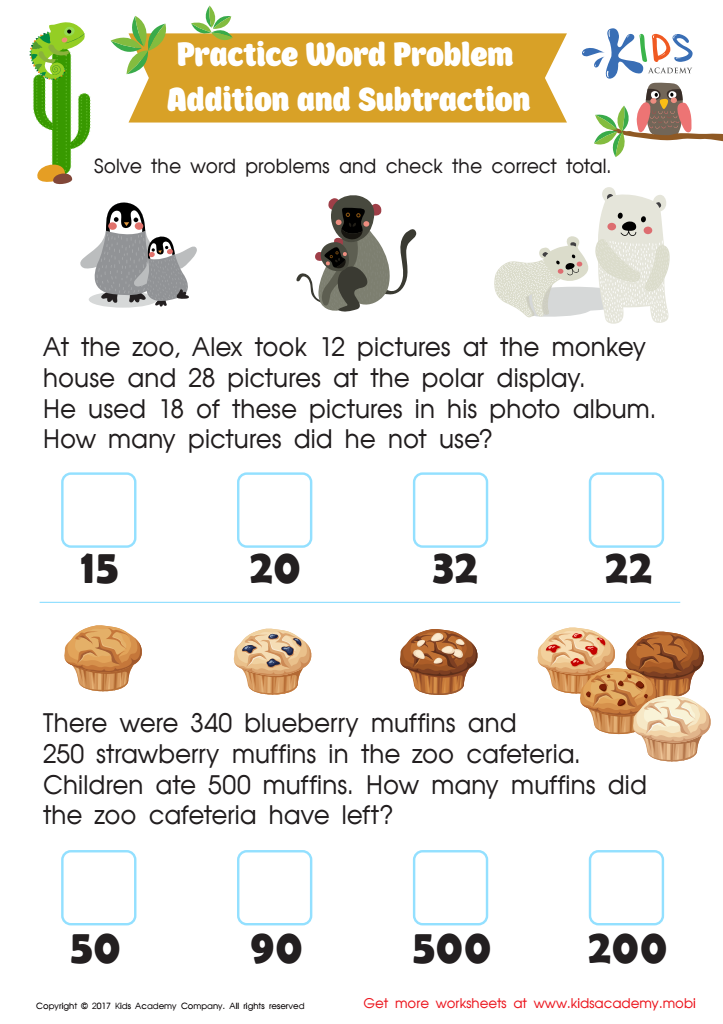
Addition and Subtraction: Word Problems Worksheet








Reading comprehension and solving normal addition and subtraction word problems are pivotal skills for children aged 3-8, as these abilities lay the foundational stones for broader academic success and everyday problem-solving abilities. For young children, mastering reading comprehension early helps in understanding and processing language, which is critical for learning all subjects, communicating effectively, and fostering imagination and empathy.
Normal addition and subtraction word problems in particular help children apply their reading comprehension skills in practical, meaningful contexts. By decoding word problems, children do more than just compute numbers; they learn to interpret language, understand scenarios, and derive logical conclusions—skills that are inherently valuable both academically and in daily life.
Moreover, integrating mathematics with reading comprehension encourages a dual skill set that enhances cognitive development. When children tackle these problems, they learn to pick out relevant information, make sense of it, and convert it into mathematical operations, thereby improving critical thinking and resilience. This evolving competence contributes to confidence when tackling new academic challenges.
Lastly, developing proficiency in these areas fosters a positive attitude towards learning by making it engaging and applicable. In a foundational sense, parents and teachers caring about these skills ensure that children develop a balanced, well-rounded educational experience, equipped to navigate an increasingly complex world.