Basic Addition Skills Normal Addition & Subtraction Worksheets for Ages 3-8
8 filtered results
-
From - To
Enhance your child's early math skills with our Basic Addition and Subtraction Worksheets, designed for ages 3-8. These fun, interactive resources help young learners grasp essential addition concepts while developing their problem-solving abilities. Each worksheet is crafted to engage children with colorful visuals and age-appropriate challenges that promote both enjoyment and learning. Parents and educators can find expertly designed activities that encourage mental math and foster a positive attitude toward math. Simplify teaching and learning basic math skills with our easy-to-use worksheets, suitable for both home and classroom settings. Start building a strong foundation in math for your little ones today!
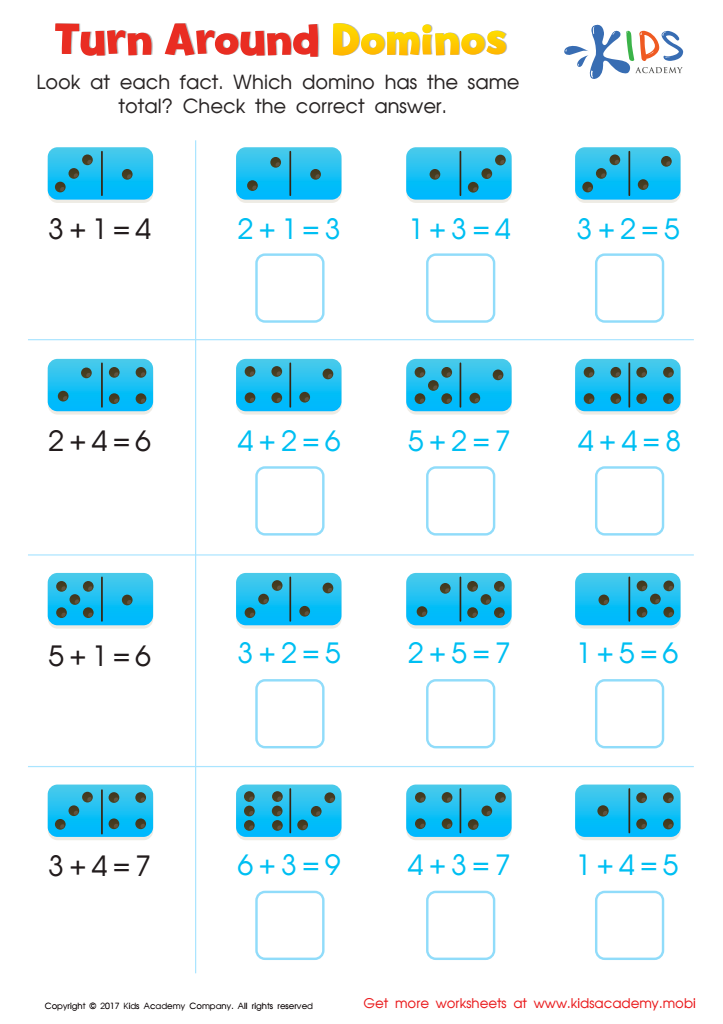
Turn Around Dominos Worksheet
 Assign to My Students
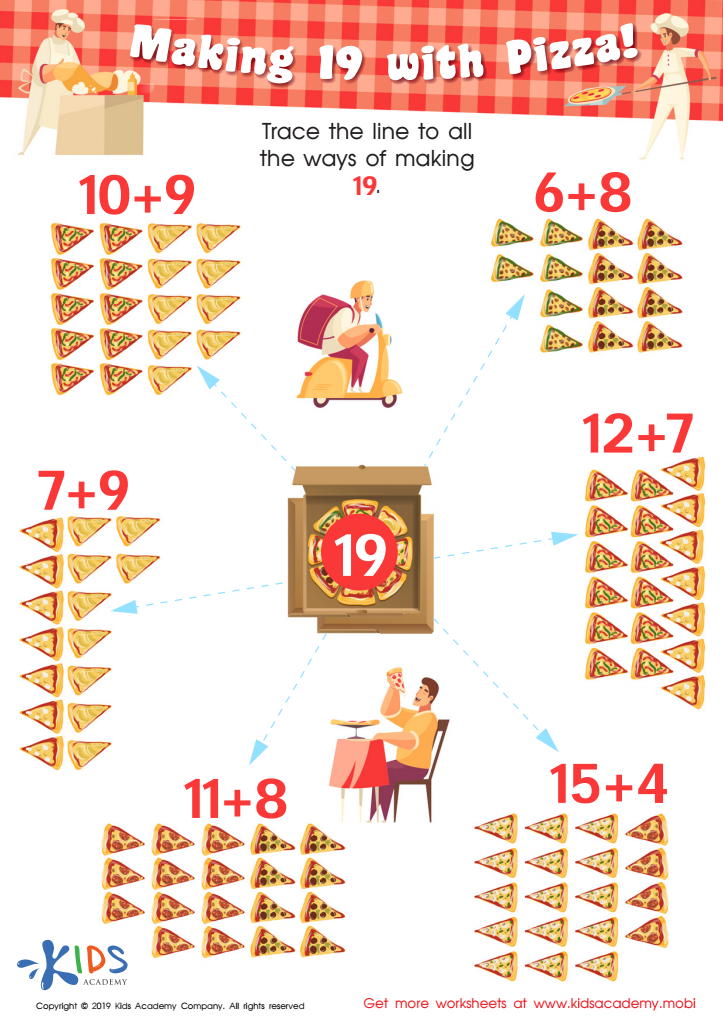
Making 19 with Pizza! Worksheet
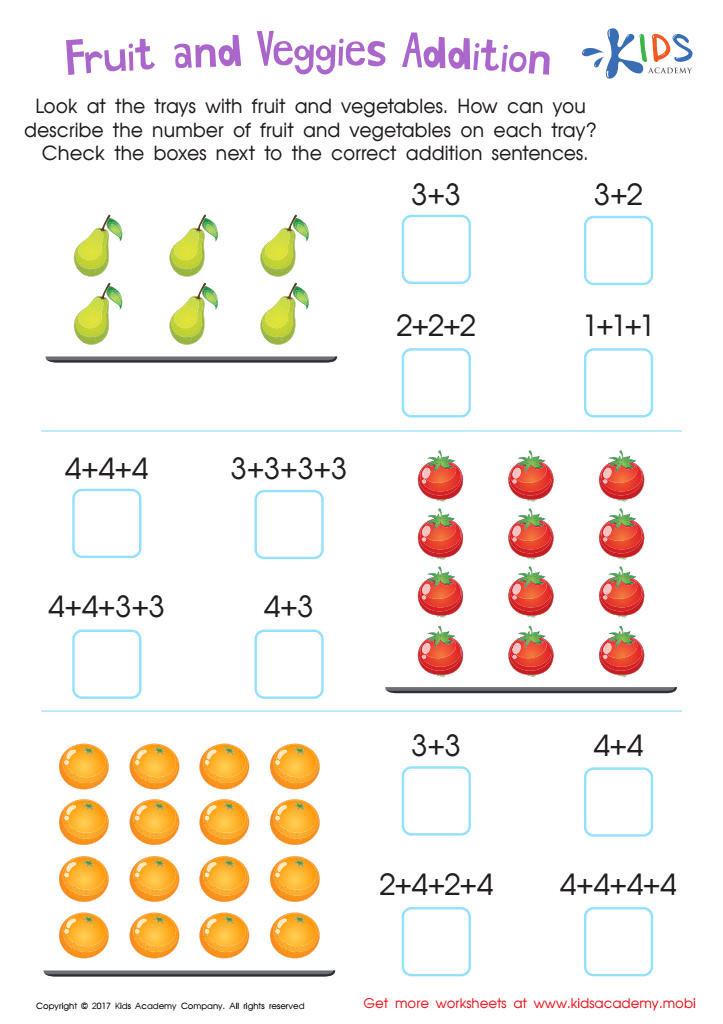
Fruit and Veggies Worksheet
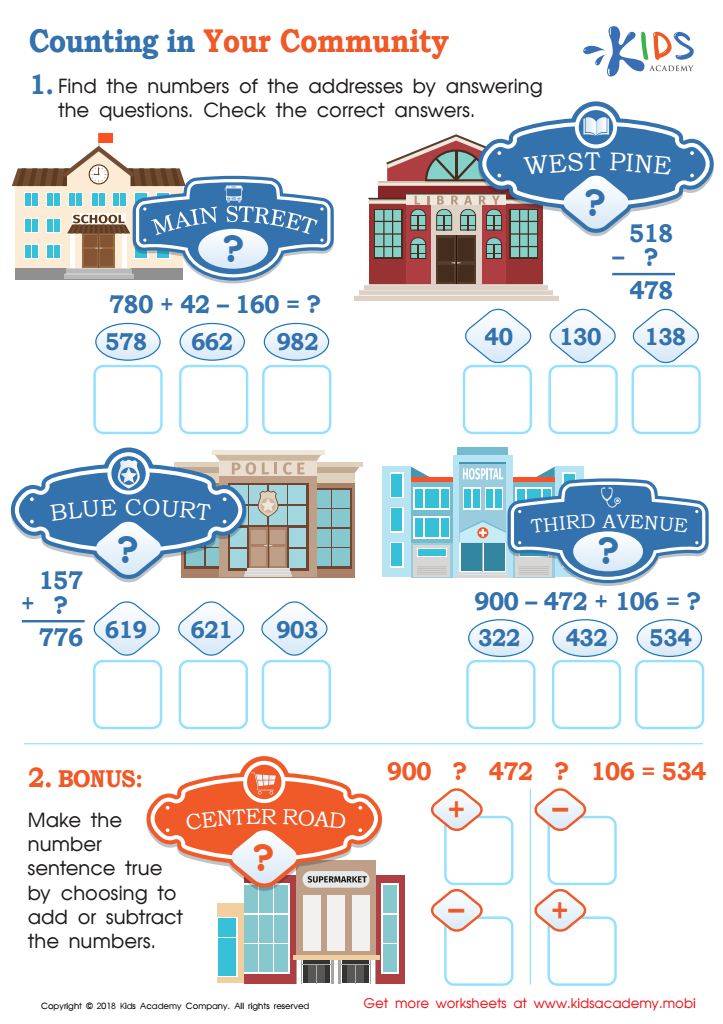
Counting in Your Community Worksheet
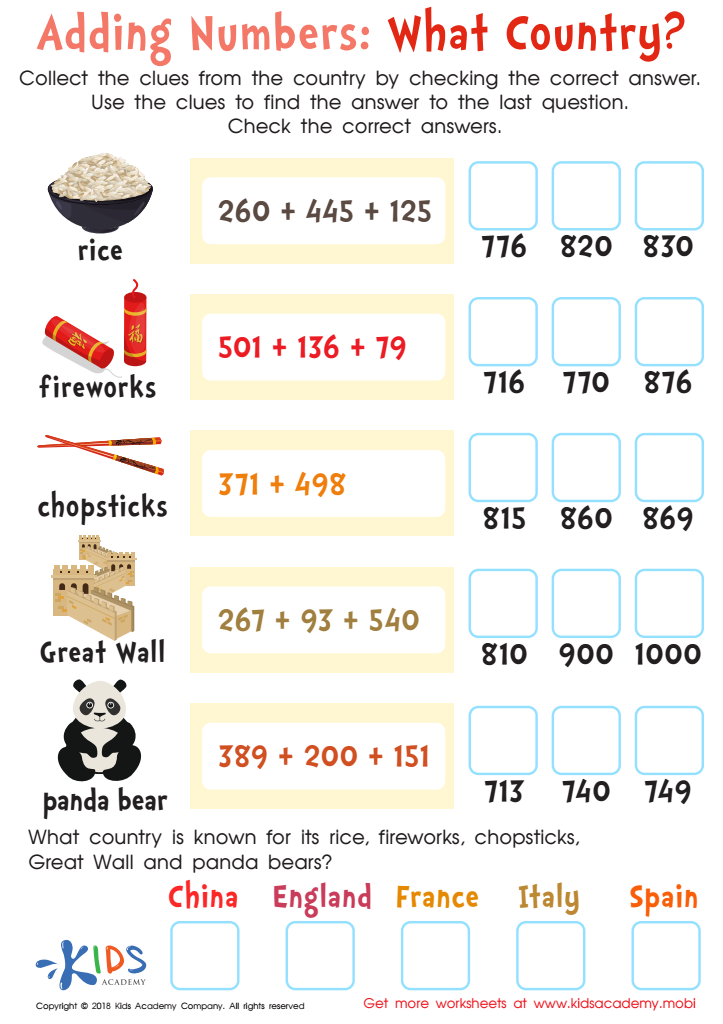
Adding Numbers: What Country Worksheet
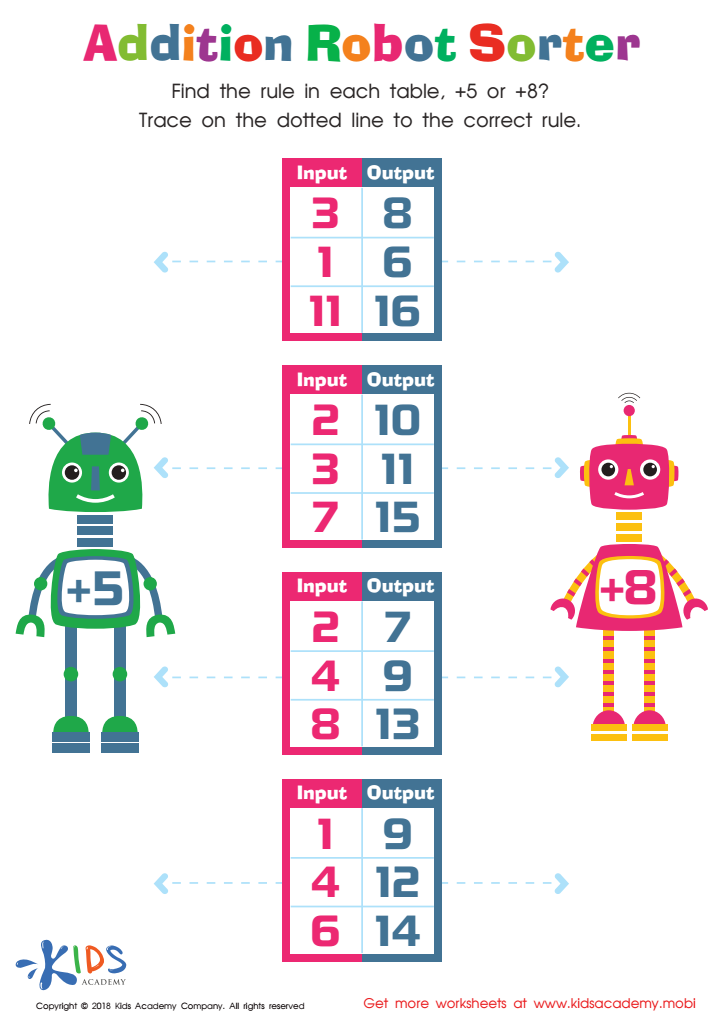
Addition Robot Sorter Worksheet
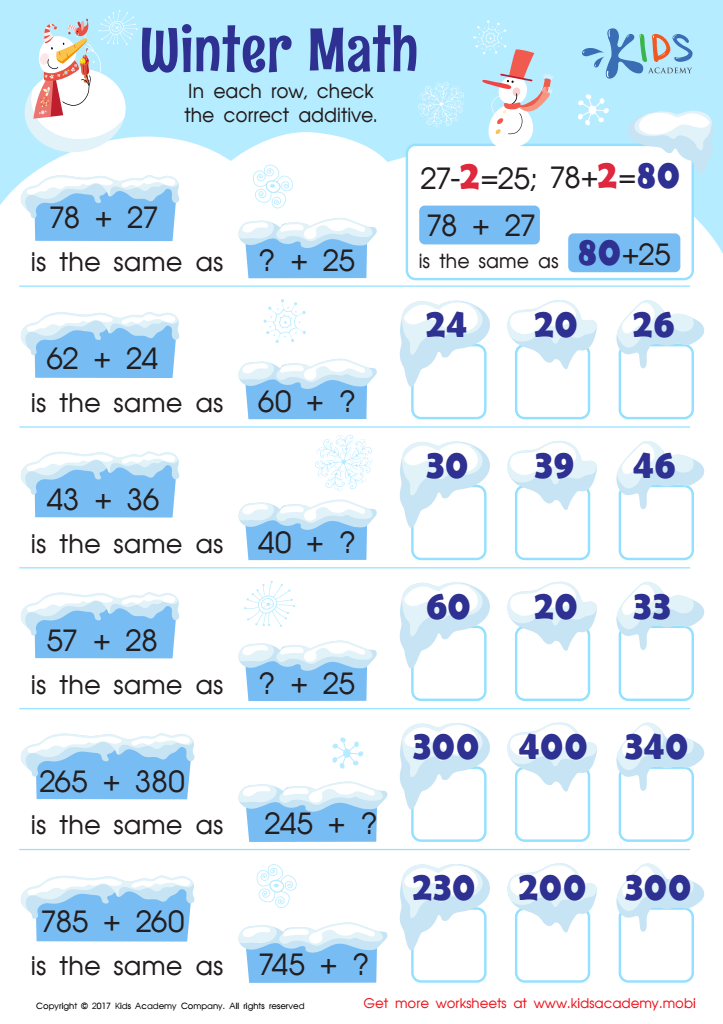
Free Addition Worksheet
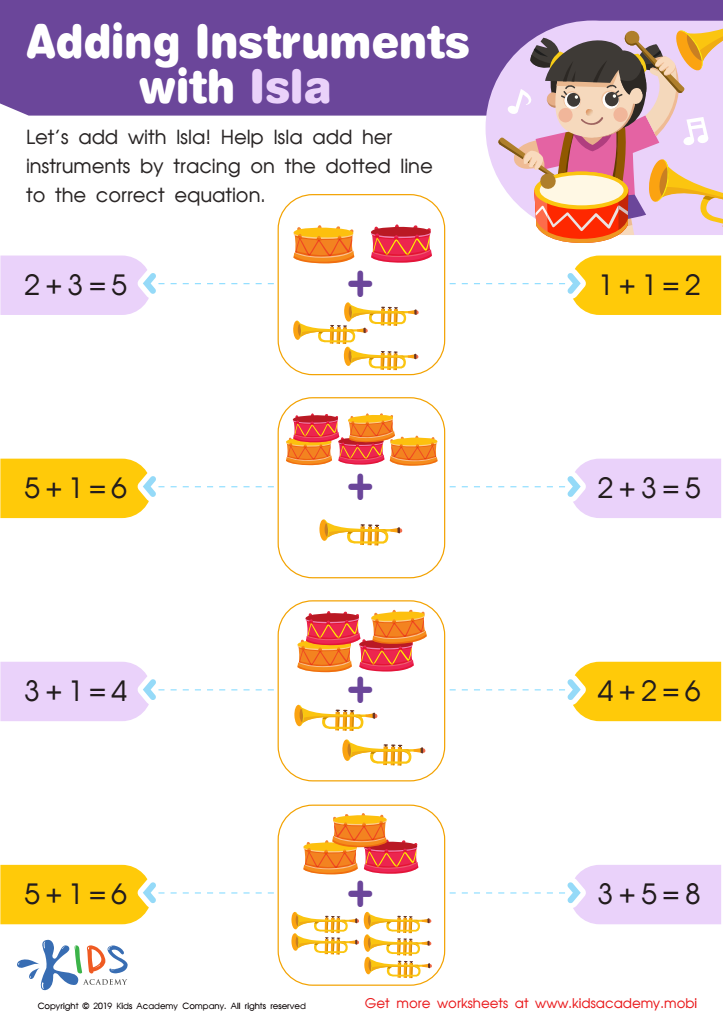
Adding Instruments with Isla Worksheet








Basic addition and subtraction skills are foundational for children aged 3-8, forming critical cornerstones for future mathematical proficiency and problem-solving abilities. Developing these skills at a young age enhances cognitive growth, enabling children to understand not just numbers, but also patterns, relationships, and logical thinking.
For parents and teachers, fostering these skills promotes confidence in children, as they learn to tackle mathematical challenges independently. Engaging children in fun and interactive activities that incorporate addition and subtraction can spark an early interest in mathematics, transforming these subjects from daunting tasks into enjoyable pursuits.
Additionally, early mastery of these skills can directly impact future academic performance. Strong capabilities in basic math lay the groundwork for higher-level concepts such as multiplication, division, and eventually algebra, while also positively influencing reading and analytical skills. Moreover, incorporating practical applications of math in daily life—like counting objects, sharing treats, or playing games—reinforces these concepts meaningfully.
Investing time in teaching basic addition and subtraction now enriches children’s educational experiences, fostering lifelong learning and success. Hence, parents and teachers should prioritize these essential skills, instilling confidence and enthusiasm for mathematics that will benefit students in the long run.








