Pattern recognition Normal Geometry Worksheets for Ages 3-8
3 filtered results
-
From - To
Explore our engaging Pattern Recognition Normal Geometry Worksheets, specially designed for children aged 3-8! These interactive worksheets foster essential skills in recognizing and creating patterns through colorful visuals and age-appropriate activities. Children will develop critical thinking, enhance their cognitive abilities, and boost confidence in math while having fun with geometric shapes. Perfect for classroom use or at-home learning, our worksheets promote an enjoyable learning experience that keeps young learners excited and engaged. Unlock your child's potential in math literacy and shape recognition with our expertly crafted resources. Download now and watch your little ones thrive through playful learning!
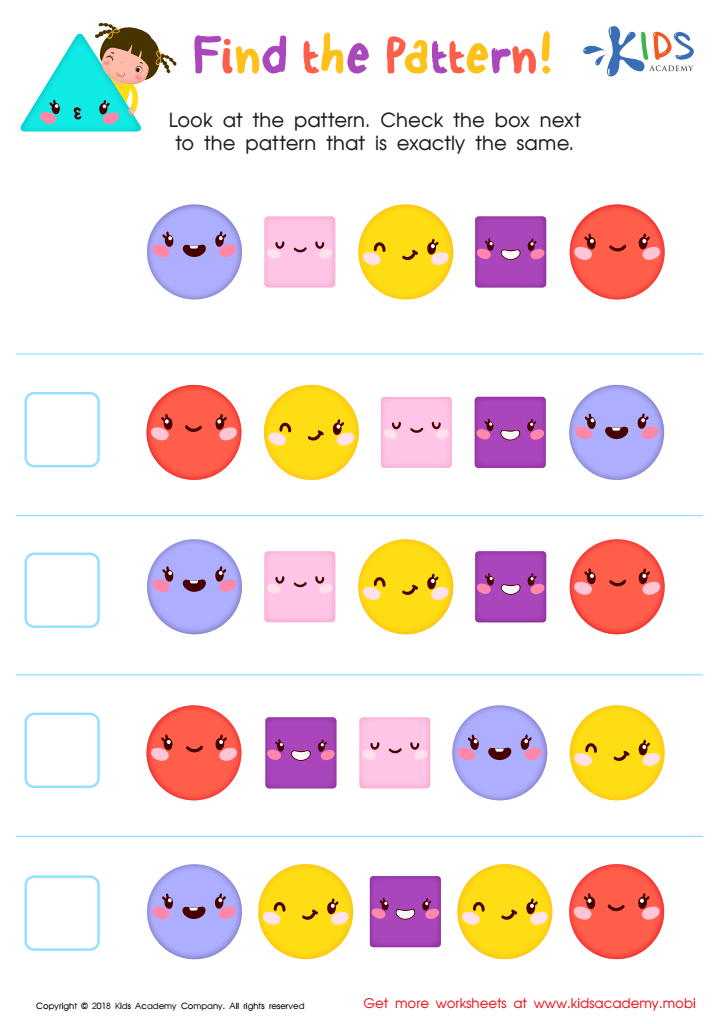
Find the Pattern Worksheet
 Assign to My Students











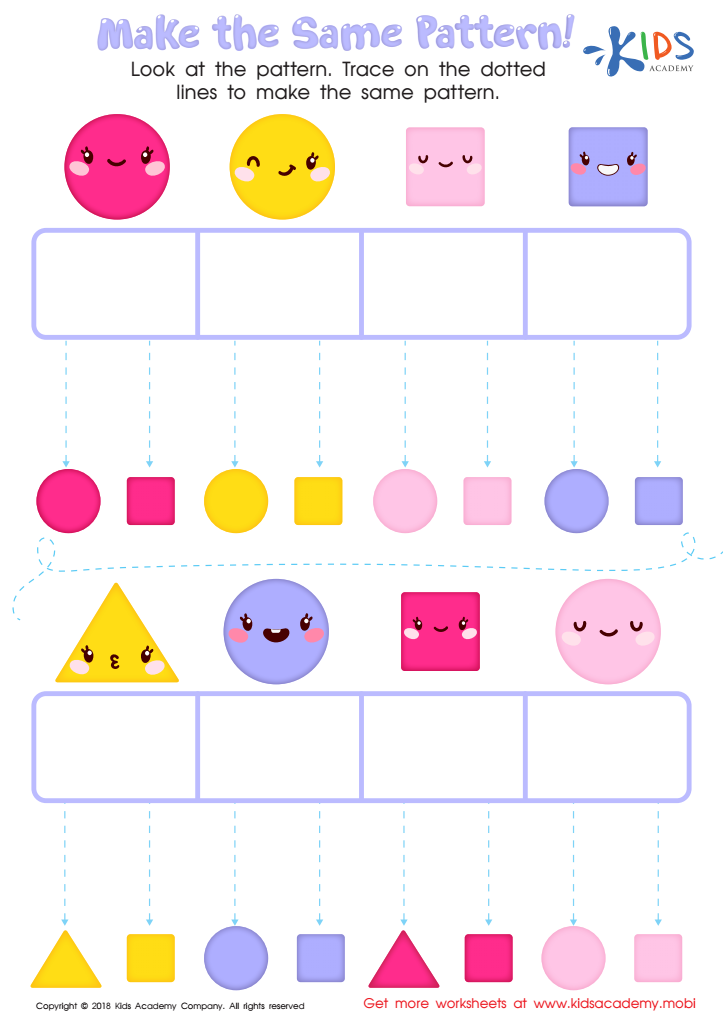
Make the Same Pattern Worksheet
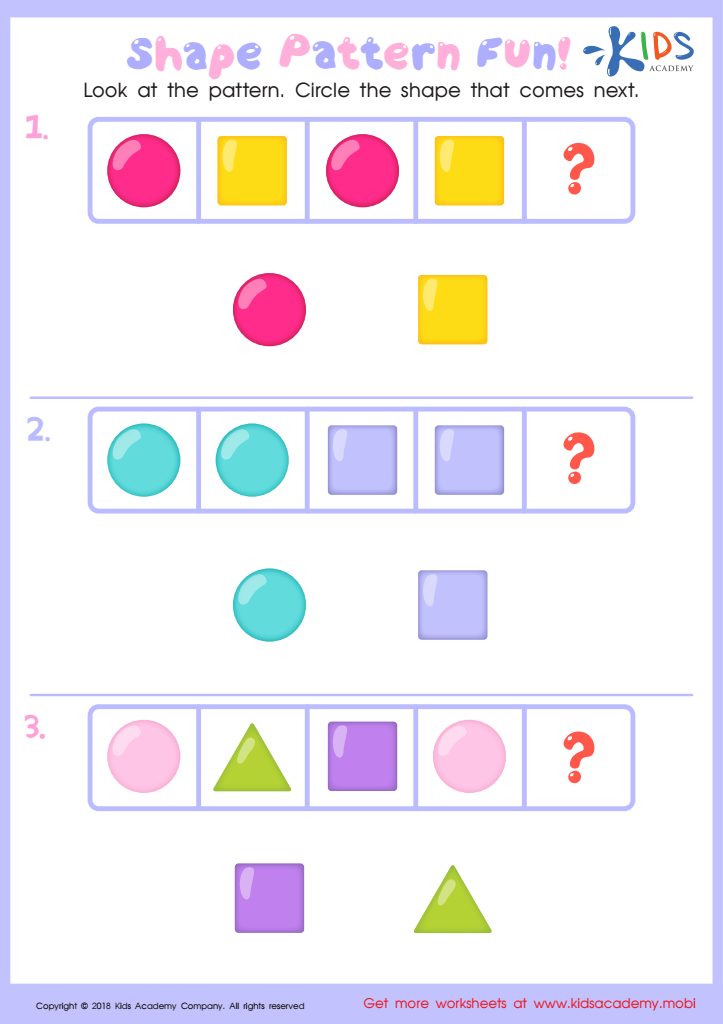
Shape Pattern Fun Worksheet








Pattern recognition and basic geometry are essential components of early childhood education, significantly enhancing cognitive development from ages 3 to 8. Recognizing patterns helps children identify relationships, make predictions, and develop critical thinking skills, which are foundational for more complex problem-solving later on. Engaging with patterns—whether through colors, shapes, or numbers—supports mathematical understanding and sets the stage for arithmetic skills.
Geometry introduces young learners to spatial awareness, helping them understand shapes, sizes, and spatial relationships. This knowledge is critical not only in math but also in everyday situations, from navigating their environment to developing fine motor skills through activities like drawing and building.
Furthermore, engaging with patterns and basic geometry fosters creativity and innovation. Children who learn these concepts are better equipped to approach challenges with creativity, as they can visualize and manipulate elements efficiently.
Parents and teachers should prioritize these skills because they are intertwined with larger academic success and life skills. Early engagement in pattern recognition and geometry cultivates a strong foundation for future learning, supports self-confidence in tackling more challenging subjects, and ultimately contributes to lifelong critical thinking and problem-solving abilities.








