Shape identification Normal Geometry Worksheets for Ages 3-8
5 filtered results
-
From - To
Explore our engaging Shape Identification Normal Geometry Worksheets designed specifically for children ages 3-8! These worksheets provide a fun and interactive way for young learners to recognize, name, and differentiate various shapes. With colorful illustrations and age-appropriate activities, children can reinforce their understanding of basic geometric concepts while developing essential critical thinking and problem-solving skills. Our resources cater to diverse learning styles, making it easy for parents and educators to support young learners. Perfect for at-home practice or classroom assignments, these worksheets will enhance your child's confidence and mastery of shape identification in a playful and educational environment. Get started today!
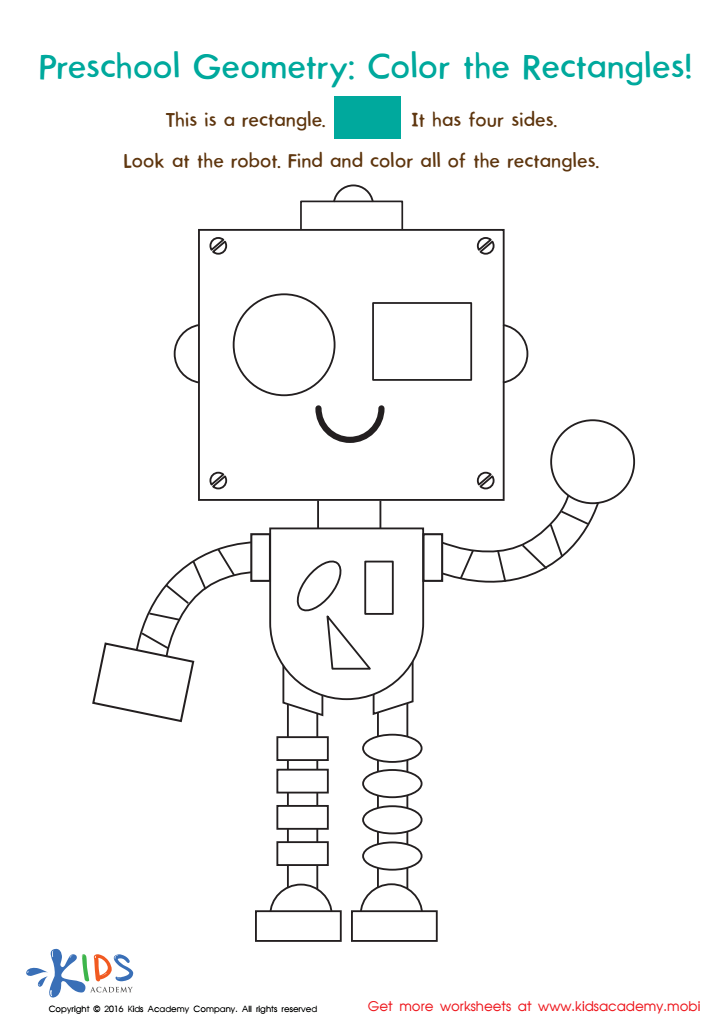
Geometry Worksheet
 Assign to My Students











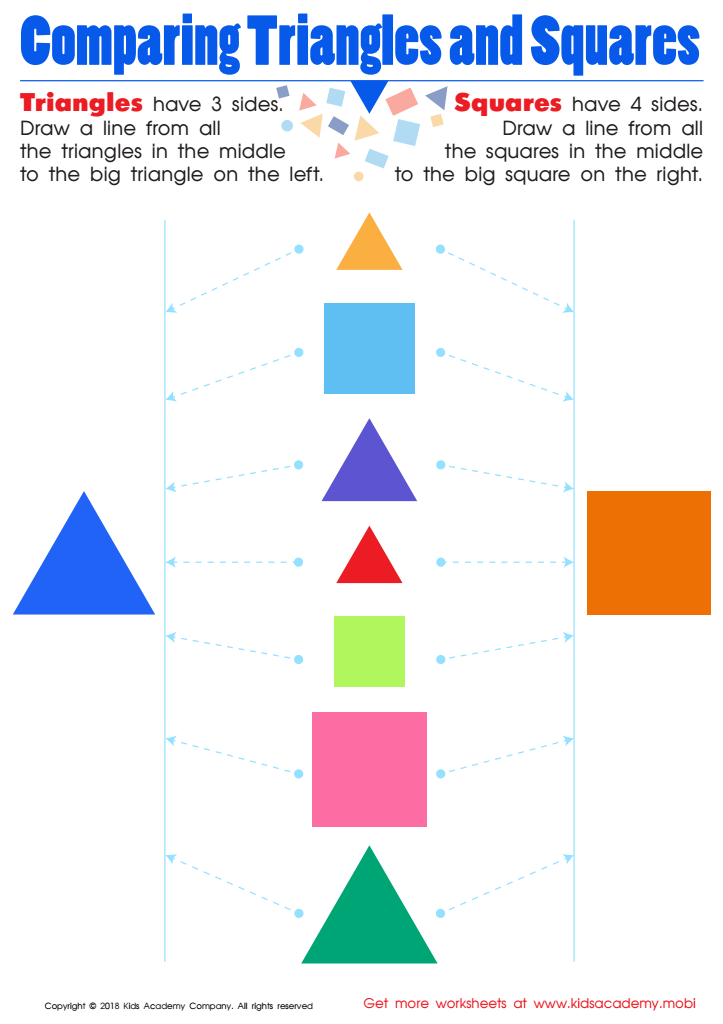
Comparing Triangles Squares Worksheet
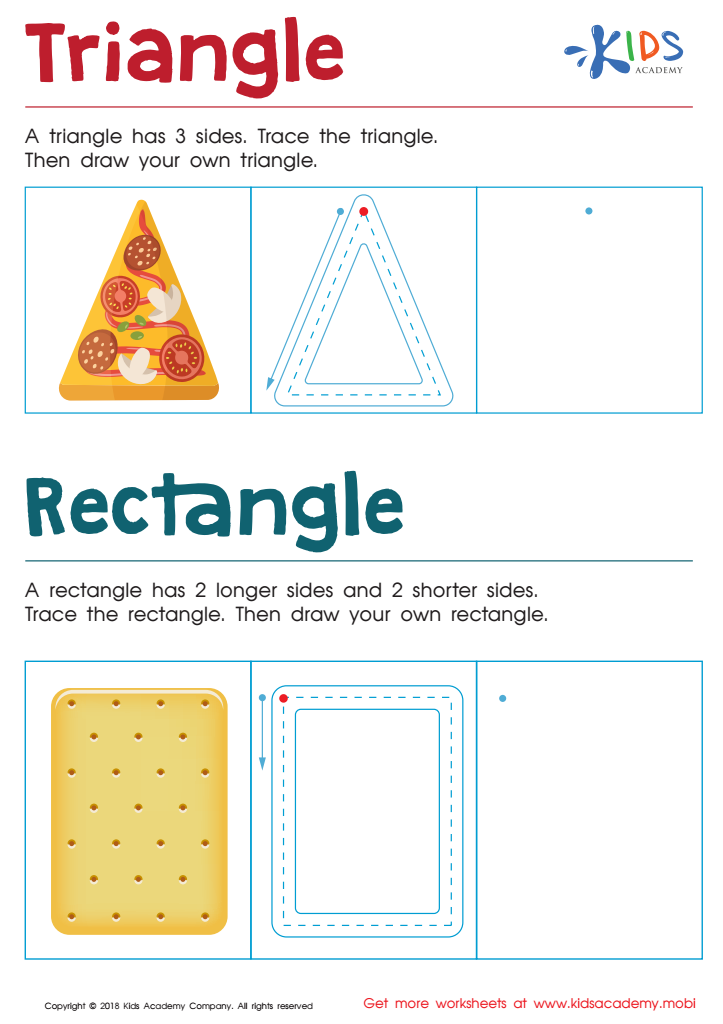
Triangle Rectangle Worksheet
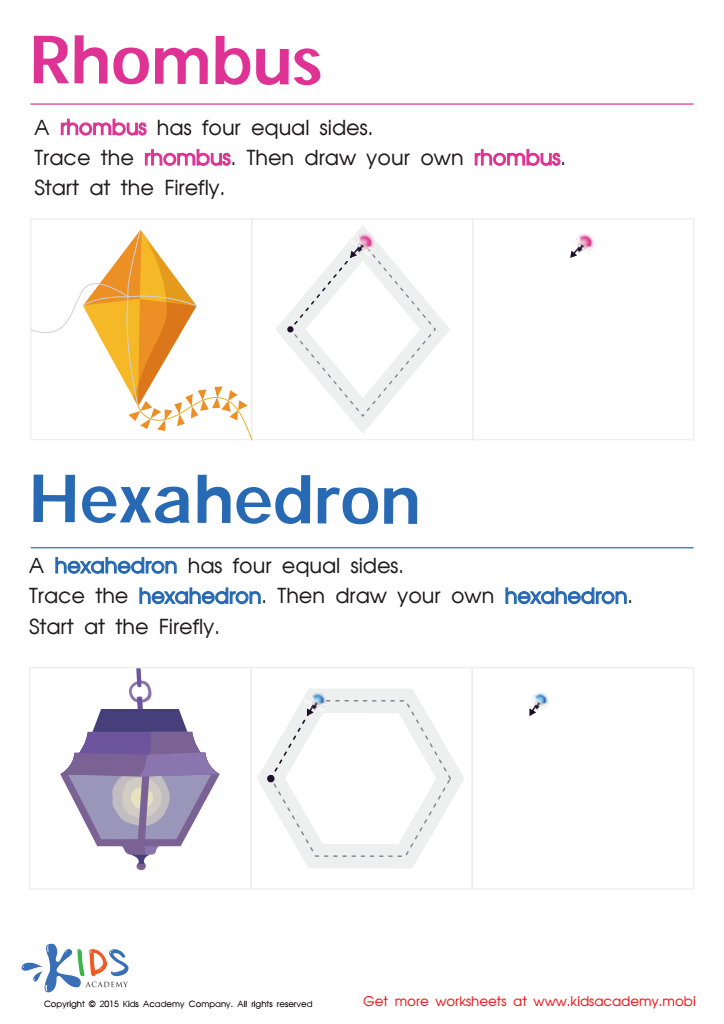
Draw a Rhombus And a Hexahedron Printable
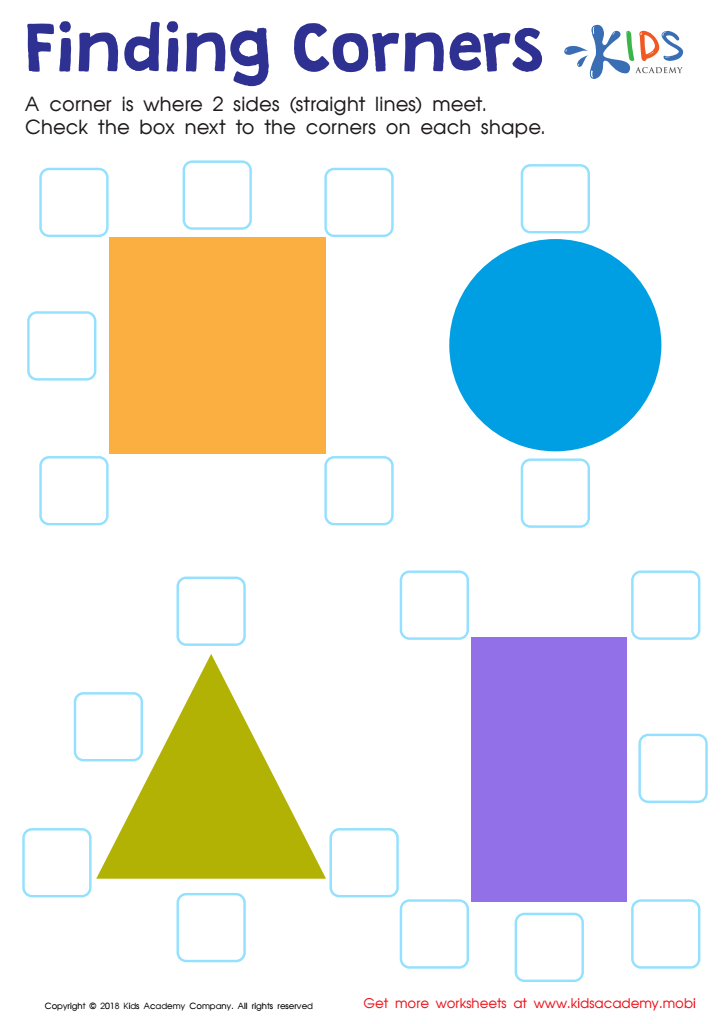
Finding Corners Worksheet








Shape identification and understanding geometry is crucial for children aged 3 to 8, as it lays the foundation for their cognitive development and problem-solving skills. During these formative years, children engage in sensory exploration, and shapes are inherently interesting and relatable to their daily lives—found in objects like toys, buildings, and nature. Learning to identify and differentiate shapes promotes spatial awareness, enabling children to understand their environment better.
Moreover, shape identification is a stepping stone to more advanced mathematical concepts. Through recognizing various shapes, children develop critical thinking and analytical skills that are essential for future success in mathematics and science. Additionally, activities involving shapes support fine motor skills and enhance hand-eye coordination, which are vital for writing and everyday tasks.
Parents and teachers should also recognize that mastering basic geometry fosters confidence and curiosity. Engaging children in shape-related games and learning opportunities helps them to embrace problem-solving and enhances their love for learning. In summary, supporting shape identification creates a holistic educational foundation, influencing children's intellectual growth and social competence as they progress through their early learning years.








