Visual Learning Normal Geometry Worksheets for Ages 3-8
3 filtered results
-
From - To
Introduce your child to the world of shapes and space with our "Visual Learning Normal Geometry Worksheets for Ages 3-8." Designed to engage and captivate young minds, these colorful and easy-to-follow worksheets build foundational skills in geometry. Each activity encourages visual learning, helping children understand and recognize various shapes, spatial relationships, and geometric patterns in everyday life. Perfect for preschool to early-grade students, our printable worksheets blend fun with education, ensuring kids remain actively engaged while mastering key concepts. Investing in our resources equips your little ones with the essential tools for a bright mathematical future. Explore more at Kids Academy!
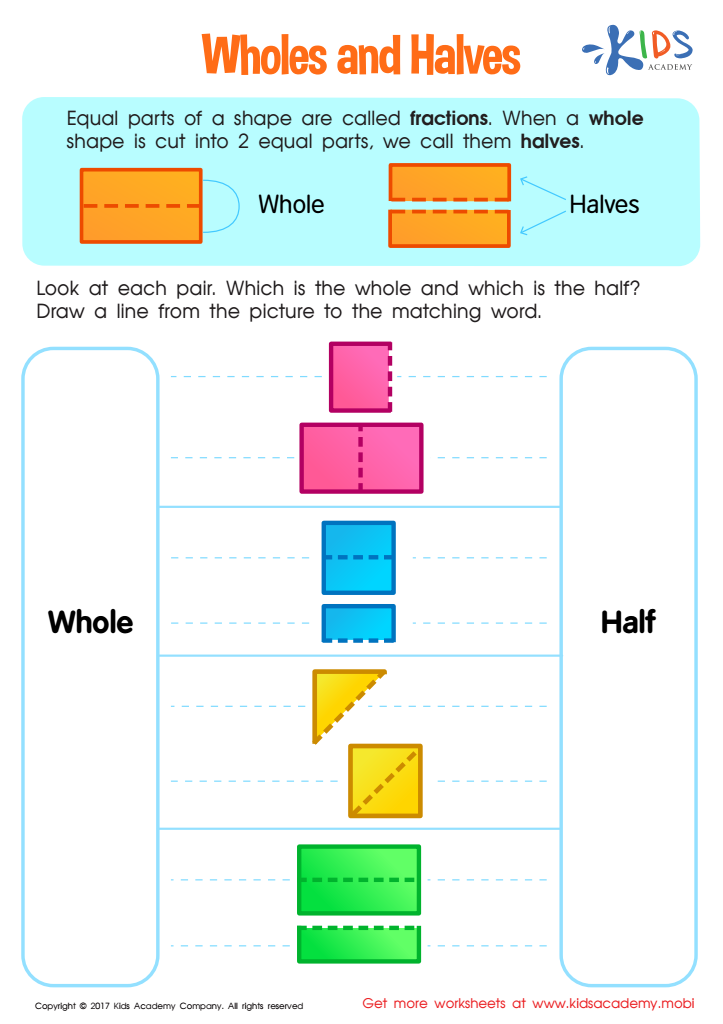
Wholes and Halves Worksheet
 Assign to My Students











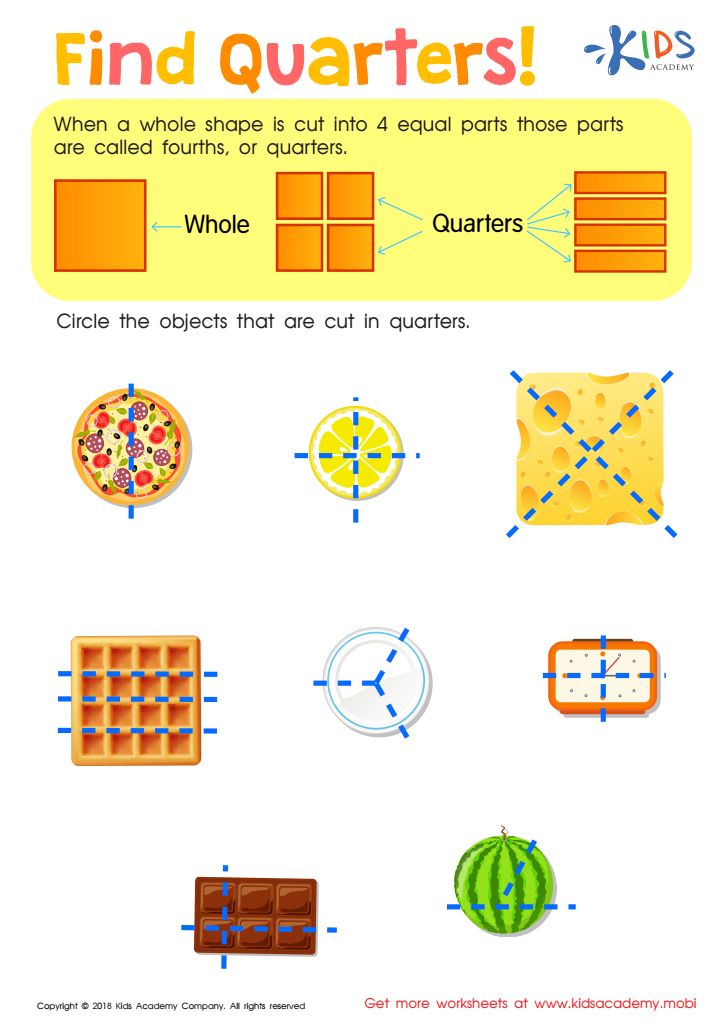
Find Quarters Worksheet
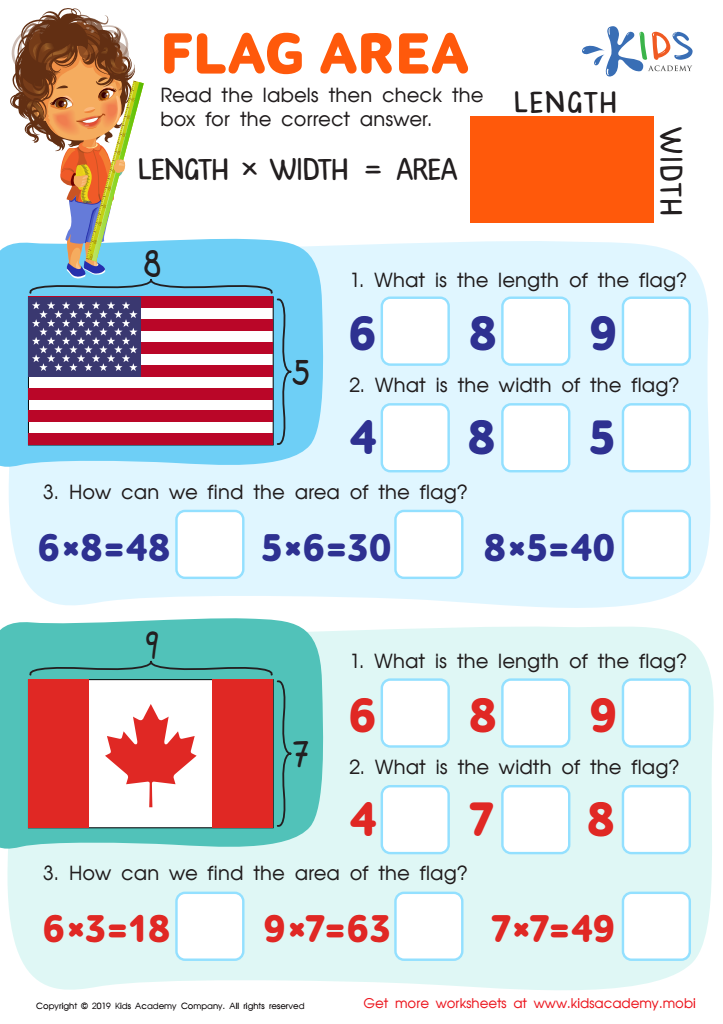
Flag Area Worksheet








Parents and teachers play a crucial role in a child's early development, and fostering visual learning for normal geometry, especially in ages 3-8, is essential for several reasons. During these formative years, children are highly receptive to visual stimuli, which makes visual learning an effective strategy for comprehension and retention. Engaging young minds with geometric shapes, patterns, and spatial reasoning helps develop their cognitive abilities, critical thinking, and problem-solving skills.
For example, recognizing different shapes (circles, squares, triangles) and their properties promotes mathematical thinking. Visual learning in geometry also enhances motor skills through activities like drawing or constructing shapes using blocks or other tactile tools. It lays the groundwork for future STEM (Science, Technology, Engineering, Mathematics) learning by making abstract concepts more concrete and understandable.
Moreover, visual learning in early geometry encourages creativity and curiosity. When children are allowed to explore and manipulate shapes, they naturally start to ask questions and seek solutions, fostering an investigative mindset. This hands-on, playful approach not only strengthens their learning but also keeps them engaged and interested in the subject matter.
In summary, incorporating visual learning in geometry during early childhood helps build a solid foundation for mathematical understanding, supports cognitive and motor development, and fosters an enduring interest in learning, all of which are critical for a child's overall growth.








