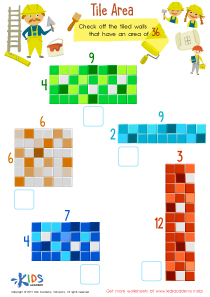
Enhancing Counting Skills Normal Numbers Worksheets for Ages 3-8
5 filtered results
-
From - To
Discover our "Enhancing Counting Skills Normal Numbers Worksheets" tailored for children aged 3-8! These engaging worksheets are designed to boost your child's counting abilities through fun, interactive activities. With a mix of vibrant illustrations and straightforward exercises, kids will enjoy practicing number recognition, one-to-one correspondence, and basic counting skills. Our educational resources are perfect for home or classroom use, allowing young learners to develop a solid foundation in numeracy. Track their progress with various difficulty levels, ensuring a comprehensive learning experience that caters to every child's unique pace. Start nurturing a love for numbers and counting today!
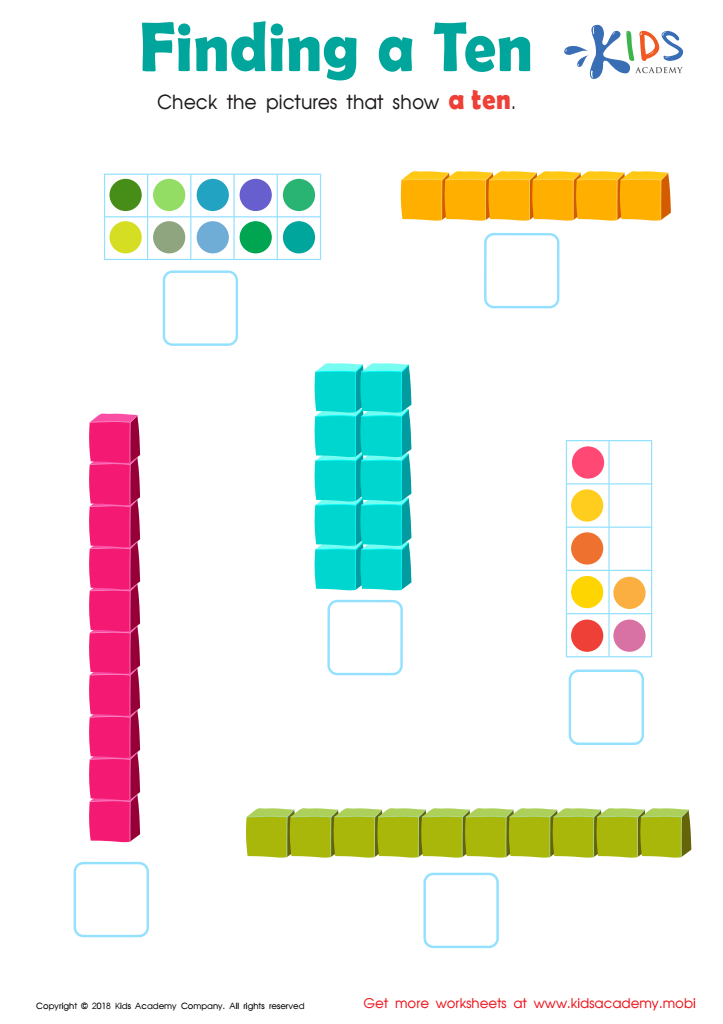
Finding a Ten Worksheet
 Assign to My Students
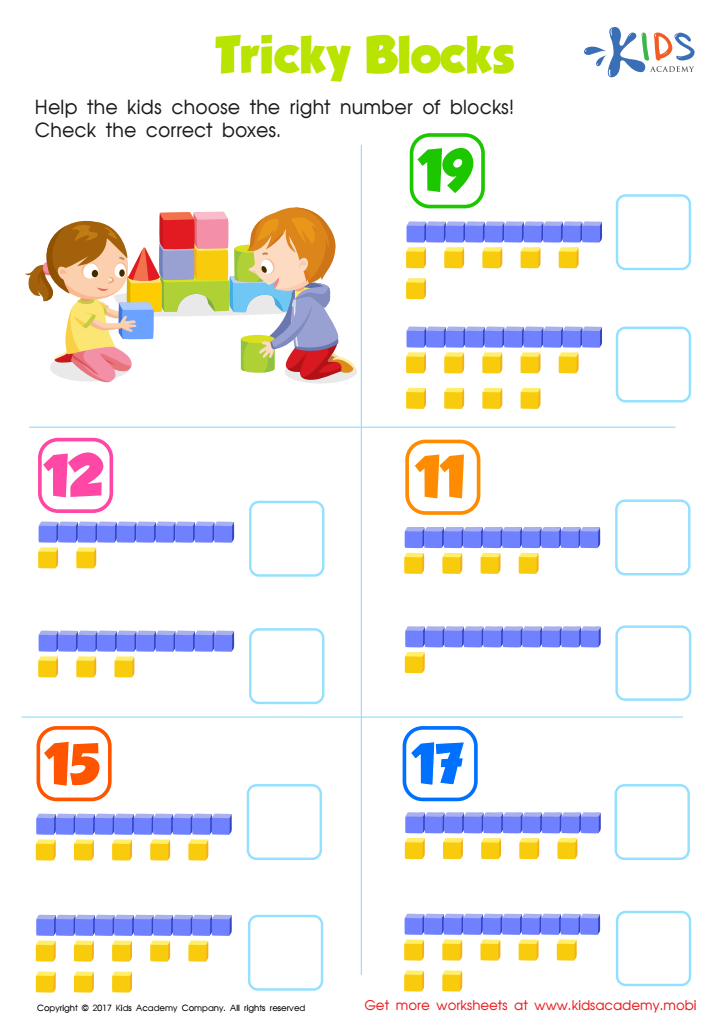
Tricky Blocks Worksheet
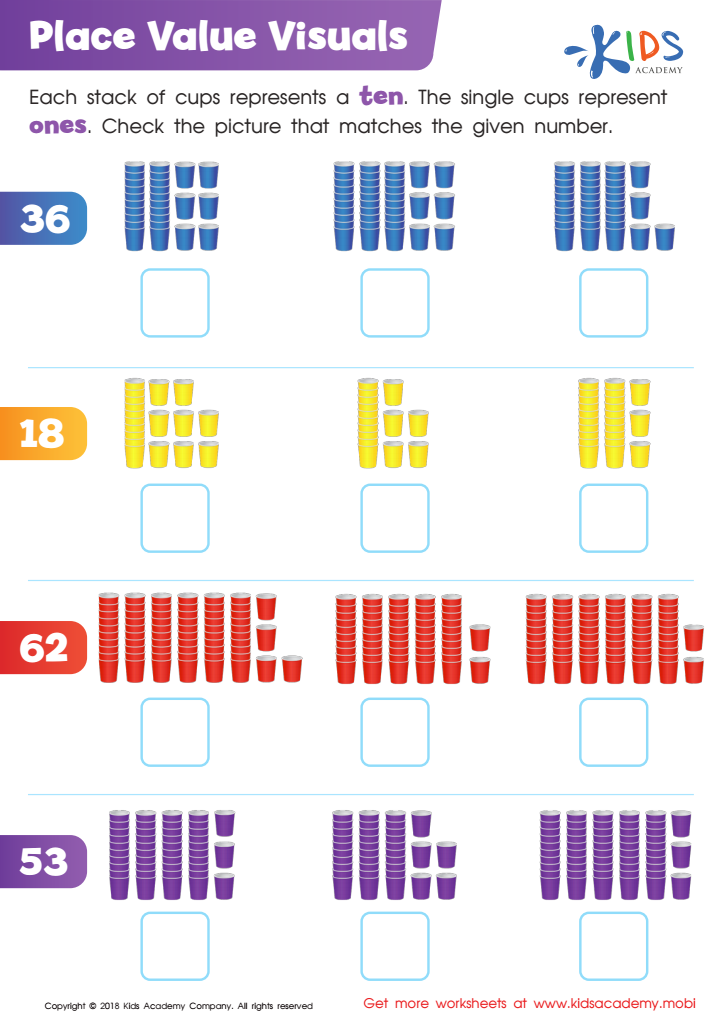
Place Value Visuals Worksheet
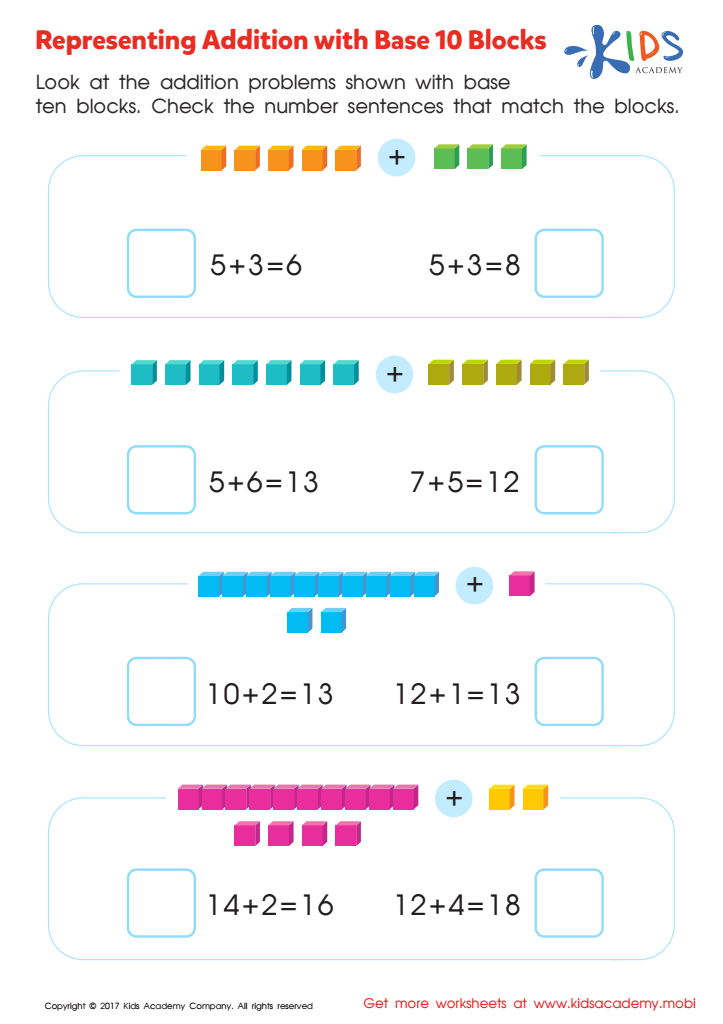
Representing Addition with Base 10 Blocks Worksheet
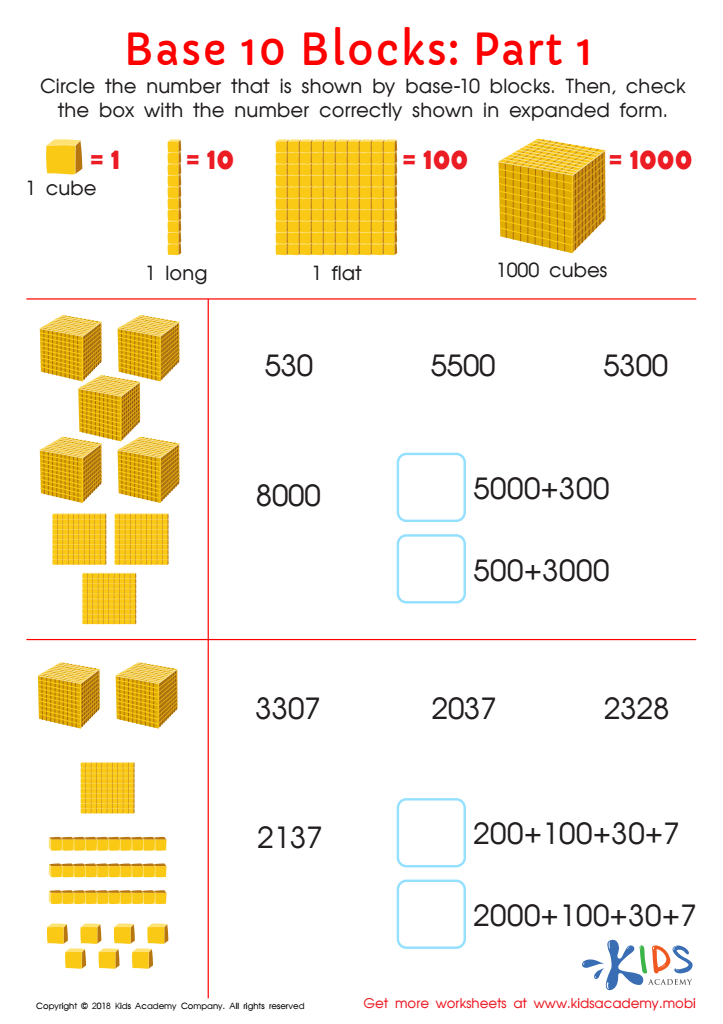
Base 10 Blocks Worksheet: Part 1








Enhancing counting skills in children aged 3-8 is crucial for their overall cognitive and academic development. This foundational skill serves as a stepping stone for various areas of learning, such as mathematics, literacy, and even problem-solving. When children grasp the concept of counting early, they develop a stronger understanding of quantities, which lays the groundwork for more complex mathematical operations, such as addition and subtraction.
Furthermore, strong counting skills promote critical thinking, as children learn to group objects, recognize patterns, and understand sequences. By fostering these skills, parents and teachers empower children with the abilities needed to tackle real-world problems, whether it’s sharing toys or measuring ingredients in cooking.
Additionally, enhancing counting skills can boost a child's confidence and encourage a positive attitude toward mathematics. Engaging activities that incorporate counting, such as games and hands-on experiences, making learning enjoyable, thereby increasing a child’s interest in educational pursuits.
Ultimately, prioritizing the development of counting skills at this formative age can significantly influence a child's lifelong learning trajectory, setting them up for future academic success and equipping them with essential skills for everyday life.