Learning addition Normal Numbers Worksheets for Ages 3-8
4 filtered results
-
From - To
Explore our engaging "Learning Addition Normal Numbers Worksheets" designed specially for children aged 3 to 8. These printable worksheets offer a fun and interactive way to introduce young learners to the world of addition. Each activity focuses on developing essential math skills through bright visuals and manageable problems tailored to various learning stages. Ideal for homeschooling, classroom use, or reinforcing skills at home, our worksheets help kids gain confidence in their math abilities while making learning enjoyable. Watch as your children master addition with these carefully crafted exercises that support their growth and learning journey. Start their math adventure today!
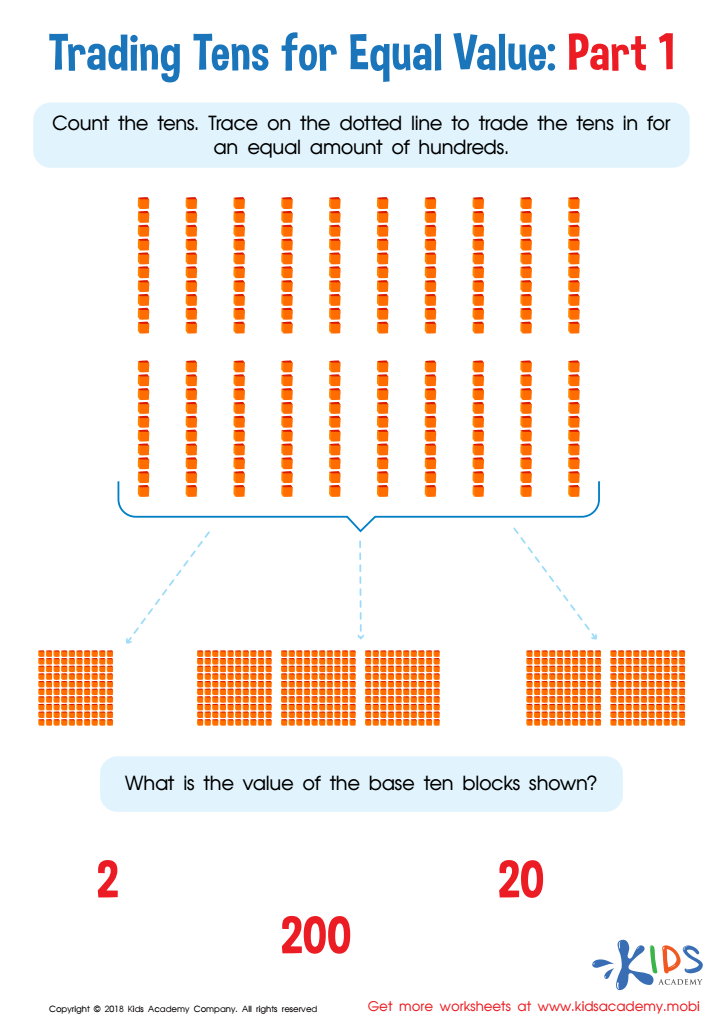
Trading Tens for Equal Value Worksheet: Part 1
 Assign to My Students
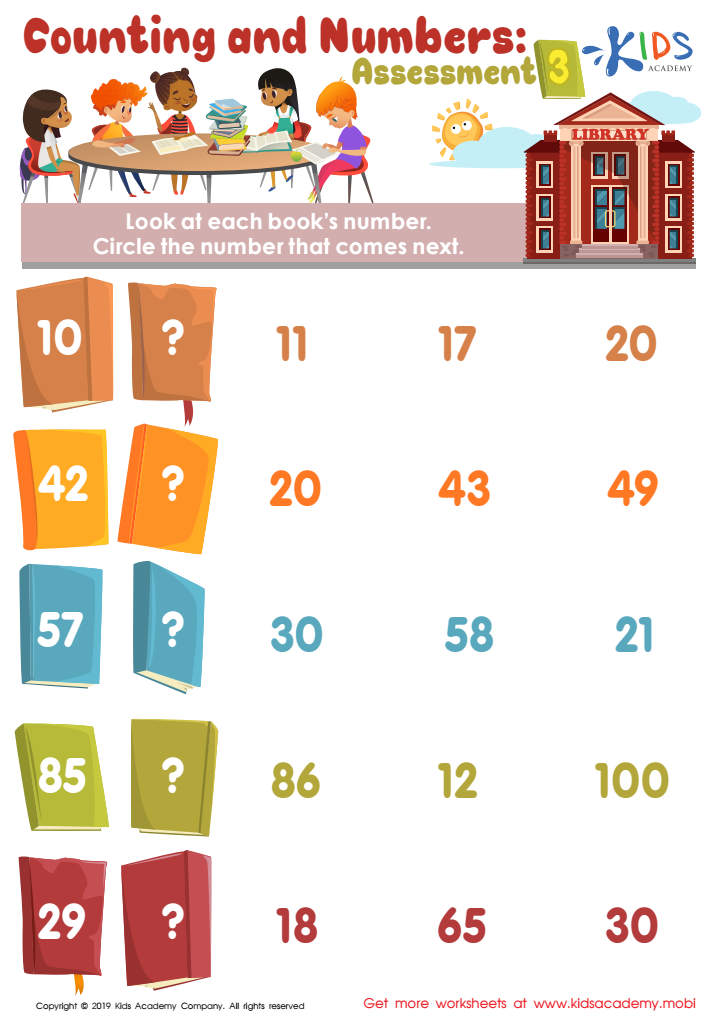
Counting and Numbers: Assessment Worksheet
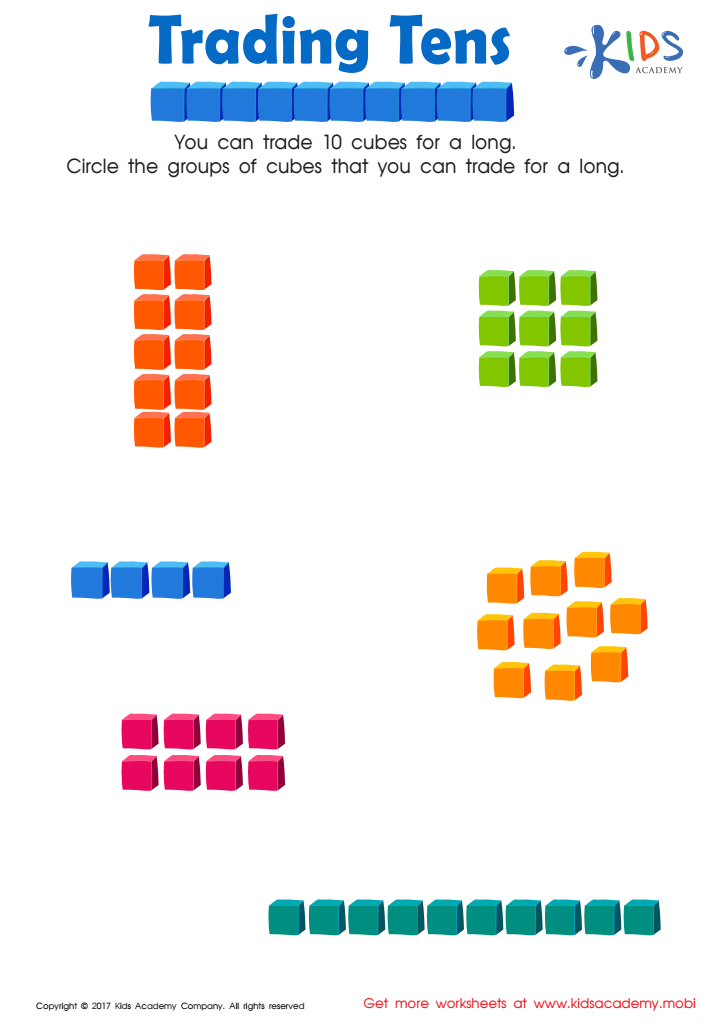
Trading Tens Worksheet
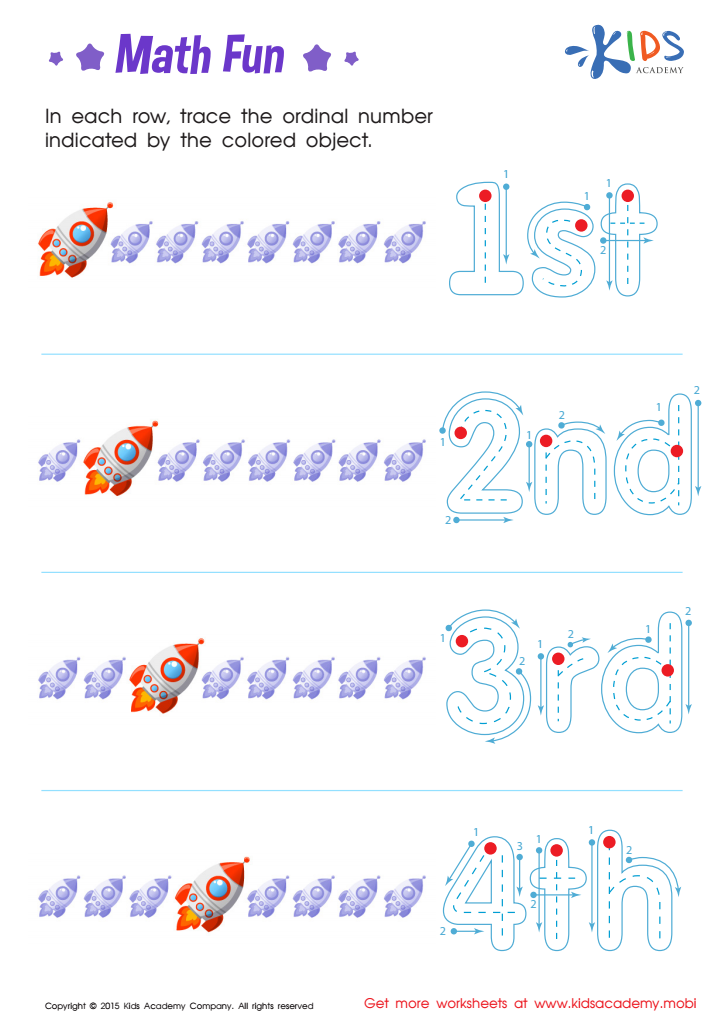
Ordinal Numbers: Math Fun Worksheet








Learning addition with normal numbers is crucial for children ages 3-8 as it lays the foundation for their future mathematical understanding and overall cognitive development. During these formative years, children are like sponges, absorbing information and developing critical thinking skills. Mastering basic addition helps them build confidence and reinforces the concept of numeracy, which is essential for everyday activities such as shopping, cooking, and managing time.
For parents and teachers, fostering a strong understanding of addition provides the tools needed for children to tackle more complex mathematical concepts in later grades. It promotes logical reasoning and problem-solving skills, which are intertwined with various academic subjects beyond mathematics.
Moreover, early engagement in addition fosters positive attitudes toward learning math. A strong early foundation can mitigate math-related anxiety often faced by children in later years. Interactive and enjoyable strategies for teaching addition ensure that children remain engaged and enthusiastic about learning.
When caregivers prioritize these skills, they help create a supportive learning environment that encourages exploration and curiosity, reinforcing a love for learning that can last a lifetime. Thus, focusing on addition not only enhances mathematical understanding but also contributes to holistic developmental growth in young learners.








