Understanding place value Normal Numbers Worksheets for Ages 3-8
9 filtered results
-
From - To
Explore our comprehensive collection of "Understanding Place Value Normal Numbers Worksheets for Ages 3-8" at Kids Academy. These expertly crafted worksheets help young learners grasp the foundational concept of place value, essential for mastering mathematics. Suitable for ages 3-8, our engaging materials are designed to make learning fun and effective. Through hands-on activities and colorful visuals, children easily understand how digits combine to form numbers, enhancing their mathematical confidence and skills. Perfect for parents and educators, these worksheets provide the tools needed for early math success. Turn learning into an enjoyable adventure with Kids Academy today!
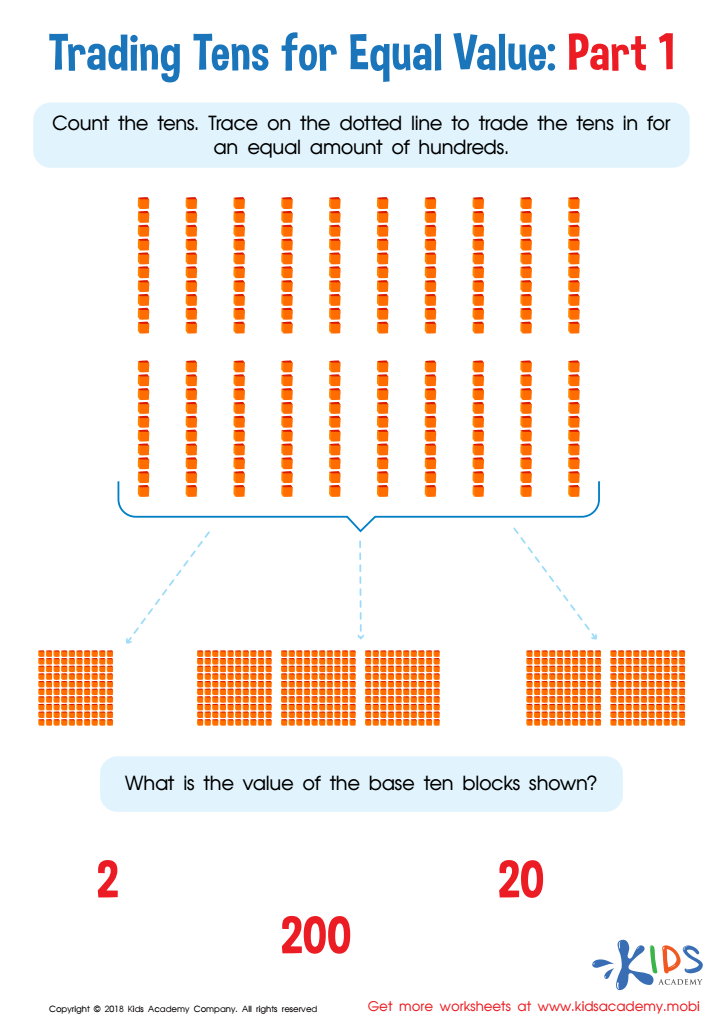
Trading Tens for Equal Value Worksheet: Part 1
 Assign to My Students
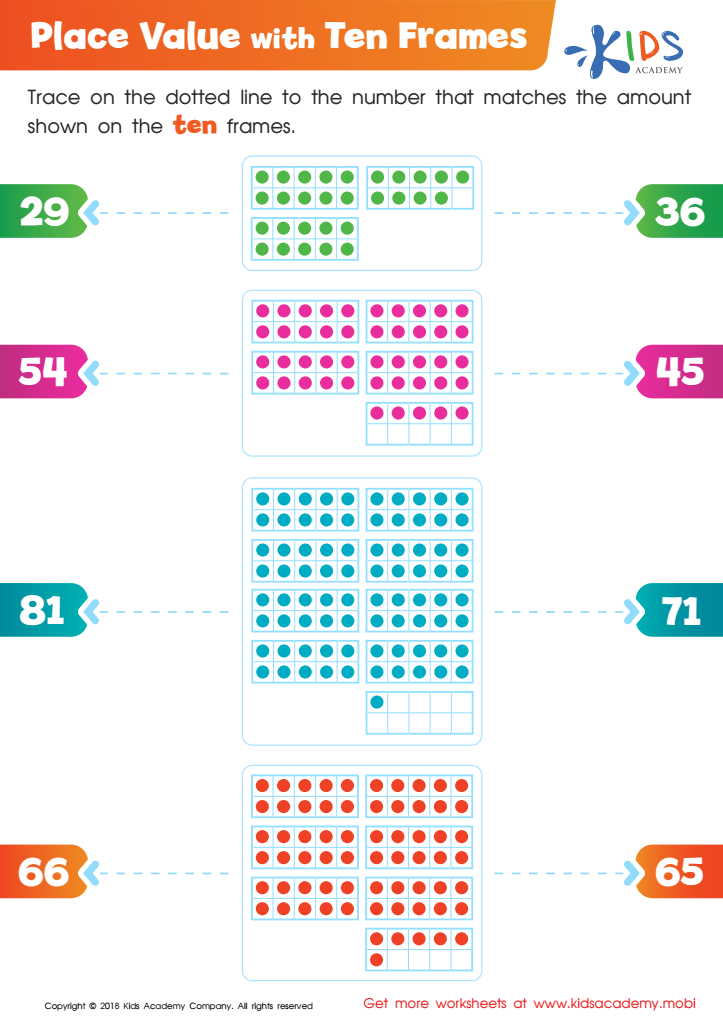
Place Values with Ten Frames Worksheet
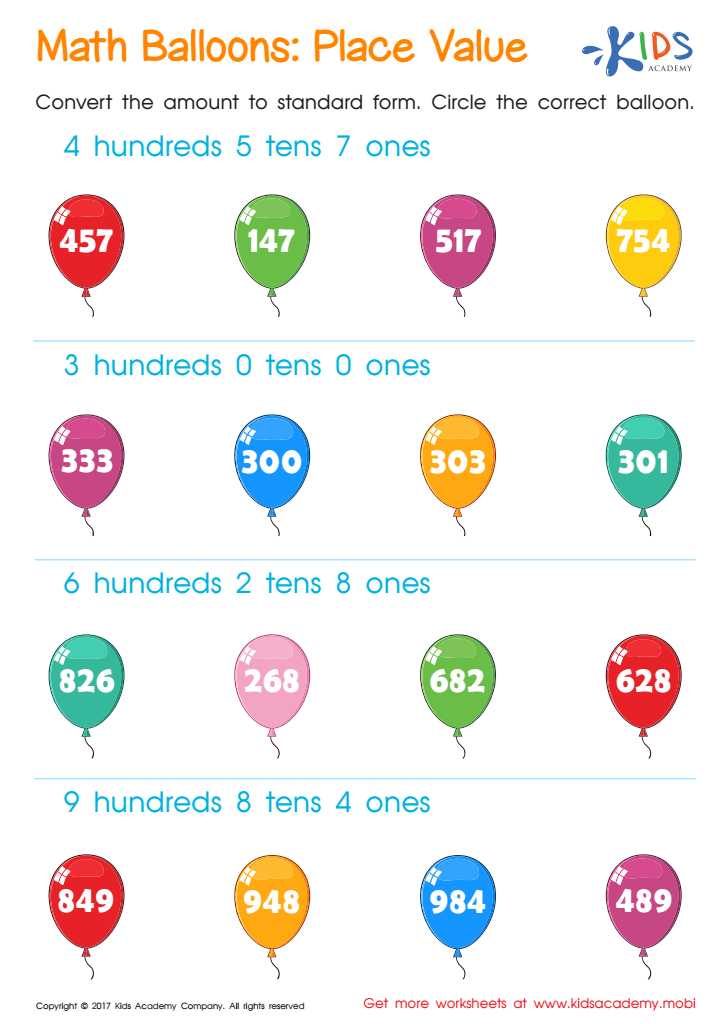
Place Value Printable Worksheet
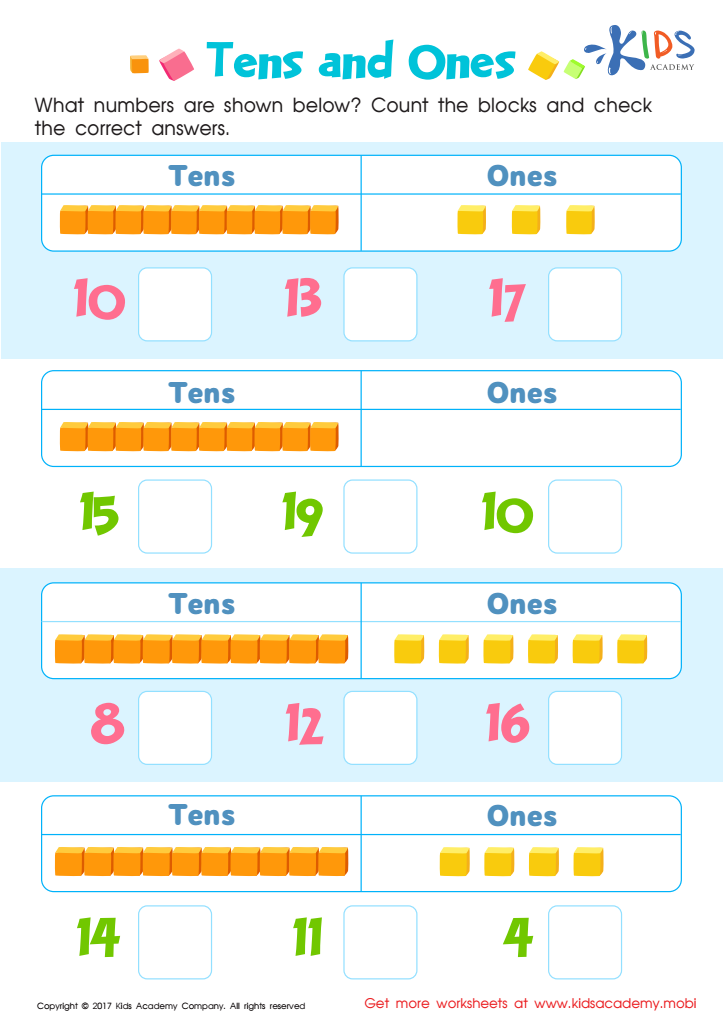
Tens and Ones Worksheet
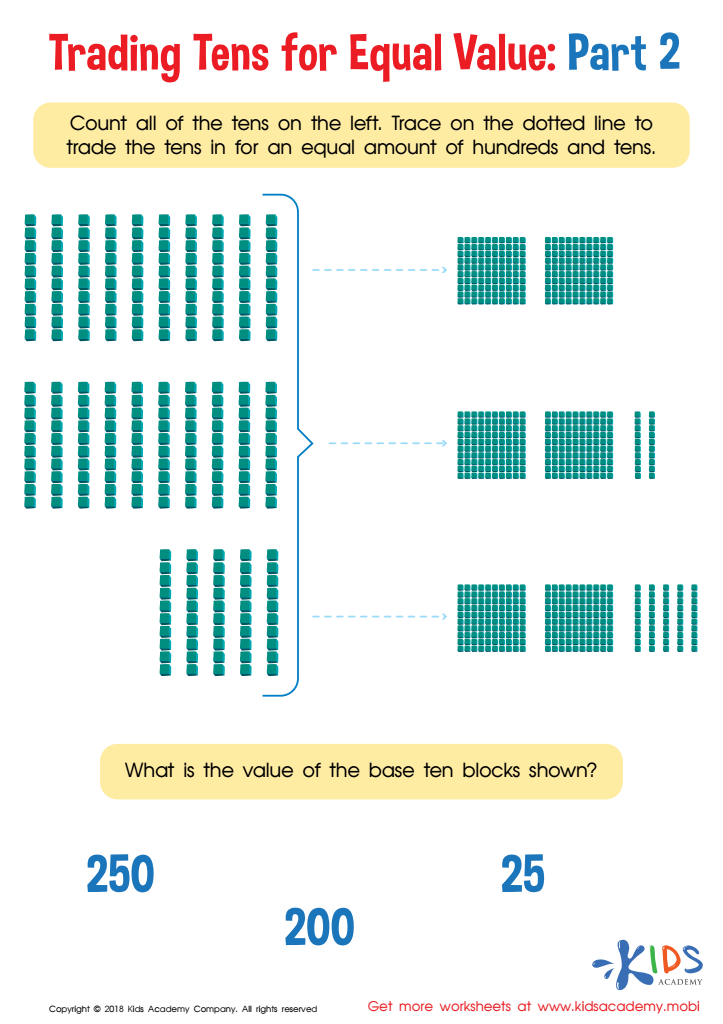
Trading Tens for Equal Value Worksheet: Part 2
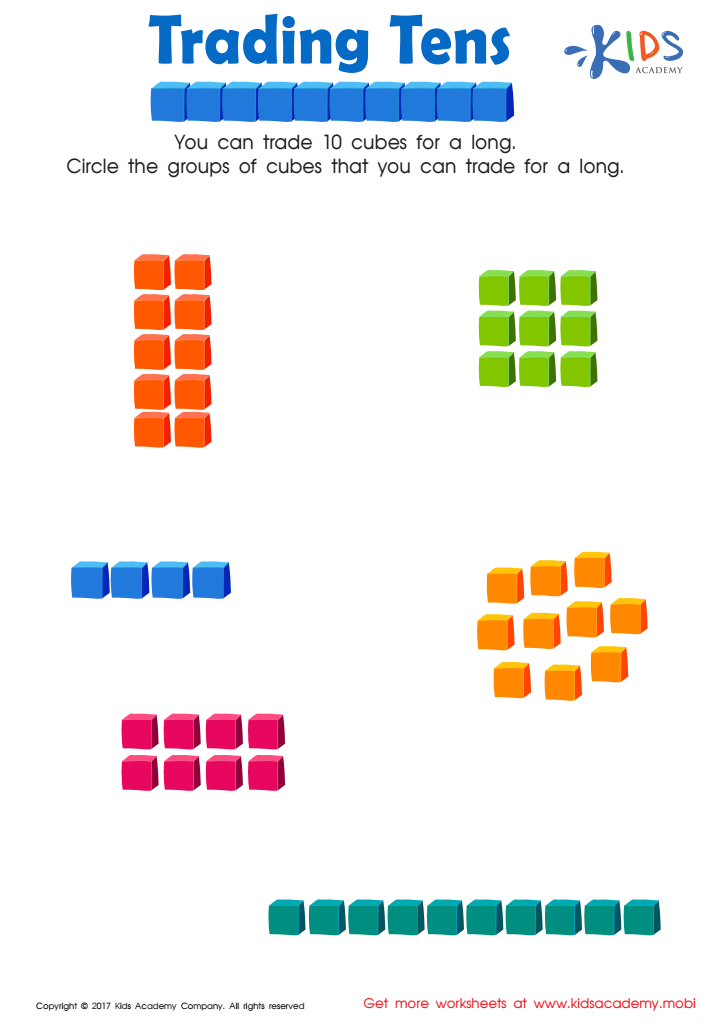
Trading Tens Worksheet
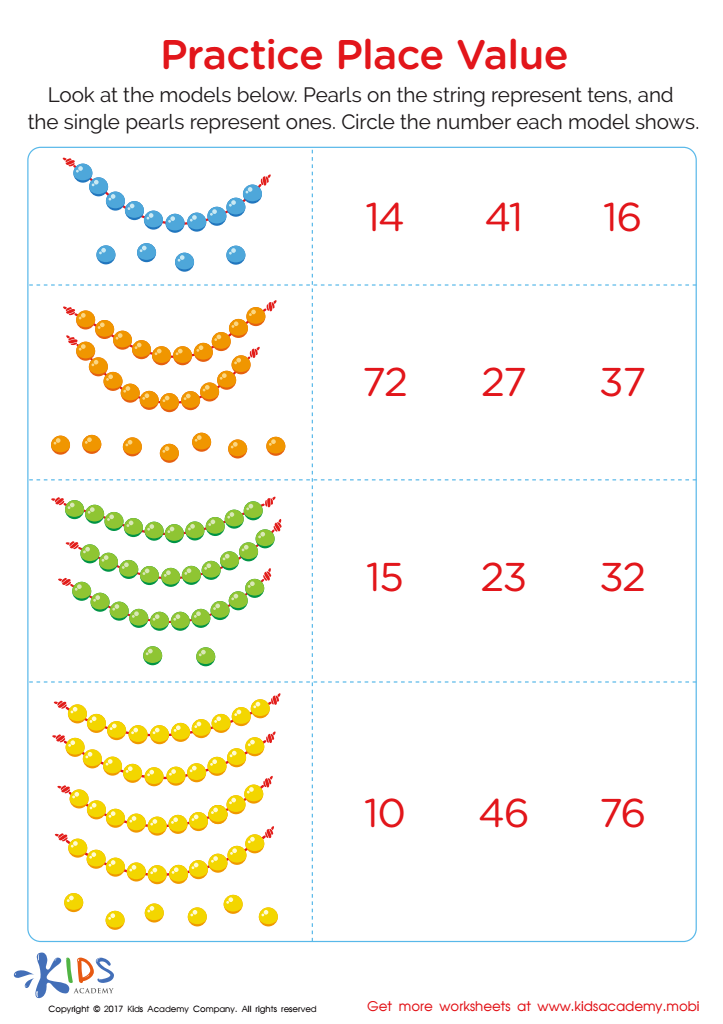
Practice Place Value Printable
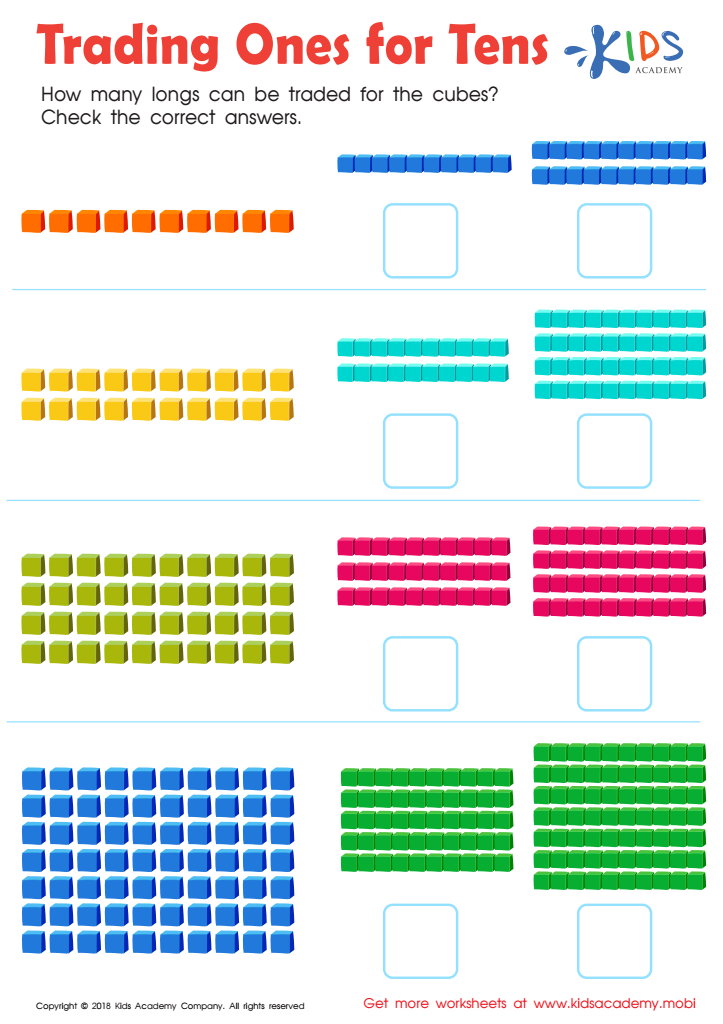
Trading Ones for Tens Worksheet: Part 2
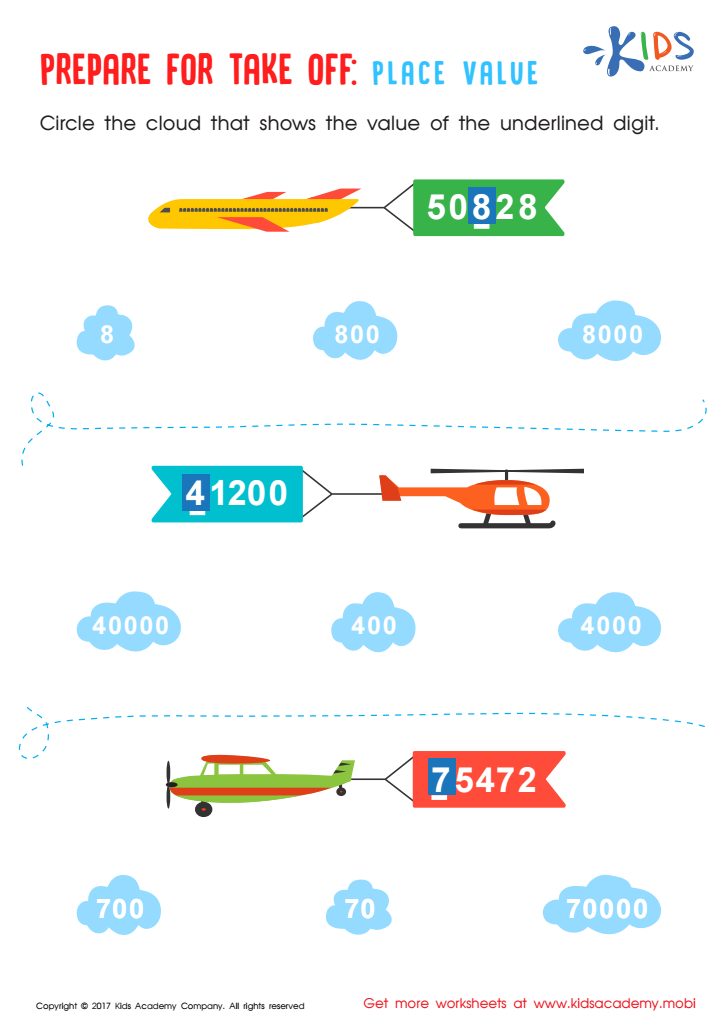
Free Place Value Worksheet for 3rd Grade








Understanding place value is fundamental to a child's early math education, especially for ages 3-8. During this age range, children are developing critical cognitive skills, and grasping this concept lays a solid foundation for their future mathematical learning.
Place value is the system that gives a digit its value based on its position in a number. For example, in the number 132, the digit '1' represents one hundred, '3' represents thirty, and '2' represents two. Without this understanding, children may struggle with basic arithmetic operations like addition, subtraction, and eventually multiplication and division.
When children comprehend place value, they gain insight into how numbers work, fostering a deeper understanding that goes beyond rote memorization. It also improves their ability to estimate, compare, and categorize numbers accurately. This understanding enhances their problem-solving skills and helps them make sense of more complex mathematical concepts they'll encounter later in their education.
For teachers and parents, emphasizing place value encourages a child's number sense—a critical thinking skill that underpins much of their academic success. By using everyday objects and real-world examples, such as grouping toys or counting money, adults can make learning place value engaging and meaningful, setting children up for a lifetime of numeracy competence.








