
Animal identification Normal Math Worksheets for Ages 3-8
3 filtered results
Difficulty Level
Grade
Age
-
From - To
Subject
Activity
Standards
Discover the fun and educational world of our Animal Identification Normal Math Worksheets designed specifically for children ages 3-8! These engaging worksheets combine math skills with exciting animal themes, making learning enjoyable and interactive. Children will enhance their counting, addition, and subtraction abilities while identifying various animals through playful activities. Each worksheet is crafted to promote critical thinking and problem-solving skills in a delightful manner. Perfect for homeschooling or classroom use, our Animal Identification Math Worksheets will spark curiosity and foster a love for learning. Join us in providing a rich, hands-on learning experience that makes math an exciting adventure for young learners!
Favorites
With answer key
Interactive
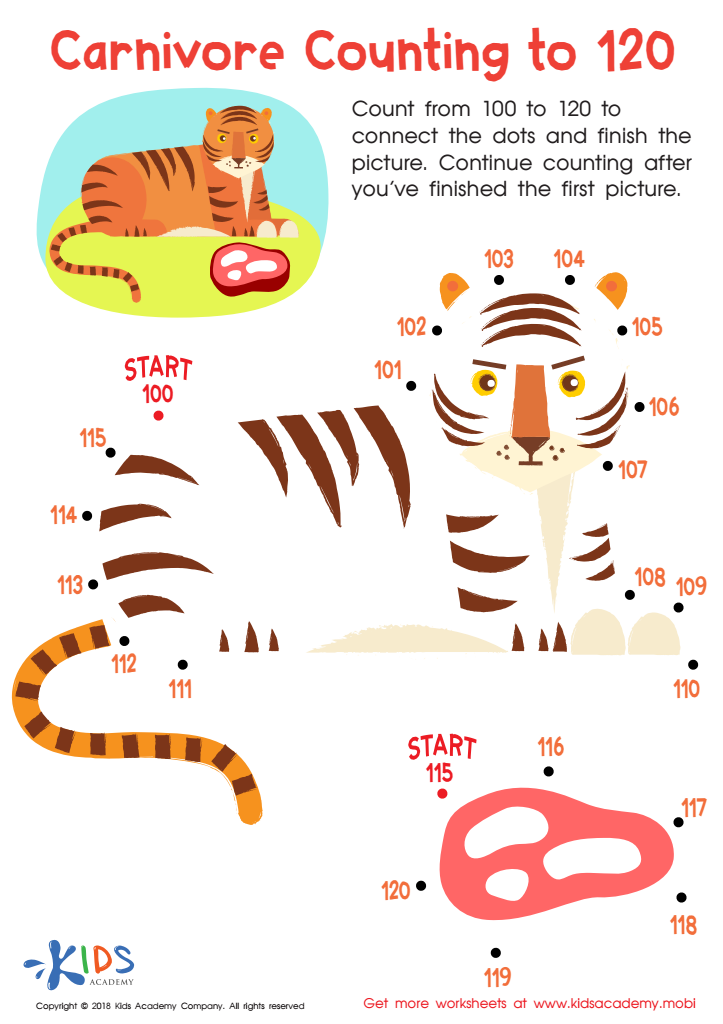
Carnivore Counting to 120 Worksheet
Ask your child to name some popular carnivores. Can they tell you what the animal in the worksheet is? A Tiger? Get them to count from 100 to 120 to connect the dots. After they finish the first picture, keep counting to help them practice!
 Assign to My Students
Carnivore Counting to 120 Worksheet
Worksheet
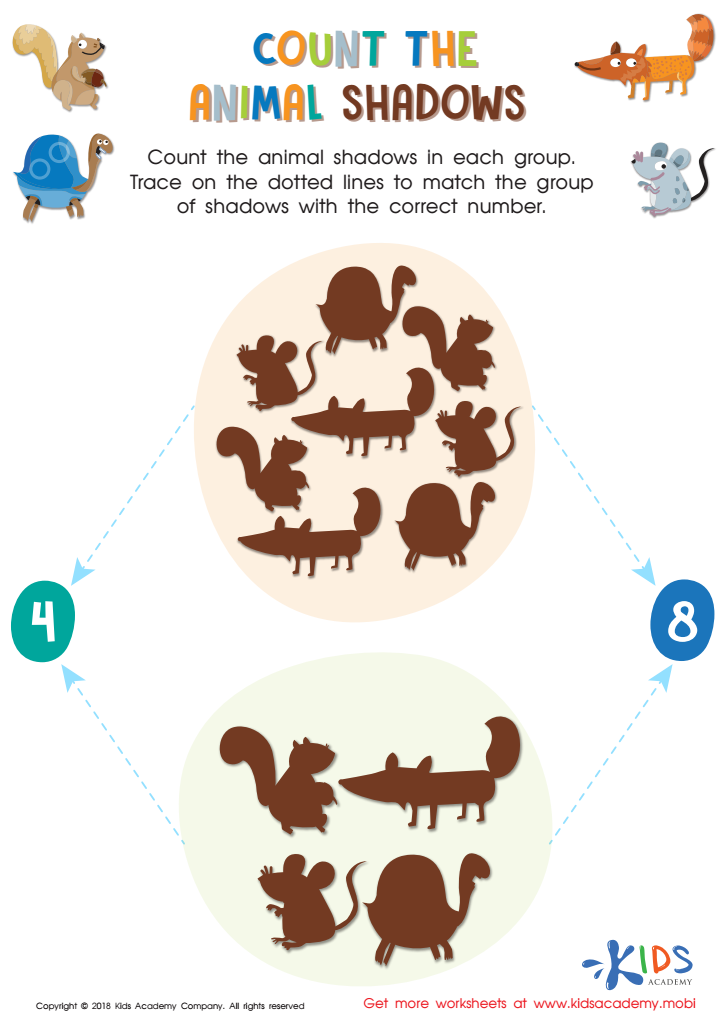
Count the Animal Shadows Worksheet
Our shadows accompany us wherever we go. Even your kids have seen theirs! Did they know that animals have shadows too? Count the animal shadows in each group with this worksheet. Ask your child to identify the animals pictured, then help them trace the dotted lines to match with the right number.
Count the Animal Shadows Worksheet
Worksheet
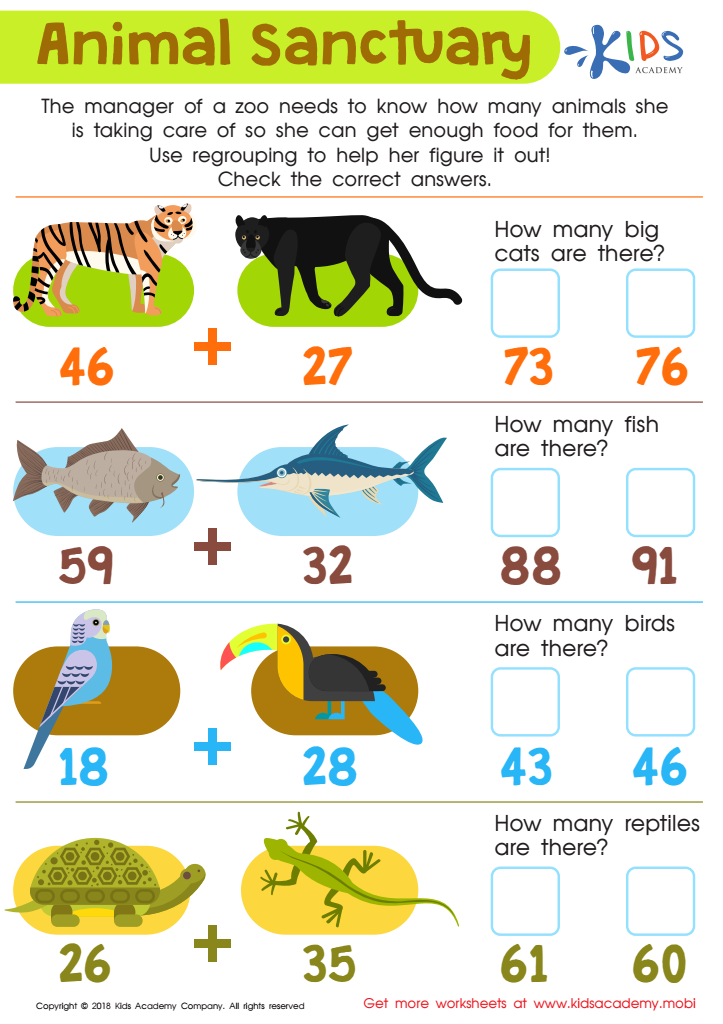
Animal Sanctuary Worksheet
Do your kids love visiting the zoo? Ask which animals they remember & which ones they liked the most. The manager needs help to get enough food for all the animals. Help your child use regrouping to figure out how many animals there are. And ask them to check the answers.
Animal Sanctuary Worksheet
Worksheet
Join Kids Academy for Free
Who is primarily going to use this learning content?








Animal Identification Normal Math is crucial for young children aged 3-8 as it integrates foundational math skills with engaging and relatable content. At this age, children are naturally curious about the world around them, and animals are a captivating theme that can stimulate their learning. By linking animals to mathematical concepts, such as counting, grouping, and identifying patterns, parents and teachers can foster a love for both math and nature.
Early exposure to math concepts through animal identification helps in developing critical thinking skills. Children learn to categorize animals, which reinforces their understanding of shapes, sizes, and quantities. For instance, counting the number of cats and dogs in a story can make math more relatable and fun.
Additionally, introducing math in the context of animals can enhance language skills as children learn about different species, their habitats, and characteristics. This holistic approach ensures that learning is not only about numbers but also about exploring diversity and nurturing curiosity.
Ultimately, supporting children's math journey through engaging themes like animal identification can lay a strong foundation for their future academic success while also cultivating an appreciation for the natural world. Parents and teachers should care because this approach makes learning enjoyable and effective!








