Basic subtraction skills Normal Math Worksheets for Ages 3-8
3 filtered results
-
From - To
Our "Basic Subtraction Skills" worksheets are designed for children ages 3-8, providing a foundation in early math skills. These engaging and educational worksheets help young learners grasp the concept of subtraction through fun and interactive activities. Each worksheet is crafted to make learning enjoyable, with colorful illustrations and easy-to-follow instructions. By practicing with these worksheets, children can improve their problem-solving abilities and build confidence in their math skills. Ideal for home or classroom use, our printable worksheets are a valuable resource in supporting your child's educational journey. Start strengthening your child's subtraction skills today!
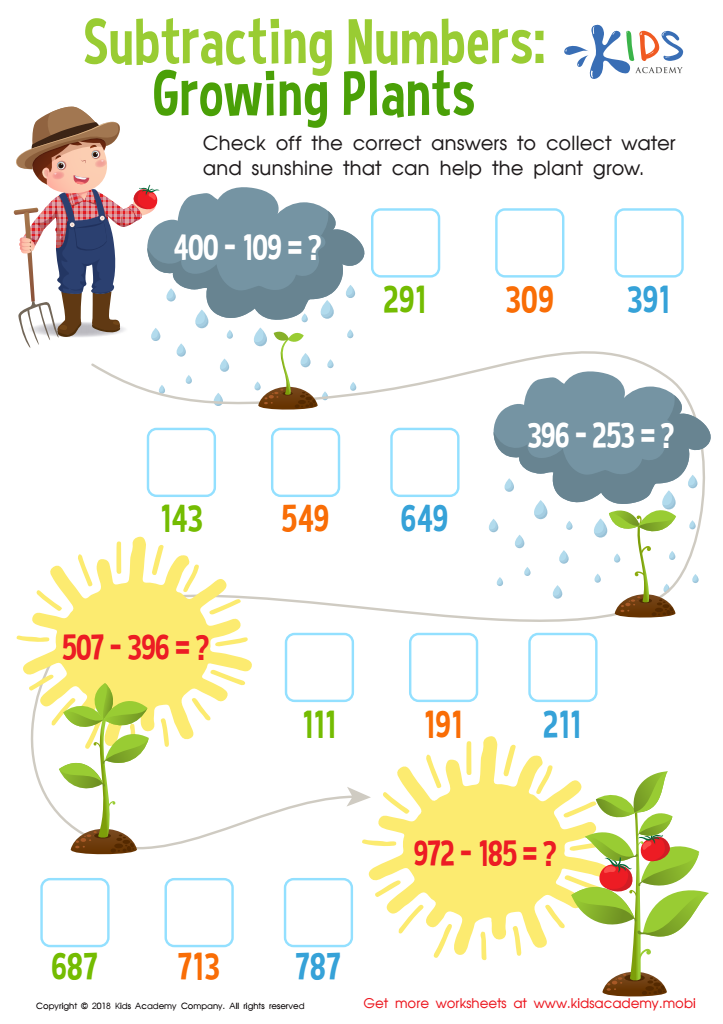
Subtracting Numbers: Growing Plants Worksheet
 Assign to My Students
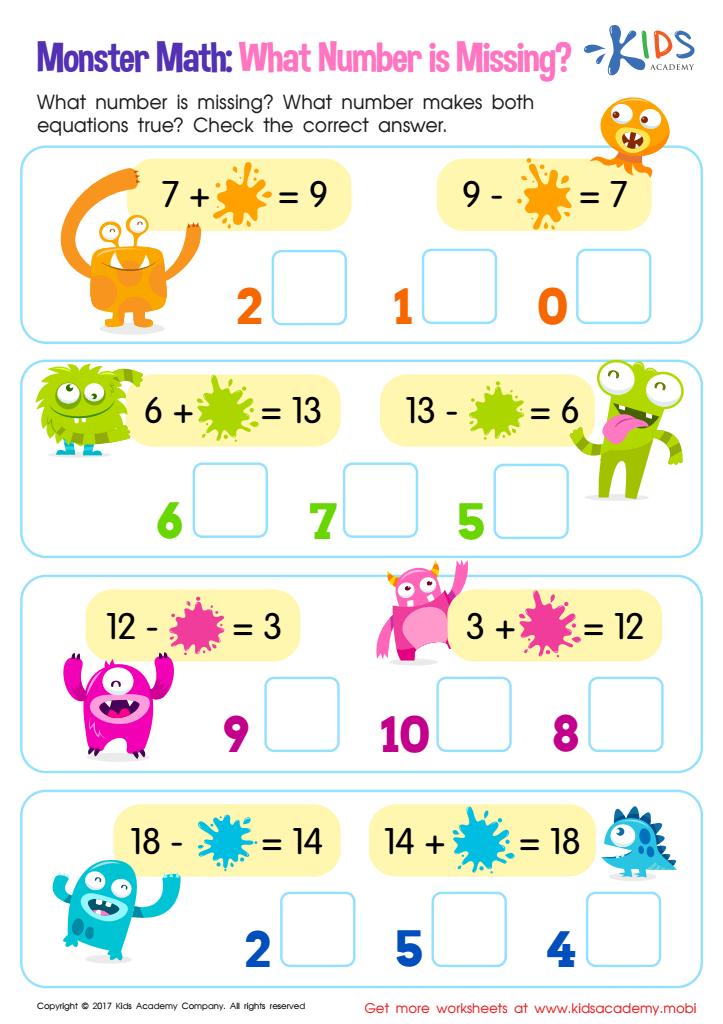
Missing Number: Monster Math Worksheet
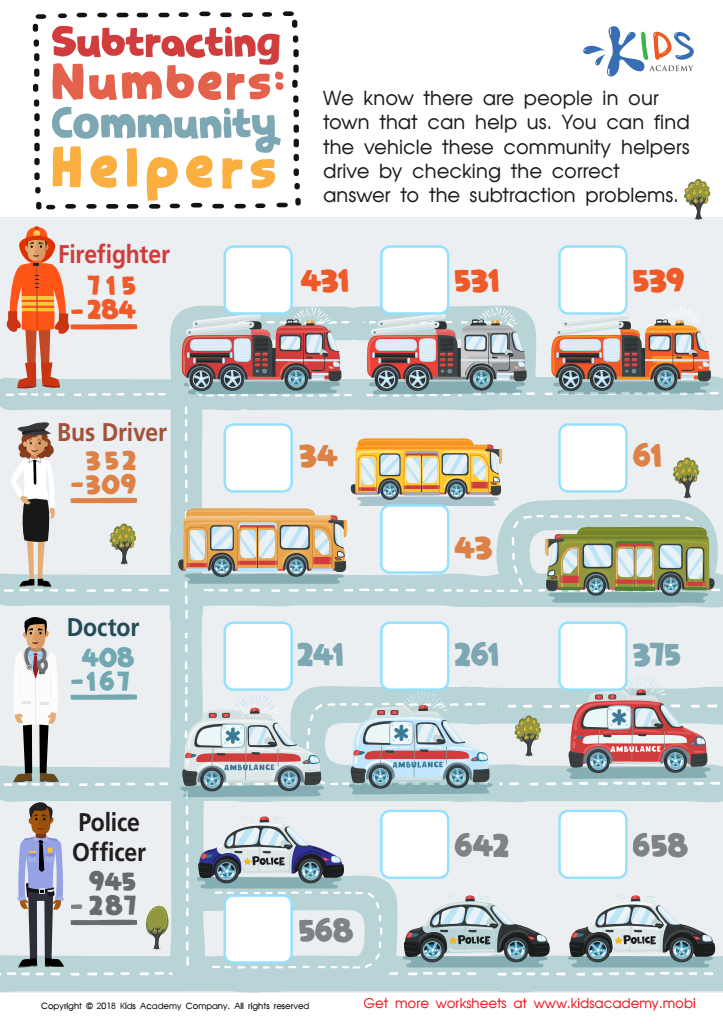
Subtracting Numbers: Community Helpers Worksheet








Basic subtraction skills are crucial for children ages 3-8 as they lay the foundational groundwork for future mathematical learning and critical problem-solving abilities. Parents and teachers should prioritize these skills to ensure that children develop a strong numerical sense that can boost their confidence and competence in math.
Subtraction, or taking away, is one of the fundamental arithmetic operations that help children understand how numbers relate to each other. This understanding is critical not only for higher-level math concepts such as multiplication, division, and algebra but also for everyday activities involving counting and reasoning. Early exposure to subtraction strengthens children's ability to perform mental calculations, understand the concept of 'less than,' and manage scenarios that involve loss or reduction, all while nurturing logical thinking and analytical skills.
Moreover, mastering basic subtraction can significantly improve a child’s overall academic performance. It encourages cognitive development and supports skills within other subjects like science and reading, where logical sequence and analysis play a crucial role.
Additionally, foundational subtraction skills foster a positive attitude towards learning math by preventing math anxiety. When taught in a supportive and engaging manner, children are more likely to embrace and excel in future mathematical challenges. Thus, parents and teachers should actively encourage and support the development of these basic skills during the early years.








