
Improving math skills Normal Math Worksheets for Ages 3-8
12 filtered results
Difficulty Level
Grade
Age
-
From - To
Subject
Activity
Standards
Enhance your child's math proficiency with our "Improving Math Skills Normal Math Worksheets" tailored for children aged 3-8. These worksheets engage young learners in fun and interactive ways, promoting essential numeracy skills. Each activity reinforces counting, addition, subtraction, and more, ensuring a comprehensive foundation in math. Designed by educators, our worksheets cater to diverse learning styles, making math accessible and enjoyable. As your child practices, they'll build confidence and mastery, laying the groundwork for future academic success. Explore our resources to turn math learning into a playful adventure that sparks curiosity and lays a strong mathematical foundation.
Favorites
With answer key
Interactive
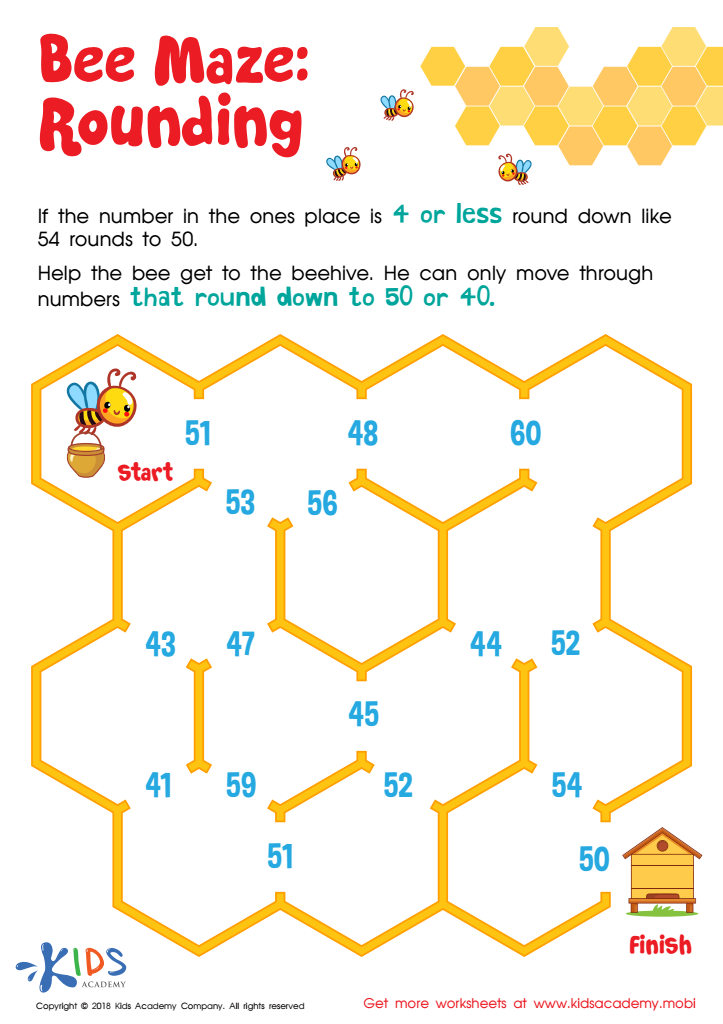
Rounding Down Printable Worksheet
Help our bee friend take its honey pot back to the hive! With this worksheet, your kid can practice rounding numbers down. Have them guide the bee through the maze, choosing only numbers that round to 50 or 40.
 Assign to My Students
Rounding Down Printable Worksheet
Worksheet
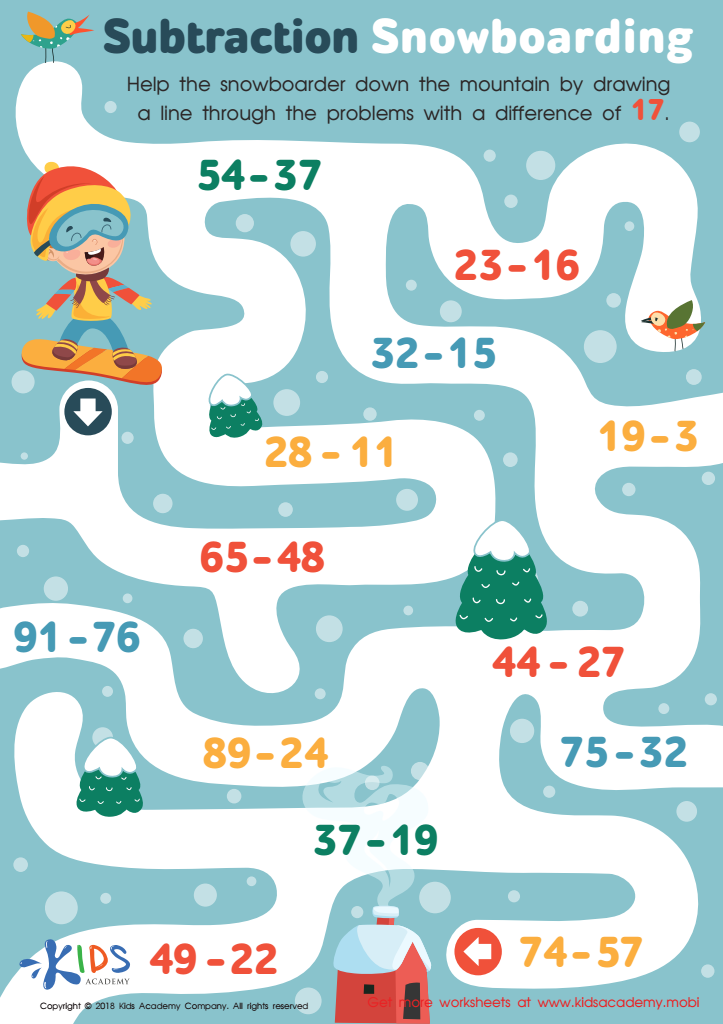
Subtraction Snowboarding Worksheet
Your child can help the snowboarder carve up the mountain with this worksheet! It features a snowboarder who loves snowboarding almost as much as your kid. Get them to draw a line through the problems, where the difference between them is 17. Winter weather brings lots of snow - so let your child channel their love for snowboarding and have fun!
Subtraction Snowboarding Worksheet
Worksheet
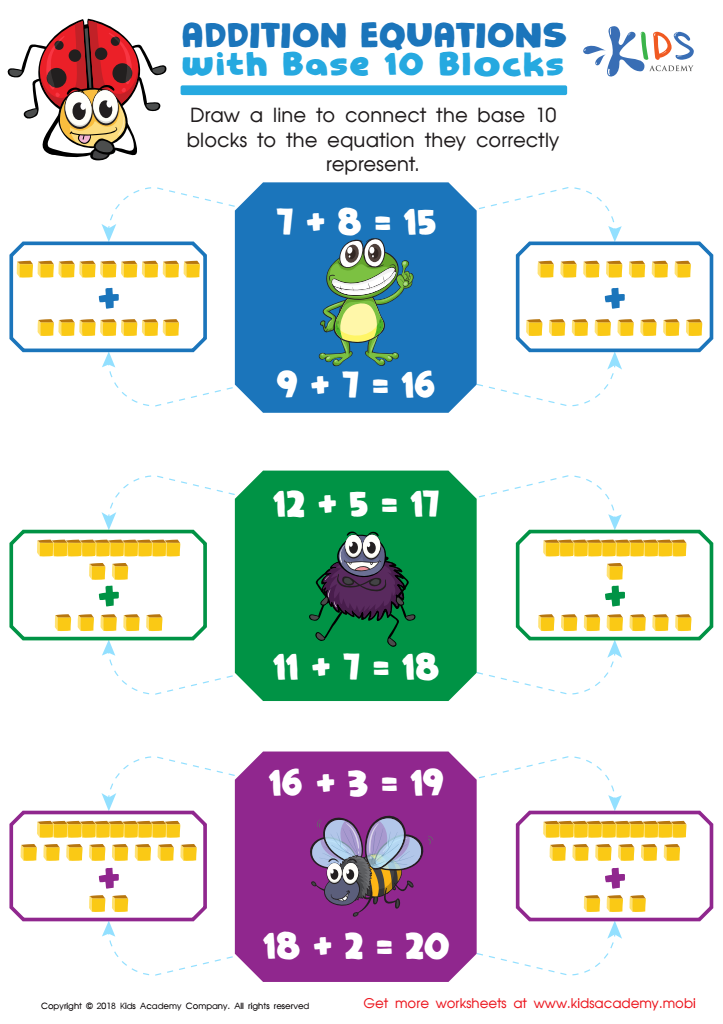
Addition Equations With Base 10 Blocks Worksheet
If your students are struggling with base 10 addition, this worksheet is here to help. Guide them with connecting the blocks to the equation with a line. It's a fun and colourful way to encourage learning.
Addition Equations With Base 10 Blocks Worksheet
Worksheet
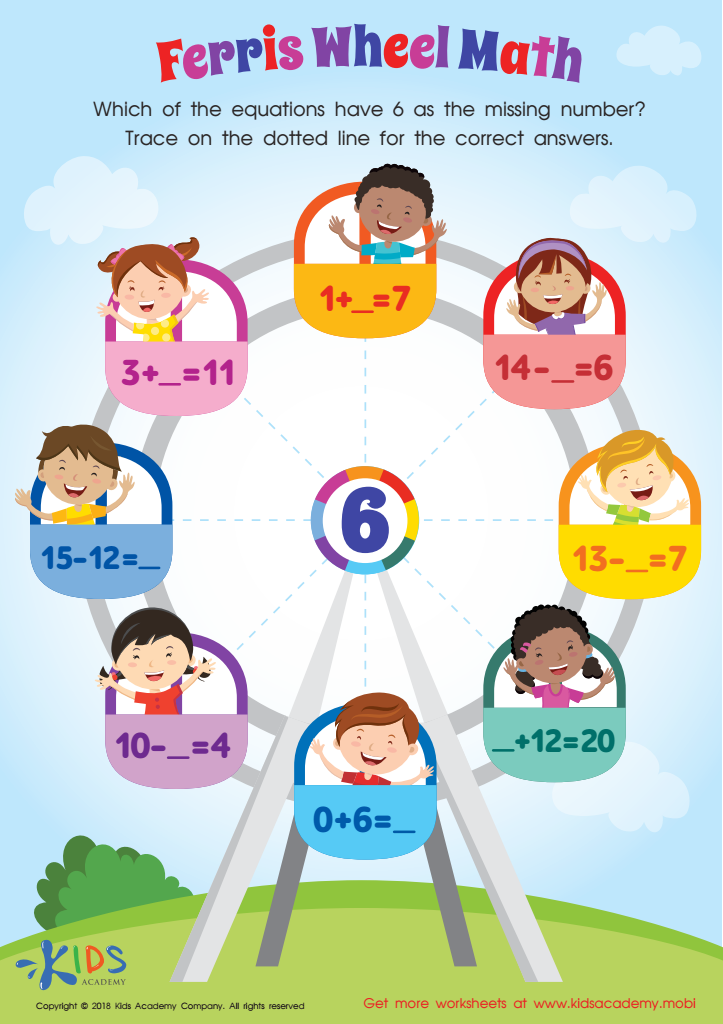
Missing Number: Ferris Wheel Math Worksheet
Hop on the Ferris wheel and solve the equations in the baskets! If the missing number is 6, draw a line from the basket to the middle of the wheel. Kids Academy's addition worksheet will not only help practice pre-algebra but also keep kids entertained with its vibrant illustrations. So, go round and round and have fun with math!
Missing Number: Ferris Wheel Math Worksheet
Worksheet
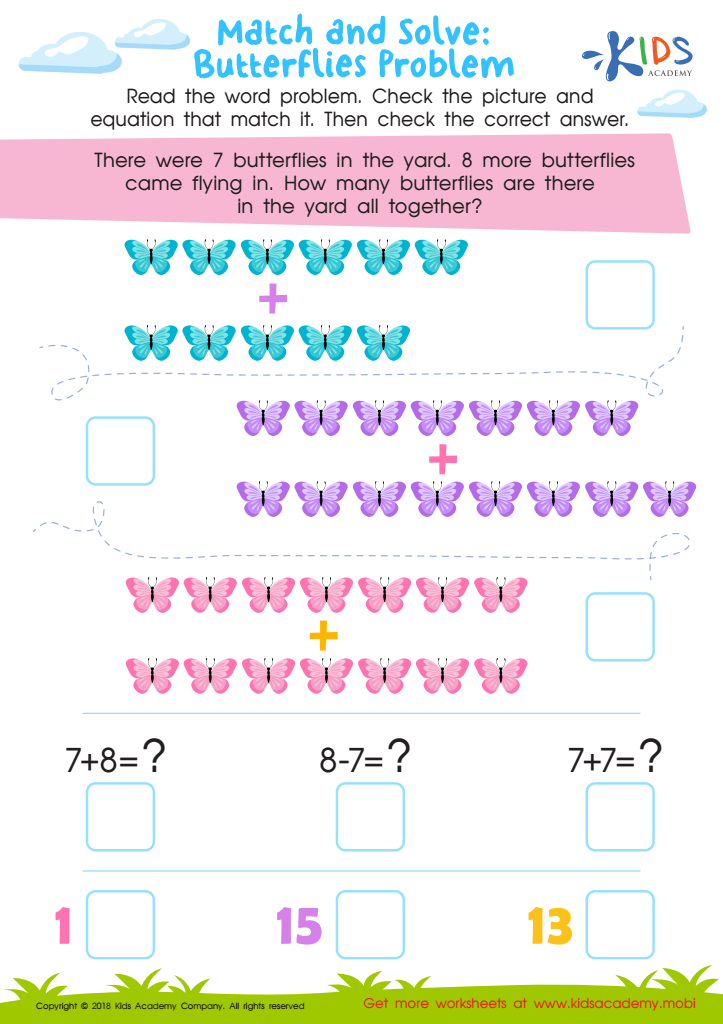
Match and Solve: Butterfly Problem Worksheet
Kids should practice math problems in different ways. This fun worksheet uses butterflies to represent numbers in word problems. Help your child read the problem and count the butterflies to find the correct illustration. Then, pick the equation with the correct answer and find the solution. Tick the box to complete! (80 words)
Match and Solve: Butterfly Problem Worksheet
Worksheet
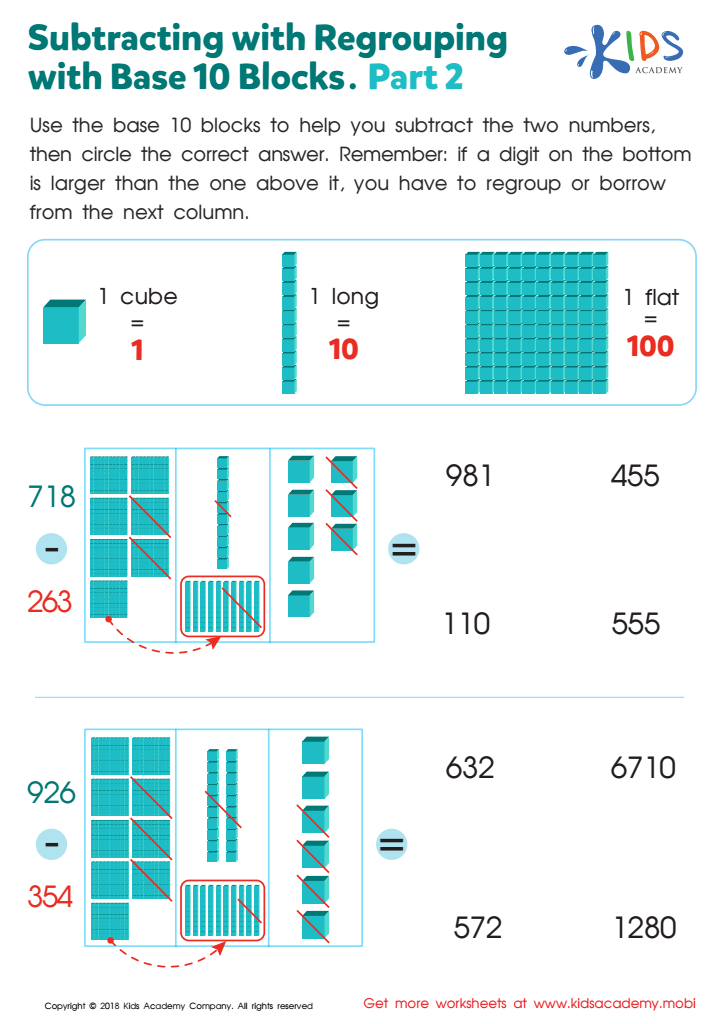
Subtracting with Regrouping with Base 10 Blocks. Part 2 Worksheet
Give your kids the practice they need to master subtracting with regrouping with Kids Academy's printable worksheet. It contains two 3-digit problems for kids to solve, plus colorful blocks to help them understand the concept more easily. Help your kids succeed!
Subtracting with Regrouping with Base 10 Blocks. Part 2 Worksheet
Worksheet
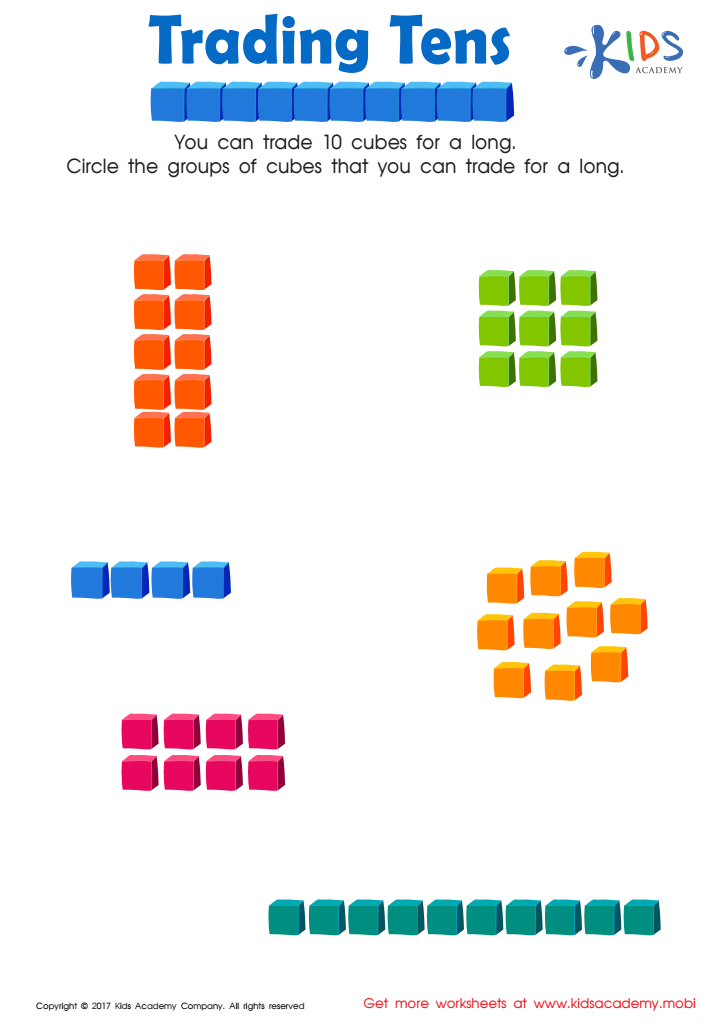
Trading Tens Worksheet
Students will hone their counting skills with this worksheet. They must identify groups of 10 cubes to trade for a long. The cubes are arranged in different ways, so students must rely on individual counting. Completing this printable pdf will help 1st graders develop problem-solving abilities and a better understanding of counting.
Trading Tens Worksheet
Worksheet
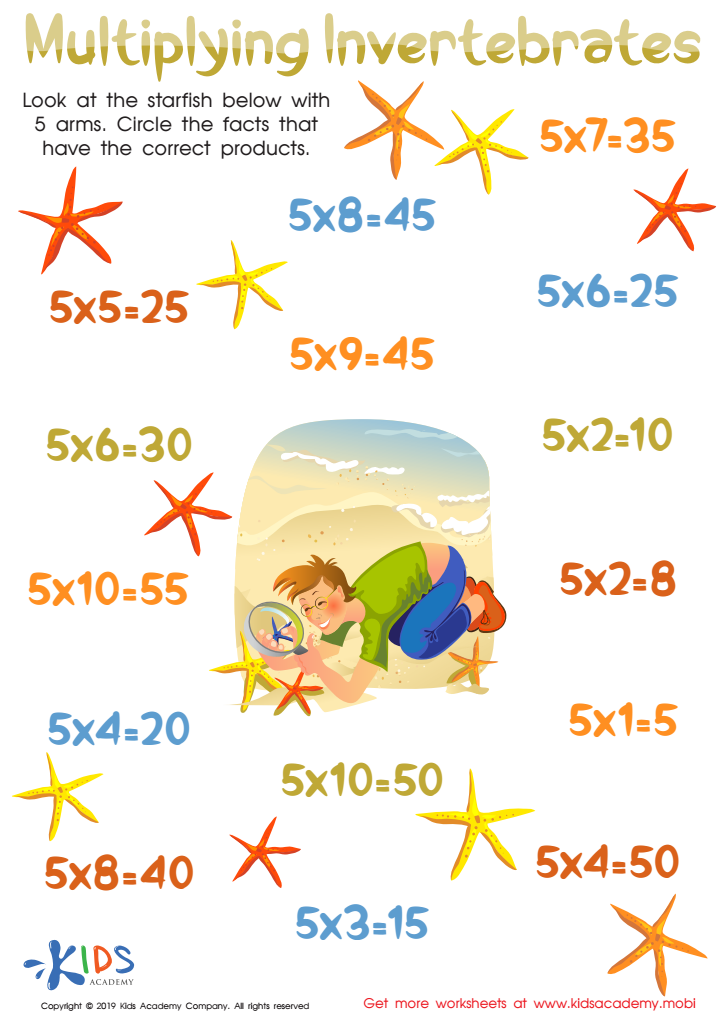
Multiplying Invertebrates Worksheet
Explain to your kids an invertebrate is an animal without a backbone. Examples: squid, jellyfish, octopus. Now, look at the starfish in the picture and help your kids circle the correct facts.
Multiplying Invertebrates Worksheet
Worksheet
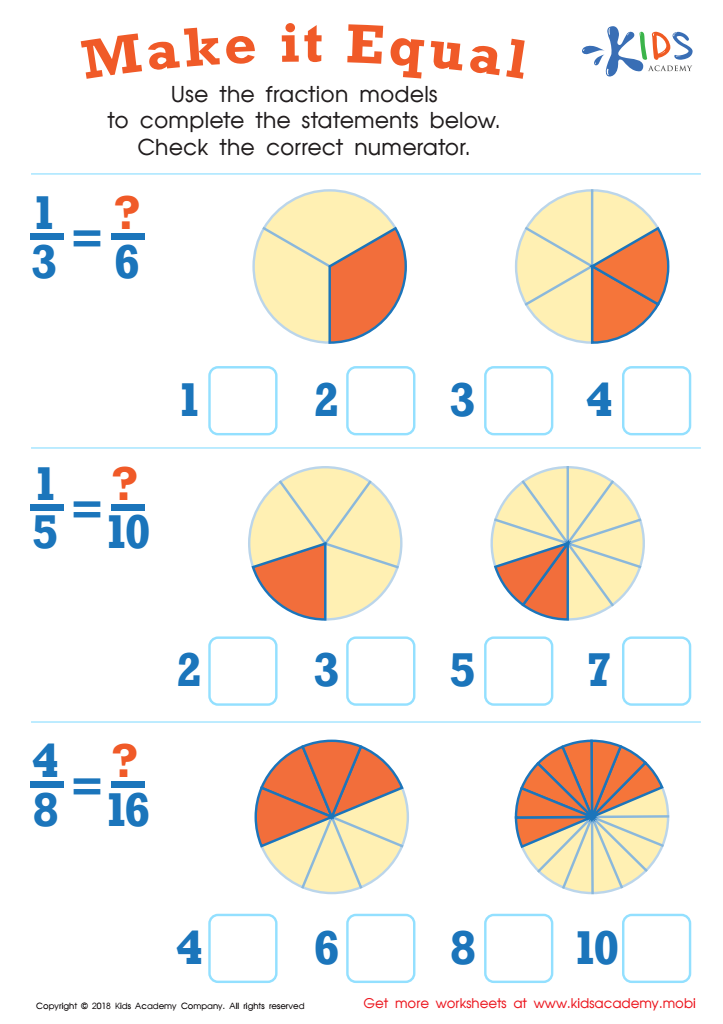
Make It Equal Worksheet
Ask your kids to complete the equations in the worksheet and find the correct numerator. Explain that numerators are the numbers at the top of a fraction and guide them as they count the shaded parts of the shapes. There are three equations to figure out.
Make It Equal Worksheet
Worksheet
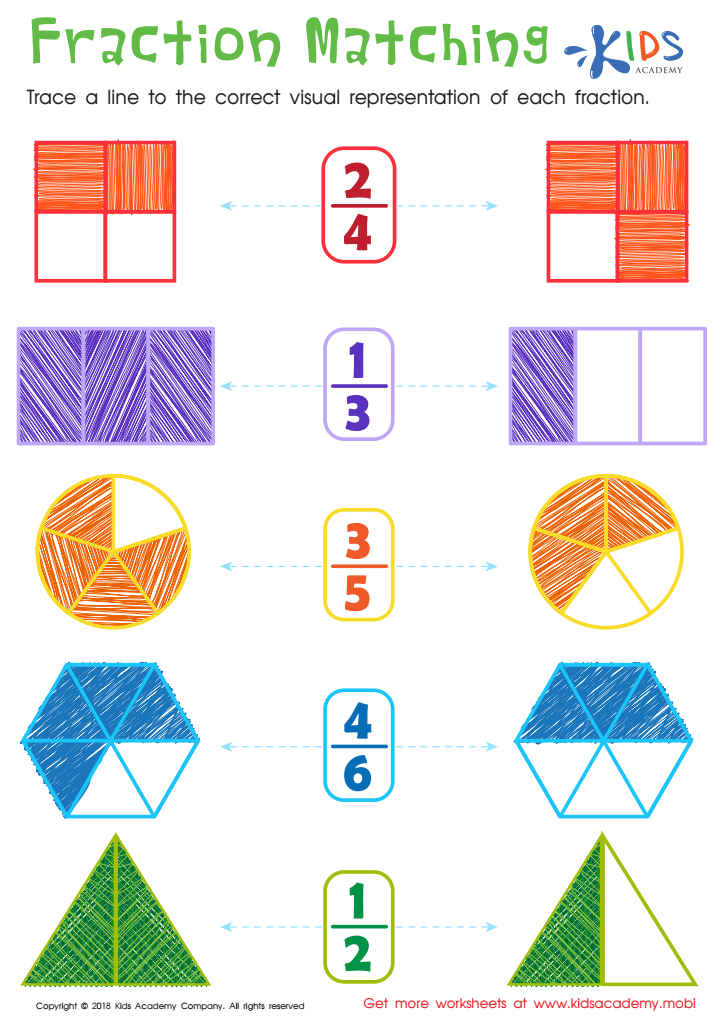
Fraction Matching Worksheet
Teach your kindergartners fractions with this colorful worksheet. Make sure they understand numerators and denominators, then have them trace a line to the correct visual representation of each equation. There are five fractions for them to work on. With the foundation of fractions, mathematics will be much easier for them.
Fraction Matching Worksheet
Worksheet
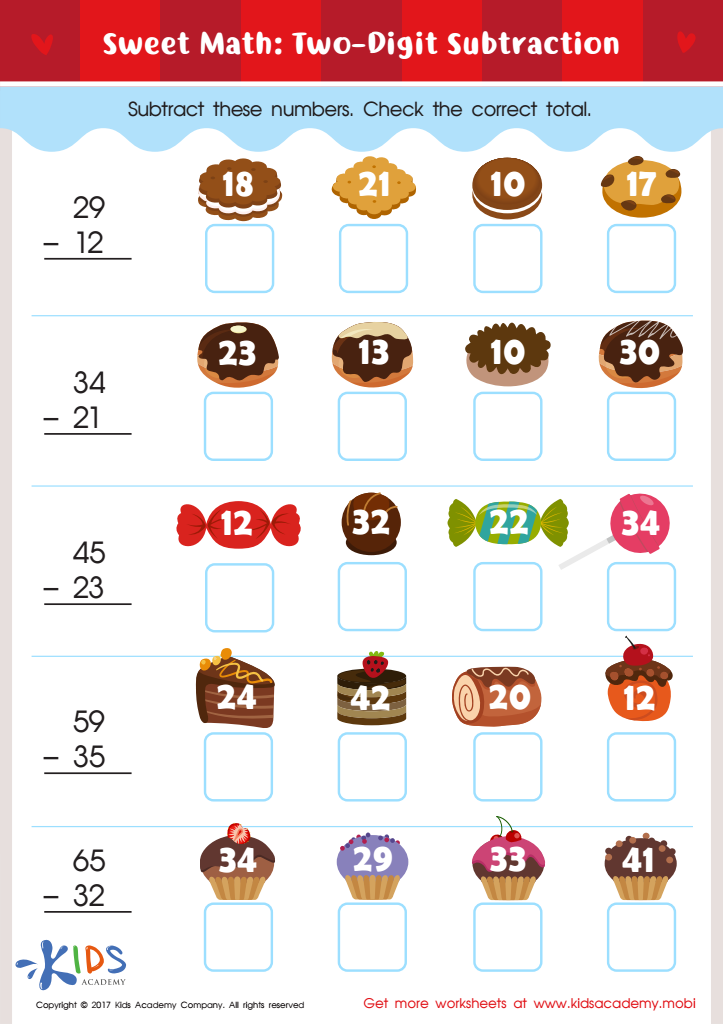
Two Digit Subtraction Worksheet
Make subtraction practice fun and easy with Kids Academy's delightful two digit subtraction worksheet PDF! Your child will love finding the sweet treat containing the correct answer to each 2-digit problem. Offer this quick practice and watch them learn!
Two Digit Subtraction Worksheet
Worksheet
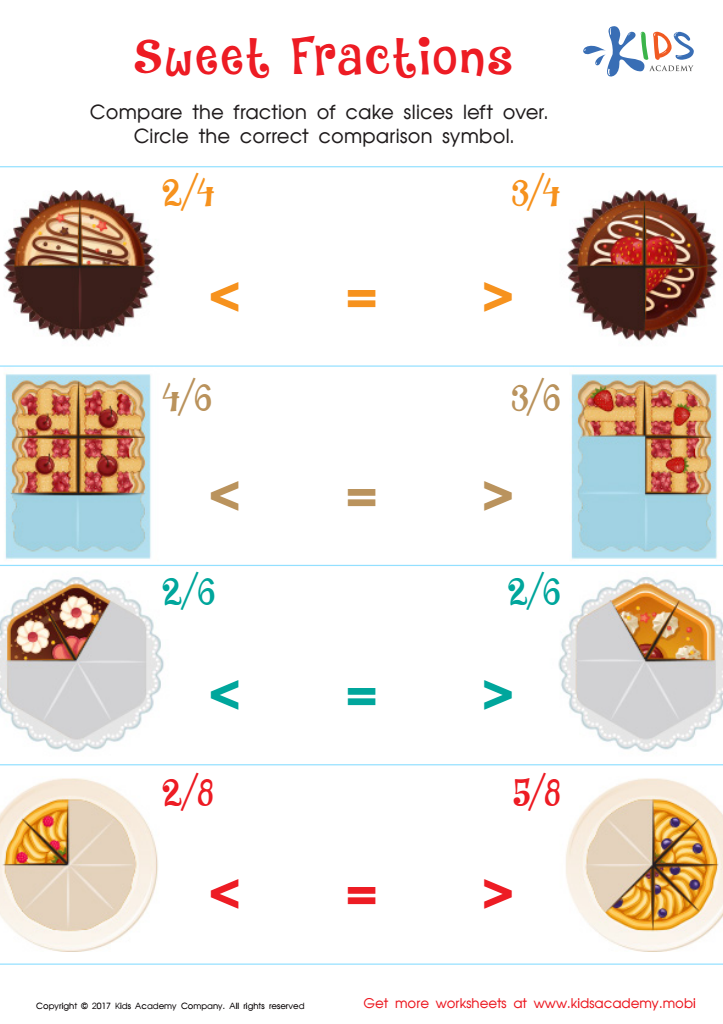
Compare Fractions Worksheet
This compare fractions worksheet is great for 3rd graders to learn and understand fractions in a fun way. Let them explore fractions visually with the help of sweet treats!
Compare Fractions Worksheet
Worksheet
Join Kids Academy for Free
Who is primarily going to use this learning content?







Improving math skills in children aged 3-8 is crucial as it lays the foundation for lifelong learning and success. This period is critical for cognitive development, and introducing mathematical concepts at an early age enhances problem-solving abilities, critical thinking, and logical reasoning. Engaging in normal math activities helps children develop an understanding of numbers, patterns, and relationships, fostering a growth mindset toward their capabilities.
Moreover, early math skills correlate with later academic achievement. Research shows that children who grasp basic math concepts early are more likely to excel in advanced math and other subjects in school. By investing time and effort in developing these skills, parents and teachers equip children with the tools necessary for future learning, encouraging confidence in their capabilities.
Math skills also support everyday life skills, teaching children to manage money, tell time, and understand measurements. Strong mathematical foundations can boost children’s self-esteem, helping them approach challenges with a positive attitude. Therefore, nurturing these skills during early childhood is not just about academic success; it's about empowering children to navigate the world and become informed, capable adults. Support from parents and teachers can profoundly shape children’s attitudes towards math and learning as a whole.








