Multiplication practice Normal Math Worksheets for Ages 3-8 - Page 2
30 filtered results
-
From - To
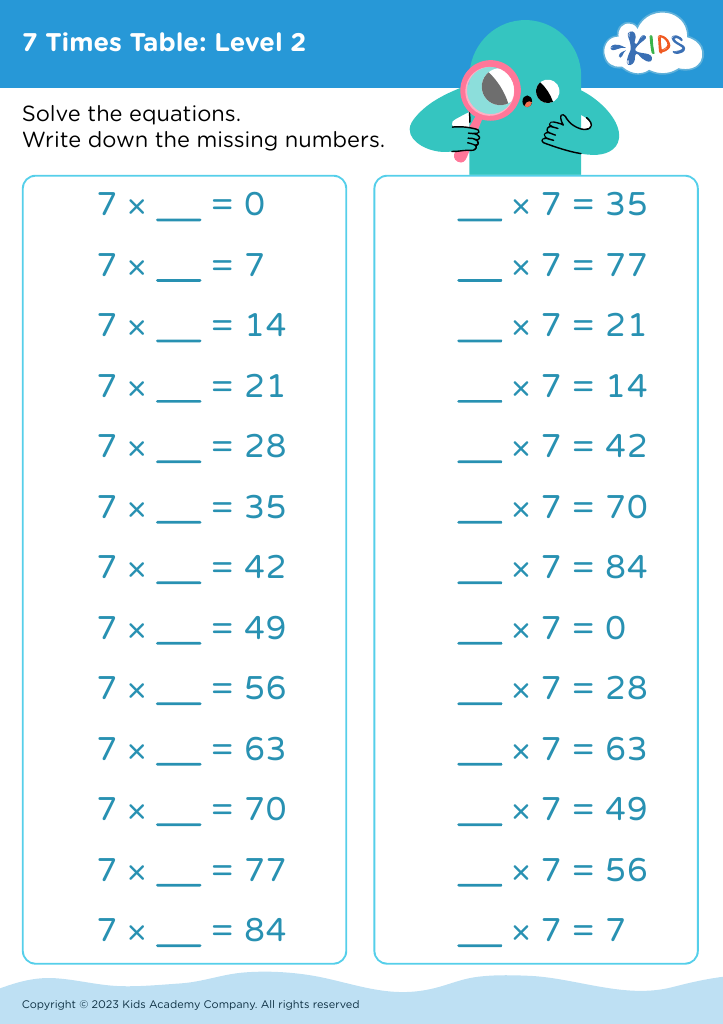
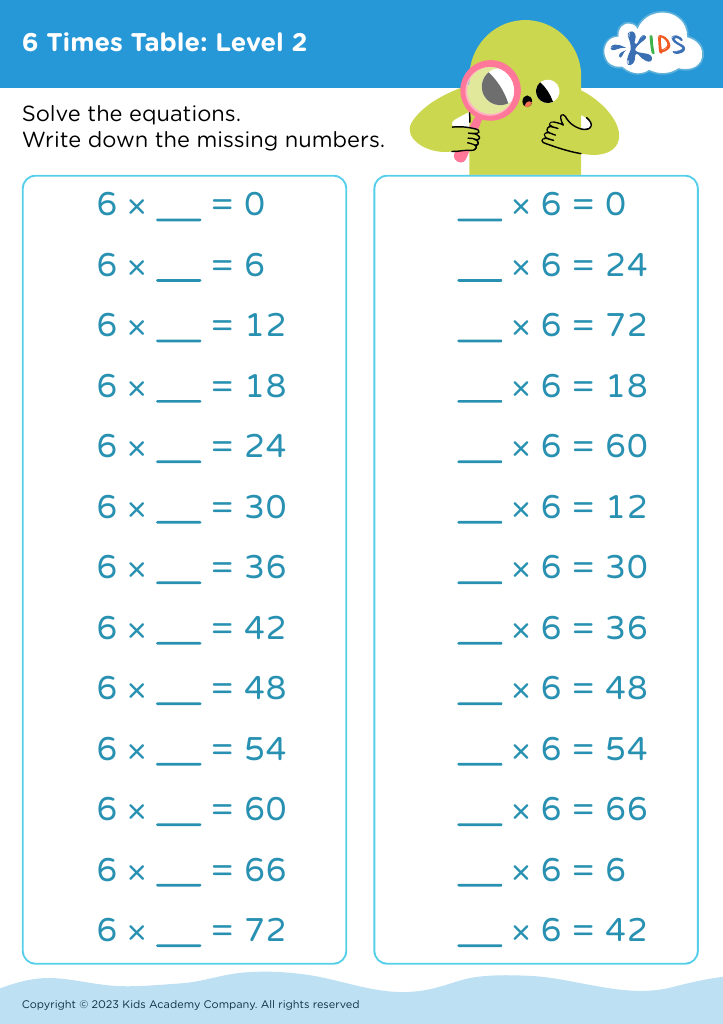
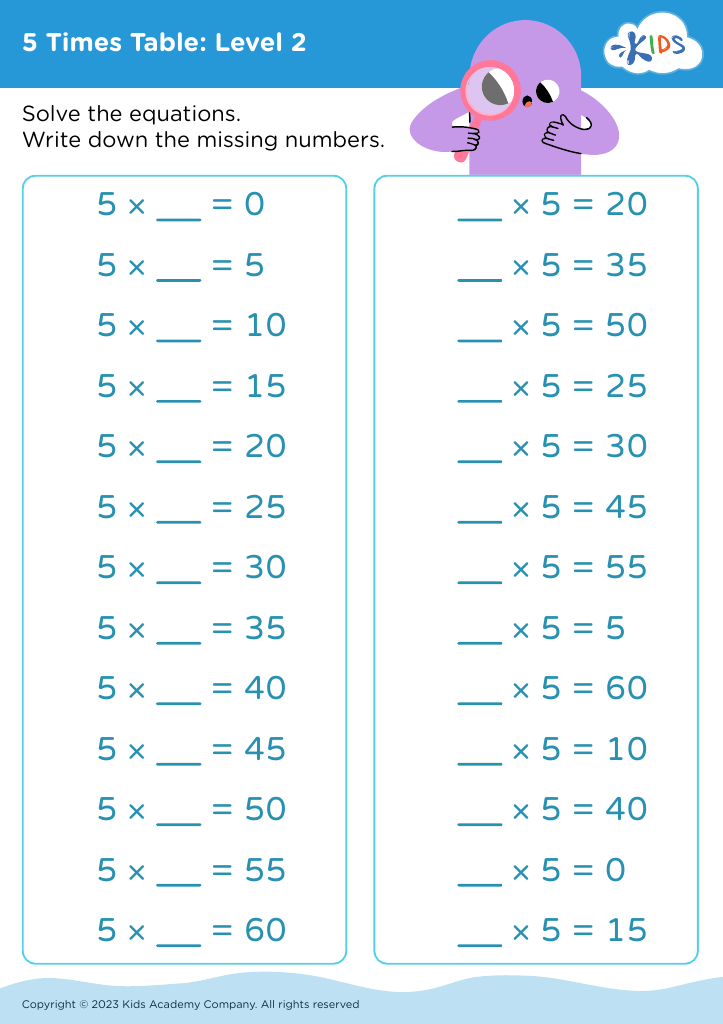
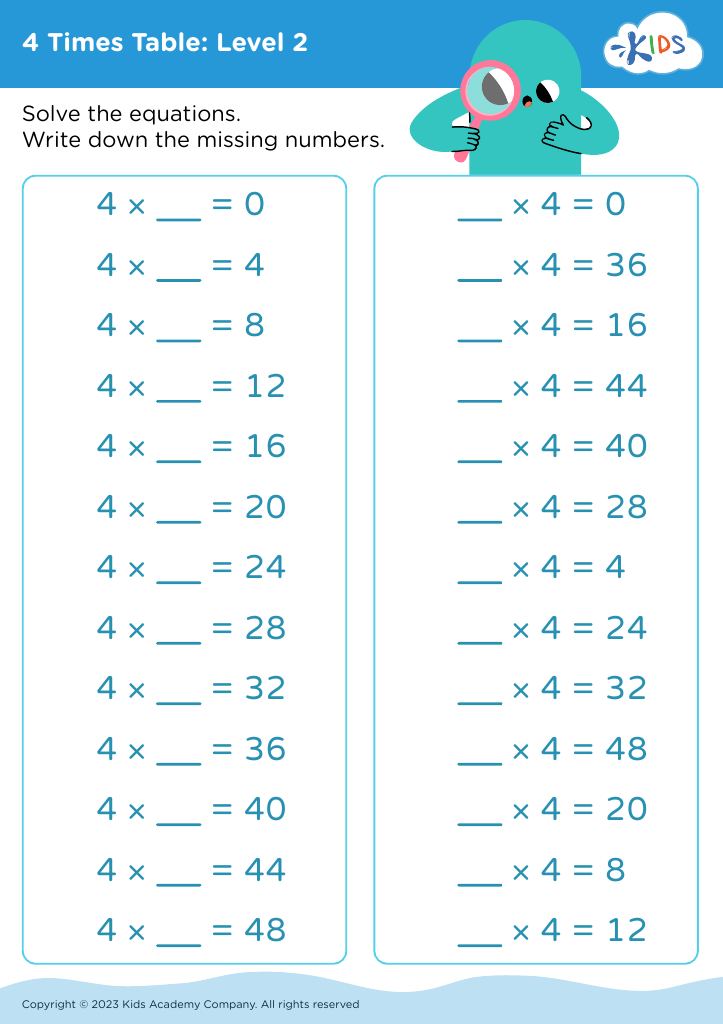
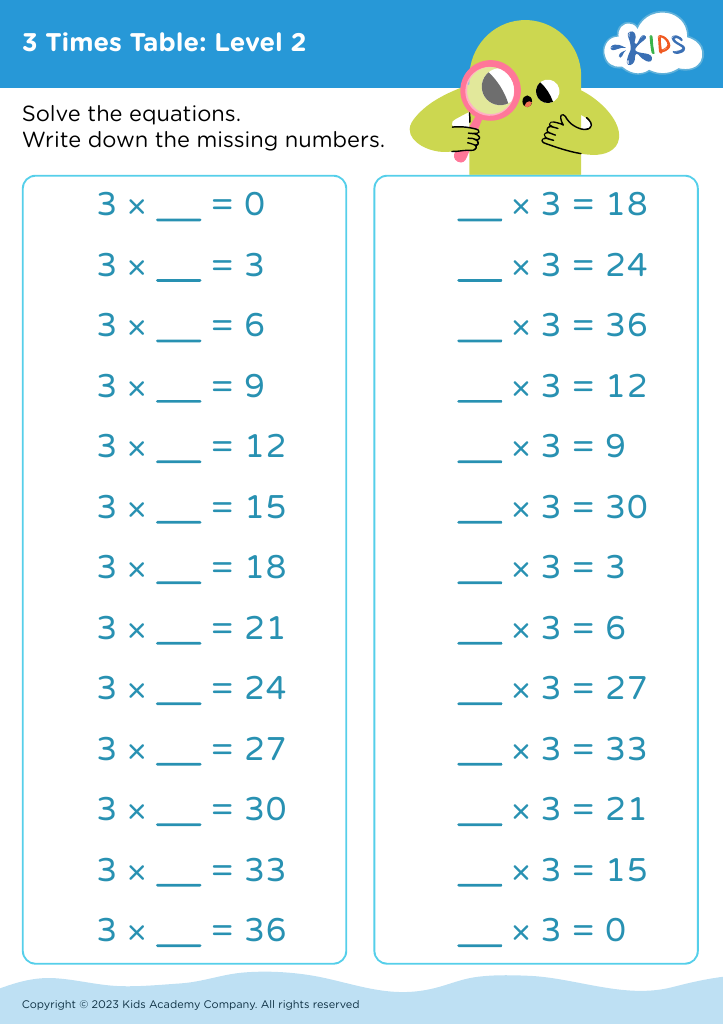
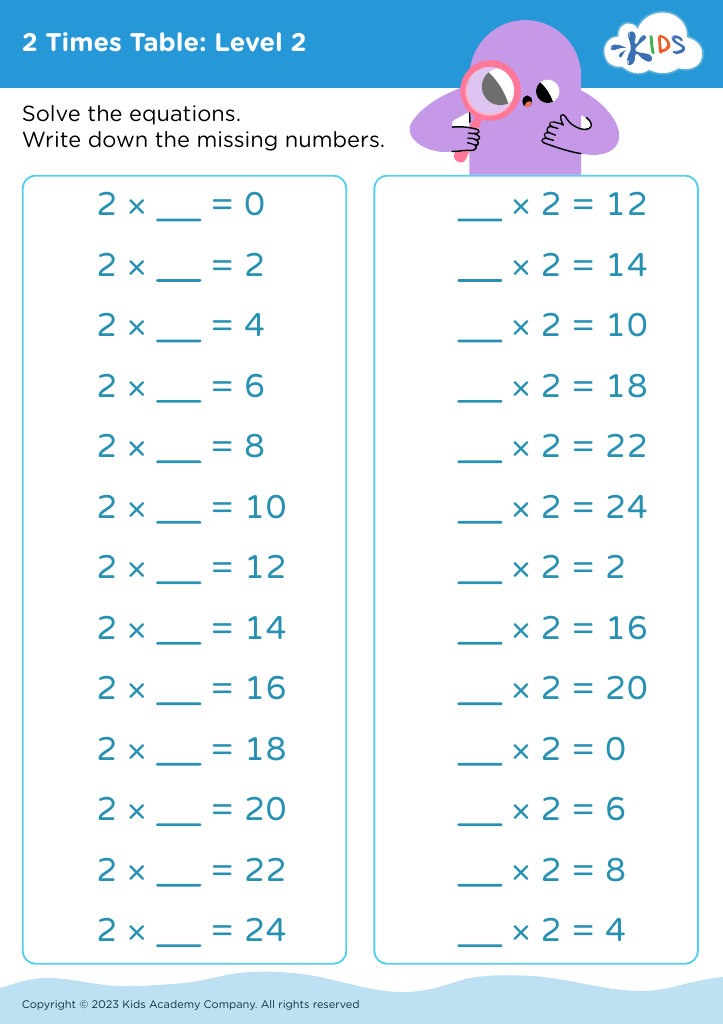








It's crucial for parents and teachers to emphasize multiplication practice for children aged 3-8 because early mathematics skills lay the groundwork for future academic success and everyday life. During these formative years, children's brains are incredibly receptive and can assimilate new concepts rapidly. Introducing multiplication early on helps in building essential Problem-Solving Skills by fostering logical thinking, pattern recognition, and the ability to make connections between numbers.
Multiplication is not just about memorizing tables; it's a stepping stone to more advanced math topics, such as division, fractions, and algebra. Early mastery of multiplication boosts a child's confidence and reduces math anxiety, making math a more enjoyable subject. For young learners, engaging, hands-on activities and games make multiplication practice feel like fun rather than a chore, enriching their learning experience.
Additionally, math competence is strongly linked to success in science, technology, engineering, and mathematics (STEM) fields. Strong early math skills can fuel a child's interest and proficiency in these areas, which are critical in today's technology-driven world.
For parents and teachers, investing time in multiplication practice now reaps long-term benefits, helping children develop a solid mathematical foundation that supports their educational journey and equips them for real-world challenges.








