
Understanding pollination Normal Math Worksheets for Ages 3-8
3 filtered results
Difficulty Level
Grade
Age
-
From - To
Subject
Activity
Standards
Explore the fascinating process of pollination with our "Understanding Pollination" Math Worksheets, designed for children ages 3-8. These engaging, educational activities combine essential math skills with nature's wonders, making learning both fun and meaningful. Kids will develop counting, addition, and pattern recognition abilities while discovering how pollinators like bees and butterflies contribute to the ecosystem. Perfectly tailored for young learners, our worksheets inspire curiosity about the natural world and build foundational math skills critical for early education. Unlock the magic of math and nature today with our downloadable resources!
Favorites
With answer key
Interactive
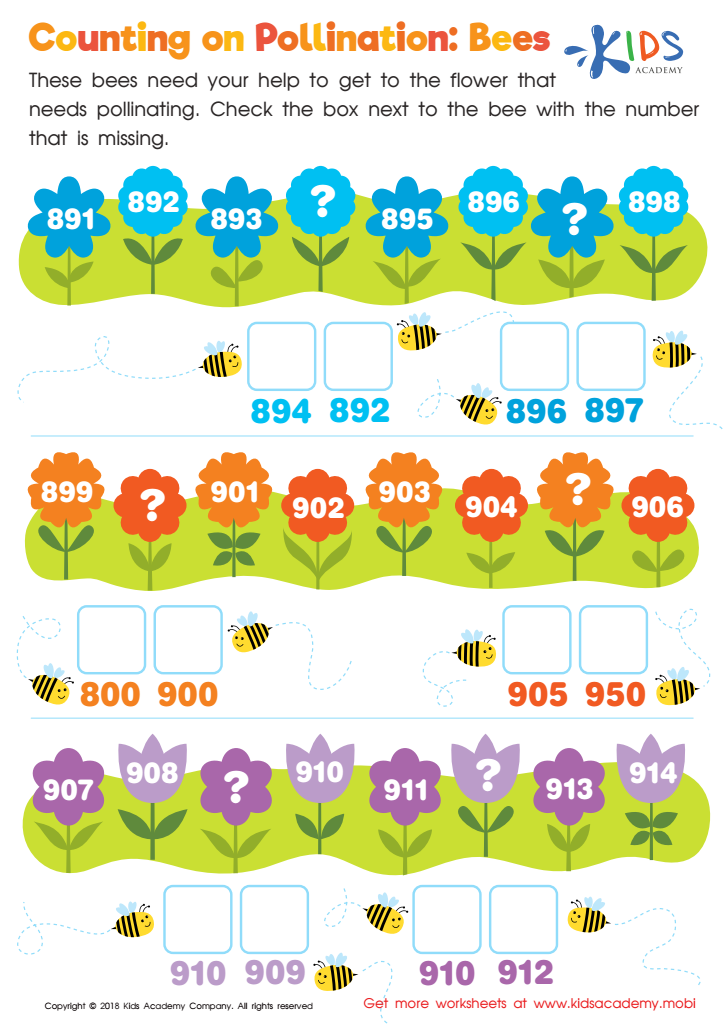
Counting on Pollination: Bees Worksheet
This downloadable worksheet helps kids improve their math skills while having fun - they'll help the bees pollinate the flowers by finding the missing number. It's an entertaining way to practice number patterns, sequences and number line skills, aiding in fast and efficient math computations.
 Assign to My Students
Counting on Pollination: Bees Worksheet
Worksheet
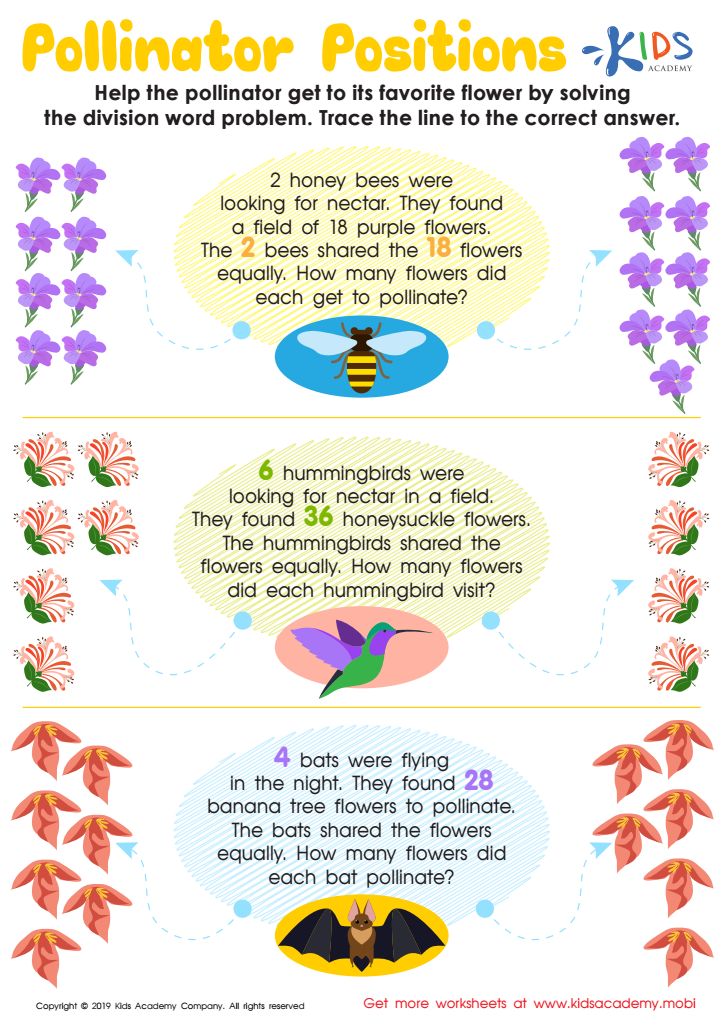
Pollinator Positions Worksheet
Kids will love learning about pollinators and how vital they are. Help their favorite friends get to the right flowers with this fun PDF. Children can solve the problems without even knowing they're doing division; just read the word problems and use the highlighted numbers. Finish by tracing the lines to the correct quotient!
Pollinator Positions Worksheet
Worksheet
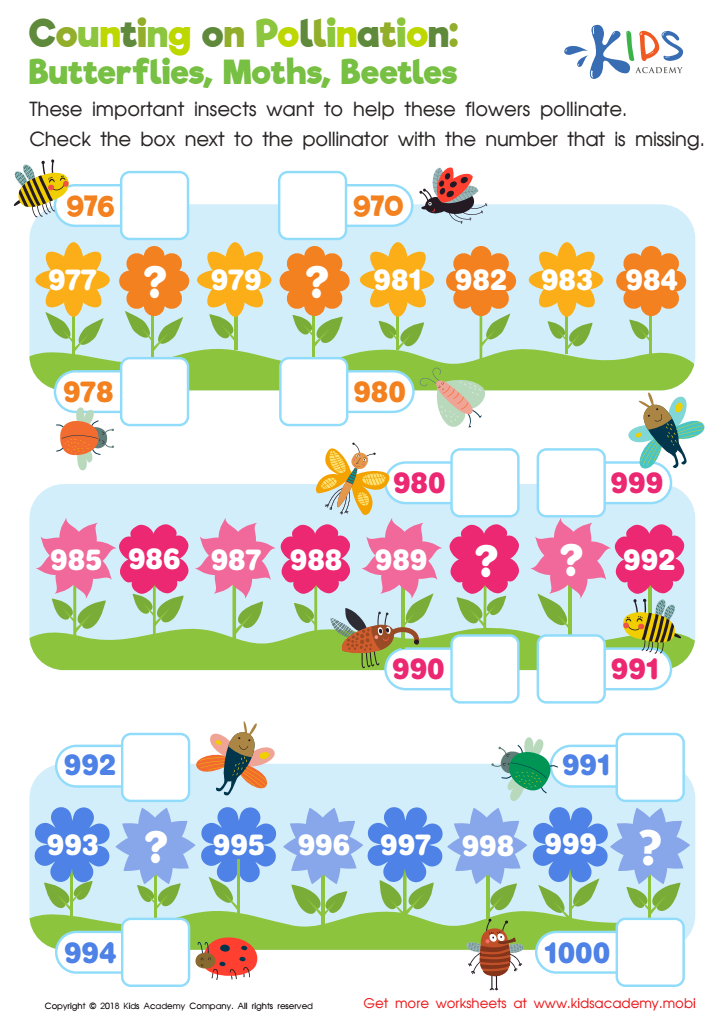
Counting on Pollination: Butterflies, Moths, Beetles Worksheet
A number line can help boost computation accuracy and efficiency. It can also be used with more advanced numbers. Help your child practice by having them identify missing numbers in sequences. This fun worksheet lets them help the pollinators in the process, as they strengthen their number sense.
Counting on Pollination: Butterflies, Moths, Beetles Worksheet
Worksheet
Join Kids Academy for Free
Who is primarily going to use this learning content?








Understanding pollination is both fun and important for children ages 3-8 as it lays the groundwork for ecological literacy and fosters curiosity about the natural world. Firstly, teaching kids about pollination helps them appreciate the vital role it plays in food production. Pollinators like bees, butterflies, and birds help transfer pollen from one flower to another, enabling the production of fruits, vegetables, and seeds. This basic knowledge helps them see the connection between plants, insects, and the food they eat every day.
Moreover, learning about pollination can cultivate empathy for living creatures and highlight the interconnectedness of ecosystems. Children gain a sense of responsibility towards protecting pollinators and their habitats, leading to early environmental stewardship.
From a developmental perspective, understanding complex processes like pollination stimulates critical thinking and observational skills. Activities involving counting petals, pollinators, or comparing the sizes of different flowers can also seamlessly integrate math skills.
Incorporating fun, hands-on activities such as gardening, watching educational videos, or creating simple crafts can make the learning process enjoyable. Such activities promote experiential learning, which is especially impactful in early childhood education. In sum, grasping the basics of pollination fosters an early appreciation for nature, develops cognitive and observational skills, and nurtures responsible future citizens.








