Matching skills Normal Matching Worksheets for Ages 3-8
4 filtered results
-
From - To
Introduce your little ones to the world of learning with our Matching Skills Normal Matching Worksheets, tailored for ages 3-8. These engaging tools are designed to sharpen cognitive abilities, enhance visual perception, and develop critical thinking. Each worksheet offers a fun and interactive experience, allowing children to match objects, shapes, and patterns while improving their attention to detail and concentration. Simple yet effective, our matching activities also promote fine motor skills and hand-eye coordination, setting a strong foundation for early math and problem-solving abilities. Make learning enjoyable and productive with our expertly-crafted matching worksheets!
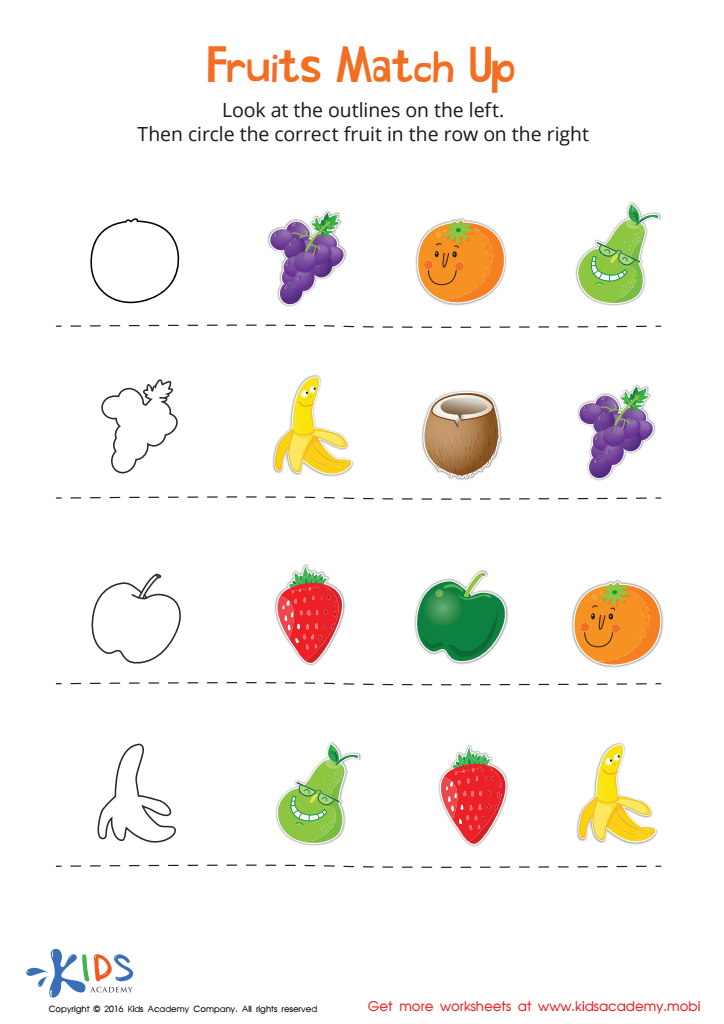
Fruits Match Up Worksheet
 Assign to My Students
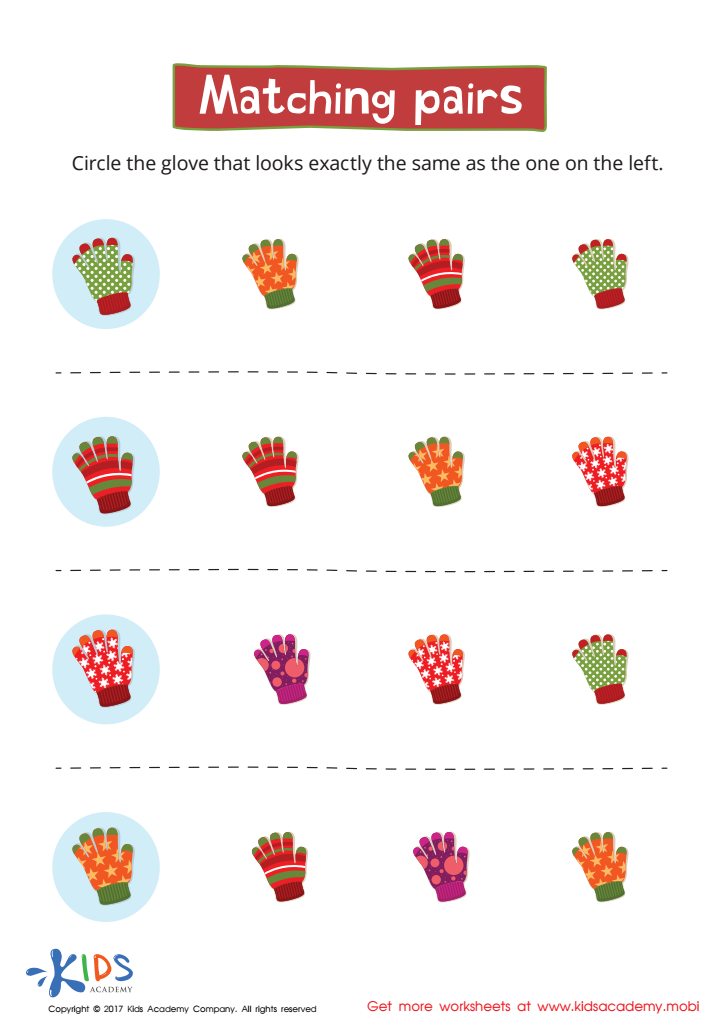
Matching: Matching Pairs Worksheet
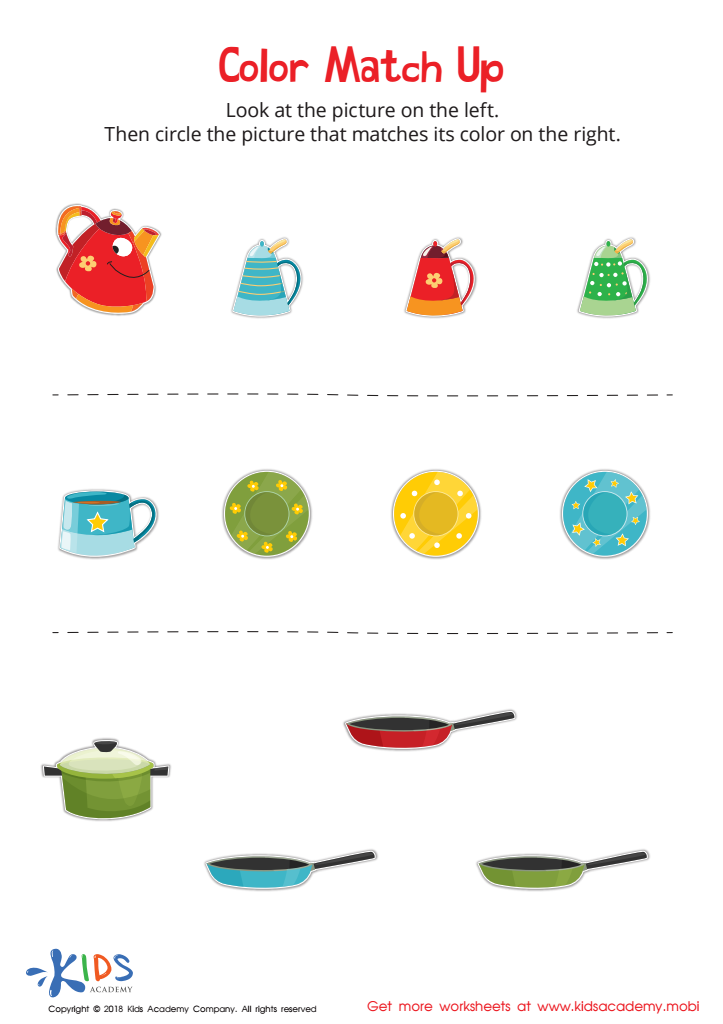
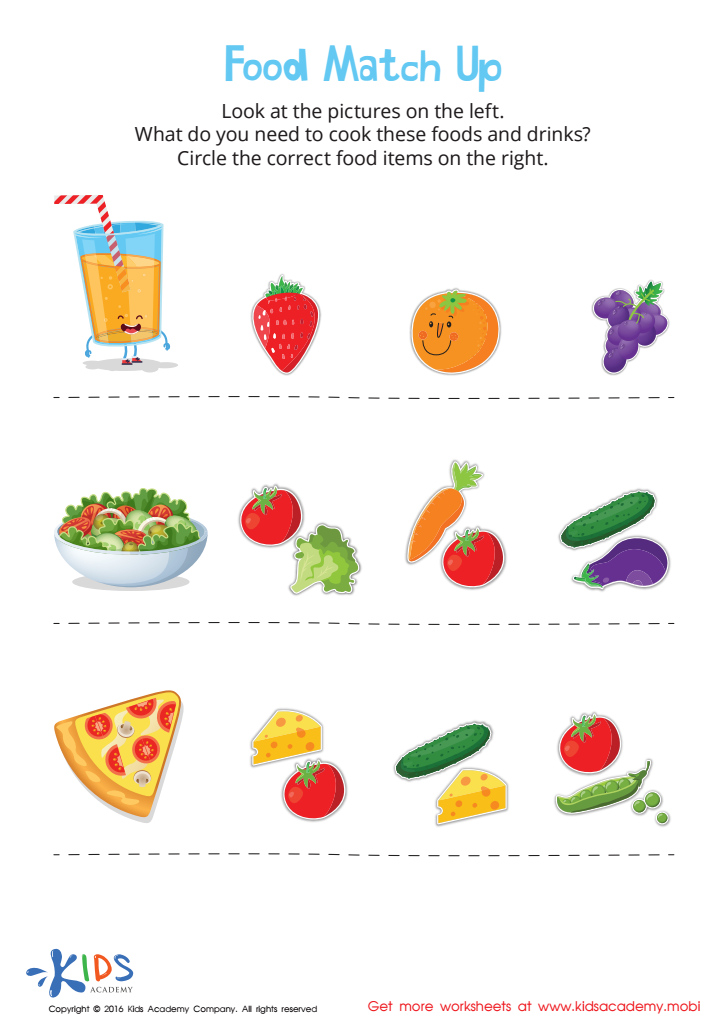
Food Match Up Worksheet







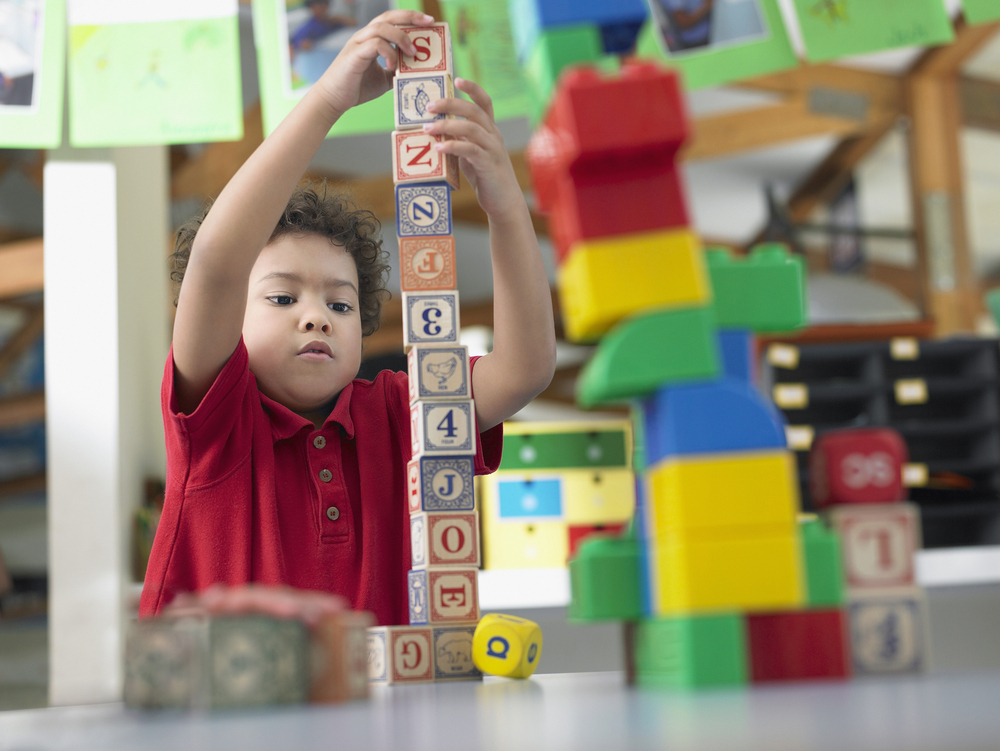
Matching skills are fundamental for children aged 3-8 as they serve as building blocks for several critical cognitive and developmental milestones. Firstly, matching activities help strengthen visual memory, enabling children to recognize and recall patterns, letters, numbers, and words, which are pivotal for reading and mathematics. Moreover, engaging in matching exercises enhances attention to detail and concentration, essential skills for academic success and daily life problem-solving.
Secondly, matching promotes logical thinking and categorization. When children group objects based on color, shape, size, or function, they learn to understand relationships and make sense of their environment, skills crucial for science and social learning.
Simultaneously, matching tasks improve fine motor skills and hand-eye coordination as children manipulate cards, puzzle pieces, or digital interfaces. Fine motor development is vital for handwriting and other precise physical activities.
Additionally, matching games foster social and emotional growth. Activities that involve taking turns, cooperating, or competing constructively encourage positive interpersonal interactions and the development of social skills.
Lastly, matching is an inclusive skill that can be easily adapted for children with varying learning needs, ensuring every child has the opportunity to succeed and build confidence in their abilities. Therefore, parents and teachers should prioritize matching exercises to support a well-rounded, foundational growth phase.








