Subtraction practice Normal Subtraction Worksheets for Ages 3-8
6 filtered results
-
From - To
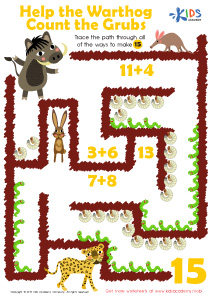
Our "Subtraction Practice Normal Subtraction Worksheets" are designed for children ages 3-8 to build and strengthen their subtraction skills. Crafted by educational experts, these worksheets combine engaging graphics with age-appropriate subtraction problems to ensure effective learning. Each worksheet progresses in difficulty, helping young learners understand and apply subtraction concepts step-by-step. Perfect for classroom use or at-home practice, these printable sheets provide a fun and interactive way for children to develop foundational math skills. Make subtraction practice enjoyable and productive for your child with Kids Academy. Download now and start subtracting with confidence!
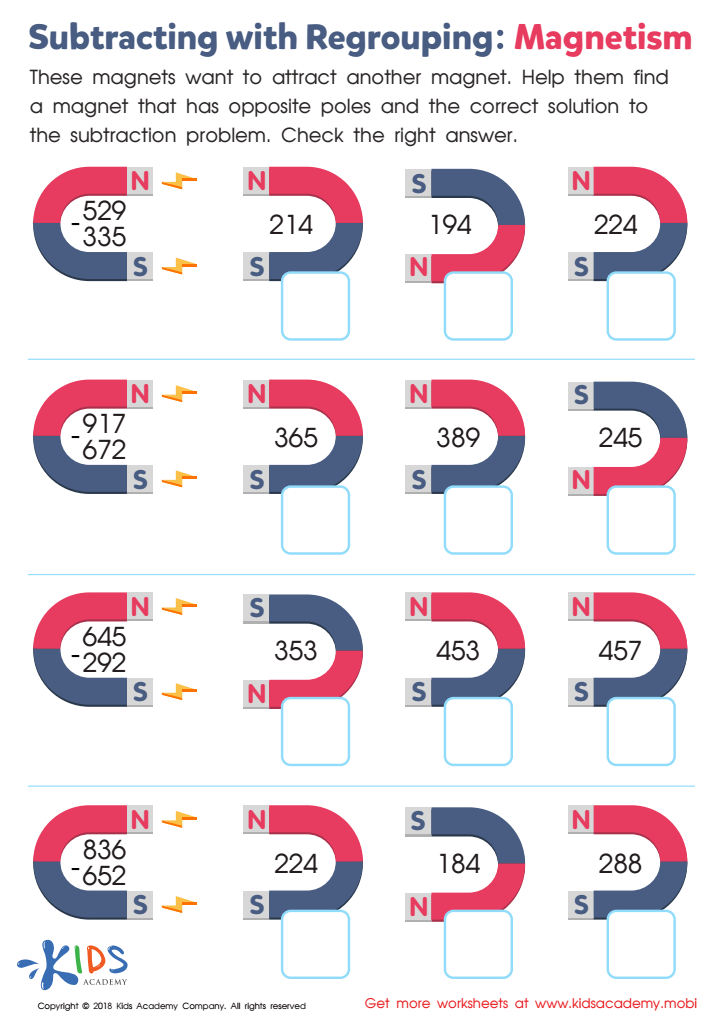
Subtracting with Regrouping: Magnetism Worksheet
 Assign to My Students
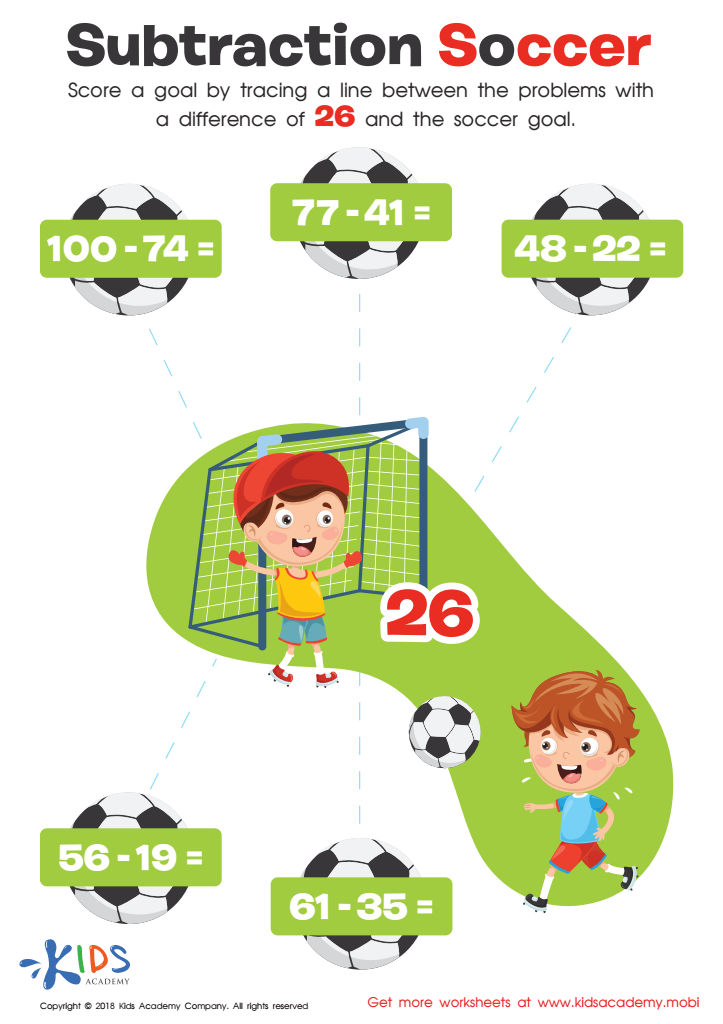
Subtraction Soccer Worksheet
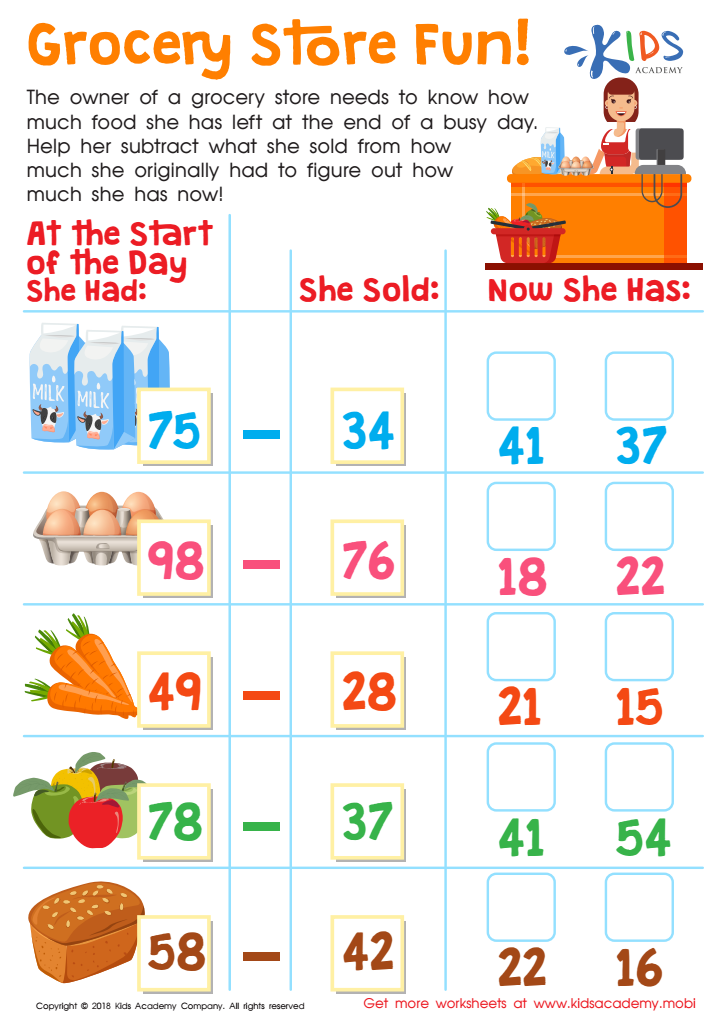
Grocery Store Fun! Worksheet
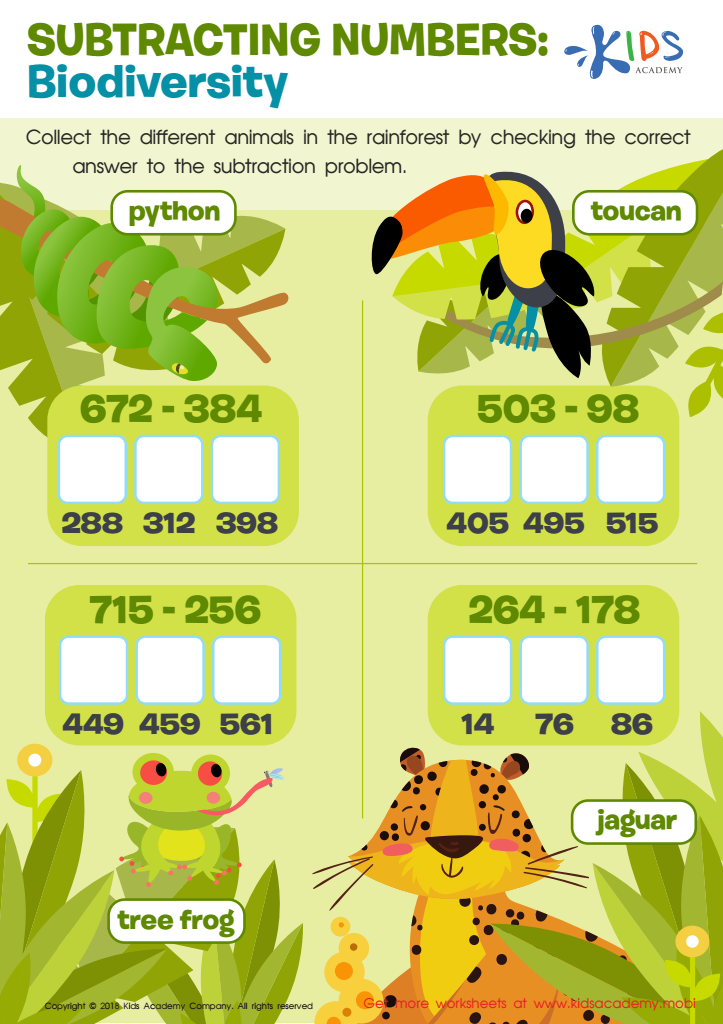
Subtracting Numbers: Biodiversity Worksheet
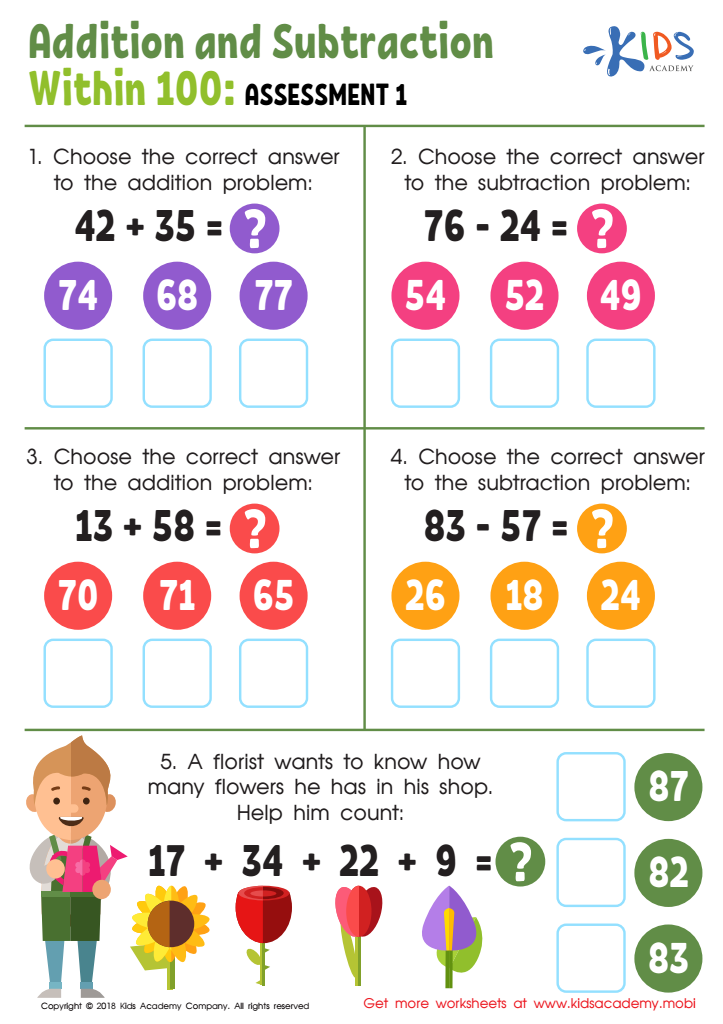
Addition and Subtraction Within 100 Worksheet
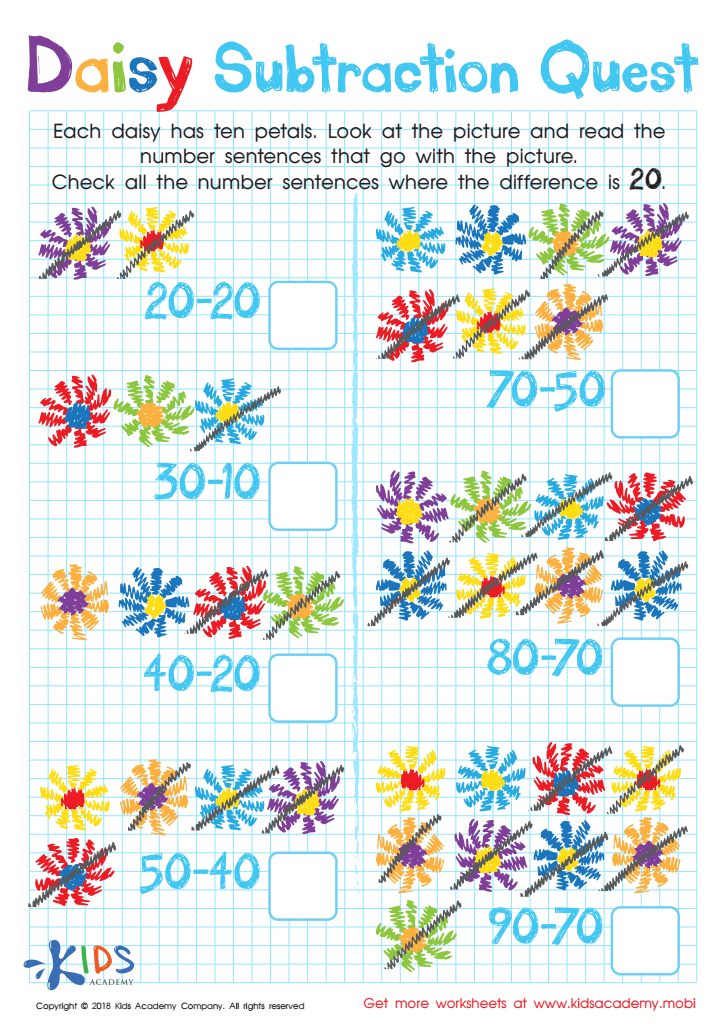
Daisy Subtraction Quest Worksheet








Parents and teachers should prioritize subtraction practice for children aged 3-8 to build essential foundational skills in mathematics, crucial for their cognitive development and academic success. At this formative age, children's brains are highly adaptable and primed to grasp fundamental concepts like numbers and basic arithmetic operations. Subtraction, though seemingly basic, is a cornerstone of numeracy, fostering critical thinking, problem-solving, and analytical skills that are needed for more complex mathematical reasoning later on.
Practicing subtraction helps young learners understand the concept of 'taking away', which is pivotal for their ability to manage comparisons, contrasts, and understand sequences. This process fosters mental calculation abilities, encouraging children to internalize number relationships and develop confidence in handling numbers. Effective mastery of subtraction also builds a solid groundwork for learning addition, multiplication, and division, creating a holistic approach to mathematics.
Moreover, early success in math can boost a child’s self-esteem and motivation for future learning experiences. Engaging subtraction practice can make learning interactive and enjoyable, utilizing visual aids, tangible objects, and relatable scenarios to make abstract ideas accessible. By prioritizing subtraction early on, parents and teachers set the stage for a child’s ongoing academic journey, ensuring they are equipped with the skills needed for everyday problem solving and future educational opportunities.