Critical thinking skills Normal Reading Worksheets for Ages 3-8
5 filtered results
-
From - To
Enhance your child's critical thinking abilities with our engaging Normal Reading Worksheets designed for ages 3-8. These worksheets focus on improving comprehension and analytical skills in a fun and interactive way. By exploring diverse reading materials, children will develop the ability to think critically, solve problems, and make connections between concepts. Each worksheet is crafted to cultivate curiosity and encourage thoughtful reflection, making learning enjoyable. Ideal for at-home practice or classroom activities, our resources support early readers in becoming confident learners. Unlock your child's potential in reading and critical thinking with our age-appropriate worksheets that inspire creativity and cognitive growth!
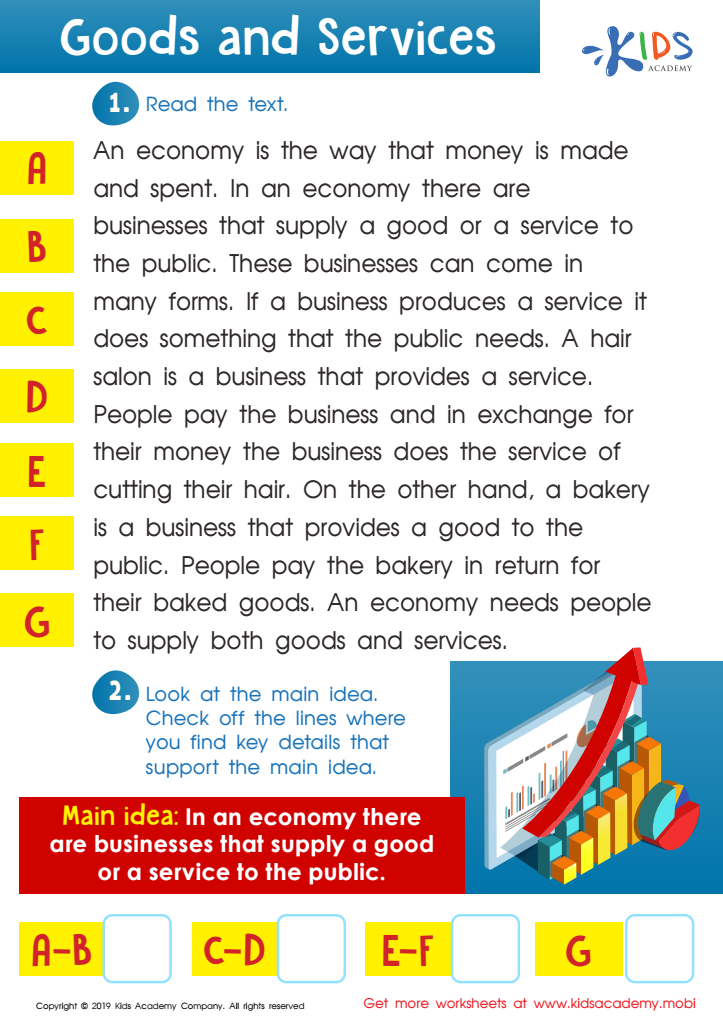
Goods and Services Worksheet
 Assign to My Students
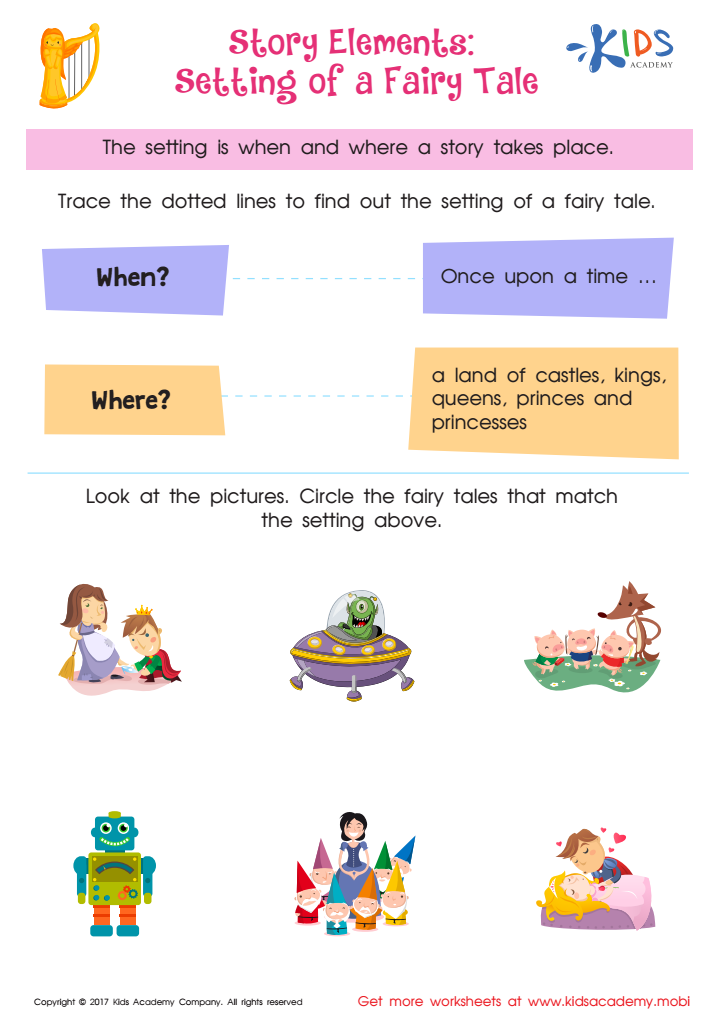
Story Elements: Setting of a Fairy Tale Printable
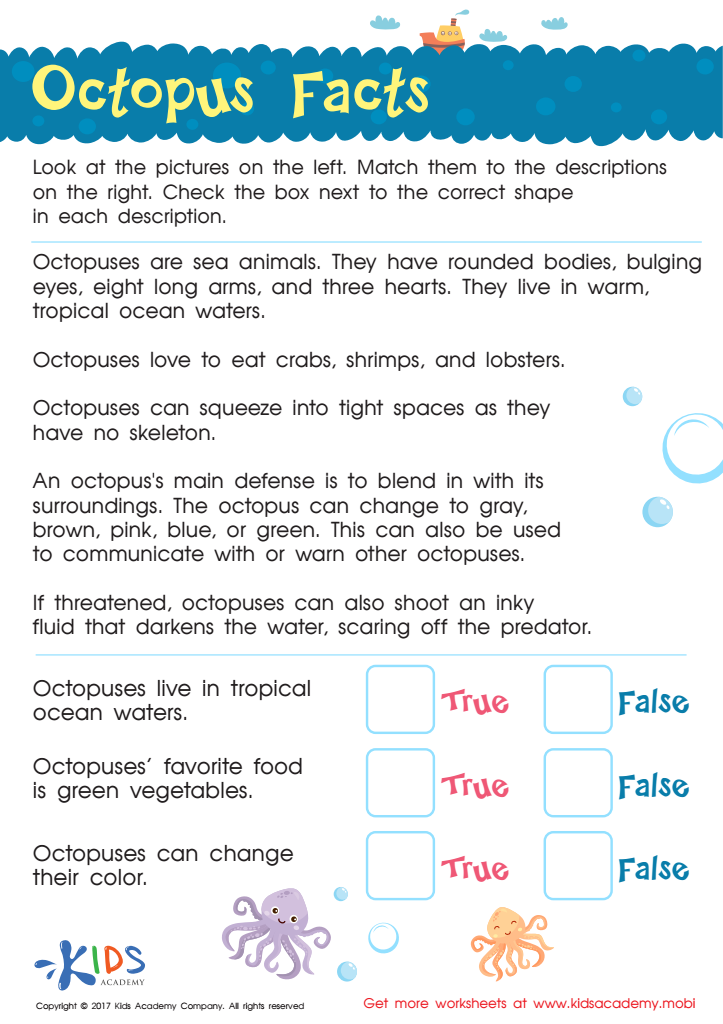
Octopus Facts Worksheet For Kids
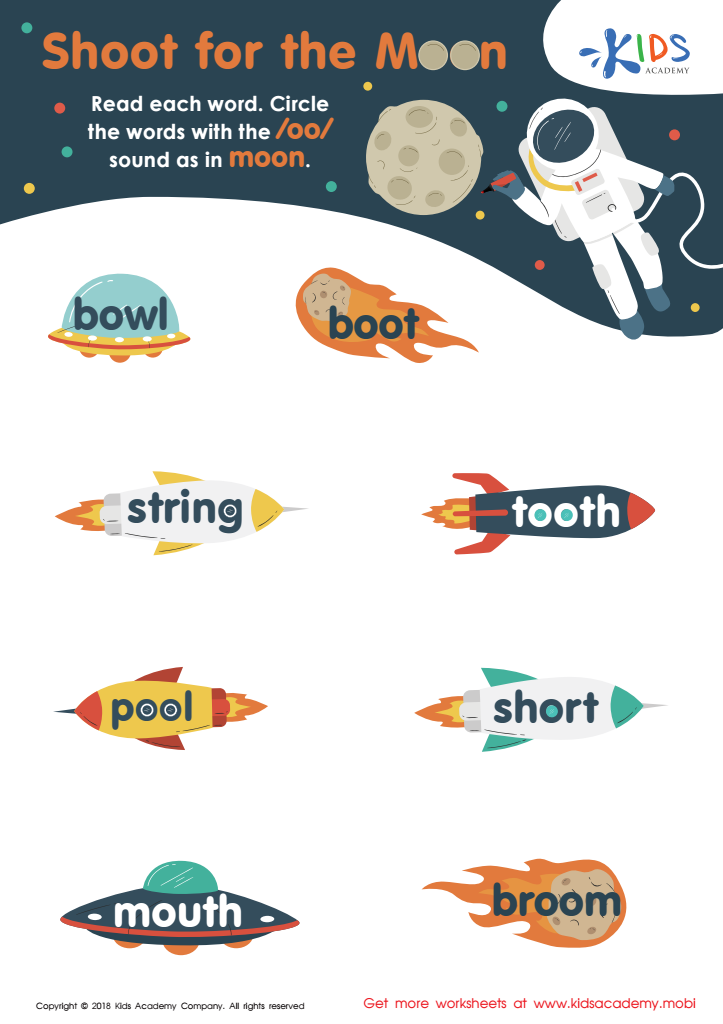
Reading: Shoot for the Moon Worksheet
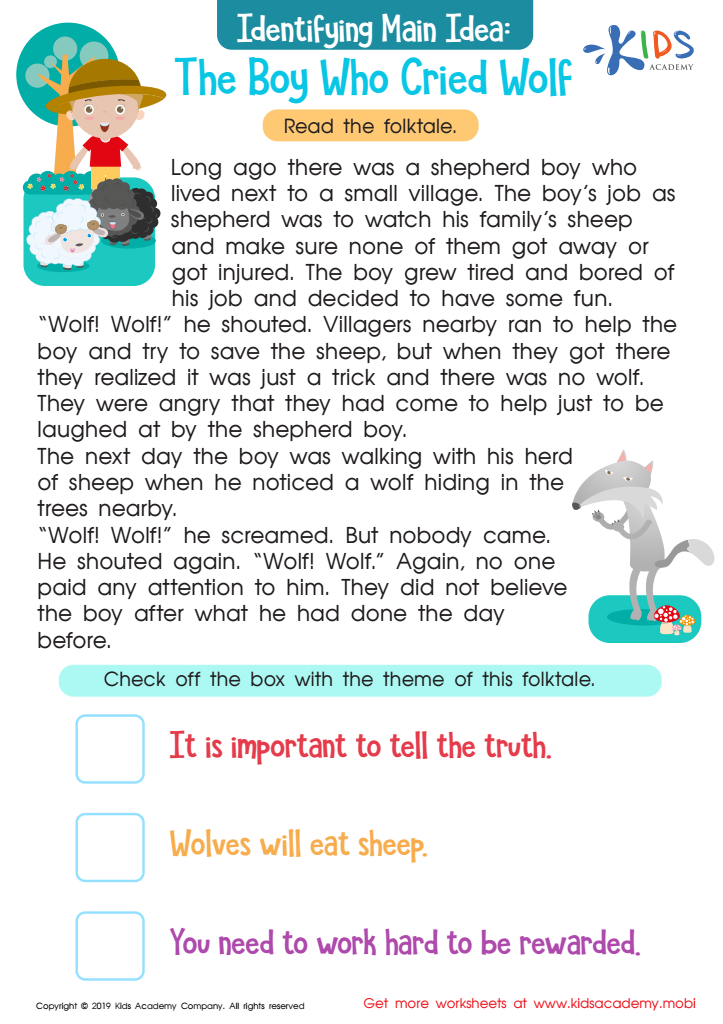
The Boy Who Cried Wolf Part 2 Worksheet






Critical thinking skills are essential for children aged 3-8 as they form the foundation for lifelong learning and problem-solving abilities. During this formative period, young learners become curious about the world around them. By fostering critical thinking skills through reading, parents and teachers help children learn to analyze information, ask questions, and make informed decisions.
Normal reading, when integrated with critical thinking, encourages children to go beyond rote memorization and engages them in thoughtful discussions about stories, characters, and situations. This approach enables them to identify cause-and-effect relationships, draw conclusions, and develop their imaginative skills. In turn, this nurtures emotional intelligence and empathy, helping them better understand others' perspectives.
Moreover, honing these skills early on prepares children for future academic challenges and fosters a love for learning. As they become adept at evaluating various concepts and ideas, children are more likely to engage actively in their education. Parents and teachers play a vital role in this process by providing age-appropriate reading materials and encouraging inquisitive dialogue. Overall, prioritizing critical thinking in early education equips children with essential skills they will utilize throughout their lives, in both personal and professional contexts.








