Sound recognition Normal Reading Worksheets for Ages 3-8
4 filtered results
-
From - To
Discover our "Sound Recognition Normal Reading Worksheets" designed for children aged 3-8! These engaging resources emphasize the fundamental skill of sound recognition, essential for developing strong reading abilities. Each worksheet features fun and interactive activities to help young learners identify and associate sounds with their corresponding letters and words. Perfect for parents and educators, these age-appropriate worksheets promote phonemic awareness through colorful illustrations and user-friendly formats. Enhance your child's literacy skills while making learning enjoyable! Access these printables to support your child's reading journey and foster confidence in their abilities. Start building a strong foundation in literacy today!
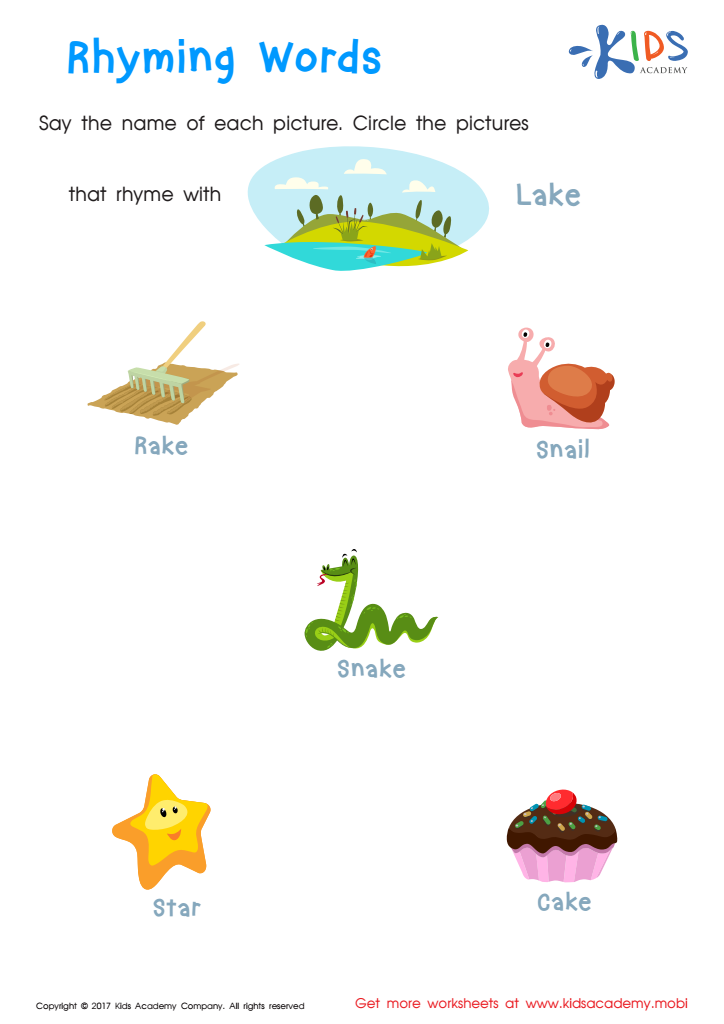
Rhyming Words Rhyming Worksheet
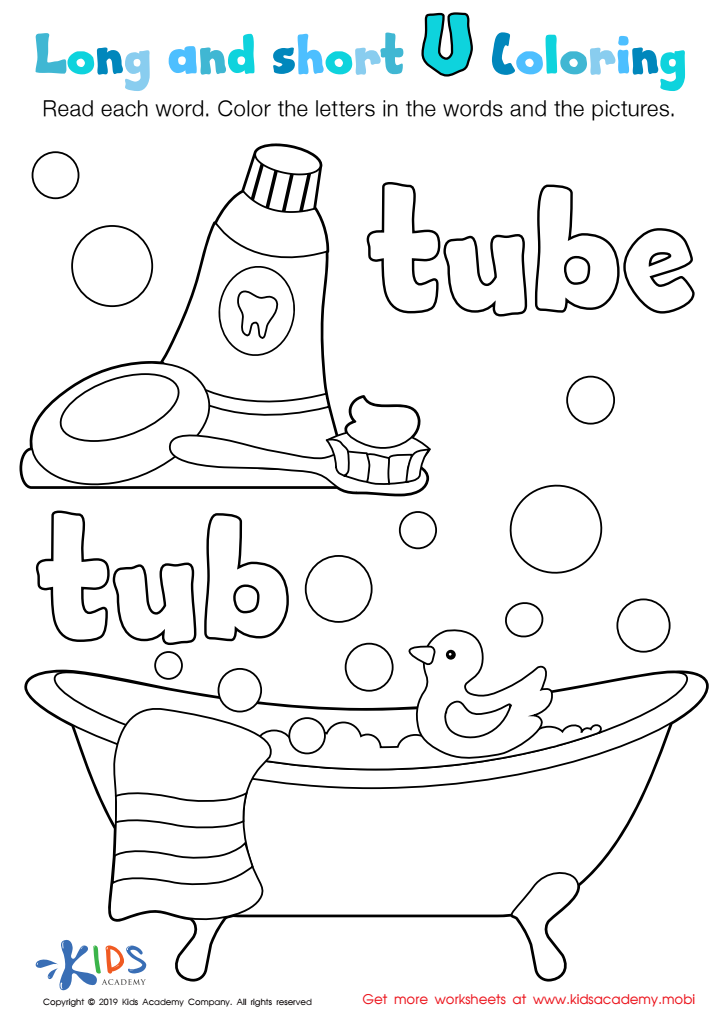
Long and Short U Worksheet
 Assign to My Students
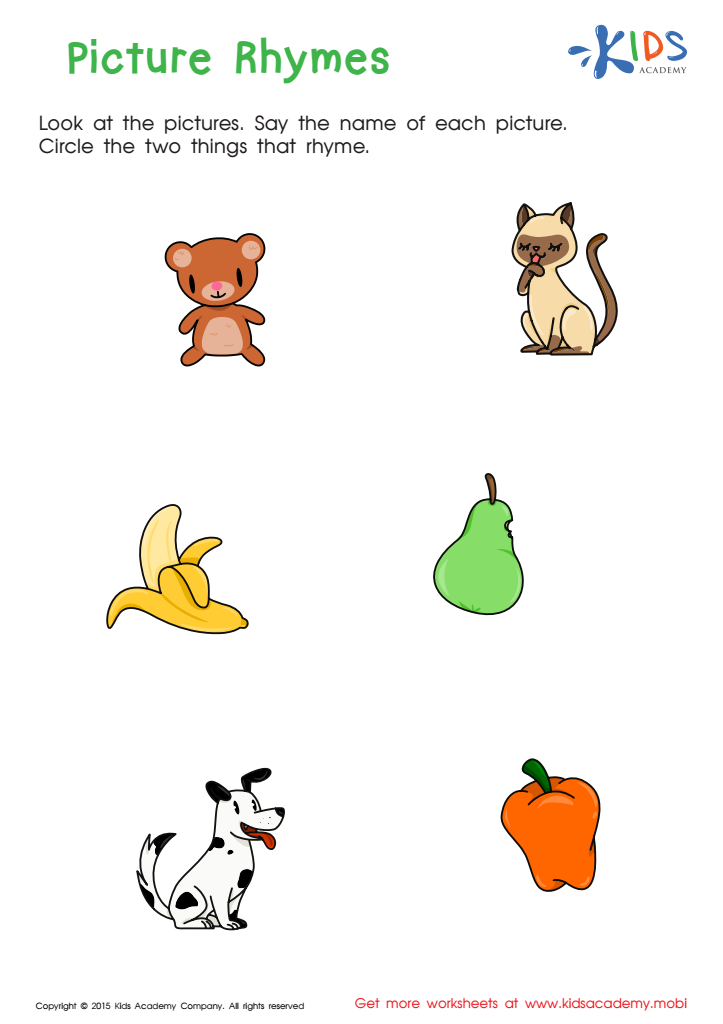
First Words: Picture Rhymes Worksheet
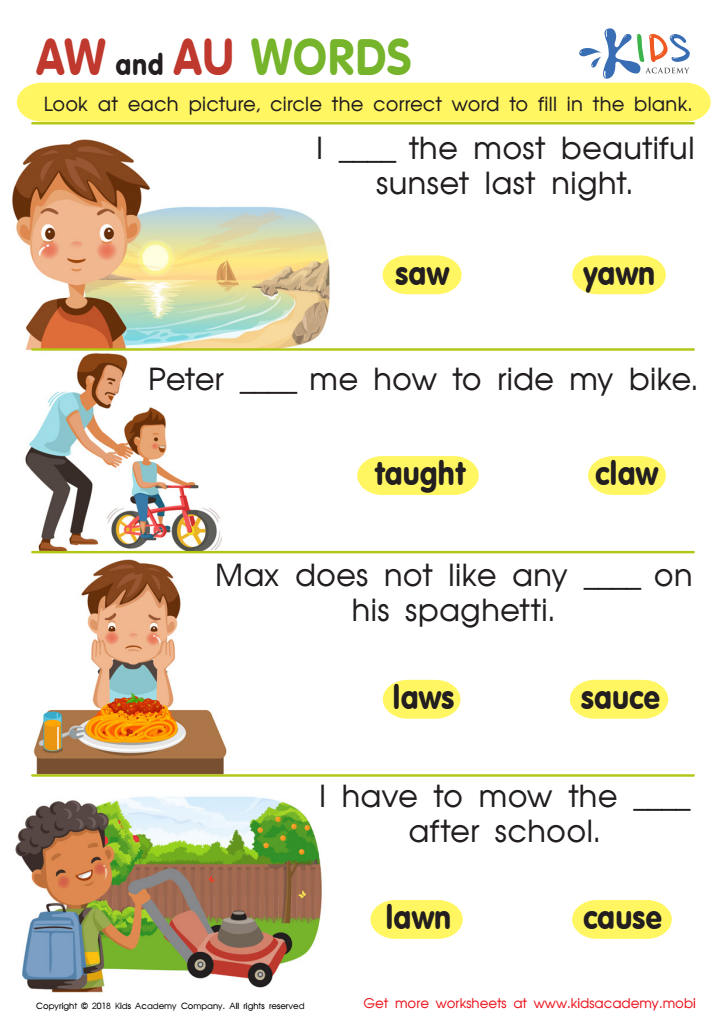
Reading: AW and AU Words Worksheet








Sound recognition is a foundational skill that plays a crucial role in early literacy development for children aged 3-8. At this stage, children are beginning to explore letters, words, and the systems of language. When parents and teachers prioritize sound recognition, they help young learners develop phonemic awareness—the ability to hear, identify, and manipulate individual sounds in spoken words. This skill is essential for reading proficiency, as it enables children to connect sounds with corresponding letters, thereby facilitating decoding.
Moreover, strong sound recognition enhances vocabulary expansion and spelling skills. As children recognize and manipulate sounds, they become better equipped to understand the structure of words, contributing to fluent reading and effective communication. Engaging in activities like rhymes, songs, and games that emphasize sound can make learning enjoyable and interactive, encouraging a positive attitude toward language.
Furthermore, acknowledging unique learning styles and backgrounds among children enhances inclusivity and supports diverse learning needs. When parents and teachers focus on sound recognition, they forge a strong foundation for literacy that not only impacts reading but also boosts critical thinking and cognitive development well into later years, setting the stage for lifelong learning. Hence, the involvement of adults in fostering this skill is vital for a child's educational journey.








